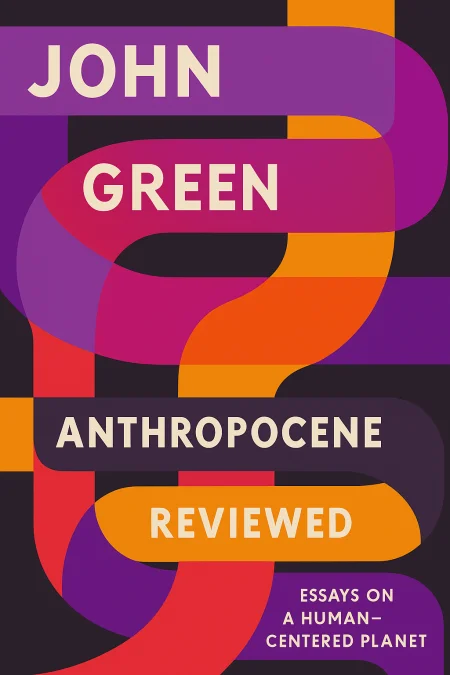
The Anthropocene Reviewed
Essays on a Human-Centered Planet
Book Edition Details
Summary
In a world reshaped by human hands, John Green lends his singular voice to a captivating collection of essays that chronicle the idiosyncrasies of the Anthropocene epoch. With wit and wisdom, Green takes readers on a journey through the mundane and the magnificent—from the mundane QWERTY keyboard to the celestial dance of Halley's Comet, even touching on the pop culture phenomenon of Penguins of Madagascar—all rated on an inventive five-star scale. This mosaic of reflections, evolved from his acclaimed podcast, resonates with empathy and insight, offering a fresh lens on the complexities of modern life. "The Anthropocene Reviewed" isn't just a series of reviews; it's a poignant exploration of humanity's mark on the world, complete with six new essays that enrich this thought-provoking tapestry.
Introduction
Standing in a hospital waiting room at three in the morning, watching a vending machine hum its mechanical lullaby while fluorescent lights buzz overhead, you might feel the profound strangeness of being human in the twenty-first century. Here we are, creatures who evolved to gather berries and tell stories around fires, now living in a world of our own making—a world where we've changed the very chemistry of the atmosphere, where we carry the sum of human knowledge in our pockets, where we can video-call someone on another continent but struggle to remember the last time we saw the Milky Way. This is the Anthropocene, the geological age defined by human impact on Earth. It's an era both magnificent and terrifying, where we wield godlike power over the planet while remaining startlingly vulnerable to forces beyond our control. In this collection of reviews, we encounter the everyday objects and experiences that define our strange moment in history—from the art we create to the diseases that humble us, from the games we play to the songs we sing together. Each review offers a star rating, but the stars are less important than the stories they illuminate. These are meditations on what it means to be human when humanity has become a geological force, explorations of how we find meaning and connection in a world we're simultaneously destroying and creating. Through the lens of seemingly ordinary things, we discover the extraordinary complexity of our current existence, and perhaps glimpse ways to navigate this unprecedented time with more wisdom, compassion, and hope.
Making Meaning From Mundane Moments
In the summer of 2008, the author found himself in Reykjavík, Iceland, suffering from a multiday hangover and wandering empty streets with scratched glasses that made the world appear blurry and uncertain. The city seemed abandoned until suddenly, from every building, came a tremendous roar. Thousands of people poured into the streets, weeping with joy, embracing strangers, singing songs in languages he couldn't understand. Iceland had just won its first-ever Olympic medal in men's team handball, and an entire nation was celebrating together. Later that evening, still caught in the euphoria of that unexpected moment, he followed a recommendation to visit Bæjarins Beztu Pylsur, a small hot dog stand that had become legendary among travelers. Despite his usual disappointment with hyped culinary experiences, the hot dog he ate there—topped with remoulade, sweet mustard, and fried onions—became one of the most joyous moments of his life. It wasn't just the food; it was the confluence of place, time, and feeling that transformed an ordinary hot dog into something transcendent. This is how meaning works in the Anthropocene. We live in an era of such rapid change and overwhelming information that significance often emerges not from grand gestures but from small encounters with the unexpected. A hot dog stand becomes a portal to understanding joy. A crowd of strangers becomes a lesson in shared humanity. These mundane moments, when viewed with attention and openness, reveal the profound interconnectedness that defines our human experience, reminding us that even in our fragmented world, we remain capable of sudden, inexplicable connection.
Finding Wonder in an Age of Crisis
The cave paintings at Lascaux were discovered by accident in 1940 when four teenage boys, including a Jewish refugee named Simon Coencas who was fleeing Nazi-occupied France, followed a dog named Robot down a hole. What they found were seventeen-thousand-year-old handprints and animal paintings that seemed to move in the flickering light of their oil lamps. The boys were so moved by their discovery that two of them spent the winter camping outside the cave to protect it from harm. Simon Coencas would never see the cave again after that summer. His family was betrayed to the Nazis, his parents murdered. He survived the war hiding in an attic, wouldn't see his friends for forty-six years, and lived to be ninety-three, dying just as the world entered another crisis in 2020. Meanwhile, the cave that sparked such wonder had to be sealed off from visitors because too many people breathing inside it was damaging the ancient art. Yet this story illuminates something essential about wonder in our current age. The paintings at Lascaux exist—magnificent, ancient, created by humans who faced unimaginable hardships yet still made time to create art. We can't visit them directly, but we built perfect replicas so future generations can experience their power. Even when circumstances force us apart from beauty, even when our presence threatens what we love most, we find ways to preserve and share wonder. The cave reminds us that humans have always been vulnerable, have always faced existential threats, and have always responded by creating meaning, by leaving marks that say, "I was here, and this mattered."
Stories of Connection and Loss
Years after working as a student chaplain at a children's hospital, the author encountered a three-year-old boy suffering from severe burns. The child's cries pierced through every defense, and as he sat with the distraught parents in a windowless family room, he felt the weight of human helplessness in the face of inexplicable suffering. The boy might not survive, the doctor said, and all the author could do was sit there, inadequate to the moment, while the parents collapsed not into each other's arms but into themselves. For over a decade, he carried this memory without knowing what happened to the child. He had the skills to find out—he was, as he admits, exceptionally good at googling strangers—but he was too afraid to look. To google would be to know, one way or another. The uncertainty was bearable; the potential truth might not be. Then one morning, driven by some inexplicable need, he typed the boy's unusual name into a search bar and clicked enter. The boy was alive. Eighteen years old now, a member of Future Farmers of America, posting pictures with John Deere tractors and calling his girlfriend his "bae." His parents were still married. The child who might have died that night had grown up, was living his life online like any teenager, documenting a world he was supposed to leave behind. In our age of digital surveillance and lost privacy, sometimes the very technologies that strip away our autonomy also deliver us mercy. Sometimes the internet, for all its flaws, allows us to discover that hope was justified, that the worst didn't happen, that love endured and life persisted against all odds.
Hope and Despair in Human Experience
During a particularly dark period, when a "plank in reason broke" and the author found himself dropping "down, and down," hitting "a world, at every plunge," he drove to see the world's largest ball of paint in Alexandria, Indiana. Since 1977, Mike Carmichael and his son have been painting a baseball, adding layer after layer until it became a two-and-a-half-ton sphere that thousands of strangers visit each year to add their own colors to its surface. Standing before this monument to beautiful pointlessness, watching visitors carefully choose their colors and add their layer to something that would soon be painted over, he found an unexpected antidote to despair. The ball of paint wasn't the work of individual genius but of countless collaborators over decades, each adding something small that would be covered but never erased. Each layer permanently, if slightly, changed the sphere's shape and meaning. This is how hope works in the Anthropocene—not as grand gestures or dramatic reversals, but as small, persistent additions to something larger than ourselves. We paint our layer knowing it will be painted over, and we paint anyway. We cannot see the final form, cannot know how our contribution fits into the whole, but we participate because the act itself has meaning. Even in our darkest moments, even when despair tells us nothing matters, we can choose our colors and add our layer to the great human project, trusting that what we create together is more beautiful and more lasting than what any of us could create alone.
Summary
Through the intimate lens of personal experience intersecting with vast planetary forces, this collection reveals that we are living through history's most paradoxical moment. We possess unprecedented power yet remain profoundly vulnerable. We can reshape the climate but can't save those we love from suffering. We can carry libraries in our pockets but struggle to find meaning in our daily lives. Yet within this contradiction lies our most human quality: the ability to make meaning from chaos, to find connection across isolation, to create beauty in the face of destruction. The path forward requires neither naive optimism nor cynical detachment, but rather a commitment to paying attention—to the sunset that stops us in our tracks despite being meteorologically predictable, to the stranger's kindness that reminds us we're not alone, to the small acts of creation and preservation that accumulate across generations. In an age when everything feels unprecedented, these stories remind us that hope has always been humanity's most radical act, requiring us to believe in futures we cannot guarantee and to work for outcomes we may never see. The Anthropocene may be our creation, but how we live within it—with wonder, compassion, and stubborn persistence—remains our choice.
Related Books
Download PDF & EPUB
To save this Black List summary for later, download the free PDF and EPUB. You can print it out, or read offline at your convenience.
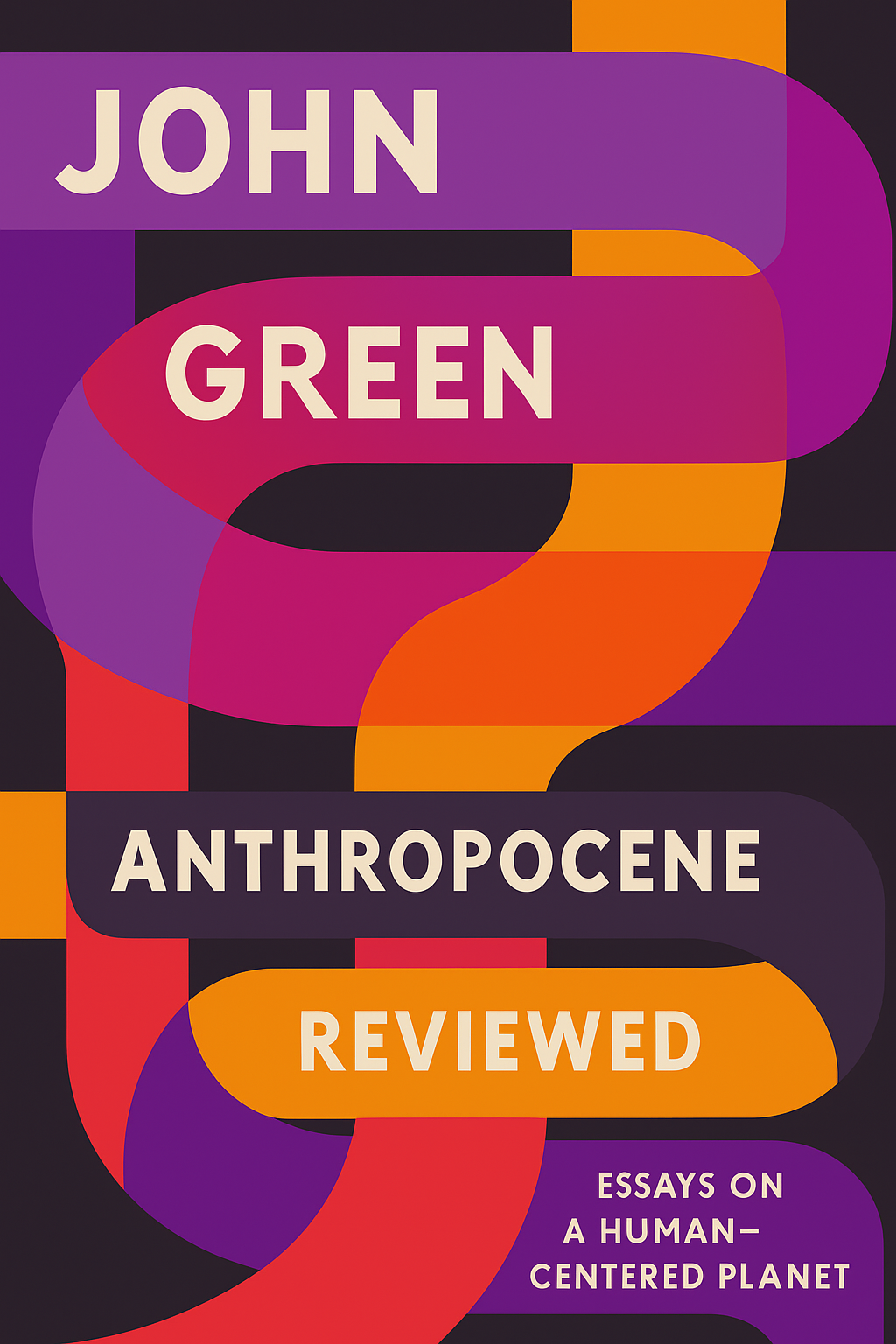
By John Green
