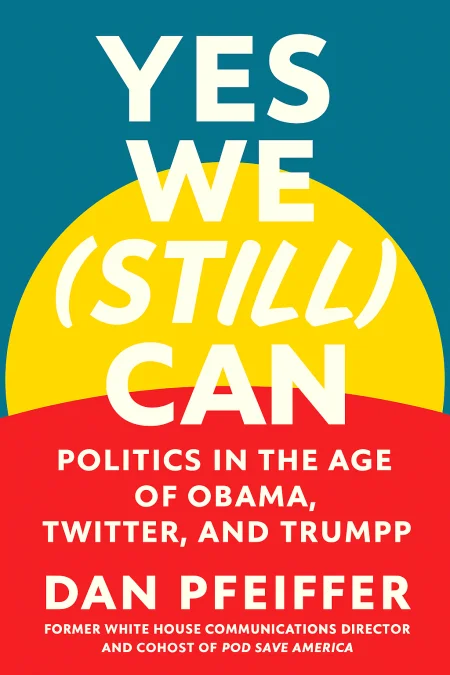
Yes We (Still) Can
Politics in the Age of Obama, Twitter, and Trump
Book Edition Details
Summary
In the wake of a seismic political shift, Dan Pfeiffer—veteran of the Obama administration and voice of Pod Save America—unravels the surreal tale of how a thoughtful leader gave way to a reality TV mogul in the Oval Office. As Pfeiffer navigates the kaleidoscope of chaos that marked the transition from Obama to Trump, he offers a candid, behind-the-scenes look at the strategies and missteps that shaped this unprecedented era. Infused with wit and insider anecdotes, "Yes We (Still) Can" is a rallying cry for those disenchanted by the current political landscape, yearning for the sanity of yesteryears, and ready to forge a path forward. This is essential reading for anyone who remains defiant in the face of bewildering change, determined to reclaim a hopeful vision for America's future.
Introduction
The morning after Donald Trump's electoral victory, seasoned political operatives who had spent eight years in Barack Obama's White House found themselves grappling with an impossible question: How did the country that elected its first African American president twice end up choosing a reality television star who had spent years promoting racist conspiracy theories? This stunning reversal represents more than a simple change of administration—it reveals the profound forces that have been reshaping American politics for over a decade. The transformation from Obama to Trump didn't happen overnight. It was the culmination of a perfect storm involving technological disruption, media fragmentation, and the radicalization of one of America's major political parties. Through the lens of someone who witnessed these changes from inside the White House, we can trace the arc from hope and change to division and chaos, understanding how the very innovations that helped elect Obama also created the conditions for Trump's rise. This analysis offers crucial insights for anyone seeking to understand modern American politics, from campaign strategists and journalists to engaged citizens wondering how democracy itself became so fragile. The lessons learned during this turbulent period don't just explain our current predicament—they point toward potential paths for renewal and reform in the years ahead.
Hope Meets Reality: The Obama Presidency and Media Revolution (2008-2016)
Barack Obama's 2008 campaign represented a seismic shift in how American politics operated. Built like a Silicon Valley startup, the campaign combined grassroots organizing with cutting-edge technology, creating what Obama himself would later call "the greatest start-up in history." Unlike traditional Democratic campaigns that relied on consultants and focus groups, Obama's team embraced risk-taking, authenticity, and direct communication with voters through emerging digital platforms. The campaign's success stemmed from mastering five fundamental building blocks: attitude, scaling, culture, strategy, and branding. Obama's "have no fear" mindset infected the entire operation, leading them to take calculated risks that establishment politicians would never consider. When faced with the choice between safe options and high-risk, high-reward alternatives, they consistently chose the latter. This approach shattered conventional wisdom about electability and demonstrated how the internet was democratizing politics by erasing traditional structural advantages. Once in the White House, however, Obama faced an entirely different challenge. The presidential bully pulpit that had served leaders like Reagan was rapidly losing its power in an increasingly fragmented media landscape. Americans now had countless entertainment options, making presidential addresses optional viewing for all but the most committed. The rise of social media and 24-hour news cycles meant that political communication had to adapt or risk irrelevance. Obama's team pioneered new forms of presidential communication, from appearing on late-night comedy shows to launching official social media accounts. They recognized that reaching the American people required meeting them where they were, not where traditional politics expected them to be. Yet these innovations came with risks, as the same technologies that enabled direct communication also amplified political attacks and conspiracy theories. The tools that helped build Obama's presidency would soon become weapons in the hands of his opponents.
The Republican Response: From Opposition to Extremism
The Republican Party's reaction to Obama's election revealed the deep currents of racial anxiety that had been simmering beneath the surface of American politics. From the moment Obama took office, Republican leaders made a strategic decision that would ultimately consume their party: total opposition at any cost. This wasn't mere political calculation—it was an existential response to a changing America that many in the Republican base found threatening. The emergence of the Tea Party movement and the rise of Fox News as a propaganda outlet rather than a news organization created a feedback loop of radicalization. Republican voters, fed a steady diet of conspiracy theories and racial grievance, began demanding ideological purity from their representatives. Moderate Republicans who attempted to work with Obama found themselves facing primary challenges from increasingly extreme candidates who viewed compromise as betrayal. This dynamic played out in countless ways throughout Obama's presidency, from the unprecedented decision by every House Republican to vote against economic stimulus during a recession to the multiple threats to default on America's debt. Republican leaders like John Boehner and Mitch McConnell found themselves trapped between their understanding of governing and the demands of a base that had been taught to view Obama as an illegitimate usurper rather than a democratically elected president. The transformation was captured perfectly in the birther conspiracy promoted by Donald Trump, which gained traction despite being thoroughly debunked. Republican leaders refused to definitively reject these theories, preferring to maintain plausible deniability while benefiting from the racial animus they generated. This cowardly approach would ultimately backfire when the forces they had unleashed turned against the party establishment itself, paving the way for Trump's hostile takeover of the Republican Party.
The Perfect Storm: How 2016 Changed Everything
The 2016 election represented the convergence of multiple disruptions that had been building throughout the Obama era. The traditional media landscape had collapsed under economic pressure, creating an information ecosystem where conspiracy theories could spread as quickly as legitimate news. Social media platforms like Facebook and Twitter, designed to maximize engagement rather than truth, became vehicles for political manipulation and foreign interference. Hillary Clinton entered the race with significant advantages but also unprecedented challenges. Despite her qualifications and policy expertise, she struggled to craft a coherent narrative in an environment that rewarded authenticity over experience. The fragmented media landscape meant that her detailed policy proposals received less attention than Trump's provocative tweets and rallies. Meanwhile, Trump's mastery of the new media environment allowed him to dominate the conversation and define the terms of political debate. The election exposed fundamental weaknesses in how Democrats understood their own coalition and the broader electorate. Obama's unique personal appeal had masked the erosion of Democratic support among white working-class voters, particularly in the Rust Belt states that ultimately decided the election. The assumption that demographic change alone would secure Democratic victories proved catastrophically wrong when turnout patterns shifted and traditional Republican voters rallied around Trump's message of cultural restoration. Perhaps most importantly, the election revealed how completely the rules of political engagement had changed. Traditional concepts of electability, presidential temperament, and policy expertise proved irrelevant in an environment where viral moments mattered more than governing experience. The 2016 campaign wasn't decided by policy white papers or endorsements from respected leaders—it was won and lost on Facebook feeds and Twitter timelines, in an ecosystem that few traditional political professionals fully understood.
Lessons for the Future: Building Progressive Politics Post-Trump
The path forward for progressive politics requires learning from both Obama's successes and the Democratic failures of 2016. The Obama model demonstrates that authenticity, risk-taking, and innovative communication can overcome seemingly insurmountable odds. However, it also shows that political success requires constant adaptation to changing technological and social conditions. Democrats must develop new approaches to media and messaging that acknowledge the reality of a post-truth political environment. This means building progressive media infrastructure that can compete with the right-wing propaganda machine while maintaining commitment to factual accuracy. It also requires recognizing that the battle for public opinion now takes place primarily on social media platforms, where engagement matters more than truthfulness. The challenge extends beyond communication strategy to fundamental questions about political coalition-building. Progressive politics must find ways to unite diverse constituencies around shared economic interests while maintaining strong stands on issues of social justice and equality. This requires messaging that speaks to working-class concerns across racial lines without abandoning the Democratic Party's commitment to civil rights and inclusion. Most critically, the future of progressive politics depends on inspiring a new generation of activists and leaders who understand the changed nature of American democracy. The millennials and Gen Z voters who will determine the country's future have grown up in the digital age and possess both the technical skills and skepticism necessary to combat political manipulation. Their engagement represents the best hope for building a more just and equitable society from the ashes of the Trump era.
Summary
The journey from Obama's "Yes We Can" to Trump's "Make America Great Again" illustrates the fundamental tension between America's aspirations and its anxieties. The same technological innovations that enabled the first African American president to inspire millions also created the conditions for a demagogue to exploit racial and economic fears. This transformation reveals how quickly democratic norms can erode when institutions fail to adapt to changing circumstances and when political leaders prioritize short-term advantage over long-term stability. The historical lessons are clear: sustainable political change requires more than electoral victory—it demands building resilient institutions, fostering media literacy, and maintaining commitment to democratic values even when they seem politically inconvenient. The Obama years demonstrate both the possibilities and limitations of inspirational leadership in an increasingly polarized society. Success came from combining traditional organizing with innovative communication, but it also required constant vigilance against the forces of division and misinformation. Moving forward, Americans must recognize that democracy is not self-sustaining but requires active participation and protection. This means supporting independent journalism, engaging in local politics, and building cross-party coalitions around shared democratic values. The stakes could not be higher: the next decade will determine whether the American experiment in self-governance can adapt to the challenges of the digital age or will succumb to the authoritarian impulses that Trump's rise has revealed.
Related Books
Download PDF & EPUB
To save this Black List summary for later, download the free PDF and EPUB. You can print it out, or read offline at your convenience.
By Dan Pfeiffer
