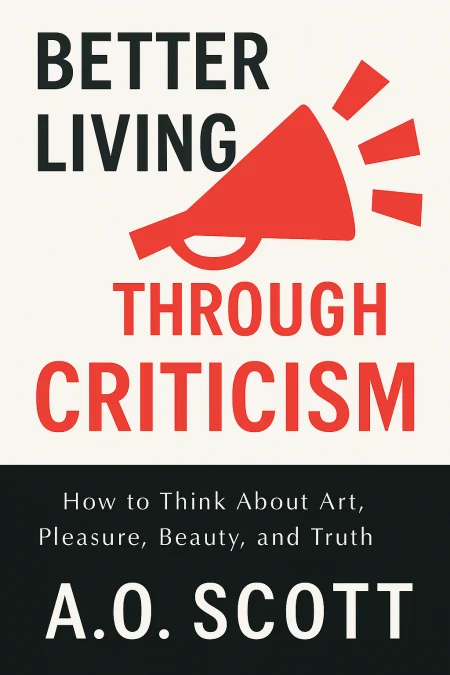
Better Living Through Criticism
How to Think About Art, Pleasure, Beauty and Truth
Book Edition Details
Summary
Criticism isn't just a profession; it's an art form that dances through every facet of our lives. A.O. Scott's "Better Living Through Criticism" beckons readers to see critics not as nitpickers but as vital participants in the creative dialogue. With sharp wit and reflective insight, Scott uncovers the universality of critique, from the poetic realms of Rilke to the visceral riffs of the Rolling Stones. He challenges us to understand that the critic's eye, whether casting a skeptical glance at blockbusters like "The Avengers" or celebrating the genius of "Ratatouille," is crucial to the vibrancy of culture itself. As he draws from Aristotle to Sontag, Scott paints a rich tapestry that insists on the necessity of thoughtful discourse, reminding us that the pulse of creativity beats strongest when questioned and explored.
Introduction
Criticism stands as one of humanity's most essential yet misunderstood activities. Far from being mere fault-finding or aesthetic snobbery, the critical impulse represents our deepest engagement with beauty, meaning, and value in an increasingly complex cultural landscape. Every day, we make countless judgments about films, books, music, and art, yet we rarely examine the nature of these evaluative acts themselves or consider their profound implications for how we understand ourselves and our world. This exploration challenges the widespread assumption that criticism is either an elitist enterprise divorced from popular experience or a subjective exercise where all opinions carry equal weight. Instead, it reveals criticism as a fundamental human capacity that bridges the personal and universal, the emotional and intellectual, the individual encounter with art and our collective cultural conversations. Through rigorous analysis of critical practice across centuries and mediums, the discussion illuminates how judgment operates as both an aesthetic and ethical activity, one that shapes not only our relationship to art but our very capacity for meaningful experience. The investigation proceeds through careful examination of criticism's paradoxes, revealing how the apparent contradictions in critical practice actually point toward deeper truths about human consciousness and cultural value.
The Critical Imperative: Why Judgment Matters in Art and Life
Criticism emerges not as an optional cultural luxury but as an inescapable dimension of human experience. The moment we encounter any work of art, we find ourselves thrust into a complex web of responses, comparisons, and evaluations that reveal the critical faculty as fundamental to consciousness itself. To experience art is already to judge it, whether consciously or not, and these judgments inevitably shape both our understanding of the work and our sense of ourselves as perceiving beings. The critical imperative operates on multiple levels simultaneously. At its most basic, it represents our attempt to make sense of aesthetic experience, to translate the immediate impact of encountering beauty, meaning, or artistic achievement into communicable thoughts and feelings. Yet criticism also functions as a form of cultural stewardship, helping to preserve and transmit the artistic achievements that define human civilization while remaining alert to new forms of excellence that challenge established canons. This dual responsibility creates the central tension in all critical activity: the need to honor both tradition and innovation, to maintain standards while remaining open to surprise. Critics serve as intermediaries between the isolated aesthetic encounter and the broader cultural conversation, translating private experience into public discourse. They help audiences navigate the overwhelming abundance of contemporary cultural production while cultivating the deeper appreciative capacities that allow for genuine aesthetic experience. The imperative to judge extends beyond professional criticism to encompass the evaluative dimension of all cultural participation. Whether we acknowledge it or not, our choices about what to read, watch, listen to, or attend reflect critical judgments about value, meaning, and quality. Developing these faculties more consciously and rigorously enhances not only our appreciation of art but our capacity for thoughtful engagement with experience itself.
The Critic's Paradox: Between Authority and Democracy in Cultural Discourse
Professional criticism exists in permanent tension between claims to expertise and democratic ideals of cultural participation. Critics position themselves as possessing special knowledge or refined sensibility that qualifies them to guide public taste, yet this authority rests on fundamentally subjective responses that any engaged audience member might equally claim. This paradox intensifies in an era when traditional cultural gatekeepers face challenges from crowd-sourced evaluation and algorithmic recommendation systems. The authority of the critic derives partly from extensive exposure to the art form in question, allowing for the kind of comparative analysis and historical perspective that casual consumers typically lack. Professional critics develop vocabularies for articulating aesthetic experience and frameworks for understanding how individual works relate to broader traditions and contexts. Their authority also stems from the discipline of regular public accountability, the requirement to translate private aesthetic experience into reasoned argument that can withstand scrutiny and debate. Yet this expertise always remains contestable, grounded ultimately in the critic's individual sensibility rather than objective knowledge. The most authoritative critical voices often acknowledge this limitation explicitly, presenting their judgments as informed but personal responses rather than definitive verdicts. They invite readers into ongoing conversations about value and meaning rather than delivering pronouncements from on high. The democratic challenge to critical authority reflects broader cultural shifts toward participatory media and user-generated content. When anyone can publish reviews, maintain cultural blogs, or contribute to rating systems, the special status of professional critics becomes harder to justify. This democratization brings both opportunities and dangers: greater diversity of voices and perspectives, but also the potential dilution of critical standards and the triumph of popularity over quality. The most vital criticism today acknowledges both its own limitations and the value of multiple perspectives while maintaining commitment to rigorous aesthetic judgment.
The Art of Being Wrong: How Critical Failure Enables Cultural Progress
Critical judgment inevitably involves the risk of error, and the history of criticism is littered with spectacular misjudgments that subsequent generations mock or lament. Yet these failures serve essential functions in cultural development, revealing the provisional nature of all aesthetic evaluation while creating space for the gradual recognition of previously overlooked excellence. The capacity to be wrong, far from undermining critical authority, actually enables the kind of adventurous judgment that drives cultural progress. Every critical assessment reflects the historical moment of its creation, shaped by prevailing assumptions about artistic value, cultural hierarchies, and aesthetic possibility. Critics working within these constraints necessarily miss aspects of contemporary work that later generations will find obvious or significant. The frequent dismissal of artistic innovations reflects not critical incompetence but the genuine difficulty of recognizing excellence in unfamiliar forms. What appears derivative or insignificant in its historical context may reveal revolutionary potential only in retrospect. These temporal limitations create opportunities for critical rehabilitation and discovery. Works dismissed by their contemporary critics often find champions among later audiences who can appreciate qualities invisible to earlier viewers. This process of reassessment keeps cultural canons alive and responsive to changing sensibilities while demonstrating the provisional nature of all critical judgment. Critics who acknowledge the possibility of error maintain the intellectual humility necessary for genuine aesthetic openness. The willingness to risk being wrong also enables critics to champion difficult or challenging works that popular audiences might initially reject. Some of the most valuable critical interventions involve defending artistic achievements that seem to violate established expectations or that require the development of new appreciative capacities. Critics who consistently play it safe, avoiding the risk of controversial judgments, abdicate their responsibility to cultural development and reduce criticism to mere consumer guidance.
The Future of Critical Thinking in the Digital Age
Digital technology has fundamentally transformed the conditions under which criticism operates, creating new opportunities for critical engagement while threatening traditional forms of cultural authority and professional sustainability. The democratization of publishing enables more diverse voices to enter critical conversations, while algorithmic systems promise to personalize cultural recommendations with unprecedented precision. Yet these developments also raise questions about the future of sustained critical attention in an environment characterized by information overload and shortened attention spans. The proliferation of digital platforms has exponentially expanded the volume of critical discourse while potentially fragmenting audiences into increasingly specialized niches. Traditional gatekeepers lose influence as readers can access unlimited alternative viewpoints, but this abundance creates new challenges for distinguishing valuable criticism from mere opinion or promotional material. The speed of digital communication often conflicts with the reflective processes that produce thoughtful aesthetic judgment, encouraging quick reactions over sustained analysis. Yet digital tools also enable new forms of critical practice that would have been impossible in purely print-based culture. Critics can incorporate multimedia elements, link directly to the works they discuss, and engage in real-time conversations with readers and other critics. The global reach of digital platforms allows for critical perspectives that transcend national and linguistic boundaries while preserving records of critical discourse that might otherwise disappear. The survival of criticism in digital environments depends partly on recovering and maintaining commitment to the distinctive values that separate critical thinking from other forms of cultural commentary. These include the willingness to make evaluative judgments, the development of aesthetic vocabularies adequate to contemporary artistic practice, and the cultivation of historical awareness that allows present developments to be understood in broader contexts. Critics who can articulate why their perspectives matter, beyond merely adding to the general conversation, will find audiences hungry for guidance in navigating cultural abundance.
Summary
The critical faculty emerges from this investigation not as specialized professional activity but as fundamental dimension of cultural consciousness itself, one that bridges individual aesthetic experience and collective meaning-making through the disciplined exercise of evaluative judgment. The apparent contradictions that characterize critical practice reveal deeper truths about how human beings create and maintain cultural value in the face of temporal change and subjective limitation. Rather than seeking to resolve these tensions, the most vital criticism embraces them as generative forces that keep cultural traditions alive while remaining open to revolutionary transformation. This understanding proves especially crucial in our current moment of digital disruption and cultural abundance, when the need for thoughtful discrimination has never been greater even as traditional forms of critical authority face unprecedented challenges.
Related Books
Download PDF & EPUB
To save this Black List summary for later, download the free PDF and EPUB. You can print it out, or read offline at your convenience.
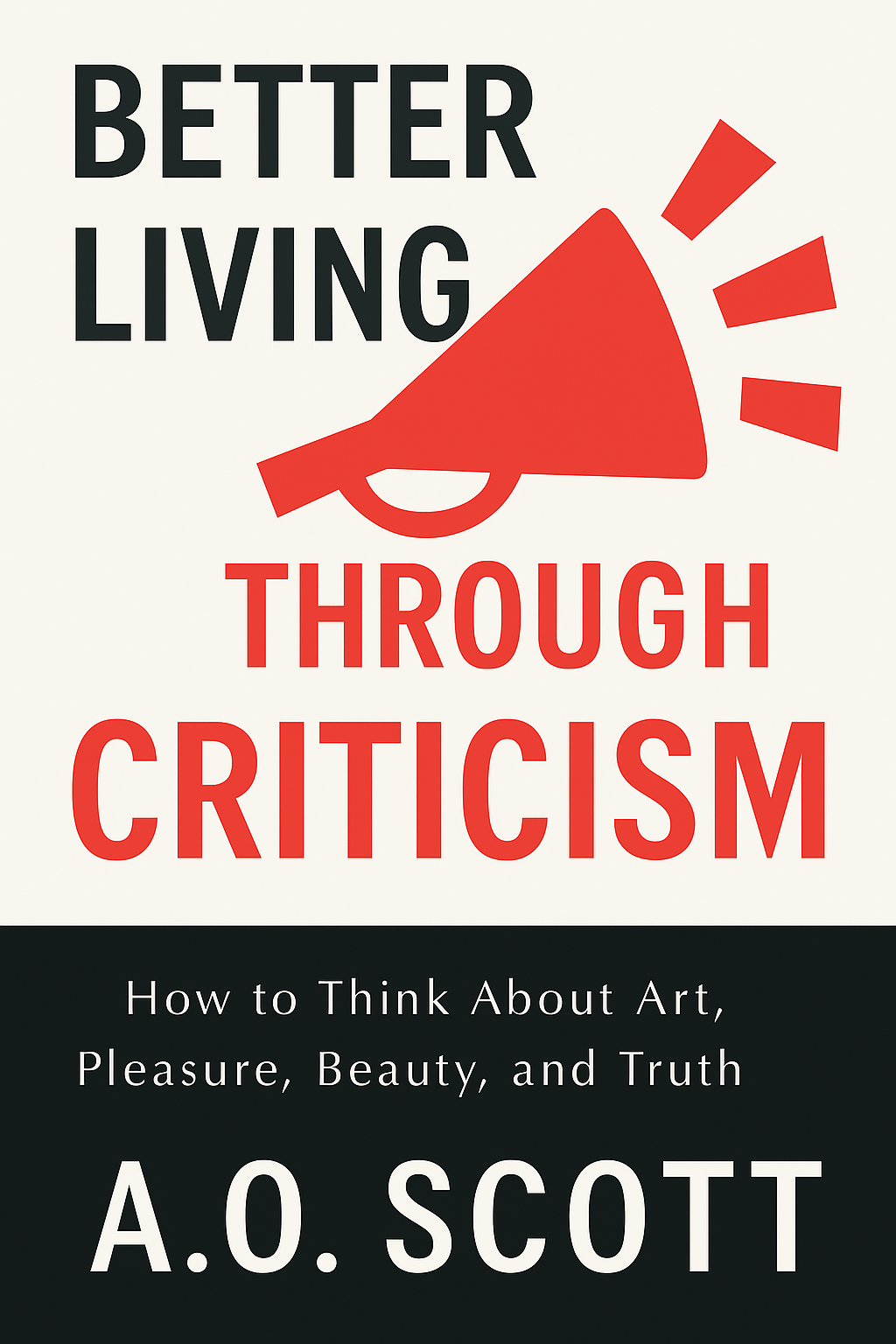
By A.O. Scott
