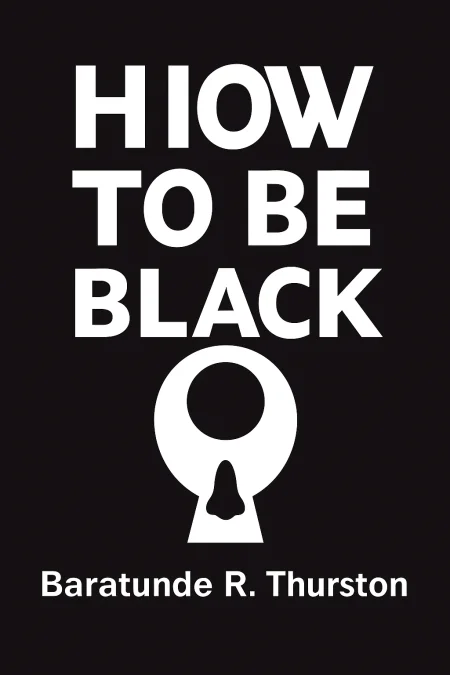
How To Be Black
Over thirty years of experience in being black
Book Edition Details
Summary
In a world teeming with stereotypes and unspoken racial protocols, Baratunde Thurston emerges as a comedic oracle, offering both laughter and enlightenment with "How to Be Black." This satirical masterpiece deftly navigates the labyrinthine social expectations of race, daring to dismantle the monochrome narratives that media often paints over black culture's vibrant tapestry. Thurston, with his razor-sharp wit, invites readers to re-examine their perceptions through essays that are equal parts guide and revelation—like "How to Be the Black Friend" and "How to Speak for All Black People." Whether you're here to challenge your assumptions or simply relish in incisive humor, Thurston's voice is an exhilarating beacon for those ready to explore the complexities of identity and acceptance in a world still learning to see color.
Introduction
Picture a twelve-year-old boy standing in front of a mirror, practicing how to introduce himself to new classmates at an elite private school where he'll be one of the few Black faces in a sea of privilege. His mother has just moved the family from their inner-city neighborhood to escape the crack epidemic, and now he's about to navigate a world where his very existence challenges assumptions about who belongs where. This moment of transition—between worlds, between expectations, between versions of himself—captures the essence of what it means to constantly negotiate identity in America. The question of authenticity haunts many of us, regardless of race. We find ourselves code-switching between different environments, wondering if we're being true to ourselves or simply performing the roles others expect. For Black Americans, this negotiation carries additional weight, as every choice—from speech patterns to career paths, from musical preferences to political views—becomes a statement about racial loyalty and authentic identity. This exploration reveals how identity formation is rarely a solo journey. It's shaped by family expectations, peer pressure, institutional demands, and broader cultural narratives about who we should be. Through personal stories and candid conversations, we discover that the struggle to define ourselves authentically while meeting others' expectations is both deeply personal and universally human. The path forward isn't about choosing sides, but about creating space for the full complexity of human experience.
Finding My Voice: From Names to Neighborhoods
A name can be a burden, a gift, or a bridge between worlds. When teachers stumbled over syllables, transforming "Baratunde" into everything from "Barry" to "Bartender," each mispronunciation became a small lesson in cultural translation. The boy learned early that his Nigerian name—chosen not from family lineage but from parents seeking connection to African roots—would require constant explanation and patient correction. These daily interactions with his name revealed something profound about American identity. While his white classmates breezed through roll call with their familiar Johns and Jennifers, he waited for the inevitable pause, the furrowed brow, the apologetic attempt. Yet each correction became an opportunity for education, a chance to share something about heritage and intentionality behind identity markers we often take for granted. The power dynamics embedded in these seemingly simple exchanges extended far beyond pronunciation. When Nigerian immigrants questioned his right to claim an African name without direct ancestral ties, the criticism cut deeply. Here was a young person seeking connection to roots severed by slavery, only to be told by some that his attempt at cultural reclamation was illegitimate. The irony was sharp: those who had maintained unbroken ties to the continent couldn't understand the particular hunger of those whose connections had been violently disrupted. These naming controversies illuminated a larger truth about identity formation. We don't simply inherit our sense of self; we actively construct it from available materials, family stories, cultural symbols, and personal choices. Sometimes the most authentic thing we can do is claim what calls to us, even if others question our right to do so.
Navigating White Spaces: School, Work, and Friendship
The transition from a predominantly Black elementary school to an elite private institution created a masterclass in cultural navigation. Suddenly surrounded by wealth and whiteness, the adjustment required learning new languages—not just proper diction to replace neighborhood vernacular, but the subtle codes of class and privilege that governed social interaction in these rarefied spaces. Friendship across racial lines brought unexpected responsibilities and opportunities. White classmates would reach out to touch his hair without permission, fascinated by its texture and authenticity. These moments required delicate calibration—how to educate without alienating, how to set boundaries while maintaining relationships. Each interaction became a diplomatic mission where the stakes felt simultaneously personal and representative of his entire community. The role of "cultural translator" emerged organically. During discussions of race in literature or history class, all eyes would turn his way, expecting insider knowledge and official commentary. This unofficial appointment as spokesperson created pressure to represent not just his own views but somehow speak for all Black Americans. The weight of this expectation could be crushing, yet it also offered influence and the chance to shape perspectives. Perhaps most challenging was the realization that friendship itself had become a form of activism. By simply being himself—studying hard, enjoying classical music, going camping—he was quietly expanding his white friends' understanding of Black identity. Their comfort with him created ripple effects in their families and social circles, challenging stereotypes through relationship rather than rhetoric. These experiences reveal how integration happens not through grand gestures but through countless small moments of genuine human connection. The work of breaking down barriers often falls disproportionately on those crossing into new spaces, yet the rewards include expanded opportunities and the satisfaction of opening doors for others to follow.
Beyond Stereotypes: Redefining Modern Blackness
The pressure to perform "authentic" Blackness according to narrow media representations created constant internal tension. Music preferences, academic achievement, career choices, and even recreational activities became loaded with meaning about racial loyalty and cultural legitimacy. The message seemed clear: stray too far from prescribed norms and risk losing community membership entirely. College brought encounters with other Black students who had navigated similar pressures while developing their own unique approaches to identity. Some embraced Afrocentric philosophy and imagery, surrounding themselves with symbols of African heritage and Black Power. Others seemed to minimize their racial identity entirely, focusing on individual achievement while avoiding explicitly Black spaces or causes. Most fell somewhere in between, creating personal combinations of cultural pride and mainstream participation. The discovery that there was no single "correct" way to be Black came as both relief and revelation. Conversations with peers revealed the enormous diversity within Black American experience—different regions, economic backgrounds, family structures, and personal interests created vastly different lived realities despite shared racial categorization. The rural South produced different cultural expressions than urban Northeast or West Coast communities. International travel provided additional perspective on the constructed nature of racial categories. In different countries and contexts, the same physical features and cultural background could signify entirely different social positions. These experiences highlighted how much of racial identity is contextual rather than essential, shaped by local history and power structures rather than biological reality. The freedom that comes from recognizing this fluidity is transformative. Instead of forcing themselves into predetermined boxes, individuals can draw from the full range of human experience while maintaining connections to community and heritage. Authenticity becomes about honest self-expression rather than conformity to external expectations.
The Future of Being Black in America
The election of Barack Obama as president crystallized both the possibilities and limitations of racial progress in America. For many, his success represented the ultimate validation that barriers could be overcome through individual excellence and determination. Yet the intense scrutiny of his every word and action, the persistent questions about his citizenship and loyalty, revealed how much work remained in achieving true equality and acceptance. The concept of "post-racial America" emerged as wishful thinking rather than accomplished reality. Despite claims that Obama's election had somehow resolved centuries of racial tension, daily experience suggested otherwise. Microaggressions persisted in workplaces and social settings. Wealth gaps remained enormous. Criminal justice disparities continued unchanged. The dream of a colorblind society seemed premature at best. More promising was the emergence of new forms of cultural expression and political engagement. Social media platforms enabled Black voices to bypass traditional gatekeepers and share their own stories, creating what one observer called a "Second Harlem Renaissance" powered by digital technology. Young people could build audiences and influence conversations without waiting for permission from established institutions. This technological democratization opened space for multiple definitions of Blackness to coexist and flourish. Artists, writers, comedians, and activists could present alternative narratives that challenged both mainstream stereotypes and internal community policing. The rigid boundaries that once seemed so important began to feel more fluid and negotiable. The future lies not in abandoning racial identity but in expanding its possibilities. Rather than choosing between authenticity and success, between community loyalty and individual expression, emerging generations are creating new syntheses that honor the past while embracing contemporary realities. This evolution requires courage from individuals willing to live their truth despite criticism from all sides.
Summary
The journey of identity formation reveals itself as both deeply personal and inevitably political, shaped by family influences, institutional pressures, and broader cultural narratives about belonging and authenticity. Through stories of name pronunciation struggles, friendship negotiations, and professional code-switching, we see how individuals must constantly navigate between different worlds while trying to maintain some core sense of self. The most profound insight may be that authenticity isn't about choosing sides or conforming to predetermined categories, but about creating space for the full complexity of human experience. Whether dealing with racial identity, class mobility, cultural assimilation, or any other form of boundary-crossing, the challenge remains the same: how to honor our roots while growing toward our full potential. The future belongs to those brave enough to define themselves on their own terms while remaining connected to community and purpose, opening doors not just for themselves but for others who will follow their path toward expanded possibilities.
Related Books
Download PDF & EPUB
To save this Black List summary for later, download the free PDF and EPUB. You can print it out, or read offline at your convenience.
By Baratunde R. Thurston
