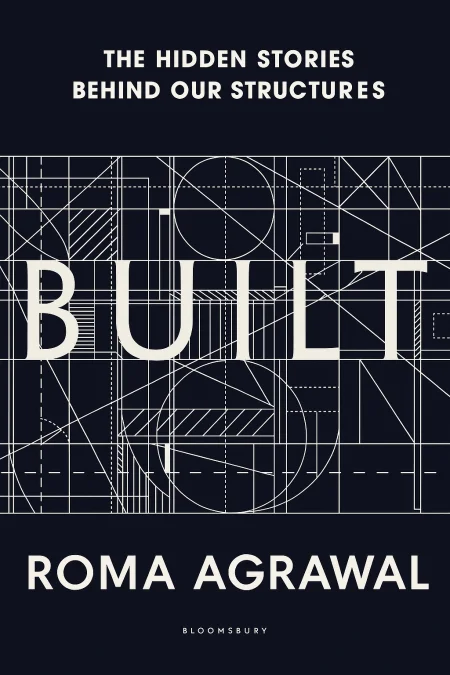
Built
The Hidden Stories Behind Our Structures
Book Edition Details
Summary
What mysteries lie beneath the skyscrapers that pierce the sky and the bridges that gracefully arch over waters? In "Built," Roma Agrawal, the brilliant mind behind London’s Shard, invites you into the hidden world of structural engineering, where the silent genius of design meets the thrilling stories of human ingenuity. Through eight riveting chapters, Agrawal not only reveals the feats that prevent buildings from crumbling and bridges from toppling but also honors the legacy of ancient innovators whose techniques still underpin modern marvels. Enriched with captivating illustrations and personal anecdotes, this book celebrates the often-overlooked heroes of our urban landscapes—engineers who shape the world, yet remain largely unseen. With "Built," you’ll find yourself marveling at the wonders of construction with newfound appreciation and awe.
Introduction
Standing at the top of The Shard in London, gazing out at the sprawling metropolis below, I felt a profound sense of wonder. Not just at the breathtaking view, but at the countless invisible forces holding everything together. Every bridge spanning the Thames, every tunnel carrying commuters underground, every building rising toward the sky - all of it represents thousands of years of human ingenuity, trial and error, and the relentless pursuit of solutions to life's most fundamental challenges. As a structural engineer, I've spent my career learning to see the world through different eyes - eyes that recognize the hidden stories embedded in our built environment. Every structure around us tells a tale of human ambition, creativity, and the eternal struggle to create safety and comfort from the raw materials of our planet. From the ancient Romans' revolutionary concrete to the steel skyscrapers that define our modern cities, engineering has quietly shaped every aspect of human civilization. This journey through the engineering marvels that surround us reveals not just how things are built, but why they matter to our daily lives. It's about the visionary minds who dared to dream the impossible, the materials that make our modern world possible, and the ingenious solutions that keep us safe, connected, and thriving. Through these stories, we'll discover that engineering isn't just about technical calculations - it's fundamentally about improving human life, one structure at a time.
Forces and Foundations: When Structures Stand and Fall
The morning of March 12, 1993, changed my perspective on engineering forever. While I sat in my Mumbai classroom, wearing my neat school uniform with green braces decorating my teeth, a bomb exploded in the basement of the Bombay Stock Exchange where my father worked. As I watched the horrific scenes unfold on television - people covered in blood and dust fleeing the 29-story concrete tower - one terrifying question consumed my young mind: was my father alive? The hours that followed were the longest of my life. Without mobile phones, we had no way to reach him. When he finally called from my grandmother's house, his voice shaking as he described the dismembered bodies and chaos he'd witnessed, I felt overwhelming relief mixed with confusion. How had the building survived such a devastating explosion at its base? Years later, studying structural engineering, I discovered the answer lay in the fundamental principles that govern how forces flow through structures. The Bombay Stock Exchange survived because engineers had designed it to prevent disproportionate collapse - ensuring that even if one part of the structure failed, the loads would find alternative paths to the ground. This principle emerged from earlier disasters like the 1968 collapse at Ronan Point in London, where a gas explosion on the 18th floor caused an entire corner of the building to pancake downward. The prefabricated concrete panels simply sat on top of each other, held together only by friction and thin mortar joints. When the explosion pushed out the wall panels, gravity took over, and floor after floor came crashing down. These catastrophes taught engineers that structures must be tied together like a three-dimensional puzzle, with steel rods and robust connections ensuring that forces always have somewhere to go. Understanding how compression and tension flow through buildings - like water finding its way through a network of pipes - became the key to creating structures that could withstand the unexpected. My father's survival that day was a testament to engineers who had learned from past failures and designed buildings that refuse to surrender to disaster.
Materials and Making: From Ancient Clay to Modern Steel
In ancient Japan, a peculiar economy thrived on something most civilizations preferred to forget - human waste. During the Tokugawa shogunate, "night soil" became so valuable that laws determined whether landlords or tenants owned the rights to the waste produced in their buildings. Ships carried this precious cargo across the islands, trading it for silver and vegetables, while farmers fought fierce legal battles for the privilege of purchasing it as fertilizer. This seemingly absurd obsession actually reflected sophisticated engineering thinking. Japan's small landmass and booming population demanded intensive agriculture, which rapidly depleted soil nutrients. With few animals available for manure, human waste became an ingenious solution to a fundamental resource challenge. The careful collection and distribution system not only sustained the economy but inadvertently created one of the world's most hygienic urban environments, as waste was systematically removed from populated areas rather than allowed to contaminate water sources. The story of night soil reveals a crucial engineering principle: the most successful solutions often emerge from our greatest constraints. When Henry Bessemer accidentally discovered how to mass-produce steel by blowing air through molten iron, he transformed a rare, expensive material into the backbone of modern construction. His process, born from a failed experiment with improving cast iron cannons, made steel six times cheaper and launched the age of skyscrapers, railways, and suspension bridges. Whether transforming human waste into agricultural gold or turning iron ore into towering structures, engineers have always understood that materials are not just building blocks - they are opportunities waiting to be unlocked. The greatest innovations often come not from working with ideal materials, but from finding extraordinary uses for ordinary substances, turning limitations into breakthroughs that reshape civilization itself.
Water and Waste: The Hidden Arteries of Civilization
Deep beneath the scorching Iranian desert, an extraordinary network of tunnels stretches for thousands of kilometers, carrying precious water from mountain aquifers to thirsty communities. The qanat system, engineered over 2,700 years ago, represents one of humanity's most ingenious solutions to survival in harsh environments. Master builders called muqanni would spend months digging vertical shafts, then connect them with gently sloping tunnels, creating underground rivers that could flow for dozens of kilometers without losing a drop to evaporation. The construction of these water highways required remarkable courage and skill. Working by candlelight deep underground, the muqanni faced constant threats of cave-ins, toxic gases, and flooding. They used the flame of their oil lamps as both beacon and warning system - if it burned differently or went out, they knew dangerous gases were present. Each vertical shaft had to be precisely positioned and angled to maintain the delicate slope that would keep water flowing without eroding the tunnel walls. Some of these ancient engineering marvels still function today, providing water for tens of thousands of people across Iran. Meanwhile, in Victorian London, engineer Joseph Bazalgette faced a different but equally urgent water crisis. The "Great Stink" of 1858 had made the Thames so putrid that Parliament considered abandoning the city. Bazalgette's solution was breathtakingly ambitious: intercept London's polluted tributaries with a vast network of brick-lined sewers, creating a hidden underground highway system that would carry waste safely away from the population. His oversized sewers, built to accommodate twice the city's current population, still serve London today. Both the Persian qanat builders and Victorian sewer engineers understood that water infrastructure is civilization's circulatory system. Without reliable methods to bring clean water in and carry waste away, cities cannot exist. These hidden arteries beneath our feet represent thousands of years of human ingenuity dedicated to solving our most fundamental survival challenges, creating the invisible foundation upon which all urban life depends.
Reaching Skyward: The Human Drive to Build Higher
Standing on the 87th floor of The Shard during construction, with nothing but metal barriers protecting me from the London sprawl far below, I experienced a moment of pure terror mixed with profound awe. The tapering structure felt alive beneath my feet, responding to wind and bearing the weight of countless tons of steel and concrete. As I closed my eyes and took deep breaths to calm my vertigo, I realized I was experiencing the culmination of humanity's 4,000-year journey toward the sky. For millennia, the Great Pyramid of Giza held the record as the world's tallest structure at 146 meters. Then, in just 150 years, we leaped from 150-meter medieval cathedrals to towers exceeding 1,000 meters. This dramatic acceleration began with a series of breakthrough innovations: Archimedes' compound pulley system that allowed Roman workers to lift loads 60 times heavier than before, Otis's safety elevator that made tall buildings practical rather than punishing, and Fazlur Khan's revolutionary insight to move a building's stability system from its core to its exterior skin. Khan's "tubular" design concept turned traditional engineering inside out. Instead of relying on a central spine to resist wind forces, his buildings used their outer walls as structural shells, like hollow tubes standing upright. This exoskeleton approach, first demonstrated in Chicago's John Hancock Center with its iconic X-braced facade, made it possible to build both taller and more efficiently. The concept spread globally, enabling the construction of landmarks from Hong Kong's Bank of China Tower to Malaysia's Petronas Towers. Yet as I stood atop London's tallest building, I wondered whether our relentless pursuit of height serves human needs or merely satisfies our ambitions. The engineering challenges of going higher - from elevator systems that can't efficiently travel beyond 500 meters to the psychological effects of living disconnected from the ground - suggest that our technical capabilities may be outpacing our humanity. Perhaps the future of building lies not just in reaching ever higher, but in creating structures that better serve the human experience at every level.
Summary
The structures that surround us are far more than mere arrangements of steel, concrete, and stone - they are the physical manifestation of humanity's greatest dreams, deepest needs, and most ingenious solutions. From ancient Persian water tunnels that sustained desert civilizations to modern skyscrapers that pierce the clouds, every engineered marvel tells a story of human beings refusing to accept the limitations imposed by nature, geography, or materials. These hidden stories reveal that the most transformative engineering breakthroughs often emerge from constraint rather than abundance, from failure rather than success, and from the courage to imagine the impossible rather than accept the status quo. The Romans discovered concrete not through careful planning but through experimentation with volcanic ash. Bessemer revolutionized steel production through a happy accident in his garden workshop. Even disasters like the Quebec Bridge collapse and the London cholera epidemics became catalysts for safer, more thoughtful approaches to construction and public health. The built world around us represents millions of individual acts of creativity, persistence, and hope. Every bridge that carries us safely across water, every tunnel that speeds our journey underground, every building that shelters us from the elements embodies the fundamental human belief that we can shape our environment rather than merely endure it. As we face the challenges of an uncertain future - from climate change to urbanization to resource scarcity - the stories of past engineers remind us that human ingenuity has no limits when guided by compassion, informed by experience, and driven by the desire to improve life for all.
Related Books
Download PDF & EPUB
To save this Black List summary for later, download the free PDF and EPUB. You can print it out, or read offline at your convenience.
By Roma Agrawal
