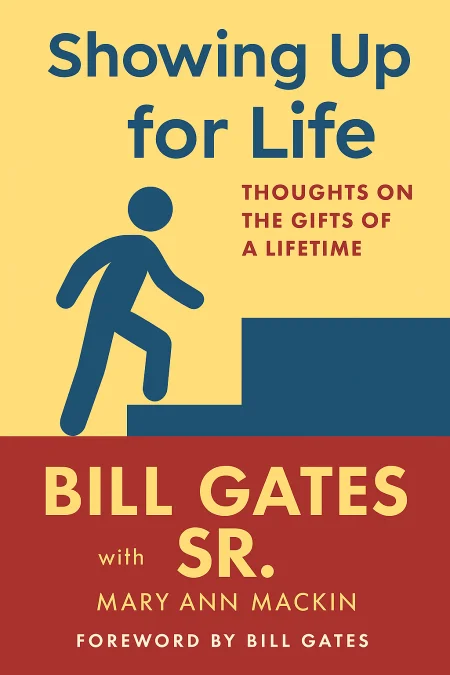
Showing Up for Life
Thoughts on the Gifts of a Lifetime
byBill Gates Sr., Mary Ann Mackin
Book Edition Details
Summary
Bill Gates Sr.'s legacy pulses through the pages of "Showing Up for Life," a poignant reflection on values sculpted by history's harshest lessons and life's tenderest moments. Through vignettes that dance across time, Gates Sr. invites readers into a tapestry woven from the Great Depression's grit, the nuanced guidance of a scoutmaster, and the revolutionary curiosity of his son, Bill Gates Jr. These stories aren't mere reminiscences; they're a masterclass in resilience, trust, and the quiet power of consistency. With humor and humility, Gates shares the wisdom gleaned from a life shared with remarkable figures—from his beloved family to luminaries like Nelson Mandela and Jimmy Carter. This book is not just a memoir; it's an open invitation to a shared journey toward understanding, humanity, and the potential of showing up for each other.
Introduction
At six feet seven inches tall, Bill Gates Sr. was a towering figure both physically and metaphorically in twentieth-century America. Born in 1925 during the Great Depression, he witnessed and participated in some of the most transformative decades in American history. From his humble beginnings in a small Washington town to becoming one of the nation's most influential philanthropists and civic leaders, Gates Sr. embodied the principle that success comes not from what you achieve for yourself, but from how consistently you show up for others. His life spanned the economic hardships of the 1930s, the unity and sacrifice of World War II, the social upheavals of the civil rights era, and the technological revolution led by his son. Yet through all these changes, he remained anchored by timeless values of service, integrity, and community engagement. Through his journey, readers will discover the profound impact of consistent civic participation, the art of building lasting relationships across generations, and the wisdom that comes from viewing life's challenges as opportunities to serve something greater than oneself. His story reveals how one person's commitment to showing up can ripple through families, communities, and ultimately touch lives around the globe.
Early Years and Foundation Building
Bill Gates Sr.'s formative years were shaped by the economic realities of Depression-era America and the values of a tight-knit community in Bremerton, Washington. Born into a family where his father sold furniture and his mother engaged in community service, young Bill learned early that decent people simply showed up when their neighbors needed help. His father's nightly ritual of collecting fallen coal from delivery trucks spoke to the era's anxieties about making ends meet, while simultaneously teaching lessons about resourcefulness and never taking anything for granted. The small-town environment of Bremerton provided Bill with powerful role models who would influence his entire approach to life. His parents, whom he rated as "nines" on a scale of showing up for others, never spoke about community service as an obligation but simply demonstrated it through their actions. Perhaps more influential was their neighbor Dorm Braman, a cabinet maker who led their Boy Scout troop and later became mayor of Seattle. Under Braman's guidance, Bill and his fellow scouts undertook the monumental project of building Sundown Lodge at Camp Tahuya, felling trees by hand and constructing a twenty-five-by-forty-foot log structure over three summers. This experience of building something substantial through collective effort became a defining metaphor for Bill's understanding of what people could accomplish when they worked together toward a common goal. The physical structure of the lodge eventually disappeared, but the lessons learned during its construction about visionary leadership, inclusive collaboration, and the power of persistence would shape his approach to every challenge he encountered throughout his life. These early experiences instilled in him an unshakeable belief that anything was possible when people committed to showing up for each other.
Family Values and Community Leadership
The Gates family operated on principles of mutual support, intellectual curiosity, and genuine care for others that extended far beyond their immediate household. Mary Maxwell Gates, whom Bill married after initially thinking she was too short to be his dance partner, became the family's organizing force and a model of how to balance personal ambition with community service. Her approach to parenting involved creating elaborate games and social events that naturally taught their children to engage with others while building confidence and competitive spirit. Mary's influence extended well beyond their home as she became the first woman to chair their local United Way and served on corporate boards at a time when such positions rarely went to women. Rather than viewing herself as a token, she saw these roles as opportunities to create the changes she wanted to see in the world. Her ability to connect people and identify their unique gifts made her what one university president called "the glue that held the board of regents together." She approached every interaction with genuine interest in others, remembering personal details and making people feel valued in ways that could transform their entire day. The family's dinner table conversations regularly included discussions of current events, social problems, and the work being done by Mary's various volunteer organizations. When young Bill Gates III would pepper his mother with questions about United Way's decision-making processes and the problems they were trying to solve, these exchanges were quietly building his analytical approach to philanthropy. The Gates children learned that wealth brought responsibility, but more fundamentally, they absorbed the understanding that everyone has gifts to share and that a life well-lived involves using those gifts in service of others. Their approach to traditions, from the elaborate summer gatherings at Cheerio to their Christmas morning ritual of matching pajamas, reinforced the message that showing up for family creates the foundation for showing up for the wider world. These experiences taught their children that building relationships and maintaining them over time requires intentional effort, but that such effort pays dividends that can last lifetimes.
Law Career and Public Service
Bill Gates Sr.'s legal career demonstrated how professional excellence and public service could reinforce each other rather than compete for attention. After returning from World War II, where he learned valuable lessons about getting along with people from diverse backgrounds under difficult circumstances, he entered law practice with a commitment to using his skills for the broader good. His early years as assistant city attorney in Bremerton taught him that every case, no matter how mundane, connected to larger questions of justice and community welfare. His approach to legal practice emphasized thorough preparation, understanding opposing viewpoints, and never losing sight of the human impact of legal decisions. Even when working with difficult colleagues, he found ways to extract valuable lessons, learning courtroom techniques from lawyers he didn't personally admire while vowing to treat people with greater respect than he had witnessed. This ability to separate personal relationships from professional learning opportunities became a hallmark of his approach to complex situations throughout his career. Beyond his private practice, Gates Sr. worked through the Bar Association to tackle systemic problems in the legal profession and judiciary. He campaigned against incompetent judges, created scholarship programs to increase diversity in the legal profession, and helped establish innovative approaches to delivering legal services to the poor. These efforts reflected his belief that the law's greatest purpose was creating a more just society, and that lawyers had special obligations to ensure equal access to justice regardless of economic circumstances. His commitment to asking "Is it right?" in every professional situation created a reputation for integrity that transcended political and professional disagreements. Colleagues knew that while they might not always agree with his positions, they could trust that his arguments arose from careful thought and genuine conviction rather than personal advantage. This combination of competence and character enabled him to build coalitions across traditional boundaries and tackle problems that required sustained effort over many years.
Philanthropy and Global Impact
The transformation of Bill Gates Sr. from a successful lawyer to a global philanthropist began with a simple offer to help his son and daughter-in-law respond to requests for charitable donations. What started as organizing correspondence in his basement evolved into managing one of the world's most influential foundations, demonstrating that new chapters of meaningful work can begin at any stage of life. His approach to philanthropy combined the analytical rigor he had developed as a lawyer with the relationship-building skills he had learned from decades of community service. His travels to developing countries opened his eyes to both the magnitude of global inequities and the possibilities for addressing them through sustained, strategic effort. Witnessing mothers walk twenty miles to get their children vaccinated and meeting healthcare workers who had left comfortable practices to serve in impoverished areas reinforced his conviction that geographic boundaries should not limit our sense of responsibility to fellow human beings. These experiences transformed abstract statistics about global poverty into personal relationships with individuals whose stories illustrated both suffering and hope. The foundation's work on childhood immunization, malaria prevention, and agricultural development reflected Gates Sr.'s belief that the most effective philanthropy combined rigorous analysis with deep respect for the people being served. Rather than imposing solutions from afar, the foundation sought to identify and support local leaders who understood their communities' needs and had realistic plans for addressing them. This approach required patience and humility but produced more sustainable results than top-down interventions. His advocacy for maintaining the federal estate tax, despite criticism from some wealthy peers, exemplified his conviction that exceptional resources carry exceptional responsibilities. He argued that great fortunes were built not just through individual effort but through the support of public institutions, infrastructure, and research investments that society had made over generations. Therefore, returning a portion of those fortunes to support future generations through taxation was not confiscation but gratitude, ensuring that the systems that enable prosperity could continue serving others.
Summary
Bill Gates Sr.'s life illuminated a fundamental truth: we are all in this together, and we need each other. His eight decades demonstrated that the most profound success comes not from accumulating wealth or achieving fame, but from consistently showing up for family, community, and the broader human family with generosity, competence, and integrity. From his early lessons in Depression-era Bremerton to his later work addressing global poverty, he proved that one person's commitment to service could create ripple effects that touch lives across generations and continents. His example suggests two essential principles for anyone seeking a meaningful life: first, that every person possesses unique gifts that can contribute to solving the challenges we face together, and second, that the act of showing up consistently for others creates a legacy far more valuable than any individual achievement. Whether someone is drawn to local community service, professional excellence with a service orientation, or thinking about how their resources can serve broader purposes, Gates Sr.'s journey offers a roadmap for living with intention and impact. His story ultimately reminds us that the question is not whether we have enough time, talent, or resources to make a difference, but whether we will choose to show up with what we have been given.
Related Books
Download PDF & EPUB
To save this Black List summary for later, download the free PDF and EPUB. You can print it out, or read offline at your convenience.
By Bill Gates Sr.
