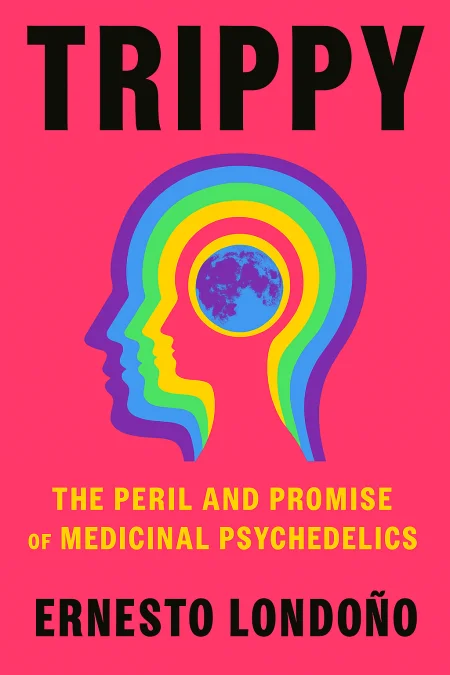
Trippy
The Peril and Promise of Medicinal Psychedelics
Book Edition Details
Summary
In the heart of Brazil’s lush rainforest, where tradition and modernity entwine, veteran journalist Ernesto Londoño finds himself at a crossroads. Battling the darkness of severe depression, he ventures into a realm where ancient rituals and cutting-edge science collide. At Spirit Vine Ayahuasca Retreat Center, Londoño surrenders to the transformative power of ayahuasca, embarking on a series of soul-altering ceremonies that redefine his understanding of healing. This gripping narrative chronicles not just his personal rebirth, but also a broader cultural revolution. From Indigenous shamans to war-torn veterans, meet the pioneers challenging the status quo and advocating for psychedelics as potent allies in mental health. With Trippy, Londoño delivers a masterful blend of intimate storytelling and investigative journalism, casting a spotlight on the delicate dance between potential and peril in this burgeoning field. This is not just a book—it's a call to reimagine the future of medicine.
Introduction
In the depths of depression and despair, humans throughout history have sought pathways to healing that transcend conventional medicine. What if the most profound breakthroughs in mental health treatment weren't found in laboratories or hospitals, but in ancient plant ceremonies that predate modern civilization by thousands of years? This remarkable story traces how psychoactive substances, once relegated to the margins of society and criminalized by governments worldwide, are now emerging as potentially revolutionary tools for treating depression, PTSD, addiction, and other mental health crises. The journey from prohibition to promise reveals a complex tapestry of Indigenous wisdom, scientific discovery, legal battles, and personal transformation. Through meticulous reporting and deeply personal narrative, we witness how underground healing communities preserved ancient knowledge during decades of prohibition, how brave researchers fought to legitimize psychedelic therapy, and how desperate individuals found hope in ceremonies conducted far from traditional medical settings. This exploration illuminates not just the therapeutic potential of these substances, but the broader questions they raise about consciousness, healing, and what it means to be human in an increasingly disconnected world. This narrative will resonate with anyone curious about alternative approaches to mental health, those interested in the intersection of spirituality and medicine, and readers seeking to understand one of the most significant paradigm shifts occurring in contemporary healthcare. It speaks to our universal search for meaning, connection, and healing in times of crisis.
Ancient Wisdom: Indigenous Plant Medicine Traditions
For millennia before the first pharmaceutical laboratories emerged, Indigenous communities across the Amazon basin developed sophisticated healing practices centered around psychoactive plants. These weren't recreational drugs or primitive superstitions, but carefully cultivated medical and spiritual systems that viewed mental and physical ailments as interconnected expressions of deeper imbalances. The Yawanawá, Shipibo, and other tribes understood that true healing required more than treating symptoms - it demanded a transformation of consciousness itself. The preparation and administration of ayahuasca exemplified this holistic approach. Master healers, known as curanderos or shamans, underwent years of training through plant diets and isolation, learning to channel what they believed were the healing spirits of the forest. These practitioners didn't simply dispense medicine; they served as bridges between the human and plant worlds, conducting elaborate ceremonies that could last entire nights and facilitate profound psychological breakthroughs. What strikes modern observers is how these ancient practices anticipated many principles that contemporary psychedelic therapy is only now rediscovering. The emphasis on set and setting, the integration of music and ritual, the recognition that healing often requires confronting rather than avoiding difficult emotions - all these elements were integral to Indigenous ceremonies long before Western medicine understood their importance. The shamans recognized that plants like ayahuasca didn't cure through chemical action alone, but through their ability to temporarily dissolve the ego's defenses and allow deeper truths to emerge. These traditions faced near-extinction during centuries of colonization, missionary activity, and modernization, yet they survived in remote communities that maintained their connection to ancestral wisdom. Their persistence would prove crucial, as they preserved knowledge that mainstream medicine had forgotten or never possessed, setting the foundation for what would eventually become a global renaissance in psychedelic healing.
Prohibition Era: The War on Drugs and Lost Knowledge
The promising landscape of psychedelic research that had flourished in the 1950s and 1960s came to an abrupt and devastating halt with the declaration of the War on Drugs in the early 1970s. What began as legitimate concerns about recreational drug abuse quickly evolved into a blanket prohibition that criminalized not just street drugs, but also potentially life-saving medicines that researchers had barely begun to understand. President Nixon's classification of psychedelics as dangerous substances with no medical value effectively shut down decades of promising research and drove underground the very communities that might have unlocked their healing potential. This prohibition era created a profound disconnect between scientific possibility and legal reality. Researchers who had witnessed remarkable results treating alcoholism with LSD or helping terminal cancer patients find peace through psilocybin were suddenly forbidden from continuing their work. The few therapists who had integrated MDMA into their practice were forced to choose between abandoning their methods or operating in the shadows of legality. Meanwhile, Indigenous communities that had safely used these substances for centuries found their sacred practices criminalized by governments that neither understood nor respected their traditional knowledge. The human cost of this lost knowledge became apparent over the following decades as rates of depression, anxiety, PTSD, and suicide climbed steadily upward. Conventional psychiatric medications, while helpful for many, proved inadequate for millions of people who found themselves trapped in cycles of mental illness that seemed immune to traditional treatments. Veterans returning from wars in Iraq and Afghanistan faced particular challenges, with existing therapies often failing to address the deep trauma that manifested in nightmares, hypervigilance, and suicidal ideation. Yet even during the darkest years of prohibition, small communities of practitioners, researchers, and seekers maintained the flame of psychedelic healing. Operating in legal gray areas or traveling to countries where certain substances remained accessible, they preserved both the scientific knowledge and the ceremonial wisdom that would eventually fuel a remarkable comeback.
Underground Revival: Retreat Centers and Spiritual Communities
While psychedelics remained illegal in most Western nations, a remarkable underground network of healing centers and spiritual communities began flourishing across Latin America in the 1990s and 2000s. Countries like Peru, Brazil, Costa Rica, and Ecuador became havens for those seeking alternatives to conventional mental health treatment, hosting thousands of visitors annually who traveled vast distances in search of healing that remained inaccessible in their home countries. This wasn't medical tourism in any traditional sense, but something far more radical - a grassroots revival of plant medicine traditions adapted for a modern, globalized world. The retreat centers that emerged during this period represented a fascinating fusion of Indigenous wisdom and contemporary therapeutic approaches. Practitioners like those at the Spirit Vine Center in Brazil or the Temple of the Way of Light in Peru developed protocols that honored traditional ceremonial frameworks while incorporating elements of Western psychology and safety standards. These centers became laboratories for rediscovering what worked in psychedelic healing, often through trial and error, as desperate individuals sought relief from depression, trauma, and addiction that had proven resistant to conventional treatment. What emerged from this underground revival was a new model of healing that challenged Western medicine's emphasis on individual pathology and pharmaceutical intervention. Participants found themselves in communal settings where sharing personal struggles was encouraged rather than stigmatized, where the healing process was understood to unfold over days or weeks rather than months of therapy, and where the medicine itself was treated as a teacher rather than merely a chemical compound. The intensity of these experiences often led to rapid and lasting changes in perspective, behavior, and emotional well-being. However, this underground revival also revealed the dangers inherent in unregulated healing practices. Stories emerged of sexual abuse, psychological manipulation, and inadequate safety protocols at some centers, highlighting the need for better training, oversight, and ethical standards. The very conditions that made this revival possible - operating outside formal medical and legal structures - also created vulnerabilities that would need to be addressed as the movement gained legitimacy and mainstream attention.
Clinical Breakthrough: FDA Approval and Therapeutic Applications
The transformation of psychedelics from underground healing tools to legitimate medical treatments represents one of the most remarkable reversals in modern healthcare policy. Beginning in the early 2000s, organizations like MAPS (Multidisciplinary Association for Psychedelic Studies) began conducting rigorous clinical trials that demonstrated the therapeutic potential of substances like MDMA and psilocybin. These studies, conducted under strict FDA oversight, showed response rates that far exceeded those of conventional treatments, particularly for conditions like treatment-resistant depression and PTSD. The breakthrough moment came when the FDA designated both MDMA and psilocybin as "breakthrough therapies," a designation reserved for treatments that show substantial improvement over existing options. This regulatory shift opened doors that had been sealed for decades, allowing researchers at prestigious institutions like Johns Hopkins, NYU, and the Mount Sinai School of Medicine to investigate how psychedelics might revolutionize mental healthcare. Veterans Affairs hospitals began their own trials, recognizing the urgent need for new approaches to treating the epidemic of veteran suicides. What these clinical trials revealed was that psychedelics don't work like conventional psychiatric medications. Rather than requiring daily dosing to maintain neurochemical balance, substances like psilocybin and MDMA appear to catalyze lasting changes in brain connectivity and emotional processing through just a few carefully guided sessions. The therapy model that emerged emphasized the crucial importance of preparation, the therapeutic relationship, and integration work - elements that echoed the wisdom of Indigenous practitioners who had always understood healing as a holistic process rather than a simple chemical intervention. Yet even as these clinical breakthroughs point toward FDA approval and mainstream medical adoption, fundamental questions remain. Will the medicalized version of psychedelic therapy retain the transformative power observed in underground settings? Can the healthcare system accommodate treatments that require intensive therapeutic support and potentially challenge patients' fundamental worldviews? The answers to these questions will determine whether the psychedelic renaissance fulfills its promise or becomes another well-intentioned reform that falls short of its revolutionary potential.
Summary
The story of psychedelics reveals a profound tension between ancient wisdom and modern regulation, between individual healing and societal control, between the mystical dimensions of consciousness and the reductionist tendencies of contemporary medicine. What emerges is not simply the tale of prohibited drugs becoming approved medicines, but a deeper narrative about how societies decide which forms of healing are legitimate and who gets to determine the boundaries of acceptable consciousness exploration. The renaissance we're witnessing today represents more than a medical breakthrough - it's a recognition that our current approaches to mental health, addiction, and human suffering may be fundamentally incomplete. The Indigenous communities who preserved these practices through centuries of persecution, the underground practitioners who kept the knowledge alive during prohibition, and the researchers who fought to legitimize scientific investigation all contributed to a movement that challenges us to reconsider what healing means and how it happens. Looking forward, the integration of psychedelic therapy into mainstream healthcare offers both tremendous promise and significant challenges. The success of this integration will depend on our ability to honor the wisdom embedded in traditional practices while ensuring safety and accessibility, to maintain the transformative potential of these experiences while scaling them responsibly, and to address the spiritual and existential dimensions of healing that conventional medicine often overlooks. Most importantly, it will require us to confront the deeper social, economic, and cultural factors that contribute to the mental health crisis these treatments aim to address, recognizing that true healing extends far beyond individual therapy to encompass our relationships with each other and the natural world.
Related Books
Download PDF & EPUB
To save this Black List summary for later, download the free PDF and EPUB. You can print it out, or read offline at your convenience.
By Ernesto Londoño
