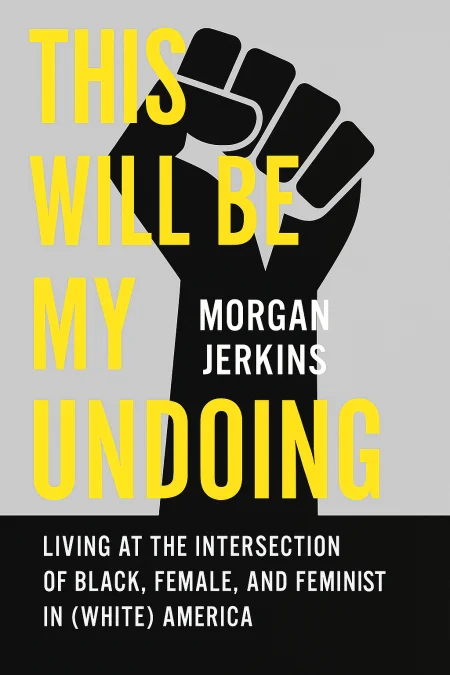
This Will Be My Undoing
Living at the Intersection of Black, Female, and Feminist in (White) America
Book Edition Details
Summary
Morgan Jerkins, a fearless voice of her generation, delivers a profound and searing collection in "This Will Be My Undoing." Through a tapestry of linked essays, Jerkins navigates the complexities of race, gender, and identity with the precision of a master storyteller. Her personal narrative intertwines with sharp cultural critique, offering an unflinching exploration of what it means to inhabit the world as a Black woman today. As she confronts systemic injustices and personal truths, Jerkins invites readers to challenge their perspectives and engage with the urgency of her revelations. For those ready to confront the uncomfortable and embrace the transformative, this work stands as a necessary beacon, illuminating paths to understanding and change.
Introduction
In the landscape of contemporary American literature, few voices have emerged with such raw authenticity and unflinching honesty as that of a young Black woman who dared to excavate the deepest truths of her existence. Born into a world that simultaneously fetishizes and demonizes Black female bodies, she navigated the treacherous waters of identity formation while pursuing excellence in predominantly white spaces. Her journey from a light-skinned girl in New Jersey grappling with belonging, to a Princeton-educated writer finding her voice in Harlem, represents more than personal triumph—it embodies the complex reality of Black womanhood in twenty-first century America. Through her lens, readers encounter the multifaceted nature of Black female experience: the pressure to perform respectability while yearning for authentic self-expression, the burden of carrying ancestral trauma while forging individual paths, and the challenge of loving oneself in a society designed to diminish that very love. Her story illuminates three crucial dimensions of modern Black womanhood: the intricate process of self-discovery amid societal expectations, the reclamation of beauty and identity from white supremacist standards, and the revolutionary act of centering Black women's narratives in their own stories. This exploration offers readers an intimate understanding of how personal transformation becomes political resistance.
Growing Up Black and Female
The earliest memories of racial consciousness often arrive not as dramatic revelations, but as quiet realizations that seep into a child's understanding like water through limestone. For a ten-year-old girl desperately wanting to make the cheerleading squad, the awakening came through the brutal clarity of exclusion. Despite perfect execution of routines and infectious enthusiasm, she watched as white girl after white girl received acceptance while she and other Black girls were systematically rejected. The moment crystallized when a so-called friend delivered the crushing verdict: "Do you know why you didn't make the cheerleading squad? It's because they don't accept monkeys like you on the team." This childhood trauma established a pattern that would echo throughout her formative years—the constant negotiation between authentic self-expression and the demands of respectability politics. Growing up in Atlantic County, New Jersey, she learned early that Black girlhood meant existing under perpetual surveillance, where every gesture, every outfit, every hairstyle carried the weight of representation. The term "fast-tailed girl" hung over young Black women like a sword of Damocles, ready to fall at the slightest deviation from prescribed behavior. High school brought its own crucibles of identity formation. Moving to the predominantly white town of Williamstown exposed her to a different kind of racial hostility—the subtle violence of being made invisible or hypervisible depending on the moment's convenience. Academic excellence became both shield and target, as she discovered that succeeding in white spaces meant accepting a fundamental loneliness. The choice between fitting in with other Black students or pursuing individual achievement felt like choosing between authenticity and advancement, a false binary that many Black girls face daily. These early experiences laid the foundation for a lifelong struggle with belonging—too Black for white spaces, too educated for some Black spaces, too light-skinned for others to fully trust her proximity to Blackness. Yet within this liminal space, she began to understand that her very existence challenged others' comfortable categories, and that perhaps disruption itself was a form of power.
Identity, Beauty, and Belonging
The relationship between Black women and beauty standards represents one of the most complex battlegrounds in the war for self-definition. From childhood, she absorbed the message that natural hair was "unprofessional," that lighter skin offered social advantages, that conforming to European beauty ideals was the price of acceptance. The ritual of chemical relaxers began at age three, a monthly baptism in pain that promised transformation but delivered only temporary assimilation. The journey toward natural hair became a metaphor for larger questions of authenticity and self-acceptance. Each protective style, each failed attempt at straightening, each moment of shame when caught in the rain without an umbrella—these seemingly mundane experiences carried the weight of centuries of colonization. When she finally made the decision to embrace her natural texture during college, it felt revolutionary precisely because it was so simple: choosing to exist as she was naturally created. Princeton University served as both laboratory and proving ground for these identity experiments. Surrounded by wealth and whiteness she had never encountered, she found herself performing acceptability while battling imposter syndrome. The eating clubs, the social hierarchies, the casual racism disguised as curiosity—all of it demanded constant code-switching and emotional labor. Yet within this challenging environment, she also discovered the power of intellectual excellence as a form of resistance. The complexity of light-skinned privilege added another layer to her identity formation. Often mistaken for biracial, she occupied a space that granted certain advantages while simultaneously requiring her to prove her Blackness to skeptical communities. This position offered unique insights into colorism's devastating effects while also burdening her with guilt about benefits she neither sought nor fully wanted. Learning to name and navigate this privilege became crucial to developing an authentic relationship with her own identity.
Writing Our Own Stories
The transition from consuming stories to creating them marked a pivotal moment in her journey toward self-actualization. Writing became more than career aspiration—it represented the radical act of centering Black women's experiences in their own narratives. Moving to Harlem after graduation, she confronted the reality of gentrification from an unexpected angle: as a Black woman whose education and class position aligned her more with incoming forces of change than with longtime residents. The literary world, despite its progressive pretensions, revealed itself as another predominantly white space where Black voices faced systematic marginalization. Yet persistence, combined with undeniable talent, began opening doors. Each published piece represented not just personal achievement but a small victory in the larger battle for representation. The viral success of her writing on gentrification, natural hair, and Black female sexuality demonstrated a hunger for authentic Black women's perspectives. Her exploration of sexuality deserves particular attention, as it challenged both racist stereotypes about Black women's bodies and respectability politics within Black communities. Writing honestly about desire, pain, and healing required confronting centuries of mythology about Black female sexuality. The decision to undergo labiaplasty, chronicled with unflinching honesty, sparked conversations about bodily autonomy, beauty standards, and the right to make choices about one's own body without judgment. The responsibility of representation weighed heavily—each piece carrying the burden of speaking for an entire demographic while remaining true to individual experience. This tension between specificity and universality, between political necessity and artistic freedom, defined much of her literary development. Success brought its own challenges, including navigating predominantly white literary spaces while maintaining connection to Black communities and dealing with both external criticism and internal imposter syndrome.
Summary
At its core, this story illuminates the fundamental truth that Black womanhood in America requires constant acts of creation and recreation—of self, of narrative, of possibility itself. Through unflinching examination of her own experiences with identity, beauty, sexuality, and belonging, she demonstrates that the personal is indeed political, and that individual healing can become collective liberation. Her journey from a confused child seeking acceptance through assimilation to a confident woman creating space for authentic Black female voices represents more than personal growth—it embodies the ongoing struggle for Black women to define themselves on their own terms. The lessons embedded in her story extend far beyond autobiography to offer frameworks for understanding how marginalized identities navigate hostile systems. Her insistence on complexity, her refusal to sanitize difficult truths, and her commitment to centering Black women's experiences provide a roadmap for others seeking to transform pain into power. For readers grappling with questions of identity, belonging, and authentic self-expression, her work offers both mirror and lamp—reflecting shared struggles while illuminating paths toward liberation. This narrative ultimately argues that the act of telling our own stories, in all their messy complexity, becomes a revolutionary act of self-determination and collective healing.
Related Books
Download PDF & EPUB
To save this Black List summary for later, download the free PDF and EPUB. You can print it out, or read offline at your convenience.
By Morgan Jerkins
