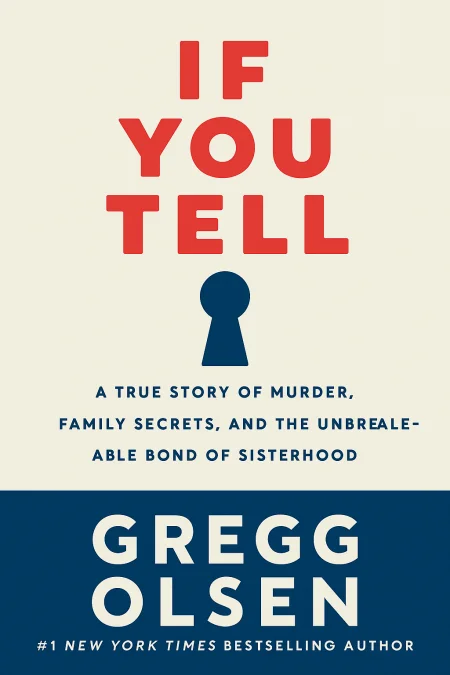
If You Tell
A True Story of Murder, Family Secrets, and the Unbreakable Bond of Sisterhood
Book Edition Details
Summary
In the shadowy corners of a seemingly ordinary farmhouse in Raymond, Washington, the Knotek sisters—Nikki, Sami, and Tori—harbor secrets darker than midnight. Their mother, Shelly, rules with an iron fist wrapped in velvet, a master of manipulation who cloaks her sadism in the guise of maternal care. Yet, beneath the surface of their relentless torment, a fierce and unyielding bond among the sisters begins to forge an unexpected strength. "If You Tell" unveils a chilling true story where the Knotek daughters confront unimaginable cruelty with resilience, navigating a labyrinth of fear and control that ensnares even those who dare to come close. This harrowing tale of survival and sisterhood will grip you with its raw power and haunting truths.
Introduction
What happens when the person who should love you most becomes your greatest enemy? When the walls that should shelter you become the bars of your prison? For three sisters growing up in what appeared to be an ordinary American household, these questions weren't philosophical—they were matters of life and death. Their story reveals one of the most chilling truths about human nature: that evil often wears the mask of love, and the most dangerous predators are those who claim to care for us. This haunting account exposes how psychological manipulation can flourish behind closed doors, even in communities where neighbors wave hello and children play in well-kept yards. Yet it's also a testament to the unbreakable power of truth and the extraordinary courage required to speak it. Through their journey from victims to survivors, you'll discover how abusers systematically dismantle their victims' sense of reality, why speaking out requires more than just bravery, and how healing begins with the revolutionary act of refusing to keep deadly secrets. Most importantly, you'll witness how three young women transformed their darkest experiences into a beacon of hope, proving that even in the most hopeless circumstances, love can triumph over fear and truth can set us free.
The Perfect Facade: How Evil Hides Behind Kindness
Michelle Knotek was the kind of mother other women envied. She threw elaborate birthday parties with towering cakes and mountains of presents, her home always filled with the warm scents of baking and the sound of children's laughter. Neighbors saw her rushing to comfort her infant daughter when medical alarms sounded in the night, a devoted mother sacrificing sleep for her child's wellbeing. She decorated every surface with family photos capturing her daughters' bright smiles, creating the picture-perfect image of maternal love. But behind this carefully orchestrated performance lay a different reality. When young Nikki received a coveted Cabbage Patch doll for Christmas, her joy lasted only moments. Michelle snatched the gift away immediately, declaring her daughter "ungrateful" and storing the doll in a closet where Nikki could see but never touch it. The little girl learned to sneak the toy out during her mother's absences, holding it briefly before carefully returning it to avoid detection. This pattern repeated with countless gifts, creating a cycle where love was given and withdrawn at Michelle's whim. The facade extended to manufactured crises that showcased Michelle's heroic mothering. Those midnight medical emergencies weren't random—Nikki once discovered her mother holding a pillow over baby Tori's face before the alarms had even sounded. Each "emergency" became another opportunity for Michelle to demonstrate her devotion to concerned neighbors and medical staff, while her children learned to live in constant fear of her unpredictable moods. This reveals a crucial truth about psychological abuse: it thrives on contradiction and confusion. The most dangerous abusers don't simply inflict pain—they create elaborate performances of love that make victims question their own perceptions. When someone alternates between kindness and cruelty, victims often cling desperately to moments of warmth, hoping they represent the "real" person underneath. This hope becomes a chain more binding than any physical restraint. Understanding this dynamic is essential because it explains why victims often defend their abusers and why escape seems impossible even when doors are literally open.
Kathy's Silent Prison: When Trust Becomes Fatal
Kathy Loreno arrived at the Knotek household in 1988 as a friend in need, a hairdresser who had lost her job and gratefully accepted Michelle's offer of temporary shelter. At thirty-four, she was vulnerable but hopeful, eager to contribute by caring for the children and maintaining the house. What began as friendship slowly transformed into something far more sinister, though the change was so gradual that Kathy barely noticed until escape had become impossible. The transformation followed a methodical pattern. Michelle began criticizing Kathy's work, claiming she was lazy and incompetent. When Kathy defended herself, Michelle would gaslight her, insisting that Kathy was "sleepwalking" and doing things she couldn't remember. Food would mysteriously appear under Kathy's bed, and Michelle would express apparent concern about her friend's secret eating habits. "You don't remember doing it, but I found the evidence," she would say with false sympathy. Kathy's possessions disappeared one by one, supposedly as consequences for her increasingly erratic behavior. As months turned to years, the psychological manipulation escalated to physical torture. Kathy was forced to sleep in degrading conditions, eventually confined to a pump house on the property. She was denied basic necessities like clothing, food, and bathroom privileges. When she became too weak to resist, Michelle enlisted the children to participate in her torment, creating a household dynamic where everyone became complicit in Kathy's suffering. The most heartbreaking aspect was Kathy's unwavering loyalty to the woman destroying her. Even when given opportunities to escape, she refused to leave, convinced that Michelle would find her no matter where she went. Kathy's tragedy illuminates how abusers systematically dismantle their victims' sense of self and agency. By controlling every aspect of someone's life—from basic needs to social connections—predators create a state of learned helplessness where freedom becomes literally unimaginable. The victim becomes so dependent on their abuser for survival that they cannot conceive of life without them, even when that life has become a living hell. This explains why the question isn't simply "Why don't they leave?" but rather "How can we help them rebuild the sense of self that abuse has systematically destroyed?"
Shane's Courage: The Price of Speaking Truth
Shane Watson was just thirteen when he came to live with his aunt Michelle, escaping a chaotic life that had left him desperate for stability and family connection. Initially, the Knotek household seemed like salvation. Michelle welcomed him warmly, buying new clothes and setting up a comfortable bedroom. For a brief time, Shane experienced what felt like genuine maternal care, something he had never known before. But the honeymoon period was devastatingly short-lived. Shane soon found himself subjected to the same psychological manipulation and physical abuse that plagued his cousins. He was forced to participate in degrading punishments, made to sleep on concrete floors, and enlisted as an enforcer in Michelle's campaign of terror against Kathy. Unlike the girls, who had been conditioned from birth to accept their mother's behavior, Shane retained enough perspective to recognize the household's dysfunction for what it truly was. As Shane grew older and more defiant, he became increasingly vocal about wanting to leave. He made several escape attempts, each time being tracked down and dragged back home. Michelle's paranoia about Shane intensified, and she began telling her husband Dave that the boy was dangerous, even planting evidence to suggest he had committed terrible acts. The family dynamic became increasingly unstable as Michelle positioned Shane as a threat that needed to be eliminated. In February 1995, Shane disappeared forever, though Michelle claimed he had simply run away, leaving behind a touching note expressing his love for her. Shane's story demonstrates both the power and the peril of speaking truth in abusive situations. His refusal to fully submit to Michelle's control, while admirable, ultimately made him a target for elimination. This highlights a tragic reality: those who resist abuse most strongly often face the most severe consequences. Yet Shane's courage also provided a crucial example for his cousins, showing them that it was possible to see through their mother's manipulations and maintain a sense of right and wrong even in the most twisted circumstances. The lesson isn't that victims should remain silent, but rather that speaking truth requires tremendous courage and often comes at great personal cost, making it our moral imperative to support those who find the strength to break their silence.
Breaking Free: Three Sisters Choose Freedom Over Fear
The breaking point came not with a single dramatic moment, but through the accumulation of years of horror that finally became unbearable. Nikki, Sami, and Tori had survived their childhood by developing an intricate system of protection and mutual support, but as they grew older, they began to understand that their experiences weren't normal family dynamics—they were crimes that had destroyed innocent lives and would continue destroying others unless someone found the courage to speak. The sisters' decision to contact authorities wasn't made lightly. They knew that breaking their silence meant confronting not only their mother's wrath but also a community that had long viewed Michelle as a pillar of respectability. They understood that their testimony would be questioned, their motives scrutinized, and their family's darkest secrets exposed to public judgment. Yet they also recognized that their silence had become complicity in ongoing crimes, and that their mother's pattern of targeting vulnerable victims would continue unless someone stopped her. When they finally spoke to investigators, their accounts revealed a systematic pattern of torture and murder that had claimed multiple lives over more than a decade. Their detailed testimonies led to the discovery of remains and evidence that corroborated their stories, ultimately resulting in Michelle's conviction and life imprisonment. The process was emotionally devastating—reliving trauma while facing intense legal scrutiny—but it also marked the beginning of their journey toward healing and freedom. The sisters' courage in breaking their silence demonstrates that speaking truth about abuse requires more than just individual bravery—it demands a support system willing to believe survivors and a justice system committed to holding perpetrators accountable. Their story proves that even the most carefully constructed facades of respectability can crumble when confronted with persistent truth-telling. Most importantly, it shows that healing from severe trauma is possible when survivors refuse to carry their abusers' secrets and instead choose to transform their pain into purpose, ensuring that their experiences serve to protect others from similar fates.
Summary
The most profound truth emerging from this harrowing tale is that survival sometimes requires the courage to abandon everything familiar, even when that familiar world includes the people we're supposed to love most. If you suspect someone is being abused, don't wait for them to ask for help directly—offer consistent, non-judgmental support and make it clear that you believe them, even if their stories seem inconsistent or unbelievable. Create safe spaces where they can speak without fear of consequences, and be prepared to provide practical assistance like transportation, temporary housing, or connections to professional resources. Trust your instincts when someone's behavior toward others seems controlling or manipulative, especially if they present themselves as exceptionally caring or helpful. Remember that the most dangerous predators often appear most normal to the outside world, using their public image as both camouflage and weapon against their victims. Most importantly, understand that speaking up about abuse—whether as a victim or witness—is often the only way to save lives and prevent future tragedies, making our willingness to listen and act a moral imperative that can literally mean the difference between life and death.
Related Books
Download PDF & EPUB
To save this Black List summary for later, download the free PDF and EPUB. You can print it out, or read offline at your convenience.
By Gregg Olsen
