
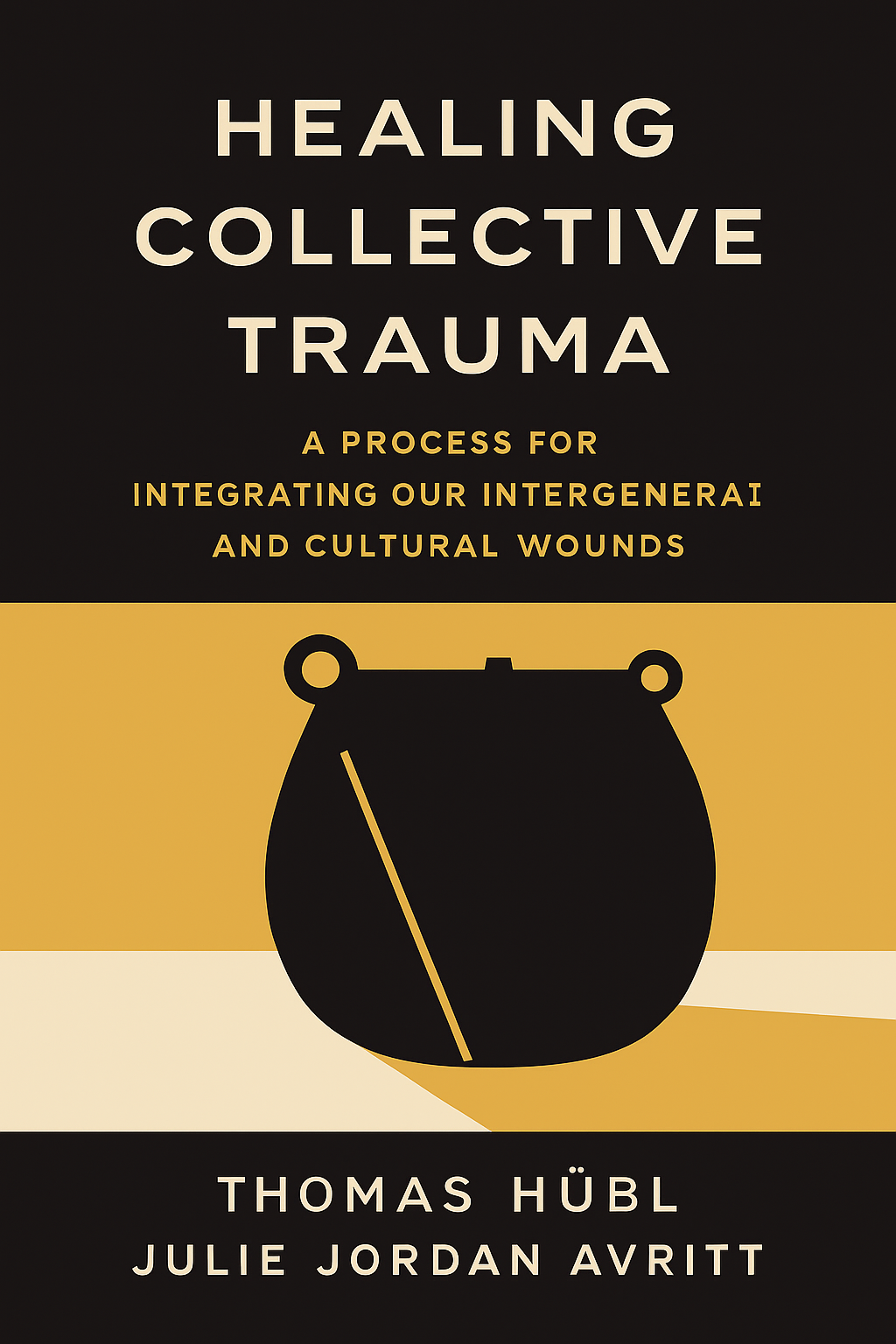
Healing Collective Trauma
A Process for Integrating Our Intergenerational and Cultural Wounds
byThomas Hübl, Julie Jordan Avritt
Book Edition Details
Summary
What if the wounds you bear are not only your own but are shared across generations and communities? In "Healing Collective Trauma," Thomas Hübl, a visionary spiritual teacher, unravels the intricate tapestry of communal suffering that threads through our identities, health, and world events. Blending mystical wisdom with cutting-edge science, Hübl offers a pioneering roadmap for understanding and healing these hidden scars. Through the Collective Trauma Integration Process, he invites us to confront these shared narratives of pain and transform them into possibilities for a brighter future. With insights from renowned thinkers like Dr. Gabor Maté and Ken Wilber, this guide is not just about healing the past but igniting a collective awakening. A call to mend the soul wounds that bind us, this work envisions a new era of connection and mutual growth for humanity.
Introduction
Individual trauma leaves lasting imprints not only on the person who experienced it, but ripples outward through families, communities, and entire cultures across generations. This work challenges the conventional understanding that trauma healing occurs solely through personal therapeutic work, proposing instead that many of our most persistent individual wounds are actually symptoms of unresolved collective injuries that span decades or centuries. The framework presented here bridges mystical wisdom traditions with contemporary neuroscience and trauma research to reveal how historical atrocities, cultural oppression, and intergenerational suffering create invisible fields of disconnection that continue to shape human behavior today. The analysis draws from years of facilitating large-group healing processes across different countries, demonstrating how communities can consciously engage with inherited trauma patterns to transform them. Rather than accepting cycles of violence, addiction, and social dysfunction as inevitable, this approach offers a systematic method for communities to recognize their shared wounds and work together toward genuine integration and collective awakening.
The Nature and Architecture of Collective Trauma
Collective trauma operates as an invisible force field that shapes entire societies, manifesting through patterns that repeat across generations until they are consciously addressed. Unlike individual trauma, which affects specific neural pathways and personal relationships, collective trauma embeds itself within the cultural DNA of communities, influencing everything from political decisions to economic systems to social hierarchies. Historical atrocities like genocides, slavery, or mass displacement create energetic signatures that persist in the collective unconscious, surfacing as seemingly unrelated phenomena such as chronic poverty, systemic racism, or recurring cycles of violence between groups. The architecture of this phenomenon reveals itself through what can be termed "trauma fields" - invisible networks of disconnection that prevent communities from accessing their full creative and healing potential. These fields operate below the threshold of conscious awareness, yet they profoundly influence how people relate to themselves, each other, and their environment. When trauma remains unprocessed at the collective level, it creates a kind of psychic pollution that affects everyone living within that cultural context, regardless of whether they have direct historical connection to the original wound. The transmission mechanisms include not only obvious channels like family stories and cultural narratives, but also subtle energetic patterns that influence nervous system development, social agreements about what is possible or normal, and unconscious behavioral patterns that get passed down through modeling and environmental conditioning. Communities trapped in collective trauma fields often experience a sense of being stuck in recurring problems that resist traditional solutions, because the underlying energetic patterns remain unaddressed. Understanding collective trauma as an architectural phenomenon rather than simply a collection of individual wounds opens possibilities for systemic healing approaches that can transform entire communities simultaneously, creating ripple effects that extend far beyond the immediate participants in any healing process.
Bridging Science and Mysticism in Trauma Integration
The integration of scientific understanding with mystical wisdom creates a more complete framework for addressing trauma than either approach offers alone. Modern neuroscience reveals how traumatic experiences fragment the nervous system, disrupting communication between different brain regions and creating patterns of hypervigilance or dissociation that persist long after the original threat has passed. Polyvagal theory demonstrates how the nervous system constantly scans for safety or danger signals in the social environment, and how traumatized individuals lose their capacity for the subtle attunement necessary for healthy relationships. Mystical traditions contribute complementary insights about the energetic dimensions of trauma and healing. Ancient practices recognize that human beings exist within interconnected fields of consciousness, where individual boundaries are more permeable than commonly assumed. From this perspective, trauma creates distortions in what might be called the subtle anatomy - energetic patterns that affect not only the traumatized individual but also those in their relational field. These distortions can be passed down through family lines and cultural contexts through mechanisms that operate beyond the purely biological. The synthesis reveals trauma as both a neurobiological phenomenon and an energetic disruption in the natural flow of life force through individuals and communities. Healing requires addressing both dimensions simultaneously - working with the nervous system's capacity for regulation and resilience while also engaging the subtler energetic patterns that influence how people connect with themselves, each other, and their sense of purpose and meaning. This integrated approach suggests that the most effective trauma healing occurs when scientific rigor meets contemplative depth, combining evidence-based practices for nervous system regulation with time-tested wisdom about the nature of consciousness and the possibility for transformation. The result is a more holistic understanding of human healing that honors both the complexity of trauma and the remarkable capacity for recovery and growth.
The CTIP Method: A Process for Collective Healing
The Collective Trauma Integration Process represents a systematic approach for communities to engage directly with inherited trauma patterns through structured group work. This methodology creates conditions where unconscious historical material can surface safely within a coherent collective field, allowing for conscious processing and integration of previously suppressed energies. The process unfolds in predictable waves, beginning with group coherence-building exercises that establish sufficient trust and presence for deeper work to emerge. The first wave typically manifests as collective resistance and denial - a group-wide tendency toward sleepiness, distraction, or subtle agitation as the unconscious trauma content begins to activate. Rather than pushing through this resistance, the methodology works with it as an intelligent protective response, maintaining presence and witnessing until the defensive patterns naturally release. The second wave brings an eruption of emotional and sensory material - often including spontaneous memories, physical sensations, and images related to historical events that participants may have no conscious knowledge of experiencing. The third wave involves discerning what can be called the "Collective Voice" - archetypal messages that emerge through individual participants but speak to universal themes affecting the entire group. These communications often carry profound healing potential, offering new perspectives on historical wounds or revealing previously hidden connections between past events and present circumstances. The fourth wave focuses on integration, using smaller group formats to process the collective material through personal sharing and mutual witnessing. The methodology requires skilled facilitation capable of holding complex group dynamics while maintaining connection to higher dimensions of consciousness that provide organizing intelligence for the healing process. Safety protocols include having trained therapists available for individual support, careful attention to group coherence throughout the process, and adequate time for integration and closure. When skillfully facilitated, this approach can create lasting shifts in collective trauma patterns that benefit not only direct participants but their families and communities for generations.
From Traumatized World to Integrating Future
The symptoms of unresolved collective trauma permeate contemporary global challenges, from climate change denial to political polarization to economic inequality. These seemingly separate crises reveal themselves as interconnected manifestations of humanity's inability to process and integrate its historical wounds. The disconnection from the natural world, the dehumanization of the "other," and the pursuit of short-term gain at the expense of long-term sustainability all reflect the fragmenting effects of unhealed trauma operating at planetary scale. The vision of an integrating future emerges from recognizing that collective healing is not merely therapeutic but evolutionary - a necessary step in humanity's development toward greater complexity and consciousness. As communities learn to consciously engage with their trauma inheritance, they develop capacities for deeper empathy, more nuanced thinking, and more creative problem-solving. The energy previously bound up in unconscious repetition patterns becomes available for innovation and collaboration. This transformation manifests through new forms of education that honor both intellectual development and emotional intelligence, governance structures that balance individual autonomy with collective wisdom, and economic systems that prioritize regeneration over extraction. Communities that have engaged in collective trauma work often report increased creativity, improved relationships, and greater capacity to address complex challenges collaboratively. The integrating future requires a fundamental shift from unconscious reactivity to conscious responsiveness, from separation-based thinking to recognition of fundamental interconnection. This is not merely a psychological or spiritual transformation but a practical necessity for navigating the complexity of contemporary global challenges. The methodology for collective trauma integration offers concrete tools for communities ready to participate in this evolutionary transition, creating ripple effects that contribute to the healing of the larger human family.
Summary
The central insight emerging from this exploration reveals that individual healing and collective transformation are inseparable processes, with the most profound therapeutic breakthroughs occurring when personal work is embedded within conscious community engagement with shared historical wounds. The integration of scientific rigor with mystical depth offers a comprehensive framework for understanding trauma as both neurobiological phenomenon and energetic disruption, requiring interventions that address multiple dimensions simultaneously for lasting healing to occur. Most significantly, the systematic approach to collective trauma integration demonstrates that communities can consciously interrupt cycles of unconscious repetition and access previously unavailable creative potential, suggesting that what often appears as intractable social problems may actually represent unprocessed collective trauma seeking resolution and transformation.
Related Books
Download PDF & EPUB
To save this Black List summary for later, download the free PDF and EPUB. You can print it out, or read offline at your convenience.
By Thomas Hübl
