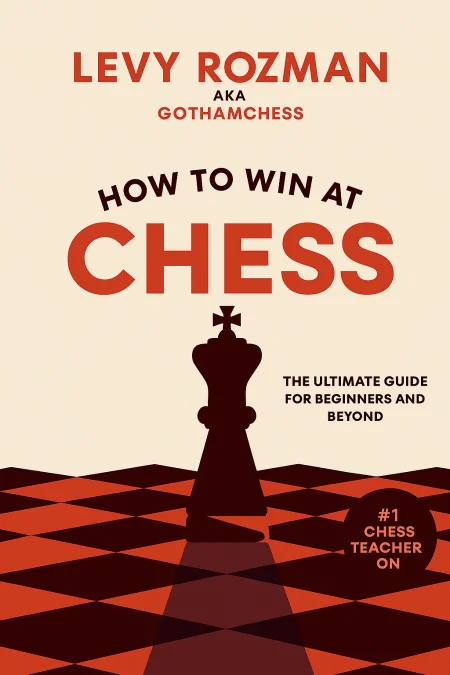
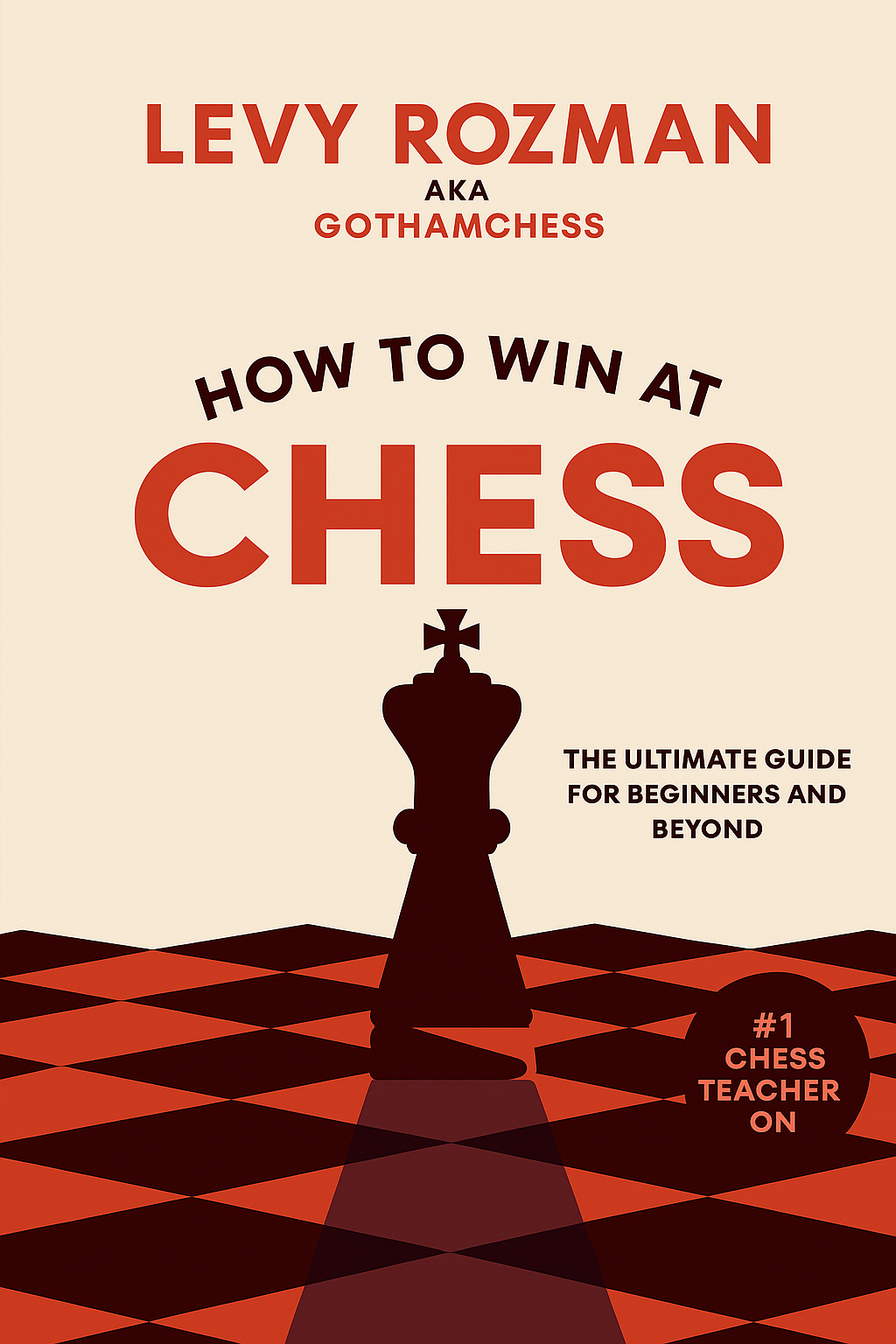
How to Win at Chess
The Ultimate Guide for Beginners and Beyond
Book Edition Details
Summary
Chess enthusiasts, meet your new best friend—Levy Rozman, also known as GothamChess. In "How to Win at Chess," Rozman transforms his charismatic teaching style into an engaging chess manual that’s anything but ordinary. This book is your gateway to mastering the board, whether you're just starting with a 0-800 Elo or looking to sharpen your skills at 800-1300 Elo. With over 500 vivid gameplay illustrations, Rozman demystifies the essentials: openings, endings, tactics, and strategies. His knack for humor and clarity shines, turning complex concepts into digestible insights. Plus, exclusive QR codes connect you to bonus content on Chessly, his interactive teaching platform. Whether aiming for casual play or grandmaster glory, this guide promises a fresh, fun, and transformative chess journey.
Introduction
Have you ever sat across from a chessboard feeling overwhelmed by the endless possibilities before you? Perhaps you've wondered how masters seem to effortlessly navigate complex positions while you struggle to see even one move ahead. The truth is, chess mastery isn't about innate genius or memorizing countless variations. It's about understanding fundamental principles, recognizing patterns, and developing a systematic approach to the game. Every grandmaster was once a beginner who felt lost among the 64 squares, but they discovered something powerful: chess can be learned through deliberate practice and proven methods. Whether you're taking your first tentative moves or seeking to break through to the next level, the journey from beginner to master follows a clear path. This path involves mastering essential opening principles, developing tactical vision, building strategic understanding, and learning systematic approaches that transform uncertainty into confident play.
Master the Golden Moves and Opening Principles
The foundation of chess mastery begins with what experienced players call the "golden moves" – a set of universal principles that guide your first ten moves regardless of your opponent's choices. These principles aren't arbitrary rules but time-tested wisdom that creates the optimal starting position for any chess battle. Consider the story of a young chess student who spent months memorizing dozens of opening variations, only to find himself constantly outplayed by opponents who seemed to know far less theory. His breakthrough came when his instructor introduced him to the golden moves: control the center with pawns, develop knights and bishops toward active squares, castle your king to safety, and connect your rooks. Instead of drowning in variations, he now had a clear roadmap. Within weeks of applying these principles consistently, his opening play transformed. He no longer fell behind in development or left his king exposed. More importantly, he reached promising middlegame positions where his pieces worked harmoniously together. The golden moves had given him something more valuable than memorized lines – they provided understanding. To implement the golden moves effectively, start each game by pushing your central pawns (e4 or d4) to control key squares. Then develop your knights before bishops, aiming for squares that influence the center. Castle early to safeguard your king, typically within the first ten moves. Finally, connect your rooks by completing development, creating a unified army ready for battle. Remember that these principles serve as your north star when facing unfamiliar positions. Your opponent may deviate from expected paths, but the golden moves ensure you maintain a solid foundation. Don't abandon these principles for tactical shots unless you can calculate concrete benefits. The golden moves represent more than opening theory – they embody the chess wisdom that separates systematic players from those who hope and guess. Master these principles first, and you'll find that complex variations become much more manageable when built upon this solid foundation.
Develop Pattern Recognition for Tactical Excellence
Chess tactics are the building blocks of combination play, but mastering them requires more than solving isolated puzzles. True tactical excellence emerges from pattern recognition – the ability to instantly identify familiar configurations that signal tactical opportunities. The journey of International Master Levy Rozman illustrates this perfectly. When he returned to competitive chess after a three-year hiatus, he discovered that his tactical vision had deteriorated significantly. Rather than despair, he embarked on an intensive pattern recognition program, solving thousands of tactical puzzles until common motifs became second nature. His approach wasn't random practice but systematic pattern absorption. Within months of dedicated pattern training, Rozman found himself spotting combinations that previously would have remained hidden. A pin here, a fork there, discovered attacks that materialized seemingly from nowhere. His brain had developed what chess psychologists call "chunking" – the ability to recognize complex tactical patterns as single units rather than analyzing each piece individually. This transformation elevated his play from hopeful calculation to confident pattern recognition. To develop tactical excellence, focus first on mastering fundamental patterns: pins, forks, skewers, discovered attacks, and deflection motifs. Practice these patterns until recognition becomes instantaneous. Use the CCA system – always look for Checks, Captures, and Attacks before making any move. This systematic approach ensures you never miss forcing continuations. Dedicate time daily to tactical puzzles, but vary the difficulty levels. Solve easier problems quickly to reinforce pattern recognition, then challenge yourself with complex positions that require deep calculation. Most importantly, analyze your games to identify tactical opportunities you missed, as real-game tactics are often more valuable than artificial puzzle positions. Tactical mastery transforms chess from a game of hope into a game of concrete calculation. When patterns become automatic, you'll find combinations emerging naturally from your positions, turning the chessboard into a canvas for beautiful, decisive play.
Build Strategic Thinking and Positional Play
While tactics win games in the short term, strategic understanding provides the foundation for consistent, long-term success. Strategic thinking involves evaluating positions beyond immediate tactics, recognizing pawn structures, understanding piece coordination, and formulating plans that improve your position gradually. Magnus Carlsen's approach to strategy exemplifies this principle beautifully. Rather than seeking immediate tactical solutions, Carlsen often accepts positions that appear equal or even slightly worse, trusting his superior strategic understanding to create winning chances over time. His famous endgame against Alireza Firouzja demonstrated this perfectly – from a symmetrical position that most players would quickly draw, Carlsen maneuvered his pawns to optimal squares and gradually transformed the position into a winning advantage. The transformation didn't happen through brilliant tactics but through patient strategic maneuvering. Carlsen placed his pawns on squares where they couldn't be attacked, restricted his opponent's pieces, and slowly improved his king position. Move by move, the balance shifted until his strategic advantages became overwhelming. This exemplifies how strategic understanding can create something from seemingly nothing. To develop strategic thinking, begin by studying pawn structures – the skeleton upon which all positions are built. Learn to identify weak pawns, understand pawn breaks, and recognize how pawn structure influences piece placement. Study different types of positions: closed, open, and semi-open structures each require different approaches and piece coordination patterns. Focus on improving your weakest pieces while restricting your opponent's best pieces. Look for outposts where your knights can settle safely, understand when bishops are stronger than knights, and learn to coordinate your rooks effectively. Most importantly, always have a plan, even if it's simple – aim for concrete improvements rather than aimless maneuvering. Strategic mastery develops slowly but provides lasting benefits. Players who understand strategy win positions that tactically oriented players would draw, finding resources and improvements that transform equal positions into winning advantages through patient, purposeful play.
Apply the CCA System for Consistent Success
The CCA system – Checks, Captures, Attacks – provides a systematic framework for finding strong moves in any position. This methodical approach ensures you never overlook forcing continuations while helping you prioritize the most important candidate moves in complex positions. Professional players like Levy Rozman credit the CCA system with dramatically improving their tactical awareness and decision-making speed. Before adopting systematic thinking, Rozman often missed obvious tactics or spent too much time analyzing irrelevant moves. The CCA system provided structure to his analysis, ensuring he examined the most forcing moves first before considering quieter positional improvements. The transformation was remarkable. Instead of randomly analyzing moves, Rozman would systematically scan for checks first – the most forcing moves that demand immediate response. Then captures, which might win material or improve position. Finally attacks on undefended pieces or important squares. This hierarchy ensured he never missed tactical opportunities while efficiently managing his thinking time. To implement the CCA system effectively, start every turn by scanning for all possible checks. Evaluate each check to determine if it leads to tactical gain or better positioning. Next, examine all captures, considering not just material gain but positional consequences. Finally, look for attacks on undefended pieces, loose pieces, or key squares in your opponent's position. Apply this system consistently, both for your moves and your opponent's threats. Before making any move, quickly run through CCA from your opponent's perspective to ensure you haven't overlooked defensive requirements. This double-checking prevents tactical oversights that plague many intermediate players. The CCA system becomes particularly powerful when combined with pattern recognition and strategic understanding. As tactical patterns become automatic, the system helps you quickly identify when familiar motifs are present, while strategic knowledge guides your choice when multiple forcing moves are available.
Summary
Chess mastery emerges not from memorizing variations or hoping for opponent mistakes, but from systematic application of proven principles and methods. The golden moves provide your foundation, tactical pattern recognition sharpens your calculation, strategic understanding guides your planning, and the CCA system ensures consistent application of these skills. As Levy Rozman discovered upon returning to competitive play, "The game doesn't end even if you are up 59 points of material. The game ends with checkmate." This profound insight reminds us that chess rewards not just knowledge but systematic application of fundamental principles. Begin today by implementing the golden moves in your very next game – control the center, develop purposefully, castle early, and coordinate your pieces. This single commitment to systematic opening play will immediately improve your results and provide the foundation for all future chess growth.
Related Books
Download PDF & EPUB
To save this Black List summary for later, download the free PDF and EPUB. You can print it out, or read offline at your convenience.
By Levy Rozman
