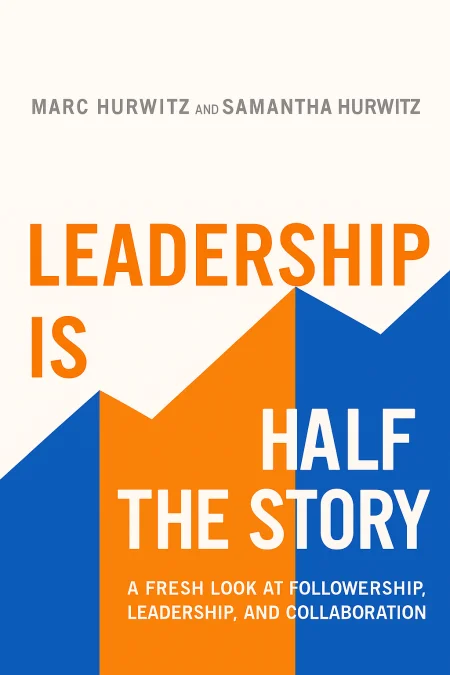
Leadership is Half the Story
A Fresh Look at Followership, Leadership, and Collaboration
byMarc Hurwitz, Samantha Hurwitz
Book Edition Details
Summary
In the bustling world of corporate dynamics, where power often feels predetermined, "Leadership is Half the Story" offers a refreshing perspective: leadership and followership as a dance, where roles are fluid and shared. Marc and Samantha Hurwitz unravel the traditional hierarchies, inviting everyone—from the executive suite to the frontline—to embrace the art of collaboration. This book isn't just about leadership; it's about the symphony of teamwork, where each note is as crucial as the next. The authors present a groundbreaking model, highlighting how the constant interplay between leading and following can ignite innovation and strengthen teams. With practical insights backed by research, this transformative guide equips you to navigate and thrive in the evolving landscapes of modern organizations. Rediscover leadership as a vibrant, collective experience, not a solitary pursuit.
Introduction
Picture this: You're sitting in your fourth meeting this week where brilliant ideas seem to evaporate into thin air, where talented individuals somehow produce mediocre collective results. Sound familiar? This scenario plays out in conference rooms around the world every single day, leaving leaders scratching their heads and team members feeling frustrated. What if the solution isn't found in better leadership techniques or more charismatic personalities? What if we've been looking at only half the equation all along? While countless books, seminars, and development programs focus exclusively on leadership skills, they miss a fundamental truth: great partnerships require both exceptional leaders and exceptional followers working in dynamic harmony. The traditional view treats followership as passive compliance or, worse, as a stepping stone to "real" leadership. But research reveals something remarkable: the most successful organizations aren't just filled with great leaders—they're filled with people who know when to lead, when to follow, and how to dance gracefully between these roles. This isn't about hierarchy or submission; it's about recognizing that followership is an active, skilled, and essential complement to leadership. Through compelling stories and practical insights, this exploration will transform how you think about workplace relationships, team dynamics, and your own professional development. You'll discover why the best partnerships feel almost magical, how to build the kind of trust that makes great work possible, and how to master both sides of the leadership equation.
The Forgotten Half: Why Followership Matters as Much as Leadership
Sarah walked into her new role as project manager with fifteen years of experience and a track record of successful initiatives. Within months, however, her projects were stalling, team members seemed disengaged, and her boss was asking pointed questions about progress. What had changed? Sarah was the same talented professional she'd always been, bringing the same skills and dedication to her work. The difference was that Sarah had mastered leadership but had never learned to be an effective follower. In her previous company, she'd been the senior voice in most rooms. Now, reporting to an executive with strong opinions and specific working styles, Sarah's inability to adapt, communicate upward, and build partnerships with those above her was undermining everything she tried to accomplish below. Research from organizations like Gallup reveals that teams with highly effective followers see productivity increases of 17% to 43% across virtually every performance metric. These aren't marginal improvements—they represent the difference between good teams and exceptional ones. Yet followership remains the invisible skill, the unspoken competency that determines who thrives and who struggles in today's collaborative workplace. Consider the most admired partnerships in business history: Steve Jobs and Tim Cook at Apple, where Cook's operational excellence complemented Jobs' visionary leadership; or The Beatles, where each member knew when to lead a song and when to support another's creative vision. These weren't relationships between a star and supporting actors—they were dynamic partnerships where leadership and followership flowed back and forth like a carefully choreographed dance. The organizations that understand this distinction are already pulling ahead. They recognize that in our team-based, rapidly changing work environment, everyone must master both roles. The future belongs not to better leaders or better followers, but to better partners who can shift fluidly between leadership and followership as circumstances demand.
From Followers to Partners: Building Dynamic Leadership-Followership Relationships
Marc thought he understood workplace dynamics until he encountered Linda, his new boss after a company merger. Previously, Marc had been praised as innovative and strategic. Under Linda's leadership, however, his performance reviews plummeted and his career progression ground to a halt. The confusion was crushing: same person, same skills, completely different results. The breakthrough came when Marc realized he'd been approaching every boss the same way, expecting them to adapt to his style and preferences. Linda valued different things than his previous managers—she needed more frequent updates, preferred detailed analysis over big-picture thinking, and made decisions through extensive consultation rather than quick executive judgment. Marc's failure wasn't in leadership capability; it was in followership agility. This story illuminates a critical truth: partnership effectiveness isn't determined by individual excellence but by relational intelligence. The best workplace relationships aren't accidents of chemistry or personality matches—they're carefully constructed partnerships where both people take active responsibility for making the collaboration work. Think of elite dance partners who make their performance look effortless. Behind that seemingly natural flow lies countless hours of practice, constant communication, and deep mutual understanding. Each partner knows not only their own steps but also how to respond to their partner's signals, when to lead, when to follow, and how to make their partner look brilliant. The same principle applies in professional relationships, but with an added complexity: workplace partnerships must be built quickly and adapted constantly as teams form and reform around different projects and priorities. The most valuable employees aren't just those with the best technical skills or the strongest leadership presence—they're the ones who can rapidly build effective partnerships up, down, and across the organizational chart. What makes these dynamic relationships work is the recognition that leadership and followership are both active, skilled roles that require different competencies and create different value. When both partners master both roles, something magical happens: they stop working around each other's limitations and start amplifying each other's strengths.
The Partnership Blueprint: Five Principles for Generative Collaboration
When Google's founders set out to create an organization without traditional managers, they expected their engineer-heavy culture would naturally self-organize around technical excellence. What they discovered instead was that even the most brilliant individual contributors struggled without clear frameworks for collaboration. Their famous Project Oxygen research revealed that the highest-performing teams weren't those with the smartest people—they were those with the clearest partnership principles. The first principle that emerged was recognizing that both leadership and followership are essential, equal, and different. Like jazz musicians who can solo brilliantly but create magic when they learn to support each other's improvisation, workplace partners need to understand when to step forward and when to step back, when to set direction and when to execute within someone else's framework. The second principle involves understanding that leadership is about setting the frame while followership is about creating within it. When a leader establishes clear constraints, expectations, and resources, they're not limiting creativity—they're enabling it. Paradoxically, people are most innovative when they understand the boundaries within which they can experiment. Meanwhile, effective followers don't just execute instructions; they bring insight, initiative, and creative problem-solving to achieve the intended outcomes. The third principle requires both partners to lean in and build genuine connection. This isn't about friendship or personal chemistry, though those can certainly help. It's about professional commitment to understanding each other's working styles, communication preferences, and success criteria. The best partnerships have a quality of attentiveness where each person actively works to understand and adapt to their partner's needs. The fourth principle focuses on building from positives rather than trying to fix negatives. Research consistently shows that teams who spend more time identifying what's working and how to do more of it vastly outperform those who focus primarily on problems and deficits. This doesn't mean ignoring issues, but rather approaching challenges from a foundation of strength and possibility. Finally, the most generative partnerships are built on deeply shared goals that go beyond individual objectives to create genuine interdependence. When partners truly need each other to succeed, they naturally invest more energy in making the relationship work, communicate more openly about obstacles, and celebrate each other's contributions more genuinely.
Skills in Action: Mastering the Art of Leading and Following
Rachel had always been praised for her analytical mind and strategic thinking, but when she was promoted to department head, she struggled with a challenge no MBA course had prepared her for: how to make decisions that her team would actually implement enthusiastically. Her carefully reasoned choices often met with lukewarm reception, and she found herself having to push harder and harder to get things done. The turning point came when Rachel learned to distinguish between making decisions and framing decision processes. Instead of presenting her team with conclusions, she began involving them in exploring options, understanding constraints, and evaluating trade-offs. She discovered that her role wasn't to be the smartest person in the room but to create conditions where the collective intelligence of her team could emerge. Meanwhile, her team members were learning complementary skills. Instead of waiting to be told what to do, they began bringing forward not just problems but potential solutions. They learned to provide context and reasoning for their recommendations, making it easier for Rachel to say yes to their initiatives. Most importantly, once decisions were made, they shifted their energy entirely toward implementation rather than continuing to debate alternatives. This transformation illustrates how partnership skills work in practice. Decision-making becomes a dance between framing (leadership) and advocating (followership). Communication flows both ways: leaders cascade context and priorities downward while followers provide dashboard updates that help leaders know when and where to intervene. Relationship building becomes a shared responsibility where both partners actively work to understand each other's styles and needs. Perhaps most critically, both partners learned to think developmentally. Rachel began seeing her role as building her team's capabilities, not just managing their output. Her team members took ownership of their own growth and proactively sought the experiences and skills they needed to advance. Performance became a partnership where Rachel coached and her team members took initiative to perform at their peak. What emerged was something neither Rachel nor her team had experienced before: work that felt energizing rather than draining, results that exceeded what anyone thought possible, and a sense of collective capability that made them excited to tackle increasingly complex challenges together.
Summary
The most profound insight from exploring these partnership dynamics is that we've been asking the wrong question. Instead of "How can I become a better leader?" we should be asking "How can I become a better partner?" The future belongs to those who can master both sides of the collaborative equation, who understand that the most powerful professional relationships are built on mutual competence, shared commitment, and dynamic role flexibility. The evidence is overwhelming: organizations with strong partnership cultures consistently outperform their competitors, individuals who excel at both leadership and followership advance faster in their careers, and teams that understand these principles create the kind of work environments where people thrive rather than just survive. Yet most of us have never been taught these skills explicitly, leaving us to figure them out through trial and error—or not at all. The path forward requires courage: the courage to give up the myth that leadership is more important than followership, the courage to take active responsibility for making our partnerships work regardless of the other person's skill level, and the courage to see every workplace relationship as an opportunity to practice these essential capabilities. When we embrace both leading and following as skilled, valuable contributions, we don't just improve our own effectiveness—we model a different way of working that ripples outward to transform entire teams and organizations. The choice is ours: we can continue treating leadership and followership as separate worlds, wondering why our best individual efforts produce mediocre collective results, or we can step into the partnership paradigm and discover what becomes possible when talented people truly learn to work together.
Related Books
Download PDF & EPUB
To save this Black List summary for later, download the free PDF and EPUB. You can print it out, or read offline at your convenience.
By Marc Hurwitz
