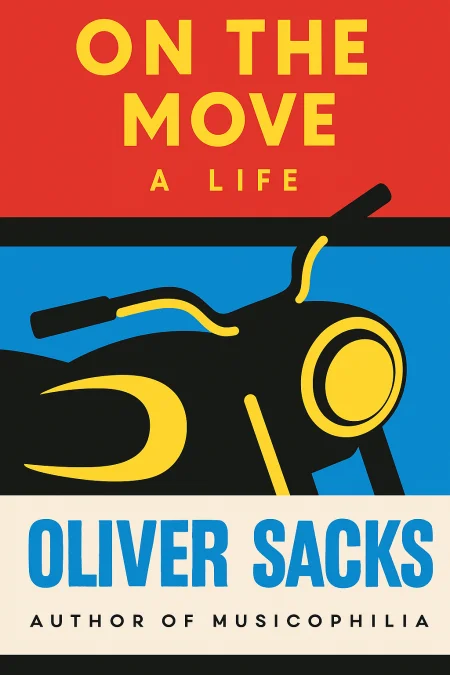
On the Move
A Life
Book Edition Details
Summary
In the whirlwind of Oliver Sacks's life, the boundaries between mind and body, passion and profession, blur into a vivid tapestry of human experience. This memoir pulses with the urgency of a man forever in motion—from a boyhood fascination with motorcycles to the relentless pursuit of knowledge that led him to the frontiers of neurology. With raw candor, Sacks invites readers into his world: a place where the thrill of speed mirrors the exhilaration of intellectual discovery, where love affairs intertwine with scientific quests, and where personal demons and dazzling insights coexist. Through his struggles with addiction and explorations of identity, Sacks unveils a remarkable journey that not only shaped him but also redefined our understanding of the human brain. "On the Move" stands as a testament to a life lived at full throttle, offering an unflinching look at the complexities and triumphs of an extraordinary mind.
Introduction
In the summer of 1969, a young neurologist stood among patients who had been frozen in time for nearly half a century. These survivors of the great encephalitis lethargica epidemic had remained motionless, speechless, yet somehow aware, trapped between sleep and waking since the 1920s. When Oliver Sacks administered a revolutionary new drug called L-dopa, these patients suddenly awakened to a world that had moved on without them. This moment of medical drama would define not just their lives, but the extraordinary career of the physician who witnessed their return to consciousness. Sacks embodied a rare combination of rigorous scientist and compassionate storyteller, a doctor who saw beyond symptoms to the full humanity of his patients. His journey from a motorcycle-riding young rebel to one of medicine's most celebrated voices reveals a man constantly in motion, both literally and intellectually. Through his eyes, we discover how the practice of medicine can become an art form, how scientific observation can illuminate the deepest mysteries of human consciousness, and how a life dedicated to understanding the brain can ultimately teach us what it means to be human. His story offers insights into the evolution of neurology, the power of empathy in healing, and the courage required to challenge medical orthodoxy in service of patient care.
The Making of an Unconventional Neurologist
Oliver Wolf Sacks was born in 1933 into a family where medicine flowed through conversations like a natural language. His parents, both physicians in London, created a household where scientific curiosity and human compassion intertwined seamlessly. Young Oliver absorbed not just medical knowledge but a profound appreciation for the stories behind every illness. Yet his path to neurology was anything but conventional. After completing his medical training at Oxford, he felt an irresistible pull toward adventure that led him to California in the early 1960s, carrying little more than his credentials and an insatiable curiosity about consciousness itself. The young doctor who arrived in America was a fascinating contradiction. By day, he pursued rigorous neurological training, mastering the technical aspects of brain science with methodical precision. By night, he explored the counterculture movement, experimenting with consciousness-altering substances and pushing his physical limits through competitive weightlifting. This period of experimentation was far from mere rebellion; it provided him with firsthand insight into the malleability of perception and the brain's capacity for creating alternate realities. These experiences would prove invaluable when he later encountered patients whose neurological conditions created their own altered states of being. What emerged from this formative period was a physician unlike any of his contemporaries. Sacks possessed not only exceptional diagnostic skills but also an almost mystical appreciation for the mysteries of consciousness. He approached each patient encounter with what he would later call "clinical love" – a combination of scientific rigor and deep personal engagement that allowed him to see beyond symptoms to the complete human being. This unique perspective enabled him to recognize that neurological conditions often revealed extraordinary adaptations rather than simple deficits. His unconventional background prepared him perfectly for the challenges ahead. When he began working with patients whose conditions defied standard medical understanding, Sacks drew upon his diverse experiences to develop innovative approaches to treatment and care. He understood that healing required more than technical intervention; it demanded a willingness to enter into the patient's world and understand their unique experience of reality.
Awakenings and the Birth of Narrative Medicine
The defining moment of Sacks' career arrived in 1966 when he encountered a group of patients at Beth Abraham Hospital who had survived the great encephalitis lethargica epidemic of the 1920s. These individuals had been living in a state of profound neurological suspension for decades, conscious but unable to move or speak, trapped in their own bodies like living statues. When the revolutionary drug L-dopa became available, Sacks made the bold decision to administer it to these forgotten patients, not knowing he was about to witness one of the most extraordinary chapters in medical history. The results defied every expectation. Patients who had been motionless for forty years suddenly came alive, walking, talking, and reconnecting with a world that had transformed beyond recognition. But these awakenings were complex and often heartbreaking, as the patients struggled to reconcile their unchanged inner selves with aged bodies and an alien modern world. Rose, who had been catatonic since 1926, awakened to find her parents long dead and her youth irretrievably lost. Leonard, brilliant and articulate, experienced a temporary renaissance of mind and spirit before the drug's effects became unpredictable and problematic. What set Sacks apart was his recognition that these experiences demanded more than clinical documentation. He began writing about his patients not as medical cases but as complete human beings with rich inner lives and compelling stories. His approach broke new ground by combining rigorous medical observation with literary narrative, creating what would later be called narrative medicine. Each patient portrait became a complete story, exploring not just their medical condition but their personality, history, and unique way of experiencing the world. This revolutionary approach challenged the traditional boundaries between science and literature, demonstrating that clinical observation could be both scientifically rigorous and deeply moving. Sacks showed that the most profound medical insights often came not from laboratory tests but from careful attention to patients' subjective experiences and the stories they told about their conditions. His work inspired a generation of physicians to recognize that healing involved not just treating symptoms but understanding the complete human experience of illness and recovery.
Finding Humanity in Neurological Difference
Throughout his career, Sacks possessed an extraordinary ability to find profound humanity within neurological conditions that others might dismiss as mere medical curiosities. His patients included individuals with Tourette's syndrome, severe autism, complete color blindness, and profound amnesia. Rather than focusing solely on deficits and abnormalities, Sacks consistently highlighted the remarkable adaptations and compensations his patients developed, revealing how the brain's plasticity could create entirely new ways of experiencing and navigating the world. His approach to patient care was revolutionary in its emphasis on understanding rather than simply treating. Sacks would spend hours with his patients, not just examining symptoms but learning about their lives, dreams, fears, and unique perspectives on their conditions. He discovered that many neurological conditions, while challenging, also conferred certain gifts or heightened abilities that deserved celebration alongside acknowledgment of their difficulties. Temple Grandin, the autistic woman who became one of his most famous case studies, exemplified this perspective – her condition created challenges in social interaction but also gave her extraordinary insights into animal behavior that revolutionized livestock handling. The stories Sacks told resonated far beyond the medical community because they spoke to universal human experiences of adaptation, resilience, and the search for meaning in the face of adversity. His writing revealed that neurological conditions often illuminated fundamental aspects of how all human brains work, making his patients' experiences relevant to everyone. By treating his patients as collaborators in understanding their conditions rather than passive subjects of medical observation, he created a new model for the doctor-patient relationship based on mutual respect and shared curiosity. His work fundamentally challenged prevailing notions about normalcy and disability, suggesting that neurological differences might represent variations in human experience rather than deviations from a standard norm. This perspective proved particularly influential in changing attitudes toward autism and other developmental conditions, helping shift focus from deficits to differences and from cure to accommodation and understanding. Sacks demonstrated that the goal of medicine should not always be to eliminate difference but sometimes to help individuals and society find ways to embrace and celebrate the full spectrum of human neurological diversity.
Love, Loss, and Legacy in Later Life
In his seventies, after decades of what he described as emotional isolation despite professional success and public recognition, Sacks experienced a profound personal transformation when he fell in love with writer Billy Hayes. This relationship, beginning when Sacks was already in his mid-seventies, brought him a happiness and emotional fulfillment that had eluded him throughout most of his adult life. The experience of love at such an advanced age became another subject of fascination for Sacks, who approached it with the same scientific curiosity and literary sensibility he brought to his medical work. This late-life romance coincided with a series of health challenges that would have defeated a lesser spirit. Sacks faced the loss of vision in one eye due to cancer, underwent multiple surgeries, and dealt with chronic pain that at times left him bedridden. Yet he approached these personal medical experiences with characteristic analytical rigor, documenting his symptoms and perceptual changes in detailed journals that informed his understanding of how the brain adapts to sensory loss and physical limitation. His own illness became another case study in the remarkable resilience of human consciousness. Even as his health declined, Sacks continued to write prolifically, producing works on topics ranging from music and the brain to hallucinations and the nature of consciousness. His later books showed a deepening wisdom and an even greater appreciation for the mysteries of human experience. He remained curious and engaged with new developments in neuroscience while maintaining his commitment to seeing patients as whole human beings rather than collections of symptoms. When Sacks learned he had terminal cancer in 2015, he faced his approaching death with characteristic grace and intellectual honesty. His final writings reflected on a life lived fully in service of understanding the human condition, expressing gratitude for the extraordinary privilege of having spent his career exploring the mysteries of consciousness alongside his patients. He continued working almost until the end, driven by an insatiable curiosity about the workings of the mind and a deep commitment to sharing the stories of those whose neurological conditions had taught him so much about what it means to be human.
Summary
Oliver Sacks transformed modern medicine by demonstrating that the most profound healing occurs when we see patients not as collections of symptoms but as complete human beings whose stories illuminate the deepest mysteries of consciousness and identity. His revolutionary approach to neurology showed that conditions often dismissed as disabilities or abnormalities could reveal extraordinary adaptations and insights into the fundamental workings of the human brain. Through his unique combination of scientific rigor and literary artistry, Sacks created a new understanding of neurological conditions that emphasized human dignity, resilience, and the remarkable plasticity of the mind. From Sacks' extraordinary life, we learn the importance of approaching others with genuine curiosity and compassion, recognizing that every person's experience, no matter how different from our own, has something valuable to teach us about the human condition. His work reminds us that true understanding comes not from maintaining clinical distance but from engaging deeply with others' experiences and stories. For anyone interested in medicine, neuroscience, psychology, or simply the rich complexity of human experience, Sacks' approach offers a model for how scientific inquiry and human empathy can work together to create both knowledge and healing. His legacy continues to inspire healthcare providers, researchers, and writers to see beyond symptoms and diagnoses to the complete human beings whose stories hold the keys to understanding consciousness, identity, and what it truly means to be human.
Related Books
Download PDF & EPUB
To save this Black List summary for later, download the free PDF and EPUB. You can print it out, or read offline at your convenience.
By Oliver Sacks
