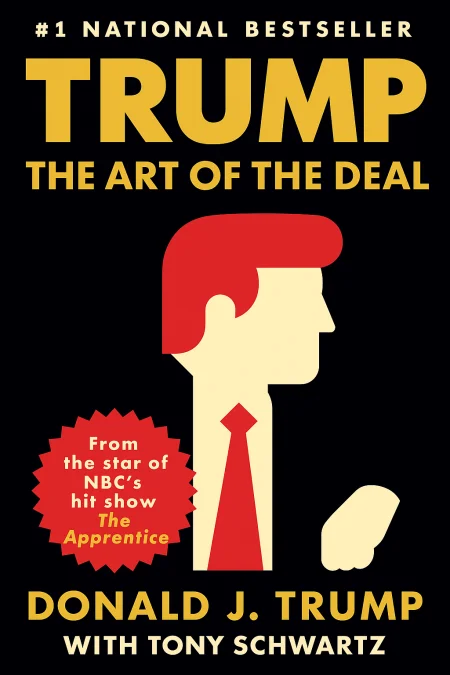
Trump: The Art of the Deal
The Art of the Deal
byDonald J. Trump, Tony Schwartz
Book Edition Details
Summary
In the high-stakes world of deal-making, Donald J. Trump emerges as a master strategist, sculpting the New York skyline and reshaping the art of negotiation. With audacious flair and an unyielding belief in thinking big, Trump unveils the secrets behind his meteoric rise. From boardroom battles to candid conversations, he invites readers into his world, revealing the eleven cardinal rules that guide his empire. Through riveting anecdotes and an unfiltered narrative, "Trump: The Art of the Deal" offers an insider’s perspective on the grit and genius of a remarkable entrepreneur. This is not just a business manual; it’s a manifesto for those who dare to redefine success on their own terms.
Introduction
In the bustling heart of 1980s New York, while Wall Street titans traded in stocks and bonds, one young developer was quietly revolutionizing the very skyline of Manhattan. Donald Trump's meteoric rise from Brooklyn construction sites to Fifth Avenue penthouse represents one of the most audacious American success stories of the late twentieth century. With a combination of relentless ambition, calculated risk-taking, and an almost supernatural ability to turn obstacles into opportunities, Trump transformed himself from Fred Trump's son into a household name synonymous with luxury real estate and bold business ventures. This extraordinary journey reveals the anatomy of dealmaking at its most sophisticated level, where million-dollar negotiations unfold with the intensity of high-stakes poker games. Through Trump's experiences, we witness the delicate balance between vision and pragmatism that separates successful entrepreneurs from mere dreamers. His story illuminates three crucial dimensions of achievement: the foundational importance of learning from failure and persistence, the strategic art of leveraging relationships and timing to create seemingly impossible deals, and the psychological principles that govern high-level business negotiations where reputation, instinct, and sheer force of will often matter more than spreadsheets and market analysis.
From Brooklyn to Manhattan: Early Business Foundations
Donald Trump's business education began not in ivy-covered lecture halls, but on the gritty construction sites of Brooklyn and Queens, where his father Fred had built a successful empire of middle-income housing. The elder Trump was a master of efficiency and cost control, a man who could negotiate the price of floor wax with the same intensity he brought to major construction contracts. Young Donald absorbed these lessons while watching his father operate in a world where every penny counted and where the difference between profit and loss often hinged on the smallest details. The transition from outer borough apprentice to Manhattan developer required more than just ambition—it demanded a fundamental reimagining of what was possible. While Fred Trump built practical, profitable housing for working families, his son harbored grander visions. Donald saw potential in the spectacular rather than the merely successful, gravitating toward projects that would make statements rather than simply generate steady returns. This philosophical divergence would prove crucial, as it prepared him for the high-stakes world of luxury development where vision often trumps conventional wisdom. The move to Manhattan in 1971, even if it was just to a tiny studio apartment, represented a psychological transformation as much as a geographic one. By immersing himself in the rhythms and relationships of the city's power centers, Trump began to understand that success in Manhattan real estate was as much about perception and timing as it was about construction and financing. His father's lessons in discipline and cost control would remain valuable, but they would need to be applied to projects of unprecedented scale and complexity. The early setbacks and false starts that marked Trump's first forays into Manhattan development taught him perhaps the most valuable lesson of all: that in the world of high-stakes real estate, patience and persistence often matter more than initial capital. The deals that didn't happen, the options that expired, and the partnerships that fell through all contributed to a growing understanding of how to navigate the treacherous waters of New York politics, finance, and community relations.
Building an Empire: Major Real Estate Victories
The transformation of the decrepit Commodore Hotel into the gleaming Grand Hyatt marked Trump's emergence as a serious player in Manhattan development. This project demonstrated his ability to see potential where others saw only problems, turning a failing property in a deteriorating neighborhood into a symbol of urban renewal. The deal required not just vision, but an intricate understanding of tax abatement policies, political relationships, and the complex dynamics of public-private partnerships. Trump's success in securing unprecedented tax breaks from the city while maintaining control of the project established templates he would use repeatedly throughout his career. Trump Tower represented the full flowering of Trump's ability to create desire through scarcity and spectacle. By positioning the building not merely as residential space but as a lifestyle statement, he tapped into deep currents of aspiration and status consciousness. The project's success stemmed from understanding that at the highest levels of the luxury market, buyers seek exclusivity and drama rather than value and practicality. Every detail, from the pink marble atrium to the sawtooth design that maximized views, was calculated to create an emotional response that transcended rational considerations of cost per square foot. The West Side yards project showcased Trump's long-term strategic thinking and his ability to turn political opposition into advantage. When community resistance and regulatory challenges blocked his initial plans, he used the delays to refine his approach and build support among key stakeholders. The evolution from Lincoln West to Television City demonstrated how effective developers must be storytellers as much as builders, creating narratives that help cities and communities envision possibilities beyond current limitations. Each major project taught Trump something new about the psychology of deal-making at the highest levels. He learned that successful negotiations often depend more on understanding what motivates the other party than on having the strongest financial position. Whether dealing with government officials seeking to revitalize neighborhoods, corporate partners looking for prestige, or wealthy buyers pursuing status, Trump developed an intuitive sense for finding the emotional drivers that make deals possible even when the numbers alone might not justify them.
Beyond Real Estate: Casinos, Sports, and Public Profile
Trump's expansion into casino gaming represented both his greatest financial triumph and his most sobering education in the limits of individual control over complex enterprises. The Atlantic City ventures demonstrated how quickly changing market conditions, regulatory pressures, and partnership dynamics could transform promising opportunities into existential challenges. His experience with Holiday Inns as a partner taught him valuable lessons about corporate culture and the difficulties of maintaining entrepreneurial agility within large organizational structures. The United States Football League adventure revealed Trump's willingness to take calculated risks in pursuit of transformational opportunities. While the league ultimately failed, the experience provided insights into media strategy, sports marketing, and the complex dynamics of challenging established monopolies. Trump's approach to player recruitment and his vision for moving the league to fall competition showed his instinct for disrupting comfortable arrangements and forcing competitors to respond to his initiatives rather than simply reacting to theirs. The Wollman Rink project became a masterclass in public relations and project management, demonstrating how private sector efficiency could highlight government dysfunction while generating enormous goodwill. By completing the renovation quickly and under budget, Trump not only provided a valuable public service but also created a powerful symbol of entrepreneurial competence that would serve him well in future negotiations with city officials. The project showed how sometimes the best deals are those that create value for all parties while establishing one's reputation for getting difficult things done. These diverse ventures beyond traditional real estate development revealed Trump's understanding that modern business success requires mastery of media, politics, and public perception as much as financial acumen. Each project contributed to building a personal brand that would become increasingly valuable in all his subsequent endeavors, creating a kind of multiplier effect where his reputation for bold action and successful completion attracted opportunities that might not otherwise have been available.
Deal-Making Philosophy and Business Strategy
Trump's approach to negotiation rests on several core principles that challenge conventional business school wisdom. His belief in "thinking big" reflects an understanding that audacious goals often prove easier to achieve than modest ones, partly because they attract better partners and more committed team members. By consistently aiming for projects that others considered impossible or impractical, Trump positioned himself in markets with less competition and higher potential returns, even if they also carried greater risks of spectacular failure. The concept of "protecting the downside while letting the upside take care of itself" represents perhaps Trump's most sophisticated strategic insight. Rather than simply being optimistic about potential returns, he structured deals to minimize his exposure to catastrophic losses while maintaining maximum flexibility to capitalize on unexpected opportunities. This approach required careful attention to contract terms, partnership structures, and exit strategies that many entrepreneurs overlook in their enthusiasm for potential profits. Trump's emphasis on location and timing reflects his understanding that in real estate, as in many businesses, success often comes from being right about trends that others miss or dismiss. His willingness to buy properties during market downturns, hold them through difficult periods, and develop them when conditions improved required both financial resources and psychological resilience that separated him from competitors who needed immediate returns to survive. The integration of marketing and development throughout every phase of major projects showed Trump's recognition that perception shapes reality in high-end markets. By generating excitement and desire before buildings were completed, he could command premium prices and attract the kind of tenants and buyers who would enhance rather than detract from each property's long-term value. This approach required treating each development as both a construction project and a carefully orchestrated media campaign.
Summary
Donald Trump's journey from outer borough developer to Manhattan icon demonstrates that extraordinary success often requires the courage to pursue opportunities that others dismiss as too difficult or too risky. His career illuminates the crucial importance of persistence in the face of setbacks, the strategic value of building relationships across political and financial networks, and the transformative power of thinking beyond conventional limitations. Through decades of complex negotiations and high-stakes projects, Trump proved that individual vision and determination can reshape entire industries and neighborhoods when combined with practical skills and relentless execution. The lessons embedded in Trump's rise extend far beyond real estate development to anyone seeking to build something significant in competitive environments. His experience suggests that success often comes not from avoiding risks, but from structuring situations so that you can survive failures while positioning yourself to benefit from successes. For entrepreneurs, executives, and anyone interested in understanding how large-scale change happens in complex urban environments, Trump's story provides insights into the delicate interplay between ambition, timing, and the practical skills needed to turn vision into reality.
Related Books
Download PDF & EPUB
To save this Black List summary for later, download the free PDF and EPUB. You can print it out, or read offline at your convenience.
By Donald J. Trump
