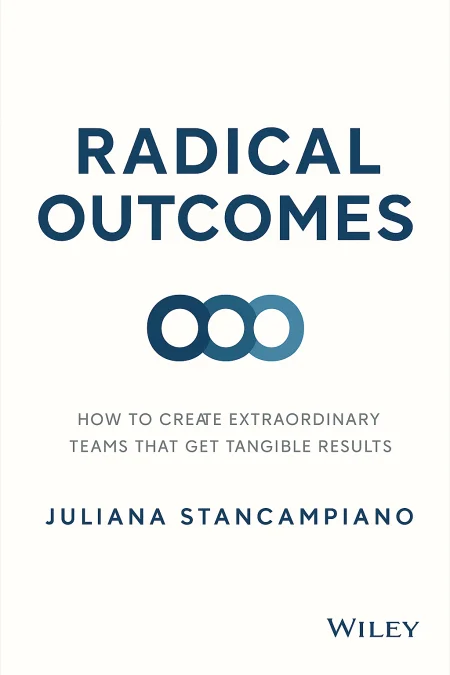
Radical Outcomes
How to Create Extraordinary Teams that Get Tangible Results
Book Edition Details
Summary
What if the future of work didn't just ask for more of the same, but demanded a radical shift in how we collaborate? In "Radical Outcomes," Juliana Stancampiano exposes the hidden chasm between intention and impact in corporate settings. By casting aside outdated tactics, she introduces a streamlined, dynamic method that aligns every layer of an organization, from boardroom to frontline. This isn't just another business manual; it's a manifesto for transformation. Stancampiano offers a compelling vision where high-performing teams drive success through genuine connection and agility. Unlock the potential to not only meet but exceed your company's strategic goals. "Radical Outcomes" is your guide to a workplace revolution, promising clarity, cohesion, and tangible results. Are you ready to redefine success?
Introduction
In today's rapidly evolving business landscape, organizations face an unprecedented challenge: how to transform knowledge into measurable outcomes while navigating constant change and information overload. Traditional approaches to team development and learning have become inadequate, leaving talented individuals struggling with random initiatives that waste time, money, and potential. The gap between strategic vision and execution continues to widen, creating frustration at every level of the organization. Yet within this complexity lies an extraordinary opportunity to revolutionize how teams collaborate, learn, and deliver results that truly matter. The solution isn't found in more training programs or better technology alone, but in fundamentally reimagining how we structure human-centered experiences that drive radical outcomes.
From Random Acts to Radical Outcomes
Random acts of content creation plague modern organizations, creating noise instead of value. These scattered efforts emerge from urgent directives without clear connection to measurable business outcomes, leaving audiences overwhelmed and executives questioning their investments. Maya Rodriguez, a vice president at a technology company, exemplified this frustration when she discovered that her sales teams were receiving fifty individual training emails while struggling to reach quota. The traditional approach of creating more content in response to business challenges had created a vicious cycle where well-intentioned efforts actually hindered performance rather than enhanced it. The transformation began when Maya's team shifted from output-focused thinking to outcome-based methodology. Instead of asking "what content do we need to create," they started with "what specific, measurable business result are we driving toward." This fundamental reframe eliminated the random nature of their work and created a clear north star for every decision. The process requires three essential elements: clear business outcomes tied to measurable results, executive-level cross-functional stakeholder involvement, and recognition that meaningful change happens over time rather than through single events. Teams must learn to triangulate between business requirements, audience realities, and customer needs. Start by identifying one initiative in your organization that feels scattered or random. Challenge yourself to articulate the specific, measurable outcome it should drive, then work backward from there to eliminate everything that doesn't directly contribute to that result.
Build Your Collaborative Ensemble
Extraordinary teams function like jazz ensembles, where individual expertise combines seamlessly to create something greater than the sum of its parts. Unlike traditional hierarchical structures, collaborative ensembles operate through shared purpose, role clarity, and psychological safety. Olivia Chandler discovered this principle when assembling her team to redesign a global sales onboarding program. Initially, team members worked in silos, each trying to shoulder the entire burden individually. The breakthrough came when they established clear codes of conduct: the ability to say "I don't know," authentic communication about strengths and weaknesses, and transparency about personal constraints and challenges. The transformation was remarkable. Instead of competitive dynamics where individuals hoarded information or blamed others, the team began functioning with the fluid precision of skilled musicians. When one designer faced a personal emergency, others seamlessly covered without drama. When technical challenges arose, multiple perspectives quickly converged on solutions. Essential ensemble characteristics include common mission alignment, defined roles with flexibility to shift when needed, and interpersonal agreements that prioritize collaboration over individual recognition. Leaders must function as "back-havers" who manage team energy and create environments where people feel safe to iterate and improve. Evaluate your current team dynamics. Identify one area where competitive behavior undermines collaboration, then establish a specific code of conduct that encourages vulnerability and mutual support rather than individual protection.
Architecture for Human-Centered Experiences
Architecture provides the structural framework that transforms complex information into digestible, sequential experiences. Without architectural thinking, organizations default to information dumps that overwhelm audiences and waste resources. Katherine and her team faced this challenge when confronting three hundred outdated online training modules for new sales hires. The existing content was random, contradictory, and impossible for any human to process effectively. The solution required creating an architectural blueprint that organized learning into missions and episodes, each connected to measurable objectives. Their breakthrough came through systematic triangulation between business outcomes, audience environments, and customer needs. They mapped essential knowledge and skills across a 120-day timeline, eliminating content that wasn't critical for initial success while creating clear pathways for deeper learning over time. The architecture functioned like a city plan, providing structure while allowing flexibility for updates and improvements. Each episode could be modified independently without disrupting the entire system, enabling rapid iteration based on feedback and changing business requirements. Architecture begins with three foundations: essential business outcomes that drive measurable results, deep understanding of audience realities and constraints, and systematic organization of content by priority and timing rather than convenience. Choose one complex initiative in your organization and create a simple architectural map showing what audiences need to know and do, when they need it, and how success will be measured at each stage.
Good Enough for Right Now
Perfectionism paralyzes progress and prevents the iterative improvement necessary for radical outcomes. The "Good Enough for Right Now" mindset liberates teams to show work early and often, gathering feedback that leads to better results than solitary pursuit of perfection. Olivia initially struggled with this concept, feeling pressure to present polished deliverables to executives. The turning point came when she decided to invite stakeholder Maya into the working conference room, surrounded by messy whiteboards and rough prototypes. Instead of hiding the complexity of their process, she embraced transparency about progress and challenges. Maya's response surprised everyone. Rather than criticism, she provided valuable insights that improved their approach and became an enthusiastic advocate for their methodology. The messy reality of thoughtful work impressed her more than polished presentations that obscured actual progress. The GEFRN approach requires structural support through clear architecture and process stages that define what "good enough" means at each iteration. Teams must frame their work appropriately, seeking content validation before design polish, and focusing stakeholder feedback on relevant aspects of each iteration. This methodology mirrors successful technology companies that release updates continuously rather than waiting for perfect versions. Each iteration provides value while building toward more sophisticated outcomes over time. Identify one project where perfectionism is slowing progress. Set a deadline to share your current version with stakeholders within forty-eight hours, focusing their feedback on content accuracy rather than visual polish. The architecture becomes your foundation for continuous improvement, enabling rapid response to changing business needs while maintaining quality and coherence. This approach transforms how teams work together and how organizations adapt to constant change, creating sustainable systems for achieving extraordinary results through human-centered design and collaborative excellence.
Summary
Creating extraordinary teams that deliver tangible results requires abandoning random acts of content creation in favor of outcome-based methodology supported by architectural thinking and collaborative excellence. As the authors emphasize, "Progress is all that matters" when teams align around measurable business outcomes, embrace iterative improvement over perfectionism, and create human-centered experiences that meet audiences where they are. The transformation from traditional hierarchical approaches to ensemble-based collaboration enables organizations to navigate complexity while maintaining focus on what truly drives results. Begin immediately by identifying one initiative in your organization, articulating its specific measurable outcome, and engaging stakeholders in collaborative design rather than isolated content creation.
Related Books
Download PDF & EPUB
To save this Black List summary for later, download the free PDF and EPUB. You can print it out, or read offline at your convenience.
By Juliana Stancampiano
