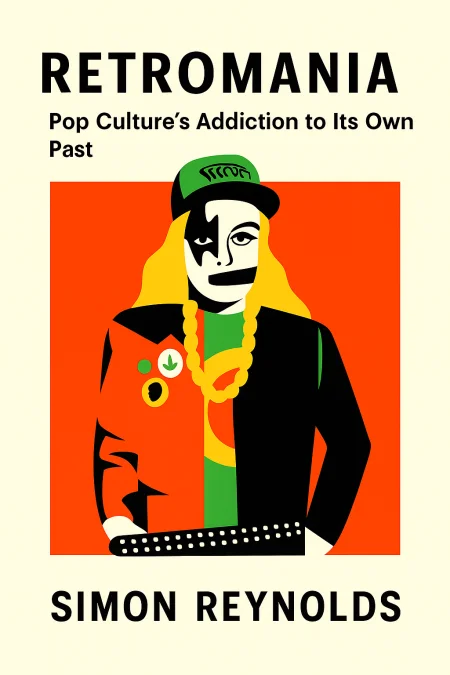
Retromania
Pop Culture’s Addiction to Its Own Past
Book Edition Details
Summary
In a world swirling with nostalgia, where every echo of yesteryear seems louder than the present, Simon Reynolds crafts a riveting examination of pop culture's backward glance. "Retromania" boldly questions if our cultural compass has lost its true north, as society spirals into an insatiable hunger for the familiar past. Reynolds, a maestro of music criticism, delves into the paradox of a modern era that idolizes its immediate history yet seems incapable of birthing a fresh musical revolution. Why do our playlists echo with the past's greatest hits, while innovation takes a backseat? This compelling narrative unravels the intricate dance between homage and stagnation, challenging readers to ponder the fate of originality amidst the relentless tide of retrospection.
Introduction
Contemporary culture has entered an unprecedented phase of temporal confusion, where the past exerts such overwhelming influence over present creative production that genuine innovation becomes increasingly elusive. This condition extends far beyond cyclical nostalgia or occasional retro revivals into a systematic transformation of how societies relate to their accumulated cultural heritage. The digital revolution has paradoxically created both infinite access to historical artifacts and new forms of creative paralysis, as artists and audiences become trapped within an ever-expanding archive of their own making. The phenomenon operates through multiple interconnected mechanisms that collectively reshape the landscape of cultural possibility. Digital technology has eliminated the natural processes of forgetting and decay that once allowed cultures to move forward unburdened by total historical awareness. Simultaneously, economic incentives increasingly favor the recycling of proven cultural formulas over the risks associated with genuine experimentation. The result is a cultural ecosystem where sophisticated curation masquerades as creativity, and where the accumulated weight of the past threatens to crush the conditions necessary for meaningful innovation. Through systematic examination of how digital archives, curatorial practices, and temporal collapse interact to produce this condition, the analysis reveals why escaping this self-consuming feedback loop requires more than individual artistic choices. Understanding these dynamics becomes essential for anyone seeking to comprehend how contemporary culture operates and what possibilities remain for breaking free from its increasingly constrictive relationship with its own history.
The Digital Archive Revolution: From Scarcity to Overwhelming Abundance
The transformation from physical to digital media has fundamentally altered the economics and psychology of cultural memory, creating unprecedented conditions of total archival availability that paradoxically constrain rather than liberate creative possibility. Where previous generations worked within natural limitations of access, storage, and preservation, contemporary creators face an overwhelming supermarket of cultural options that extends across all historical periods simultaneously. This shift from scarcity to abundance has profound implications for how individuals form relationships with cultural objects and how societies process their accumulated heritage. Digital platforms like YouTube have created vast, disorganized archives where decades of cultural production exist in an eternal present, accessible with equal ease regardless of historical significance or original context. This technological capability eliminates the natural selection processes that once determined which cultural artifacts survived and which disappeared, creating instead a condition where everything persists indefinitely. The psychological impact of this transformation cannot be underestimated—where once the purchase of a record required economic commitment and physical storage space, digital files can be accumulated infinitely without material consequence. The phenomenon of "archive fever" emerges from this technological possibility, manifesting as a compulsive desire to preserve and access everything driven by fear that cultural artifacts might disappear forever. Yet this total preservation threatens to create its own form of cultural amnesia, as the overwhelming abundance of available material makes sustained attention to any particular work increasingly difficult to maintain. The result is a new form of consciousness characterized by nervous, scattered attention that may be fundamentally incompatible with the deep engagement that meaningful cultural experience requires. The shift has also transformed the temporal experience of cultural consumption, creating what might be termed "franticity"—a perpetual state of distraction enabled by the ability to skip, sample, and simultaneously access multiple cultural streams. This technological advancement, rather than enhancing cultural appreciation, may actually undermine the conditions necessary for the kind of sustained attention that allows cultural works to exert their full transformative power, suggesting that digital abundance creates new forms of cultural poverty disguised as unprecedented access.
The Curatorial Turn: How Selection Replaced Creation as Cultural Practice
The emergence of curation as the dominant mode of cultural production represents a fundamental shift from creation to selection as the primary expression of artistic identity. Contemporary musicians, artists, and cultural producers increasingly present themselves not as original creators but as sophisticated consumers whose aesthetic value emerges from their ability to identify, combine, and recontextualize existing materials with intelligence and taste. This transformation reflects broader changes in how cultural authority operates within conditions of overwhelming archival abundance. This curatorial approach has deep roots in postmodern art practices, particularly the appropriation strategies developed by visual artists who challenged traditional notions of authorship and originality. When musicians construct their aesthetic identity through careful selection and recombination of influences, they participate in a cultural logic that privileges intelligent arrangement of existing materials over the creation of genuinely new forms. The practice has become so normalized that musical knowledge itself functions as a form of cultural capital, where sophistication of influences serves as a marker of artistic legitimacy. The phenomenon of "record collection rock" demonstrates how this dynamic operates in practice, creating feedback loops where musical education becomes focused on historical literacy rather than expressive urgency. Artists emerge who are scholars of musical history but may lack the existential investment that once drove transformative cultural movements. The result is sophisticated recombinations of historical materials produced by creators who remain fundamentally detached from the social conditions that originally gave those materials their expressive power and cultural significance. The global spread of this curatorial sensibility reveals how a particular mode of cultural production has become internationalized among educated urban elites. From Japan's Shibuya-kei movement to European electronica scenes, similar patterns emerge of artists whose relationship to culture is fundamentally archival. This suggests the emergence of a transnational class whose creative practice consists primarily of intelligent recycling, raising questions about whether such approaches can generate the kind of cultural innovation that transforms rather than merely rearranges existing possibilities.
Temporal Collapse: Why Access to Everything Produces Creative Paralysis
The digital flattening of historical time into an eternal present has created unprecedented conditions for cultural production, where artists must compete not only with their contemporaries but with the accumulated masterworks of all previous eras simultaneously available and equally present. This temporal collapse fundamentally alters the creative landscape, producing what appears to be constant innovation while actually maintaining essential stasis through increasingly sophisticated forms of recycling and recombination. The phenomenon operates through multiple mechanisms that collectively constrain imaginative possibility. Algorithmic recommendation systems favor content that connects to existing user preferences, creating feedback loops that privilege familiar elements over genuinely novel ones. The result is a cultural ecosystem that systematically rewards incremental variation over fundamental innovation, producing the appearance of diversity while maintaining underlying homogeneity. This creates conditions where genuine novelty becomes nearly impossible to distinguish from sophisticated recycling. The psychological effects extend beyond individual creators to affect entire cultural communities, producing a form of temporal claustrophobia that constrains imagination itself. When the past becomes too present, it becomes difficult to imagine genuine alternatives to existing conditions. The future, rather than representing a space of possibility, becomes simply another zone for nostalgic projection. This creates a cultural condition where innovation is not merely difficult but conceptually problematic, as every possible combination seems to have been previously explored. The economic logic of digital distribution reinforces these tendencies by making historical comparison inevitable and immediate. Contemporary works must justify their existence not only against current competition but against the entire archive of cultural achievement, creating impossible standards that favor safe recycling over risky innovation. The result is a cultural environment where the tools designed to liberate creativity actually create new forms of creative imprisonment, trapping artists within an ever-expanding museum of their own cultural heritage.
Beyond Recycling: Escaping Culture's Self-Consuming Feedback Loop
Breaking free from the current cycle of cultural recycling requires more than individual artistic choices or technological solutions—it demands a fundamental reconsideration of how contemporary society relates to time, memory, and creative possibility. The challenge lies not in rejecting engagement with the past but in developing new forms of cultural production that can operate creatively within current conditions while preserving space for genuine innovation and cultural development. The most promising approaches involve learning to work with rather than against the conditions of digital abundance, finding ways to use the overwhelming archive as a creative medium rather than a constraint. This requires moving beyond simple nostalgia toward more complex forms of temporal engagement that can acknowledge the past without being imprisoned by it. Some artists have begun developing practices that deliberately embrace the ghostly, spectral qualities of digital reproduction, using the archive's haunting presence as raw material for new forms of expression. The resolution may also require institutional changes that create space for cultural development outside the logic of digital platforms and their algorithmic preferences. This might involve supporting cultural institutions, educational programs, and economic structures that prioritize long-term cultural development over immediate commercial success. The goal is not to escape history but to develop new ways of inhabiting it that maintain the possibility of genuine transformation. Ultimately, escaping the self-consuming feedback loop of contemporary culture may require accepting that innovation will look different within current conditions than it did in previous eras. Rather than seeking to recreate the conditions that enabled past cultural breakthroughs, the focus should be on understanding how creativity can operate within the specific constraints and possibilities of the digital age. This involves developing new criteria for evaluating cultural innovation and new practices for nurturing the conditions that make transformative cultural moments possible.
Summary
The systematic analysis reveals that contemporary culture has entered a phase where the preservation and recirculation of past achievements has begun to eclipse the creation of new forms, creating a self-reinforcing system that privileges historical knowledge over expressive innovation. This condition represents not merely a temporary fashion for nostalgia but a fundamental transformation in how human societies relate to their creative output, with profound implications for the future of cultural development. The digital revolution, rather than liberating creativity, has created conditions of temporal collapse and archival overwhelm that make genuine innovation increasingly difficult to achieve or recognize. The challenge facing contemporary culture involves finding ways to honor and learn from the past without becoming imprisoned by it, developing new forms of cultural production that can operate within conditions of digital abundance while maintaining space for genuine transformation and creative development.
Related Books
Download PDF & EPUB
To save this Black List summary for later, download the free PDF and EPUB. You can print it out, or read offline at your convenience.
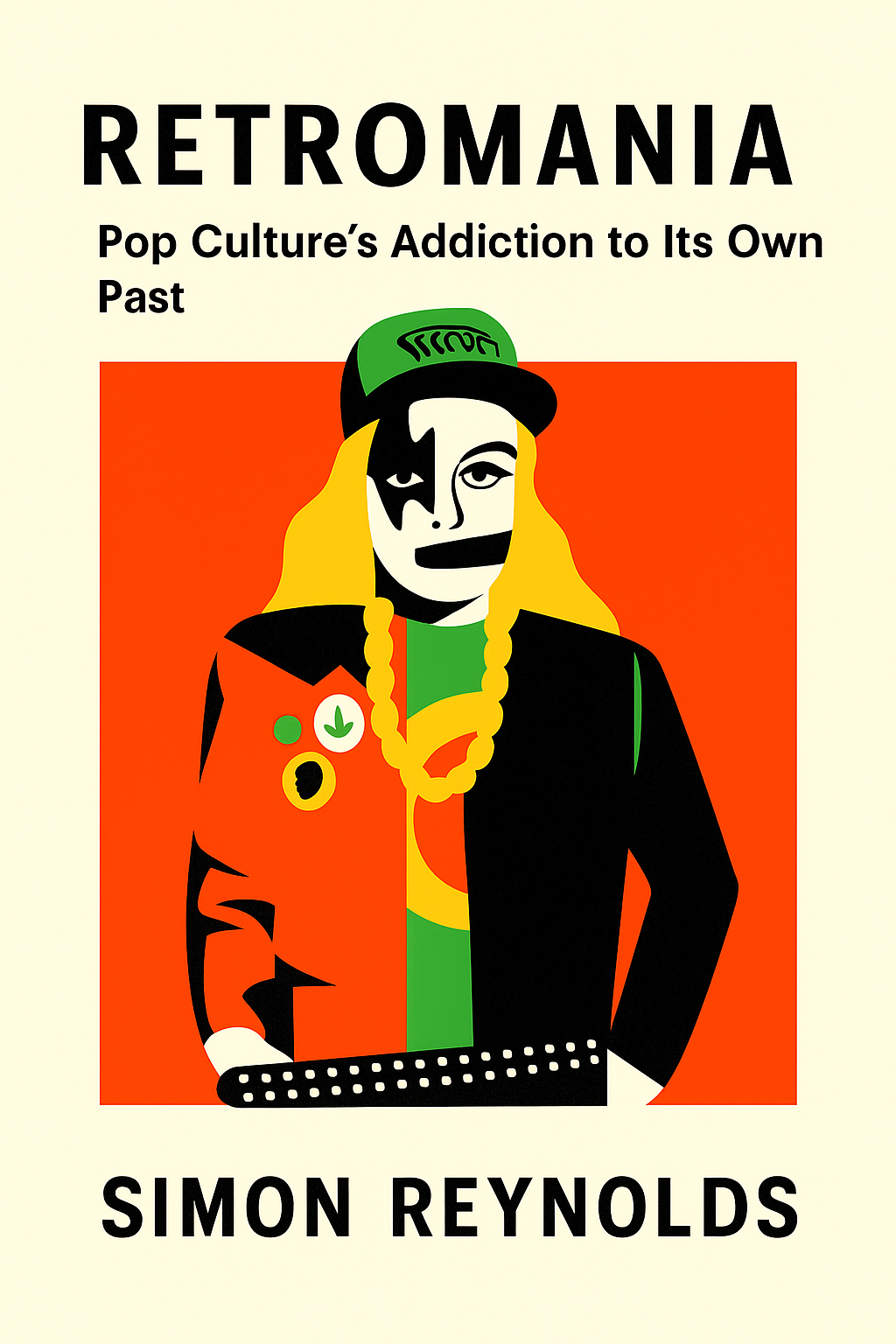
By Simon Reynolds
