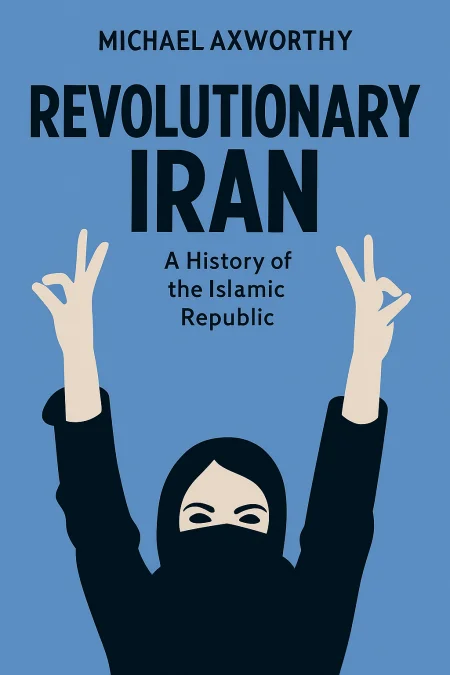
Revolutionary Iran
A History of the Islamic Republic
Book Edition Details
Summary
In the aftermath of Ayatollah Khomeini's dramatic return to Tehran in 1979, a seismic shift rippled through global politics, marking the birth of the Islamic Republic of Iran. This book, Revolutionary Iran, unfurls the intricate tapestry of a nation defined by defiance and ideological fervor, tracing the roots of its revolutionary zeal from the early 20th century to the volatile echoes of Ahmadinejad's contentious presidency. As Iran stands resilient against international censure and the specter of sanctions, its nuclear ambitions and regional influence pose a constant challenge to global stability. With a keen eye for dispelling myths, this definitive narrative delves into the heart of Iran’s internal struggles and cultural dialogues, offering readers a compelling glimpse into a society where tradition and modernity collide.
Introduction
In February 1979, as millions of Iranians poured into Tehran's streets to welcome Ayatollah Khomeini's return from exile, few could have imagined the profound contradictions that would define their nation's future. The fall of the Shah's seemingly invincible monarchy and the rise of the world's first modern Islamic republic represents one of the most dramatic political transformations of the twentieth century, yet its complexities remain poorly understood in the West. This extraordinary story reveals how a diverse coalition of revolutionaries—from liberal intellectuals to radical clerics, from bazaar merchants to university students—united to overthrow a regime backed by the world's most powerful nations, only to fracture as competing visions of Iran's future collided. The revolution's trajectory illuminates fundamental questions about the relationship between religious authority and popular sovereignty, the challenges of building legitimate governance, and the eternal tension between the desire for freedom and the need for order. Understanding Iran's revolutionary transformation offers crucial insights for anyone seeking to comprehend the dynamics of political change, the role of religion in modern politics, or the broader struggles between tradition and modernity that continue to shape our world. Through the experiences of ordinary Iranians caught up in extraordinary times, we witness how grand political theories play out in human lives, and how the pursuit of justice and independence can lead to unexpected and often troubling destinations.
The Shah's Fall and Revolutionary Unity (1978-1979)
The year 1978 began with Mohammad Reza Shah Pahlavi still firmly seated on the Peacock Throne, commanding one of the world's most powerful militaries and enjoying unwavering American support. Yet beneath the veneer of stability, profound tensions were building that would ultimately tear the country apart. The Shah's ambitious modernization program, while impressive in scope, had created deep social fractures that his authoritarian methods could no longer contain. The revolution that erupted revealed the remarkable diversity of opposition to the monarchy. Liberal intellectuals like Mehdi Bazargan envisioned a democratic Islamic republic, while radical clerics around Ayatollah Khomeini harbored more ambitious plans for religious governance. Students, workers, and bazaar merchants each brought their own grievances to the movement, creating a coalition united primarily by what they opposed rather than what they hoped to build. This diversity initially proved to be the revolution's greatest strength, allowing it to appeal to virtually every segment of Iranian society. Khomeini's genius lay in his ability to serve as a unifying symbol while remaining deliberately vague about his specific intentions. From his exile in Paris, he became a master of modern media, using cassette tapes and international broadcasts to coordinate resistance across Iran. His concept of velayat-e faqih—the guardianship of the Islamic jurist—was known only to a small circle of followers, while his public statements emphasized broad themes of independence, justice, and Islamic values that resonated across factional lines. The speed and totality of the Shah's collapse caught intelligence agencies completely off guard. When the military declared neutrality on February 11, 1979, the monarchy simply evaporated, leaving behind a power vacuum that would soon be filled by forces very different from what many revolutionaries had envisioned. The revolution's success demonstrated how quickly seemingly stable political orders can collapse when they lose the consent of the governed, but it also revealed the challenges of translating revolutionary unity into stable governance.
War and Clerical Consolidation (1980-1989)
The euphoria of revolutionary victory quickly gave way to bitter struggles over the shape of the new order. Khomeini moved skillfully to consolidate clerical control, using a series of crises to marginalize liberal and leftist competitors. The American embassy hostage crisis that began in November 1979 created a permanent rupture with the United States and eliminated moderate voices like Prime Minister Bazargan, who resigned in protest. This prolonged confrontation helped create the siege mentality that would justify increasingly authoritarian measures. Saddam Hussein's invasion in September 1980 provided the external threat that completed the revolutionary consolidation. The Iraqi dictator had calculated that revolutionary chaos and military purges had left Iran defenseless, but instead he unleashed an eight-year war that would claim over a million lives and reshape the entire Middle East. The conflict became the crucible in which the Islamic Republic was forged, transforming what had been a diverse revolutionary coalition into a more unified but increasingly militarized state. The war took on the character of a holy struggle, with young volunteers marching to the front carrying keys to paradise and portraits of Imam Husayn, the martyred grandson of the Prophet Muhammad. These human wave attacks, often by teenagers barely old enough to shave, horrified Western observers but reflected genuine patriotic and religious conviction. The conflict's demands for unity and sacrifice allowed the clerical leadership to eliminate remaining opposition groups, justifying repression in the name of defending the revolution against foreign aggression. Khomeini's decision to continue fighting even after Iraqi forces were expelled from Iranian territory in 1982 proved costly and controversial, reflecting his belief that removing Saddam Hussein was necessary for Iran's long-term security. The war finally ended in 1988 when Khomeini accepted a UN ceasefire he compared to drinking "a chalice of poison." Iran emerged from the conflict isolated and economically devastated, yet with its revolutionary system intact and its sense of resistance to foreign domination stronger than ever.
Reform Dreams and Conservative Backlash (1997-2009)
The election of Mohammad Khatami as president in 1997 seemed to herald a new chapter in Iran's political evolution. This soft-spoken cleric, who spoke eloquently of civil society and dialogue among civilizations, captured the imagination of millions of Iranians hungry for greater freedom and international respectability. His overwhelming electoral victory appeared to demonstrate that the Islamic Republic's democratic elements could still produce meaningful change, offering hope for reform within the existing system. Khatami's presidency witnessed a remarkable flowering of intellectual and cultural life. Newspapers proliferated, filmmakers gained international recognition, and public discourse became more open than at any time since the revolution. The reform movement attracted a diverse coalition of students, women, intellectuals, and middle-class professionals who saw an opportunity to transform Iran from within. Reformist thinkers developed sophisticated arguments for reconciling Islam with democracy, human rights, and gender equality. Yet these achievements proved fragile, constantly undermined by conservative institutions that viewed reform as a threat to the revolution's core values. The fundamental contradiction at the heart of the Islamic Republic became increasingly apparent as unelected clerical bodies vetoed legislation, disqualified candidates, and overrode popular will. The serial murders of intellectuals, closure of reformist newspapers, and violent suppression of student protests demonstrated the limits of change within the existing framework. The election of Mahmoud Ahmadinejad in 2005 marked a sharp reversal, bringing to power a populist hardliner who combined inflammatory rhetoric with appeals to the poor and marginalized. His presidency coincided with growing international pressure over Iran's nuclear program, creating a siege mentality that strengthened conservative forces. By 2009, popular disillusionment with both reform and reaction had created the conditions for the most serious crisis the Islamic Republic had faced since its founding.
Green Movement and Democratic Crisis (2009-2012)
The disputed presidential election of June 2009 precipitated a crisis that revealed the depth of popular dissatisfaction with the regime's authoritarian drift. When official results declared Ahmadinejad the winner with an implausibly large margin, millions of Iranians took to the streets in protests that would become known as the Green Movement. The demonstrations represented the largest popular uprising since the 1979 revolution, challenging the regime's claims to legitimacy and exposing the fundamental contradictions within the Islamic Republic. The government's violent suppression of the protests marked a turning point in the system's evolution. The killing of protesters, mass arrests, and show trials shattered any remaining pretense of popular consent and revealed the extent to which the regime had become dependent on coercion rather than legitimacy. The image of Neda Agha-Soltan bleeding to death on a Tehran street became a powerful symbol of the regime's brutality, broadcast around the world through social media that authorities could not fully control. The Green Movement's commitment to non-violence and constitutional reform, rather than revolutionary overthrow, reflected a mature understanding of the costs of political upheaval. Led by former regime insiders like Mir-Hossein Mousavi and Mehdi Karroubi, the movement sought to work within the existing framework while demanding genuine accountability and democratic participation. Yet this very moderation may have limited its effectiveness against a regime willing to use unlimited force to maintain power. The aftermath of 2009 saw the Islamic Republic retreat further into authoritarianism, with widespread arrests of journalists, activists, and opposition leaders. The Revolutionary Guards expanded their economic and political influence, while civil society organizations were systematically dismantled. By 2012, Iran resembled less the revolutionary democracy many had hoped for and more a military republic dominated by security forces, raising fundamental questions about whether the system retained any capacity for peaceful reform or democratic evolution.
Summary
Iran's journey from monarchy through revolution to Islamic Republic reveals the complex interplay between popular aspirations for freedom and the institutional forces that shape political outcomes. The central paradox running through this history is the struggle between democratic participation and authoritarian control, embodied in a constitution that promises popular sovereignty while reserving ultimate power for unelected clerical authorities. This contradiction has produced a system of remarkable durability but limited legitimacy, capable of surviving external pressures and internal challenges while failing to satisfy its citizens' basic demands for freedom and prosperity. The recurring cycles of reform and reaction demonstrate both the persistence of democratic aspirations among Iranians and the structural obstacles to their realization within the existing framework. The Iranian experience offers sobering lessons about the difficulty of building stable democratic institutions, particularly in societies undergoing rapid social transformation. It reminds us that popular revolutions, however well-intentioned, can produce outcomes far removed from their original goals, and that the mere existence of elections does not guarantee meaningful democracy. Perhaps most importantly, Iran's story shows how external pressures and internal fears can combine to strengthen authoritarian tendencies, even in systems that began with genuine democratic aspirations. For contemporary observers, this suggests the need for patience and nuance in supporting democratic development, recognizing that sustainable political change requires more than popular mobilization—it demands careful attention to building inclusive institutions, managing factional competition, and balancing ideological commitments with practical governance needs. Understanding these dynamics remains crucial for anyone seeking to promote genuine democratic progress in our complex and interconnected world.
Related Books
Download PDF & EPUB
To save this Black List summary for later, download the free PDF and EPUB. You can print it out, or read offline at your convenience.
By Michael Axworthy
