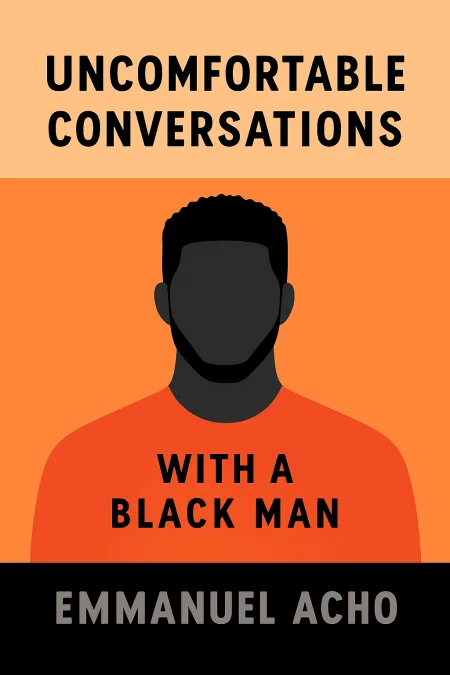
Uncomfortable Conversations with a Black Man
An introduction to race and race-related issues in America
Book Edition Details
Summary
Emmanuel Acho dares to crack open the lid on racial tension in America with "Uncomfortable Conversations With a Black Man," a bold invitation to those eager to peel back the layers of systemic injustice. This isn't just a book; it's a catalyst for change, igniting the courage to confront difficult truths about privilege, appropriation, and the myths of "reverse racism." With a compassionate yet unapologetic voice, Acho offers a sanctuary for curiosity and understanding, urging readers to embrace the discomfort of these vital dialogues. His words challenge us to rise beyond complacency and step into the ring of the antiracist movement, armed with knowledge and empathy. Here lies a guide not just for conversation, but for action.
Introduction
Race remains one of the most challenging and uncomfortable topics in American discourse, yet it is precisely through these difficult conversations that meaningful progress becomes possible. The journey toward racial understanding requires white Americans to confront uncomfortable truths about privilege, systemic inequality, and the persistent legacy of historical injustices. Rather than avoiding these conversations or retreating into colorblind rhetoric, genuine engagement demands a willingness to examine how racism operates both individually and institutionally in contemporary America. The path forward involves moving beyond surface-level discussions to explore the deeper structures that perpetuate racial disparities in housing, education, criminal justice, and everyday social interactions. This exploration challenges readers to distinguish between individual acts of prejudice and systemic patterns of discrimination while recognizing that true allyship requires sustained commitment rather than performative gestures. Through honest dialogue about privilege, cultural appropriation, and the mythology surrounding reverse racism, a clearer understanding emerges of how racial dynamics shape American life and what authentic anti-racist action looks like in practice.
Individual Racism: From Implicit Bias to Cultural Appropriation
Individual racism manifests in multiple forms, from unconscious biases that shape everyday interactions to more deliberate acts of cultural appropriation. Implicit bias operates beneath the surface of conscious awareness, influencing decisions in hiring, housing, healthcare, and criminal justice without individuals recognizing their prejudicial assumptions. These unconscious prejudices become particularly dangerous when they inform life-altering decisions, such as medical treatment disparities that result in significantly higher maternal mortality rates for Black women or resume screening practices that favor white-sounding names. Cultural appropriation represents another dimension of individual racism, occurring when members of dominant groups extract elements from marginalized cultures without understanding their significance or acknowledging their origins. This practice differs fundamentally from cultural exchange or appreciation because it typically involves power imbalances where privileged groups profit from or gain social capital through adopting cultural practices while the originating communities face discrimination for those same practices. The stereotype of the "Angry Black Man" exemplifies how individual biases become weaponized against Black Americans. This mythology transforms justified responses to racial injustice into character flaws while simultaneously excusing white defensive reactions. When white individuals call police on Black people engaging in ordinary activities, they deploy these stereotypes as tools of social control that can have deadly consequences. Understanding individual racism requires recognizing that good intentions do not eliminate harmful impacts. White Americans must develop the capacity to examine their own biases, acknowledge their participation in discriminatory practices, and commit to ongoing education rather than expecting absolution for past ignorance.
Systemic Racism: How Institutions Perpetuate Inequality
Systemic racism operates through interconnected institutional practices that create and maintain racial inequalities across multiple domains of American life. Unlike individual prejudice, systemic racism functions through policies, procedures, and cultural norms that produce racially disparate outcomes regardless of individual intent. The housing sector exemplifies this dynamic through historical redlining practices that designated Black neighborhoods as financially risky, creating patterns of residential segregation that persist decades after such policies were officially banned. Educational inequality represents another pillar of systemic racism, with school funding mechanisms that rely heavily on local property taxes ensuring that communities with lower property values receive fewer resources. This funding structure, combined with persistent residential segregation, maintains educational disparities that limit opportunities for Black students and perpetuate intergenerational cycles of inequality. The academic achievement gap reflects not inherent differences in ability but rather the cumulative effects of unequal resource allocation and environmental factors. The criminal justice system demonstrates perhaps the most stark manifestation of systemic racism, with Black Americans experiencing disproportionate rates of arrest, conviction, and incarceration despite similar rates of criminal behavior across racial groups. Mandatory minimum sentencing laws, prosecutorial discretion, and jury selection processes all contribute to outcomes where Black individuals face harsher penalties than white individuals for comparable offenses. These systems interconnect to create what scholars term cumulative disadvantage, where discrimination in one area compounds difficulties in others. Limited access to quality housing affects educational opportunities, which influences employment prospects, which impacts encounters with the criminal justice system, creating cycles that span generations and resist individual efforts at mobility.
The Myth of Reverse Racism: Why White Fragility Misses the Point
The concept of reverse racism fundamentally misunderstands the nature of racism as a system of power rather than merely individual prejudice. While Black individuals can certainly harbor prejudicial attitudes toward white people, they lack the institutional power necessary to implement systematic discrimination against white Americans as a group. Racism requires both prejudice and power, with the ability to translate biased attitudes into policies and practices that disadvantage entire populations. Claims of reverse racism typically emerge as defensive responses when white Americans encounter challenges to their racial comfort zone. This phenomenon, termed white fragility, manifests as anger, withdrawal, or counter-accusations when white individuals face discussions about racial inequality. Such reactions serve to redirect attention away from examining systemic advantages while positioning white people as victims of racial discourse rather than beneficiaries of racial systems. Affirmative Action policies often trigger reverse racism accusations, with critics arguing that efforts to remedy historical discrimination create unfair disadvantages for white Americans. This perspective ignores the centuries-long head start provided by exclusionary practices and fails to recognize that leveling the playing field necessarily requires temporary corrective measures. The argument treats equality of opportunity as discrimination when white Americans no longer receive preferential treatment. The insistence on colorblind approaches to racial issues represents another manifestation of reverse racism rhetoric. By claiming to "not see race," white Americans can avoid acknowledging the continuing significance of racial inequality while maintaining systems that benefit them. True racial progress requires recognizing rather than ignoring racial differences in experience and outcome, understanding that equal treatment in an unequal system perpetuates rather than eliminates disadvantage.
Building Bridges: Allyship and the Future of Racial Justice
Effective allyship demands moving beyond performative gestures toward sustained commitment to dismantling racial inequality. White allies must recognize that their support involves more than attending protests or posting social media statements; it requires ongoing education, internal examination, and willingness to sacrifice aspects of privilege for the sake of justice. This commitment proves particularly challenging because it demands acknowledging complicity in systems that provide advantages while working to eliminate those same advantages. Authentic allyship involves following the leadership of Black activists and organizations rather than attempting to direct or control racial justice efforts. White allies serve most effectively when they focus on educating other white people, leveraging their privilege to access spaces and conversations where Black voices might not be heard, and providing resources without expecting recognition or gratitude. This support must persist beyond moments of crisis or public attention, maintaining momentum when media coverage wanes and other issues capture public interest. The path toward racial justice requires systemic changes that extend far beyond individual attitude adjustments. Meaningful progress demands policy reforms in housing, education, criminal justice, and economic opportunity that address root causes rather than symptoms of racial inequality. Such changes require political engagement, economic investment, and cultural transformation that can only succeed with sustained white support and participation. Building an anti-racist society necessitates reimagining American institutions and social relationships in ways that center equity rather than maintaining existing hierarchies. This transformation cannot occur through incremental adjustments to fundamentally flawed systems but requires bold restructuring that prioritizes justice over comfort and equality over tradition. The ultimate goal extends beyond mere tolerance or diversity toward creating conditions where racial identity no longer predicts life outcomes or opportunities.
Summary
The journey toward racial justice requires confronting the uncomfortable reality that racism operates simultaneously as individual bias and systemic oppression, demanding both personal transformation and structural change. Progress depends on white Americans' willingness to engage authentically with their own complicity in racial systems while committing to sustained action beyond momentary expressions of solidarity. This work proves especially valuable for readers seeking to move beyond surface-level discussions of race toward deeper understanding of how historical legacies shape contemporary realities and what genuine anti-racist commitment demands in practice.
Related Books
Download PDF & EPUB
To save this Black List summary for later, download the free PDF and EPUB. You can print it out, or read offline at your convenience.

By Emmanuel Acho
