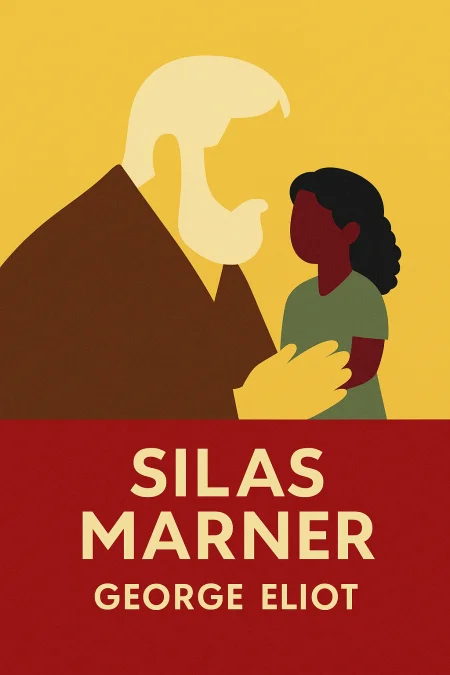
Silas Marner
Uncover a Rich Tapestry of Love, Hope, and Redemption
Book Edition Details
Summary
In the quaint village of Raveloe, a reclusive weaver named Silas Marner finds his life irrevocably altered by the arrival of a mysterious child. Once shunned and broken by betrayal, Silas exists on the fringes, weaving his days away in solitude. Yet, this unexpected visitor brings with them an unspoken promise—a chance at redemption and the warmth of community he never dared to hope for again. George Eliot crafts a narrative rich in realism, exploring themes of faith, industrial change, and the intricate tapestry of human connection. In this poignant tale, the power of love and belonging transforms an outcast's world, inviting readers to ponder the profound impact of life's most unexpected gifts.
Introduction
In the quiet countryside of early 19th-century England, where superstition mingles with simple faith and community bonds run deeper than blood, an extraordinary transformation unfolds. A solitary weaver, cast out from his religious community and betrayed by those he trusted most, finds himself living as an outcast in the village of Raveloe. For fifteen years, he exists in mechanical isolation, his only companion the growing pile of gold coins that represents both his security and his prison. Yet fate has a different plan in store, one that will arrive on a snowy New Year's Eve in the form of a golden-haired child whose presence will crack open a heart that seemed permanently sealed. This is a story of profound human transformation, revealing how love can resurrect even the most wounded soul. Through following this remarkable journey, readers will discover the redemptive power of unexpected parenthood, witness how genuine community acceptance can heal old wounds, and understand that sometimes our greatest losses prepare us for our most precious gifts. It is a testament to the truth that no one is beyond the reach of grace, and that the capacity for love, once awakened, can transform not just an individual life but an entire community.
From Faith to Betrayal: The Making of a Hermit
Silas Marner's early life was shaped by the intense religious community of Lantern Yard, where faith burned bright and fellowship ran deep. As a young man, he was regarded as exemplary among his brethren, known for his ardent belief and peculiar spiritual experiences. His cataleptic fits were seen as signs of divine favor, marking him as one chosen for special spiritual discipline. In this close-knit religious sect, where even the poorest could distinguish themselves through gifts of speech and devotion, Silas found purpose and belonging. The foundation of Silas's world crumbled through a devastating betrayal that cut to the very core of his being. When the church's money was stolen and his knife was found at the scene, his closest friend William Dane not only failed to defend him but seemed almost eager to see him condemned. The lots were drawn as divine judgment, and they declared Silas guilty of theft. Even more crushing was the revelation that his fiancée Sarah had quickly married William, suggesting a conspiracy that had stripped away both his reputation and his future. The destruction was complete when the very method of divine guidance that had governed his life appeared to have failed him utterly. The drawing of lots, which should have revealed truth and cleared the innocent, instead proclaimed his guilt before the entire congregation. This wasn't merely a case of human injustice, but seemed to be cosmic abandonment. The God he had served so faithfully had apparently turned against him, or worse, had never existed at all. In his anguish, Silas spoke words that would haunt him for years: "There is no just God that governs the earth righteously, but a God of lies, that bears witness against the innocent." With this bitter declaration, he turned his back not only on Lantern Yard but on faith itself, beginning a journey into exile that would last fifteen years. The young man who had once been marked for spiritual greatness became a wanderer, carrying his disillusionment like a wound that would not heal.
Gold and Solitude: Fifteen Years of Exile
Arriving in Raveloe, Silas found himself in a world utterly different from the intense religious community he had left behind. Here, in this quiet rural village, he could disappear into anonymity, known only as the strange weaver who lived by the stone pits. The villagers regarded him with a mixture of suspicion and superstitious awe, seeing in his pale face and peculiar eyes something otherworldly and potentially dangerous. Yet his skill with the loom made him valuable enough to be tolerated, if not welcomed. Gradually, all human feeling drained from Silas's life, replaced by an obsessive focus on the growing pile of gold coins that his weaving earned him. Each night, he would draw out his treasure, counting and handling the coins with the tenderness that should have been reserved for human relationships. The gold became his substitute for everything he had lost - companionship, purpose, faith, and love. It was tangible, reliable, and would never betray him as humans had done. His daily existence shrank to the mechanical rhythm of the loom and the secret pleasure of counting his hoard. The gold imposed its own routine: work brought coins, coins brought the nightly ritual of counting, and counting brought a kind of peace that resembled happiness but was really its hollow echo. Silas's very appearance began to mirror his inner state - bent, yellowed, and aged beyond his years, he seemed more like a piece of his own machinery than a living man. The fifteen years passed in this suspended animation, neither living nor fully dying. When neighbors occasionally sought his help with herbal remedies, remembering his mother's folk knowledge, Silas found these interactions more burden than pleasure. He had grown so accustomed to isolation that human contact felt foreign and unwelcome. His world had contracted to the space between his loom and his hidden treasure, and he appeared content for it to remain so forever. Yet this mechanical existence was about to be shattered by an event that would force him back into the world of human feeling.
The Child Who Restored His Soul
On a snowy New Year's Eve, as Silas stood in one of his cataleptic trances with his door open to the winter night, destiny walked into his cottage on tiny, stumbling feet. A golden-haired child, barely two years old, wandered in from the cold, drawn by the warmth of his fire. Her mother lay dead in the snow, another casualty of opium and despair, but the child herself was very much alive, gurgling contentedly as she warmed herself by Silas's hearth. When Silas emerged from his trance and saw the glinting gold of the child's hair by his fireplace, his first confused thought was that his lost treasure had somehow returned in a different form. But as he knelt and touched the soft curls, discovering the sleeping child, something long-dormant stirred within him. The sight awakened memories of his little sister, whom he had carried as a boy, and for the first time in fifteen years, his heart responded with something other than mechanical routine. The arrival of little Eppie - named after his sister Hephzibah - forced Silas back into the world of human relationships. Caring for her required him to seek help from neighbors like Dolly Winthrop, to attend church for her christening, and to think beyond his own narrow existence. Every day brought new challenges that pulled him further from his isolation: Eppie needed clothes, food, guidance, and love. Unlike his gold, which demanded nothing and gave nothing in return, the child was a constant source of claims and needs. As Eppie grew, so did Silas's capacity for joy and connection. Her delight in flowers led him to notice nature again; her curiosity about the world reawakened his own dormant senses. Through her eyes, he began to see Raveloe not as a place of exile but as home. The villagers, observing his devotion to the orphaned child, gradually shifted their view of him from suspicious outsider to respected member of their community. The gold that had once been his sole companion now seemed almost irrelevant compared to the living treasure that had transformed his existence.
Redemption Through Love and Community
Sixteen years after Eppie's arrival, the discovery of Dunstan Cass's skeleton in the drained stone pit brought Silas's gold back to him, but the man who received it was utterly transformed from the one who had lost it. The returned treasure seemed almost insignificant compared to what he had gained through love. When he looked at the recovered coins, he felt no revival of his old obsession. The gold had served its purpose by being taken away, making room in his heart for something infinitely more valuable. The true test of this transformation came when Godfrey Cass finally revealed himself as Eppie's father and attempted to claim her. The confrontation laid bare the different kinds of love and obligation that can exist between parent and child. Godfrey offered wealth, status, and material advantages, but Silas had given something far more precious - daily presence, unconditional love, and the security of never being abandoned again. When Eppie chose to remain with her adoptive father, she validated not just their bond but the entire journey that had brought them together. Through raising Eppie, Silas had not only regained his capacity for human connection but had become a beloved figure in Raveloe society. No longer the mysterious outsider, he was now seen as someone who had done something extraordinary - taking in an orphaned child and raising her with devoted love. His act of unexpected parenthood had earned him a place in the community that no amount of conformity could have achieved. The journey that began with bitter exile and devastating betrayal had led to a richer, deeper faith than Silas had ever known in Lantern Yard. He learned to trust again, not in the mechanical drawing of lots or rigid religious formulas, but in the mysterious workings of a providence that could bring good out of loss and love out of abandonment. His conversation with Dolly Winthrop revealed a man who had found peace with mystery, accepting that some things would always remain dark while holding fast to the light he had been given. Through Eppie's love, he discovered that redemption comes not through perfect understanding but through perfect trust in the goodness that can emerge from life's most painful experiences.
Summary
Silas Marner's journey reveals the profound truth that the human heart's capacity for love can never be permanently extinguished, no matter how devastating the betrayals we endure. His transformation from bitter hermit to devoted father demonstrates that redemption often comes not through grand gestures or dramatic revelations, but through the simple, daily acts of caring for another person. The love that grew between Silas and Eppie became a healing force that extended far beyond their small cottage, ultimately transforming how an entire community understood both of them. From Silas's experience, we learn that our greatest losses often prepare us for our most unexpected blessings, and that the courage to remain open to love after betrayal can lead to deeper joy than we ever imagined possible. His story offers hope to anyone who has felt abandoned by faith or cast out by community, suggesting that new forms of belonging and meaning can emerge from our willingness to nurture what is placed in our care. This timeless tale speaks especially to those seeking to understand how personal transformation occurs and how authentic community is built through acts of practical love rather than mere sentiment or duty.
Related Books
Download PDF & EPUB
To save this Black List summary for later, download the free PDF and EPUB. You can print it out, or read offline at your convenience.
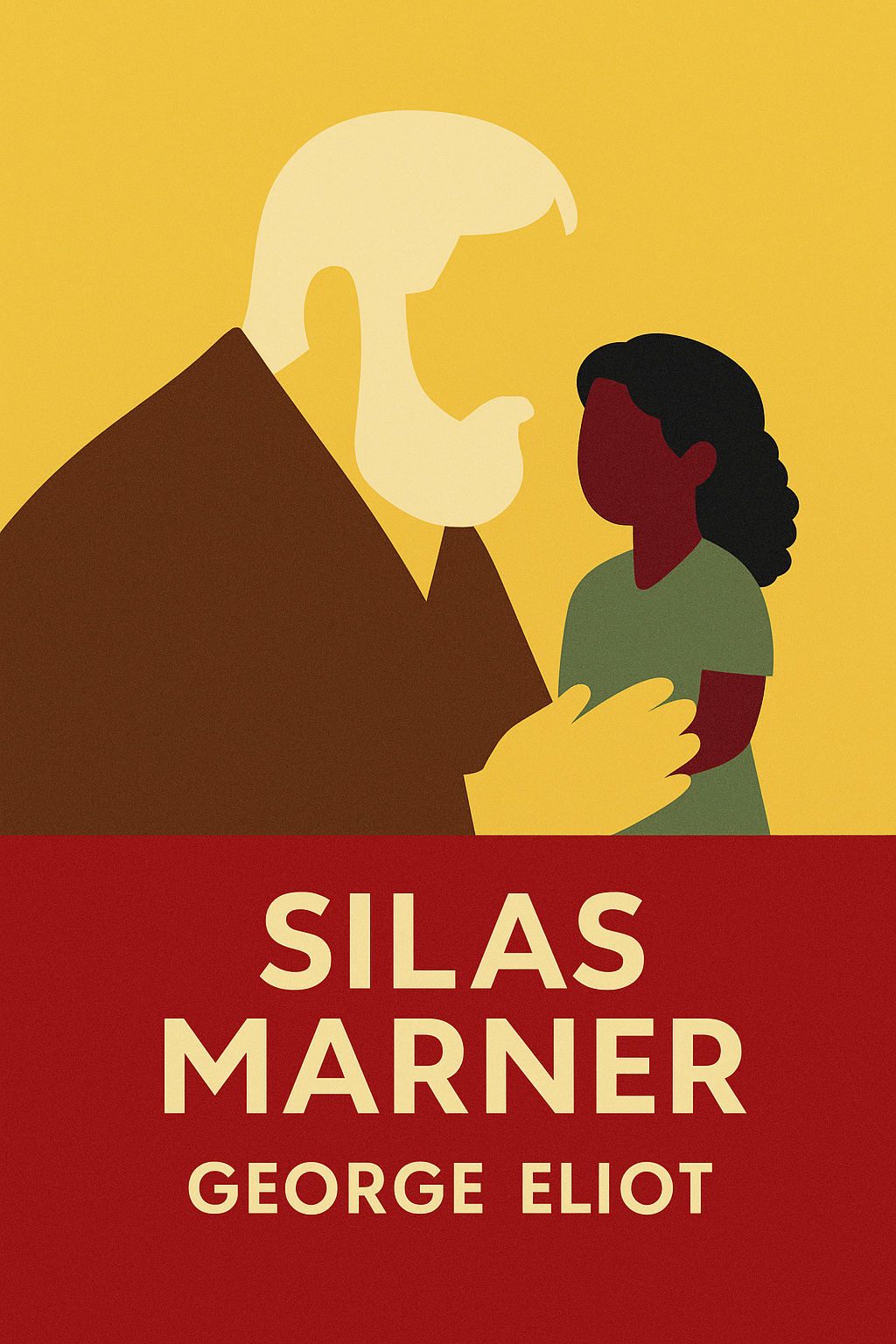
By George Eliot
