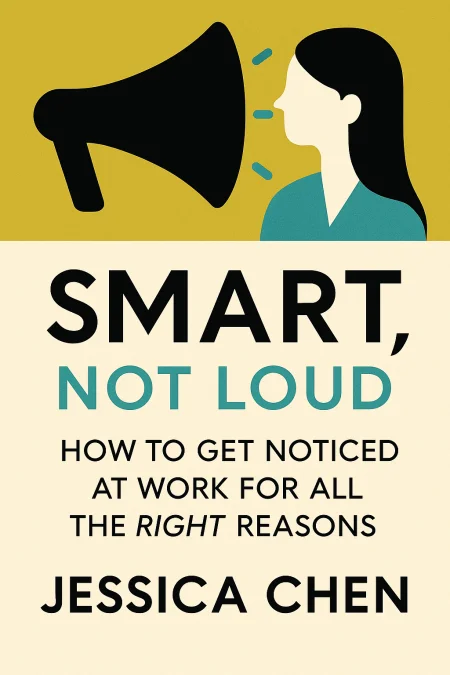
Smart, Not Loud
How to Get Noticed at Work for All the Right Reasons
Book Edition Details
Summary
In the bustling world of corporate ambition, where the loudest voices often command the stage, Jessica Chen offers a refreshing alternative for those who value quiet integrity over boisterous self-promotion. "Smart, Not Loud" is a guide for introverted professionals yearning to thrive without losing themselves. Chen, once a hesitant TV journalist, now a sought-after speaker, distills her journey into actionable insights for building a compelling personal brand that resonates powerfully yet subtly. Through personal stories and evidence-based strategies, she unveils the art of tactful self-advocacy, the power of strategic networking, and the nuanced mastery of communication. This book is a beacon for those seeking to amplify their presence and impact without raising their volume—proof that true influence is measured by substance, not decibels.
Introduction
Picture yourself in a meeting room where the loudest voices seem to carry the most weight. You have brilliant ideas, exceptional skills, and deep insights, yet somehow you remain invisible while others who speak frequently and forcefully capture all the attention. This scenario isn't uncommon for professionals who grew up with values emphasizing humility, listening, and working diligently behind the scenes. The challenge lies not in changing who you are, but in learning how to showcase your talents authentically and strategically. The workplace rewards visibility, but that doesn't mean you need to become someone you're not. Instead, you can develop smart approaches to communication, relationship-building, and self-advocacy that honor your natural tendencies while ensuring your contributions are recognized and valued.
From Cultural Friction to Strategic Balance
The tension between quiet values and loud expectations creates what we can call cultural friction in the workplace. This friction emerges when professionals raised with "quiet culture" traits encounter environments that reward "loud culture" behaviors. Understanding this dynamic is crucial because it affects how you communicate, spend your time, handle achievements, and manage conflicts at work. Jessica Chen, who later became an Emmy-winning journalist and communication expert, experienced this friction firsthand early in her career. Working at a television newsroom, she noticed a stark contrast between her approach and that of her colleagues. When the U.S. Air Force Thunderbirds were scheduled to visit for an air show, Jessica expressed interest in covering the story to her manager. However, when the assignment was made, it went to a colleague who had been "talking about it all week" and was therefore "top of mind" for the manager. This experience illuminated a critical insight about workplace dynamics. While Jessica had mentioned her interest once and assumed that would be sufficient, her colleague had strategically maintained visibility around the opportunity. The manager's response wasn't about favoritism or capability, but about presence and consistent communication. Jessica realized that her Quiet Culture approach of working hard and letting results speak for themselves wasn't enough in a Loud Culture environment. The solution isn't to abandon your authentic self, but to develop Cultural Reframes that bridge these two worlds. These reframes involve rethinking how you engage with others by tailoring your message to what your audience cares about, maximizing every opportunity to build visibility, sharing how your work benefits the greater good, and focusing on the dynamics at play when managing difficult situations. By applying these strategic adjustments, you can maintain your core values while adapting your approach to thrive in any professional environment.
Building Your Quiet Capital Framework
Your Quiet Capital represents the unique combination of your authentic values, distinctive abilities, and strategic positioning that creates lasting influence at work. This framework consists of three interconnected pillars that work together to amplify your professional presence without requiring you to become someone you're not. Michael Chen's journey from risk manager to CEO of General Electric's Media division demonstrates this framework in action. Despite being six levels below the CEO initially, Chen identified his core values of relationship-building and adding value to others. Rather than simply working within his assigned role, he proactively reached out to the sales team, offering to create analytical tools that would help them succeed. His differentiating factor was his ability to transform complex data into meaningful insights, but he understood that this skill alone wouldn't advance his career. Chen strategically expanded his reach by building genuine relationships across departments and with external clients. He worked eighty-hour weeks, balancing his regular responsibilities while investing time in creating value for others. This wasn't just networking, it was purposeful relationship-building aligned with his authentic values. When a senior sales position opened, his name naturally came up because he had demonstrated both competence and character across multiple touchpoints. The breakthrough came when airline CEOs, who had worked directly with Chen, began advocating for his advancement to GE's leadership. This external validation carried immense weight because it came from credible sources who had experienced his impact firsthand. Chen's ascension wasn't about luck or office politics, it was the natural result of consistently applying his Quiet Capital Framework to create value, build relationships, and expand his influence systematically. Start by identifying your core values and differentiating factors, then look for ways to link your talents to opportunities that matter to your organization. Focus on building authentic relationships and creating consistent value for others, as this approach compounds over time and creates advocates who will champion your advancement when opportunities arise.
Mastering Smart Communication Skills
Effective communication isn't about being the loudest voice in the room, it's about being strategic with your words, tone, and presence to ensure your message lands with impact. This requires understanding not just what to say, but how to say it in ways that resonate with your audience and reflect your expertise. Sarah Lin, working in private equity, struggled with this balance initially. She would speak up frequently in meetings, raising her voice to a loud, booming tone to ensure she was heard, and speaking quickly to avoid being cut off. However, she noticed that her contributions often resulted in blank stares and minimal engagement from colleagues. The tension in the room was palpable, and her well-intentioned participation wasn't creating the positive impression she desired. The transformation began when Sarah learned to focus on her audience and tailor her message to their concerns rather than simply trying to be heard. Instead of speaking loudly and quickly, she practiced the art of strategic timing, using active listening to identify the right moments to contribute. She learned to acknowledge previous speakers, anchor her comments to the ongoing discussion, and then deliver her insights with clarity and conviction. Sarah also mastered the use of persuasive points that combined both emotional and quantitative elements, helping her colleagues understand not just the data behind her recommendations, but why those recommendations mattered to the team's success. She began using the Power of the Contrast technique, painting clear pictures of current challenges alongside the benefits her solutions would provide. Develop your communication advantage by practicing the 4A Sequence: Active listening to gauge timing, Acknowledging previous speakers to create seamless conversation flow, Anchoring your comments to ongoing discussion, and Answering with clear, purposeful points. Remember that great communication is about connection, not volume. Focus on speaking with intention rather than intensity, and always ask yourself the golden question: "What's the point I'm trying to make here?" This approach will help you contribute meaningfully to every conversation while staying true to your authentic communication style.
Summary
The path to professional recognition doesn't require abandoning your authentic self or adopting behaviors that feel foreign to your nature. Instead, it involves developing smart strategies that honor your values while adapting your approach to thrive in any environment. As one professional journey beautifully illustrates: "You have to be your own best cheerleader, because if not you, who else?" This mindset shift from passive hoping to active self-advocacy represents the heart of sustainable career advancement. Begin immediately by identifying one specific way you can apply these principles this week. Whether it's speaking up strategically in a meeting, sharing how your recent work benefited your team, or reaching out to build one new professional relationship, take that first small step toward being noticed for all the right reasons. Your unique combination of thoughtfulness, competence, and authentic values is exactly what the workplace needs, you just need to ensure others can see it clearly.
Related Books
Download PDF & EPUB
To save this Black List summary for later, download the free PDF and EPUB. You can print it out, or read offline at your convenience.
By Jessica Chen
