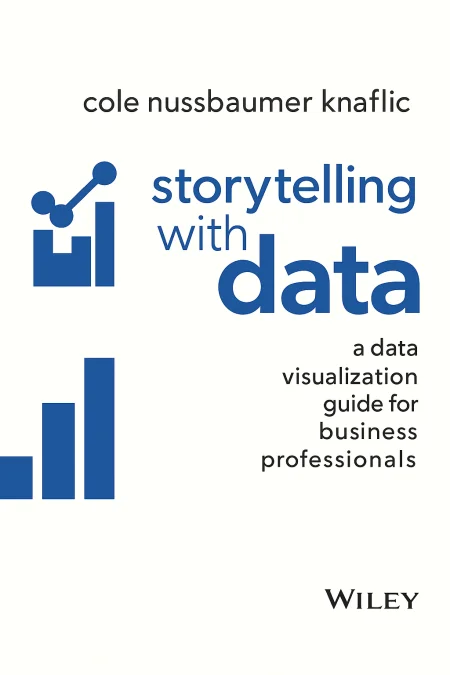
Storytelling with Data
A Data Visualization Guide for Business Professionals
Book Edition Details
Summary
Transform raw data into a vivid tapestry of insights with "Storytelling with Data," a guide that breathes life into numbers. This isn't just about crafting charts; it's about weaving compelling narratives that captivate and inform. Imagine your data as a protagonist, waiting to reveal its tale through artful visualization. Dive into practical strategies and examples that break down the complexity, empowering you to create visual stories that linger long after the presentation ends. This book transcends the ordinary tools, helping you cut through the clutter and communicate with clarity and impact. Let your graphs speak volumes and banish those clunky 3D pie charts to the past. With "Storytelling with Data," the power to engage and enlighten lies at your fingertips.
Introduction
In a world where information flows like a relentless river, how do you distinguish between truth and carefully crafted narratives designed to shape your thoughts? Every day, millions of people consume news, follow expert opinions, and make decisions based on what they believe to be factual reality. Yet what if the very foundation of our understanding has been carefully constructed to serve interests far removed from our own wellbeing? The journey toward genuine independent thinking begins with a simple yet profound realization: most of what we accept as truth has never been properly questioned or verified. Breaking free from this mental prison requires developing what can be called a "Renegade Mind" - a way of thinking that refuses to accept information simply because it comes from authority, asks uncomfortable questions, and follows evidence rather than emotion. This transformation is not just intellectual; it represents a fundamental shift in how we perceive reality itself, determining not just our personal freedom, but the future of human consciousness.
Recognizing the Web of Control Around You
The modern world presents us with an intricate network of influence that shapes our thoughts, decisions, and daily lives in ways we rarely recognize. This web of control operates through institutions, media, technology, and social systems that have become so normalized we accept them without question. Understanding this reality becomes the first step toward reclaiming our mental sovereignty and developing critical thinking skills necessary to navigate an increasingly complex information landscape. Consider the courageous story of Louise Hampton, a call handler with the UK NHS who witnessed a stark disconnect between official narratives and ground reality during the pandemic. Despite knowing it would cost her career, she made a viral video exposing empty accident and emergency departments that were supposedly overwhelmed with patients. Hampton filmed vacant corridors and unused facilities while news reports painted completely different pictures of crisis conditions. Her willingness to document and share observable truth, despite facing immediate professional consequences, demonstrated the power of individual observation over institutional messaging. Hampton's actions rippled outward like stones thrown into still water, inspiring others in healthcare and beyond to examine their own experiences more critically. Her footage showed the stark contrast between what people could verify themselves versus what they were being told to believe. This awakening moment helped many viewers recognize how manufactured consensus operates, creating the illusion of reality through repetition rather than evidence. Her courage to speak truth despite personal cost became a catalyst for others to trust their own observations over official accounts. The path to recognizing control begins with developing forensic thinking - approaching information like a detective rather than a passive consumer. Start by questioning the source of any claim, examining who benefits from particular narratives, and seeking multiple perspectives before forming conclusions. Practice distinguishing between what you directly observe and what you're told to believe. Create space between receiving information and accepting it as truth, trusting your own capacity to think critically while resisting pressure to conform when something doesn't feel right.
Understanding Psychological Manipulation Tactics
Psychological manipulation operates through sophisticated techniques designed to bypass critical thinking and create compliance without conscious awareness. These methods work by exploiting natural human tendencies toward conformity, authority deference, and emotional response. The most effective manipulations feel organic and voluntary, making targets believe they've arrived at conclusions independently when they've actually been guided toward predetermined outcomes through carefully orchestrated influence campaigns. The story of how entire populations were conditioned to accept unprecedented restrictions on their freedom provides a masterclass in mass psychology techniques. Behavioral scientists working with governments deliberately used fear as their primary tool, with leaked documents revealing explicit strategies to increase perceived personal threat levels among populations. The UK's Scientific Pandemic Insights Group on Behaviours explicitly recommended using "hard-hitting emotional messaging" to make people feel sufficiently threatened, understanding that frightened minds become more suggestible and less capable of rational analysis. This fear-based approach was then amplified through repetition across all media channels, creating what psychologists call "social proof" - the tendency to look to others for behavioral cues. When everyone around you appears to accept certain ideas or behaviors, the pressure to conform becomes almost irresistible. The manipulation was further enhanced by creating social disapproval for those who questioned official narratives, effectively turning communities against their own members who dared to think differently. This created a self-reinforcing cycle where dissent became increasingly difficult and socially costly. To defend against psychological manipulation, develop awareness of your emotional state when receiving information. Notice when content is designed to make you feel afraid, angry, or urgently compelled to act without careful consideration. Practice the pause - creating space between emotional triggers and your response allows rational thinking to engage. Question why certain information is being presented in emotionally charged ways rather than through calm, factual discussion, and learn to recognize techniques like repetition, authority appeals, social pressure, and manufactured urgency that bypass critical analysis.
Questioning Official Narratives and Agendas
The ability to question official narratives requires understanding how information flows through institutional hierarchies and recognizing when consensus is manufactured rather than organically developed through open inquiry. True scientific and journalistic investigation thrives on debate, challenge, and open examination of evidence. When questioning becomes forbidden or labeled as dangerous misinformation, this itself becomes evidence that deeper investigation is warranted rather than discouraged. Dr. Michael Yeadon, former Vice President and Chief Scientific Adviser at Pfizer, exemplifies the courage required to challenge institutional narratives from within the system itself. Despite his prestigious position and decades of pharmaceutical experience, Yeadon began questioning official claims when they contradicted his scientific knowledge and direct professional experience. He identified fundamental inconsistencies in testing procedures, treatment protocols, and safety data that were being systematically ignored by regulatory agencies and media outlets that should have been investigating these discrepancies. Yeadon's transformation from respected insider to vocal whistleblower illustrates how genuine experts often become the most credible critics when they witness institutional corruption firsthand. His technical knowledge allowed him to identify specific problems with accelerated development timelines, inadequate safety testing protocols, and compromised regulatory approval processes that laypeople might miss. Yet his willingness to speak out came at enormous personal cost, including professional ostracism, character assassination, and systematic attempts to discredit his decades of scientific expertise and contributions to pharmaceutical research. When evaluating official narratives, look for signs of manufactured consensus such as uniform messaging across supposedly independent institutions, systematic suppression of dissenting voices, and appeals to authority rather than transparent presentation of evidence. Pay attention to who is allowed to speak in public forums and who is silenced, what questions are encouraged versus forbidden, and whether genuine debate is welcomed or immediately shut down through labeling and social pressure rather than reasoned response.
Awakening to Truth and Taking Action
The journey from recognition to action requires both inner transformation and outer courage to live authentically in a world built on layers of deception and manipulation. Awakening to truth often feels isolating initially, as it can separate you from mainstream consensus and comfortable illusions that most people prefer to maintain. However, this awakening also connects you with a deeper sense of purpose and authentic power that comes from aligning with reality rather than convenient fictions that serve others' interests. The experience of countless individuals who chose to resist conformity during recent global events demonstrates that taking a stand for truth, even when difficult and costly, ultimately leads to greater personal integrity and genuine connections with like-minded others. Many who refused to comply with mandates they believed were wrong discovered inner strength they didn't know they possessed. They found that standing firm in their convictions, despite intense social pressure and practical consequences, brought a sense of self-respect and authentic power that no external approval could match or replace. These individuals often discovered that their courage inspired others who had been silently questioning but were afraid to speak up or stand out from the crowd. Their willingness to be visible in their principled dissent gave permission for others to express their own doubts and concerns about official narratives. What began as isolated acts of individual conscience gradually grew into networks of mutual support and collective resistance. They learned that truth-telling, while initially lonely and challenging, ultimately creates authentic community among those who value integrity over comfort and truth over social acceptance. The path forward requires both personal development and practical action in whatever sphere of influence you currently possess. Strengthen your own foundation through practices that connect you with your deepest values and inner wisdom. Build relationships with others who share your commitment to truth and freedom. Develop practical skills for independent thinking, research, and effective communication. Most importantly, find ways to contribute your unique talents and knowledge to the larger movement for human awakening and liberation from mental and spiritual bondage.
Summary
The transformation from unconscious compliance to conscious choice represents one of the most significant shifts a human being can make in their lifetime. It requires courage to face uncomfortable truths, wisdom to distinguish between what serves humanity and what controls it, and compassion for those who remain trapped in the matrix of manufactured consensus. As this exploration reveals, "There is a story in your data, but your tools don't know what that story is. That's where it takes you to bring that story visually and contextually to life." The future belongs not to those who can best repeat what they have been told, but to those who can think, question, and create independently while maintaining connection to their deepest humanity. Start today by questioning one assumption you have never examined, spend time in silence listening to your inner wisdom, and choose one action that expresses your authentic values rather than social expectations. Your mind is your most precious possession - guard it well, use it wisely, and never surrender it to those who would use it against your own highest good.
Related Books
Download PDF & EPUB
To save this Black List summary for later, download the free PDF and EPUB. You can print it out, or read offline at your convenience.
By Cole Nussbaumer Knaflic
