
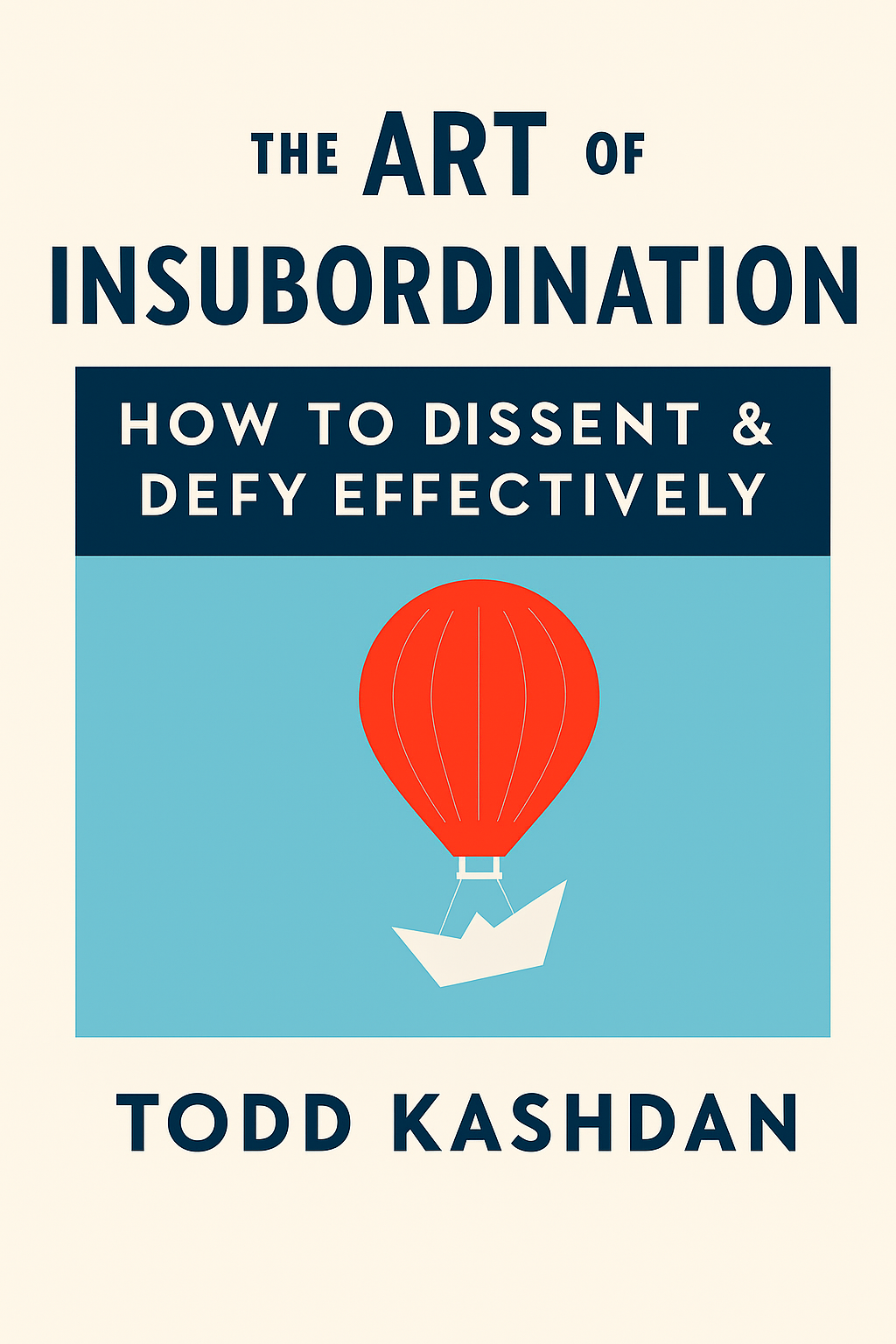
The Art of Insubordination
How to Dissent and Defy Effectively
Book Edition Details
Summary
Rebellion isn’t just for the fearless—it’s for anyone ready to challenge the mundane. "The Art of Insubordination" stands as a rallying cry for those who dare to defy the status quo. With a treasure trove of riveting stories and groundbreaking research, this book equips both the rebel and the ally with the tools to foster innovation and justice. Do you have a spark of dissent that the world desperately needs? This guide reveals how to harness that spark, navigate the discomfort of dissent, and emerge not just heard, but influential. This is a manifesto for the daring, crafted for those yearning to weave courage and creativity into the fabric of society.
Introduction
Society faces a fundamental paradox that threatens its capacity for meaningful advancement: the very conformity that enables social cohesion systematically suppresses the dissenting voices necessary for progress and adaptation. This tension manifests across countless domains, from scientific institutions that resist paradigm shifts to political systems that marginalize reformers, creating environments where mediocrity persists while innovation struggles to emerge. The psychological mechanisms driving this phenomenon operate with predictable precision, causing individuals and groups to defend dysfunctional systems, reject superior alternatives, and punish those brave enough to challenge established norms. Understanding the dynamics of principled rebellion becomes essential as accelerating change demands unprecedented intellectual flexibility and moral courage. The exploration ahead reveals how strategic dissent operates as both an individual psychological process and a collective social necessity, examining the conditions that enable constructive challenge to flourish while destructive conformity diminishes. Through rigorous analysis of the barriers that prevent effective rebellion and the strategies that overcome them, a clearer picture emerges of how societies can harness their most valuable yet underutilized resource for navigating uncertainty and driving meaningful transformation.
The Psychology of Conformity and Why We Need Principled Rebels
Human beings possess deeply embedded psychological tendencies that prioritize group harmony over individual expression, creating systematic barriers to the dissent necessary for collective adaptation. Research demonstrates that people consistently choose familiar practices over superior alternatives, defend systems that harm their interests, and reject valuable ideas simply because they challenge comfortable assumptions or originate from outsiders. This preference for the status quo operates through four primary mechanisms: seeking reassurance in established systems during uncertainty, rallying around existing leadership when facing external threats, maintaining dependence on current arrangements despite their flaws, and hoping for improvement within existing structures rather than pursuing fundamental change. The costs of excessive conformity extend far beyond individual decision-making to encompass organizational dysfunction and societal stagnation. Groups that suppress dissenting voices make demonstrably poorer decisions, generate fewer creative solutions, and remain vulnerable to catastrophic blind spots that conformist thinking cannot perceive. Historical analysis reveals countless examples of institutions and civilizations that collapsed because internal warnings were silenced or ignored, while external observers could clearly see the emerging problems. Principled insubordination differs fundamentally from mere rebelliousness or attention-seeking behavior through its combination of conscious norm deviation with authentic personal conviction and genuine concern for collective welfare. This form of dissent accepts social pressure as the inevitable price of pursuing important goals, distinguishing itself from impulsive defiance through its commitment to broader social benefit rather than personal gratification. The remedy lies not in eliminating social cohesion but in recognizing that principled rebels serve as essential immune systems for groups, identifying threats and opportunities that conventional thinking cannot detect. Societies that learn to distinguish between destructive rebellion and constructive challenge position themselves to harness dissent as a force for renewal rather than viewing it as an inherent threat to stability.
Strategic Communication and Building Alliances for Effective Dissent
Effective rebels understand that possessing superior ideas means nothing without the ability to communicate them in ways that minimize defensive reactions while maximizing receptivity to new possibilities. Research reveals five critical principles that determine whether dissenting voices gain traction or face immediate dismissal. Successful dissenters first establish themselves as insiders rather than outsiders, demonstrating shared values and group membership before introducing challenging concepts. This insider status grants what psychologists term "idiosyncrasy credits" - social capital that can be strategically spent on advocating for unconventional positions. The second principle involves sparking curiosity rather than fear in target audiences. Messages that threaten people's identities or worldviews trigger defensive reactions that shut down rational consideration, while effective rebels frame their ideas as intriguing possibilities worthy of exploration. This approach allows audiences to maintain psychological safety while considering new perspectives. The third element requires grounding arguments in objective, verifiable evidence rather than subjective opinions or emotional appeals, enhancing credibility through demonstrable competence. Projecting an aura of courageous self-sacrifice represents the fourth critical component. Audiences find dissenters more credible when they perceive genuine personal costs associated with speaking out, as this courage-signaling demonstrates commitment to principles over personal comfort. Finally, successful rebels practice flexible consistency - maintaining unwavering commitment to core principles while showing willingness to compromise on peripheral issues. Building effective alliances requires strategic thinking about human psychology and social dynamics that goes beyond simply recruiting the most powerful individuals. The most valuable allies complement the rebel's capabilities and expand their emotional and intellectual resources. Research on "emotionships" reveals that different people serve different emotional regulation functions, and rebels benefit from cultivating relationships with individuals who can provide various forms of support during challenging periods when isolation and criticism intensify.
Psychological Tools for Sustaining Rebellion and Winning Responsibly
The psychological demands of sustained rebellion require sophisticated coping strategies that enable individuals to maintain effectiveness while facing inevitable adversity, criticism, and isolation. The Psychological Flexibility Dashboard provides a systematic framework for navigating emotionally intense situations while remaining focused on long-term goals. This approach begins with clarifying core values and motivations to ensure that rebellious actions stem from authentic commitment rather than reactive impulses or ego-driven desires for attention. Developing precise awareness of emotional and physical responses to adversity represents the second crucial component. Research demonstrates that individuals who can accurately label their emotions show greater resilience and make better decisions under pressure. This emotional granularity prevents overwhelming feelings from derailing important missions while transforming distress into useful information about situational demands and necessary adaptations. The third element addresses counterproductive coping mechanisms that provide temporary relief while undermining long-term effectiveness. Many rebels sabotage their own efforts through avoidance behaviors, substance abuse, or aggressive responses that alienate potential supporters and discredit their causes. Cognitive defusion techniques help create psychological distance from distressing thoughts and feelings, reducing their disruptive power without requiring their complete elimination. Winning responsibly presents unique challenges that many successful rebels fail to anticipate, leading to the corruption of their original principles. Research identifies three psychological traps awaiting victorious dissenters: rebel's discontent, where success feels hollow and meaningless; rebel's nightmare, where former rebels become the oppressive authorities they once opposed; and rebel's blindness, where success breeds arrogance and loss of self-awareness. Understanding these patterns enables rebels to maintain their integrity and continue serving constructive purposes even after achieving their initial goals.
Creating Cultures That Welcome and Nurture Principled Insubordination
Individual efforts to promote healthy dissent must be complemented by systematic cultural changes that make organizations and communities more receptive to challenging ideas and alternative perspectives. Research identifies two primary pathways for creating rebel-friendly environments that harness the benefits of diversity while maintaining sufficient cohesion for effective collaboration. The first involves fostering epistemic motivation - a genuine commitment to seeking truth and useful information regardless of its source or implications for existing beliefs and power structures. Groups with strong epistemic motivation establish explicit norms that prioritize autonomy, critical thinking, and intellectual humility over conformity and loyalty. They create structural mechanisms that prevent high-status individuals from dominating conversations, ensure that diverse perspectives receive fair hearings, and reward collaborative problem-solving over individual grandstanding. These cultural elements require active reinforcement through explicit training, regular reminders, and accountability mechanisms that prevent backsliding into comfortable but dysfunctional patterns. The second pathway addresses intergroup bias and the formation of subgroup boundaries that prevent effective collaboration. When diverse individuals cluster into like-minded factions, the potential benefits of diversity disappear as groups fragment into competing camps that view each other as threats rather than resources. Perspective-taking training helps individuals understand and appreciate different viewpoints, while confirmation bias awareness prevents selective attention to information that supports preexisting beliefs. Creating genuinely rebel-friendly cultures requires ongoing attention to both formal policies and informal social dynamics. Leaders must model intellectual humility, actively seek out dissenting opinions, and demonstrate genuine curiosity about challenging ideas rather than merely tolerating them. The ultimate goal extends beyond accepting dissent to actively cultivating it by identifying potential rebels, providing them with necessary skills and support systems, and creating pathways for their ideas to influence decision-making processes rather than being marginalized or ignored.
Summary
The capacity for principled insubordination represents humanity's most valuable yet systematically underutilized resource for addressing complex challenges and driving meaningful progress in an increasingly uncertain world. The psychological barriers preventing both effective rebellion and receptive listening to dissenting voices operate through predictable mechanisms that can be understood and overcome through evidence-based strategies combining individual skill development with systematic cultural transformation. Success requires not only personal courage and strategic communication abilities, but also deliberate creation of environments where constructive dissent can flourish without triggering destructive defensive reactions. The stakes extend far beyond personal fulfillment or organizational effectiveness to encompass society's fundamental ability to adapt, innovate, and address existential threats through the wisdom of those brave enough to challenge conventional thinking when circumstances demand new approaches to persistent problems.
Related Books
Download PDF & EPUB
To save this Black List summary for later, download the free PDF and EPUB. You can print it out, or read offline at your convenience.
By Todd Kashdan
