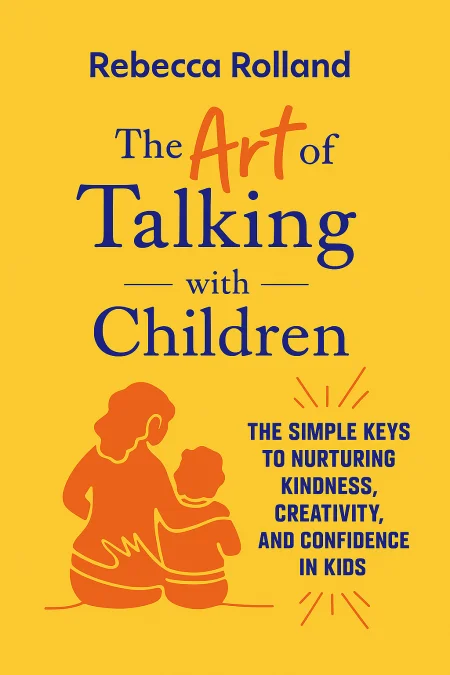
The Art of Talking with Children
Nurturing Kindness, Creativity, and Confidence in Kids
Book Edition Details
Summary
Amidst the clamor of daily life, a quiet revolution in communication awaits you. "The Art of Talking with Children" by Rebecca Rolland is not just a book—it's a lifeline for parents, educators, and caregivers yearning to bridge the gap with the young minds they cherish. With the wisdom of a Harvard scholar and the heart of a devoted mother, Rolland dismantles the walls of trivial and tension-filled exchanges, offering a treasure trove of research-backed strategies. Transform your interactions into vibrant dialogues that cultivate kindness, empathy, and independence. Whether navigating the whims of a headstrong toddler or unraveling the silence of a reticent teen, this guide lights the way to relationships brimming with joy and understanding, nurturing a future where both you and your children flourish together.
Introduction
The kitchen table becomes a battlefield every evening in countless homes across the world. Seven-year-old Maya sits hunched over her math worksheet, eraser shavings scattered around her like fallen leaves, while her mother hovers nearby asking "What's seven times eight?" for the third time. The child's shoulders slump with each repetition, her pencil trembling with uncertainty, and the air grows thick with mutual frustration. This scene, painfully familiar to so many families, represents a missed opportunity hiding in plain sight. What if these daily moments of struggle could become doorways to deeper connection? What if the conversations we already have with our children possessed untapped power to build their confidence, creativity, and emotional intelligence? The truth is, we're surrounded by profound possibilities disguised as ordinary interactions. A car ride to school transforms into space for exploring life's biggest questions. A bedtime story becomes an opportunity to build emotional vocabulary. Even conflicts and mistakes can become gateways to stronger relationships and deeper understanding. This isn't about adding more tasks to your already overwhelming schedule or achieving parenting perfection. It's about recognizing that the exchanges you're already having with your child contain extraordinary potential to shape their developing mind and heart. Through simple shifts in how we listen, respond, and engage, we can transform routine conversations into rich dialogues that nurture curious learners, compassionate friends, and confident individuals ready to embrace life's challenges with resilience and joy.
When Deep Questions Emerge: The Museum Moment and Meaningful Dialogue
Five-year-old Sophie wandered through the dimly lit halls of Boston's Museum of Fine Arts, her small hand clasped in her mother's as they explored the ancient Egyptian collection. She pressed her face against glass cases, peering at mysterious artifacts and asking endless questions about the golden treasures and painted sarcophagi. After examining mummy cases for nearly an hour, Sophie settled onto a wooden bench, her legs swinging as she absorbed the peaceful atmosphere of the ancient galleries. Then came the question that stopped her mother in her tracks: "Where did the mummies go?" When her mother asked for clarification, Sophie's serious five-year-old expression deepened. "You said the mummies aren't here anymore. That their bodies are, but they aren't. So where did they go?" What followed wasn't a lecture about Egyptian burial practices, but a genuine conversation between two curious minds exploring one of humanity's deepest mysteries. Sophie's mother didn't have ready answers about death, the afterlife, or consciousness. Instead of deflecting or oversimplifying, she admitted her uncertainty and invited Sophie to share her own thoughts. The conversation that unfolded was remarkable not for its theological precision, but for its authenticity. Sophie proposed that perhaps she had been "an old man" in a previous life who "got sick of being so old" and decided to "turn into a baby again." Her mother listened with genuine interest, creating space for her daughter's developing understanding of existence itself. This museum moment illustrates how children's deepest questions emerge not from nowhere, but from weeks of accumulated wonder and growing capacity for abstract thinking. When we respond to these moments with curiosity rather than quick answers, we create what researchers call a "zone of proximal development"—that sweet spot where a child can stretch beyond their current understanding with gentle support from a caring adult.
Learning Through Mistakes: Building Growth Mindset in Daily Conversations
The parent-teacher conference felt like a gentle wake-up call. Sophie's preschool teachers painted a picture of a bright four-year-old struggling with perfectionism. "She has trouble making mistakes," they explained kindly but directly. "She's independent and capable, but when something goes wrong, she tends to blame others. It's starting to affect her friendships." The message was clear: Sophie needed to develop a healthier relationship with failure and personal responsibility. That evening, as rain poured down outside, Sophie's mother arrived home completely drenched, having forgotten to check the weather forecast. When Sophie pointed out this obvious oversight, her mother saw an opportunity. "That was my mistake for today," she announced cheerfully, peeling off wet socks. "What was yours?" Sophie's immediate response was telling: "I don't make mistakes." But something important had been planted in that moment. Over the following weeks, what began as a simple daily ritual evolved into something transformative. Each evening at dinner, family members shared their mistakes—not as confessions requiring shame, but as interesting data points in their ongoing learning journeys. Sophie's father described sending an important email too quickly and having to follow up with clarifications. Her mother talked about forgetting to lock her bicycle and learning to be more careful with preparation. Gradually, Sophie began participating, first reluctantly, then with growing enthusiasm. The breakthrough came when Sophie shared a playground incident where she had accidentally knocked down another child but hadn't apologized because "it wasn't my fault." Through gentle questioning, her parents helped her explore the other child's perspective and understand that taking responsibility wasn't about accepting blame for malicious intent, but about recognizing the impact of her actions on others and responding with empathy and care. This simple family practice was quietly revolutionizing Sophie's relationship with learning itself, transforming mistakes from evidence of inadequacy into natural parts of growth and discovery.
Empathy in Action: How Birthday Party Moments Shape Character
The slime-making party was in full swing, with eight seven-year-old girls gathered around Sophie's kitchen table, mixing glitter and sequins into colorful, stretchy creations. The air buzzed with excitement as they compared their concoctions and planned how to divide their treasures to take home. It seemed like a perfectly ordinary birthday celebration until one small moment revealed something extraordinary about childhood empathy in action. Elizabeth held up her portion of slime—a tiny ball that looked pitifully small compared to the generous amounts her friends had created. "Look," she said with unmistakable disappointment, "mine is basically nothing." For a moment, silence fell over the group as the girls absorbed this inequality. Then Frances, without hesitation, reached over and placed some of her own slime on the table. "Let's each give her a bit of ours," she suggested matter-of-factly. "Then nobody loses a lot, and she'll have as much as we do." What happened next was remarkable not for its drama, but for its simplicity. Without debate, negotiation, or adult intervention, every girl at the table contributed some of her slime to Elizabeth's collection. Within moments, the problem was solved, Elizabeth was beaming, and the party continued with everyone feeling good about the outcome. The girls hugged warmly as they left, carrying their slime-filled bags and the satisfaction of having taken care of a friend in need. This brief interaction demonstrated the three essential components of empathy working in perfect harmony: cognitive empathy to recognize Elizabeth's disappointment, emotional empathy to actually feel something of what she was experiencing, and compassionate empathy to be moved to help in a concrete, effective way. The beauty lay not just in their natural kindness, but in how effortlessly they had navigated a social challenge that could have created lasting hurt feelings, having learned through countless conversations to notice when someone was struggling and to take action that helped without creating new problems.
From Ordinary Exchanges to Extraordinary Growth: The Power of Presence
These stories reveal a profound truth about childhood development: the conversations that matter most often happen in the spaces between our planned lessons and structured activities. Whether exploring existential questions in a museum, learning to embrace mistakes at the dinner table, or spontaneously solving problems at a birthday party, children are constantly seeking opportunities to make sense of their world through dialogue with the adults who love them. The art of rich conversation lies not in having perfect answers or creating elaborate teaching moments, but in recognizing and nurturing the natural curiosity, empathy, and resilience that already exist within every child. When we approach our children as thinking, feeling individuals worthy of genuine dialogue rather than empty vessels waiting to be filled with our wisdom, we create space for authentic learning and connection to flourish. The magic happens when we resist the urge to immediately solve, correct, or redirect, and instead become curious companions exploring ideas together. Perhaps most importantly, these stories remind us that transformation happens gradually, through accumulated moments of presence and authentic engagement rather than dramatic interventions or perfect parenting performances. A willingness to sit with uncertainty, to share our own vulnerabilities, and to trust in our children's capacity for growth creates the foundation for relationships that nurture not just academic success, but the deeper qualities of character, creativity, and compassion that will serve them throughout their lives.
Summary
The threads weaving through these stories illuminate a fundamental truth: the conversations that shape our children's lives are rarely the grand speeches we plan, but the authentic moments of connection we create in everyday interactions. When we choose to explore struggles with curiosity rather than quick fixes, when we help children develop empathy through guided reflection, and when we celebrate their natural capacity for problem-solving and growth, we practice the art of truly seeing and hearing our children. These experiences reveal that meaningful conversation isn't about having all the answers or saying the perfect thing. It's about creating space for children's authentic experiences to emerge, honoring their questions and struggles, and walking alongside them as they make sense of their world. The ripple effects extend far beyond the immediate moment, as children who experience this kind of dialogue develop stronger emotional intelligence, greater resilience, and deeper capacity for meaningful relationships. They learn to trust their own thinking while remaining open to other perspectives, growing into adults who can navigate complexity with wisdom and build connections that bridge divides rather than deepen them. In choosing presence over perfection and curiosity over control, we give our children the greatest gift of all: the confidence to embrace their own questions, learn from their mistakes, and show up fully for the people they love.
Related Books
Download PDF & EPUB
To save this Black List summary for later, download the free PDF and EPUB. You can print it out, or read offline at your convenience.
By Rebecca Rolland
