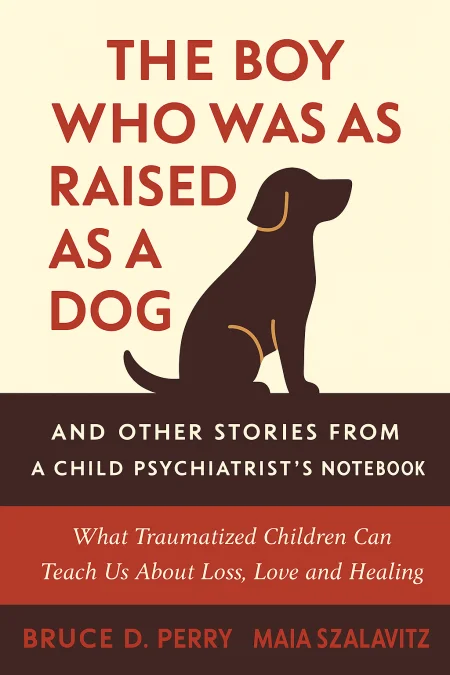
The Boy Who Was Raised as a Dog
And Other Stories from a Child Psychiatrist's Notebook – What Traumatized Children Can Teach Us About Loss, Love, and Healing
byBruce D. Perry, Maia Szalavitz
Book Edition Details
Summary
In the raw aftermath of terror and trauma, what becomes of a child’s mind? Renowned child psychiatrist Bruce Perry has ventured into the darkest corners of human experience, offering solace and healing to young survivors of horrific events—from war-torn landscapes to violent homes. In "The Boy Who Was Raised as a Dog," Perry weaves haunting true stories with groundbreaking science, revealing the brain’s miraculous capacity to rebound from unspeakable hardship. As he guides us through these poignant narratives, Perry unveils the profound impact of love, environment, and gentle touch in restoring a shattered psyche. This compelling exploration not only charts the resilience of the human spirit but also illuminates paths toward recovery, proving that even in the wake of despair, hope can flourish with the right nurturing.
Introduction
When a seven-year-old girl crawls into a psychiatrist's lap during their first meeting and tries to unzip his pants, what does this tell us about the invisible wounds that trauma leaves on a developing mind? Dr. Bruce Perry's groundbreaking work with some of the most severely traumatized children in America reveals a startling truth: the experiences that shape us in our earliest years don't just influence our personalities—they literally rewire our brains, determining how we see the world, form relationships, and respond to stress for the rest of our lives. Through intimate case studies of children who have survived unthinkable horrors, this book illuminates the profound connection between early trauma and lifelong patterns of behavior, while offering hope through revolutionary treatment approaches. You'll discover how the developing brain adapts to survive traumatic environments, often in ways that later create problems in safe settings. You'll learn to recognize the hidden signs of trauma in children's behavior, understanding that what appears as defiance or aggression is often a desperate attempt to feel safe. Most importantly, you'll see how the power of human connection and properly timed interventions can literally heal damaged neural pathways, proving that even the most wounded children can recover when given what their developing brains truly need.
When Touch Becomes Terror: Understanding Trauma's Hidden Language
Seven-year-old Tina sat quietly in the waiting room, her neat braids framing a face that seemed far too knowing for her age. When Dr. Perry led her to his office, she surprised him by climbing into his lap—then shocked him by reaching for his zipper. This wasn't the behavior of a seductive child, but rather the tragic response of a little girl whose understanding of relationships had been twisted by two years of sexual abuse at the hands of her teenage babysitter. Tina's case file was thin, containing little more than complaints from her school about aggressive and inappropriate sexual behavior with classmates. The medical system had quickly labeled her with attention deficit disorder and oppositional defiant disorder, prescribing medications and behavioral interventions that completely missed the root cause of her problems. Her elevated heart rate of 112 beats per minute—far above normal for a child her age—told a different story entirely. Her small body was trapped in a constant state of hypervigilance, her stress response system stuck in overdrive from months of unpredictable terror. What Tina taught Dr. Perry would revolutionize his understanding of childhood trauma. Her brain had formed powerful associations between adult men and sexual demands, creating neural pathways that fired automatically whenever she encountered a male authority figure. These weren't conscious thoughts she could simply choose to change—they were deeply embedded memory templates that guided her behavior below the level of awareness. When traditional therapy failed to address these core associations, it became clear that healing trauma requires more than just talking about it. The key insight from Tina's case is that traumatized children aren't broken or defiant—they're responding logically to the world as their experience has taught them it exists. When we understand that a child's "inappropriate" behavior is actually an adaptive response to an abnormal situation, we can begin to provide the safety and consistency needed to rewire those damaged neural pathways. True healing happens not through punishment or behavioral modification, but through patient, predictable relationships that teach the brain new ways of being in the world.
From Cage to Connection: The Brain's Remarkable Recovery Power
When Dr. Perry first encountered six-year-old Justin in the pediatric intensive care unit, the boy was literally living in a cage—his hospital crib fitted with iron bars and a plywood top to contain his wild, feces-throwing behavior. Rocking back and forth in his own filth, shrieking and moaning primitive sounds, Justin seemed more animal than human. His tragic story revealed why: for five years, he had been raised in a dog kennel by an elderly man who, while not intentionally cruel, had applied his knowledge of animal care to the task of raising a human child. Justin's medical records painted a picture of irreversible brain damage. Scans showed severe atrophy resembling advanced Alzheimer's disease, and his head circumference fell below the second percentile for his age. Multiple specialists had diagnosed him with "static encephalopathy," essentially declaring his condition hopeless and unchangeable. Yet Dr. Perry suspected that what appeared to be permanent brain damage might actually be the result of severe developmental deprivation—damage that could potentially be reversed with the right interventions. The transformation that followed was nothing short of miraculous. Within days of receiving consistent, nurturing care in a calm environment, Justin stopped his aggressive behaviors and began to smile. Physical therapists helped him learn to stand and walk for the first time. Speech therapists introduced him to the world of language he had been denied. Most remarkably, within three weeks of beginning treatment, this boy who had been written off as permanently disabled was taking his first steps and beginning to speak. Justin's recovery demonstrates the extraordinary plasticity of the developing brain and the power of what Dr. Perry calls "use-dependent" development. Neural systems that receive patterned, repetitive stimulation will grow and strengthen, while those that are neglected will wither. Even after years of severe deprivation, the brain retains a remarkable capacity for healing when provided with the experiences it needs. The key is not to focus on what's broken, but to nurture what's possible, meeting the child where their development actually is, not where their age suggests they should be.
Building Communities That Heal: The Power of Understanding Together
When Peter arrived from a Russian orphanage at age four, his adoptive parents were prepared for challenges, but nothing could have prepared them for the reality. Despite their love and patience, Peter seemed unable to connect with other children. He would grab toys without asking, interrupt conversations, and had explosive tantrums when things didn't go his way. His behavior was so disruptive that other parents began avoiding playdates, and his teachers suggested he might need special education placement. The turning point came when his treatment team made an unusual request: could they visit Peter's first-grade classroom to teach the children about brain development? The idea was revolutionary. Instead of trying to fix Peter in isolation, they would help his entire peer group understand why he behaved differently. The presentation was simple but profound, explaining how Peter's early experiences in an orphanage had affected his brain development, making it harder for him to understand social cues and control his impulses. The response was immediate and remarkable. The children, who had previously avoided Peter, suddenly saw him in a completely different light. Instead of viewing his behavior as mean or weird, they understood it as the result of experiences beyond his control. They began including him in games, patiently explaining social rules he didn't understand, and even protecting him from teasing by children in other classes. Within months, Peter's behavior transformed dramatically. His tantrums virtually disappeared, he began forming genuine friendships, and showed remarkable progress in understanding social situations. Peter's story reveals a fundamental truth about healing from trauma: relationships are the most powerful therapeutic tool we possess. While professional treatment has its place, the daily interactions with caring peers, teachers, and community members often matter more than formal therapy sessions. When children feel understood and accepted, their brains can finally relax enough to learn and grow. This insight has profound implications for how we structure schools, communities, and support systems for traumatized children. Instead of isolating struggling children in special programs, we need to build inclusive communities where differences are understood and supported.
Summary
The most profound truth about human development is this: we become who we are through our earliest relationships, and the brain we develop in childhood becomes the lens through which we see the world for the rest of our lives. Start by recognizing that challenging behavior in children is often a window into their inner world of fear and survival adaptations. Instead of asking "What's wrong with this child?" ask "What happened to this child?" Provide the safety, consistency, and nurturing touch that traumatized children desperately need, understanding that healing happens through relationships, not through punishment or behavioral modification. Remember that recovery is possible at any age when we address trauma in the proper sequence, starting with the most basic needs for safety and moving gradually toward higher-level skills like social connection and emotional regulation. The children who recover best are not those who experienced the least trauma, but those who are surrounded by the most loving, patient, and understanding caregivers after their ordeal ends.
Related Books
Download PDF & EPUB
To save this Black List summary for later, download the free PDF and EPUB. You can print it out, or read offline at your convenience.
By Bruce D. Perry
