
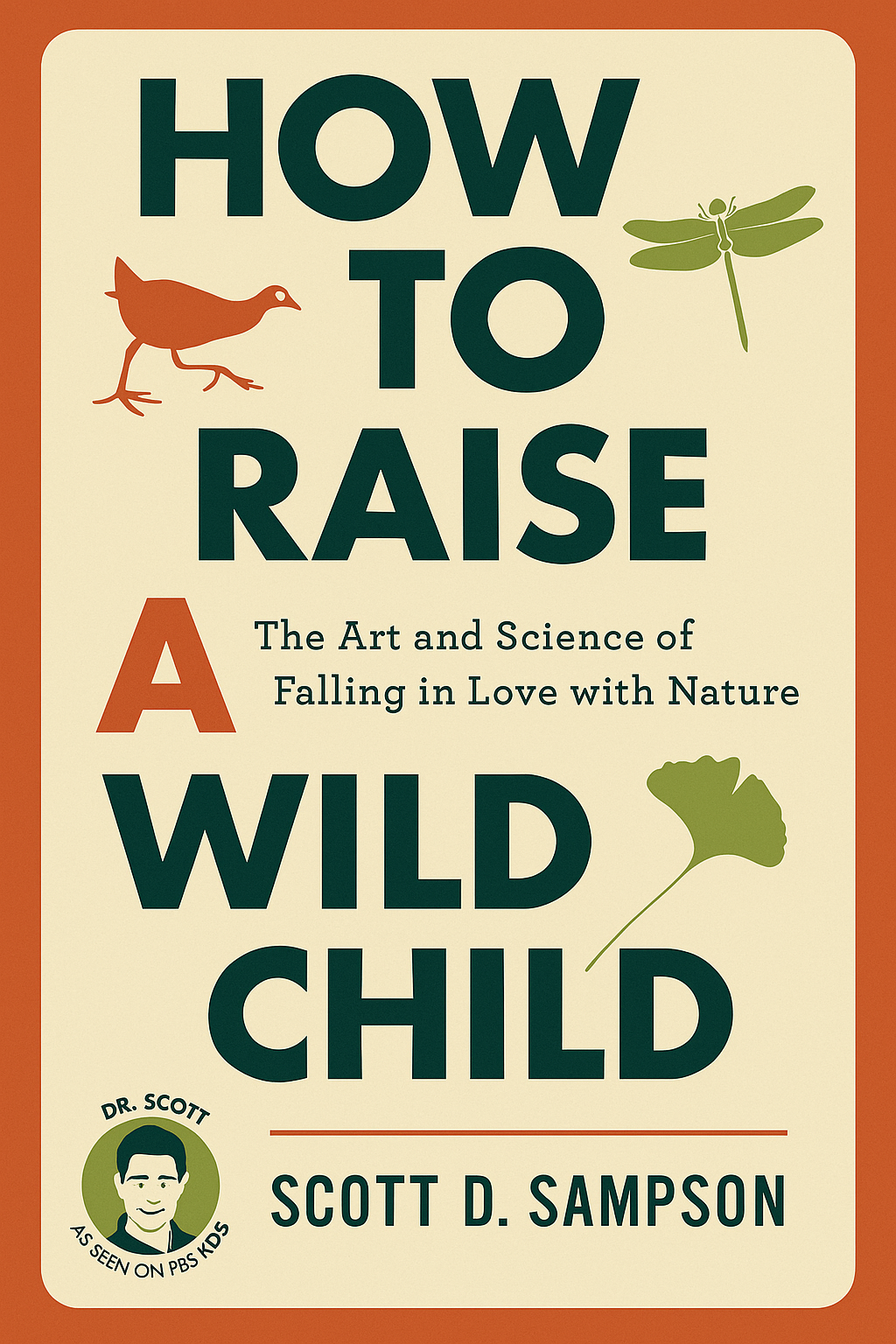
How to Raise a Wild Child
The Art and Science of Falling in Love With Nature
Book Edition Details
Summary
In a world where screens dominate and nature takes a backseat, "How to Raise a Wild Child" emerges as an essential guide for nurturing children's innate bond with the natural world. Crafted by the beloved host of PBS Kids’ Dinosaur Train, this book is a treasure trove of insights and activities designed to rekindle young hearts' love for the outdoors. Recent studies underscore nature's pivotal role in child development, offering profound benefits like reduced stress and enhanced cognitive growth. Yet, many caregivers feel ill-equipped to bridge this vital connection. Sampson artfully weaves research with practical advice, revealing how technology can enhance—not replace—nature experiences. This book is a clarion call to parents and educators: embrace the urban jungle, cultivate a sense of place, and let the wonders of nature unlock a child's full potential.
Introduction
Picture a typical afternoon in any modern neighborhood: children hunched over glowing screens while outside their windows, birds build nests, leaves rustle in the breeze, and countless small dramas of the natural world unfold unnoticed. This scene captures one of the most dramatic shifts in human history—the first generation of children growing up largely disconnected from the natural environments that shaped our species for millions of years. While parents worry about screen time and academic pressure, mounting scientific evidence reveals a deeper concern: children who lack meaningful contact with nature may be missing fundamental experiences necessary for healthy brain development, emotional resilience, and creative thinking. The consequences extend far beyond individual well-being. As environmental challenges intensify, we face a troubling paradox—raising a generation that may lack the deep emotional connection to nature necessary to protect it. Yet the solution isn't as complex as we might imagine. Research shows that children possess an innate capacity for wonder and environmental connection that, when properly nurtured, can flourish into lifelong stewardship and enhanced cognitive abilities. This book reveals how understanding child development, balancing technology with natural experiences, and transforming our communities can help every child develop the nature connection essential for both personal thriving and planetary health.
The Neuroscience of Nature Connection in Child Development
The human brain arrives in this world already wired for nature connection through what scientists call biophilia—an innate attraction to living systems that reflects millions of years of evolutionary history. When children encounter natural environments, their neural networks respond in ways that indoor spaces simply cannot replicate, activating regions responsible for attention, memory formation, and emotional regulation. This isn't merely a pleasant bonus but a fundamental requirement for optimal brain development. Modern neuroscience reveals that nature experiences trigger the release of specific brain chemicals that enhance learning and well-being. Children who spend regular time outdoors show measurably improved concentration, reduced symptoms of attention disorders, and enhanced creative problem-solving abilities. The key lies in what researchers term "soft fascination"—the gentle, ever-changing stimuli of natural environments that capture attention without overwhelming it, allowing the brain's focused attention systems to rest and restore themselves. The timing of these experiences proves crucial. During early childhood, neural connections form at an extraordinary rate, creating the foundation for all future learning. Natural environments provide the rich, multisensory input that developing brains crave—textures to touch, sounds to process, smells to categorize, and visual complexity that no manufactured environment can match. Children who miss these critical nature experiences often struggle later to develop the same depth of environmental awareness and emotional connection to the living world. Perhaps most remarkably, nature connection enhances executive function—the mental skills including working memory, flexible thinking, and impulse control that predict success in school and life. These abilities develop more robustly in children who regularly explore, play, and problem-solve in natural settings where they must adapt to changing conditions and navigate unpredictable challenges, literally growing brains better equipped for the complexities of modern life.
Developmental Stages and Age-Appropriate Nature Mentoring Strategies
Children's capacity for nature connection transforms dramatically as they grow, requiring fundamentally different approaches at each developmental stage. During the preschool years, children function as natural scientists, driven by boundless curiosity and an irresistible urge to explore everything through their senses. Their brains operate in what researchers call "lantern consciousness"—a broad, diffuse awareness that illuminates everything simultaneously rather than focusing narrowly on specific tasks. This makes unstructured outdoor play ideal, where they can dig in dirt, collect interesting objects, and create elaborate imaginary worlds among trees and rocks. As children enter middle childhood, typically ages six through eleven, their cognitive abilities expand to handle more complex concepts and abstract thinking. This developmental shift opens new possibilities for systematic nature observation, such as maintaining nature journals, learning to identify local plants and animals, and understanding basic ecological relationships. Their growing need for competence and recognition makes this an optimal period for nature-based challenges and skill-building activities that allow them to demonstrate mastery while exploring their local environment. Adolescence brings another dramatic transformation as teenagers seek experiences that help forge their identity and connect with peers. Their brains undergo massive reorganization, becoming highly motivated by novel experiences and social connections while still developing impulse control and decision-making abilities. Nature adventures involving appropriate risk-taking, physical challenges, and leadership opportunities become particularly powerful during this stage. Wilderness experiences, conservation projects, and outdoor expeditions can provide meaningful rites of passage that help young people transition into adulthood while developing environmental responsibility. The secret to effective nature mentoring lies in recognizing that children aren't simply miniature adults but possess unique ways of thinking and learning at each stage. Rather than imposing adult agendas or rushing to teach facts and names, successful mentors follow children's natural interests and curiosity, asking thoughtful questions that encourage deeper observation and reflection. This approach honors children's innate wisdom while gently expanding their awareness and understanding of the natural world around them.
Balancing Digital Technology with Natural Experiences
The challenge facing modern families isn't choosing between technology and nature but creating a healthy integration that harnesses the benefits of both digital tools and natural experiences. Today's children, often called digital natives, possess remarkable technological fluency but may lack what researchers term "nature fluency"—the ability to read natural patterns, understand ecological relationships, and feel comfortable in outdoor environments without constant stimulation or structure. The solution involves developing what experts call a "hybrid mind"—the cognitive flexibility to move seamlessly between focused digital attention and the broader, more diffuse awareness that nature experiences cultivate. While screens demand narrow, concentrated focus that can become mentally exhausting, natural environments encourage a more relaxed, open attention style that actually restores cognitive resources and enhances creativity. This alternation between different types of attention proves essential for optimal brain development and mental health. Technology can serve as a powerful bridge to nature connection when used thoughtfully rather than as a replacement for direct experience. Digital cameras allow children to capture and share their outdoor discoveries, while nature identification apps can help them learn about plants, animals, and natural phenomena encountered during explorations. GPS devices and geocaching games can motivate reluctant children to venture outdoors, while online resources provide deeper information about local ecosystems and environmental challenges that spark further investigation. The key lies in ensuring that technology enhances rather than replaces unmediated sensory engagement with the natural world. Successful integration involves using digital tools to prepare for outdoor adventures, document discoveries, and share experiences with others, while maintaining substantial periods of unplugged time for direct nature immersion. This balanced approach helps children develop both the technological literacy essential for future success and the nature connection necessary for environmental stewardship and personal well-being.
Urban Rewilding and Creating Nature-Rich Communities
The future of childhood nature connection depends largely on transforming our cities and suburbs into environments where children can easily access meaningful natural experiences regardless of their family's economic circumstances or geographic location. Urban rewilding—the process of reintroducing native plants, creating wildlife corridors, and designing nature-rich spaces within developed areas—offers a practical pathway for ensuring that all children can develop strong connections to the living world. This transformation begins with recognizing that cities need not be antithetical to nature but can become thriving ecosystems that support both human development and biodiversity. By replacing sterile landscaping with indigenous plants, creating pollinator gardens, and designing natural playgrounds that incorporate logs, boulders, and flowing water, communities can provide the rich sensory experiences that developing brains require. These changes benefit not only children but entire urban ecosystems, supporting native wildlife populations and creating more resilient, sustainable communities. Schools represent particularly powerful opportunities for urban rewilding initiatives. Transforming concrete playgrounds into diverse outdoor classrooms with vegetable gardens, native plant areas, and natural play elements can revolutionize children's daily experiences while providing hands-on learning opportunities across all academic subjects. When children participate in designing and maintaining these spaces, they develop both practical environmental skills and deep emotional connections to their local ecosystem that can last a lifetime. The most successful rewilding efforts involve entire communities working together to create networks of nature-rich spaces connected by green corridors that allow both wildlife and children to move safely between different areas. This collaborative approach ensures that children encounter nature not just in designated parks but throughout their daily lives—walking to school, playing in neighborhoods, and exploring local waterways. Such comprehensive transformation requires coordination between schools, local governments, community organizations, and families, but the results can fundamentally change how an entire generation relates to the natural world.
Summary
The path to raising environmentally connected children lies not in rejecting modern life but in thoughtfully weaving natural experiences throughout childhood development while using technology as a tool for deeper engagement rather than replacement of direct experience. Children possess an remarkable innate capacity for wonder and environmental connection that, when nurtured through developmentally appropriate nature experiences and supportive mentoring, can flourish into lifelong environmental stewardship alongside enhanced cognitive, emotional, and creative abilities that serve them throughout their lives. As we face unprecedented environmental challenges requiring both technological innovation and deep ecological wisdom, the question becomes how we might transform our communities into places where every child can develop the nature connections essential for both personal flourishing and planetary health. What changes in our schools, neighborhoods, and daily routines could help ensure that the next generation grows up feeling genuinely at home in the natural world rather than alienated from the living systems that sustain all life? The answers may determine not only our children's well-being but the future of environmental stewardship itself.
Related Books
Download PDF & EPUB
To save this Black List summary for later, download the free PDF and EPUB. You can print it out, or read offline at your convenience.
By Scott D. Sampson
