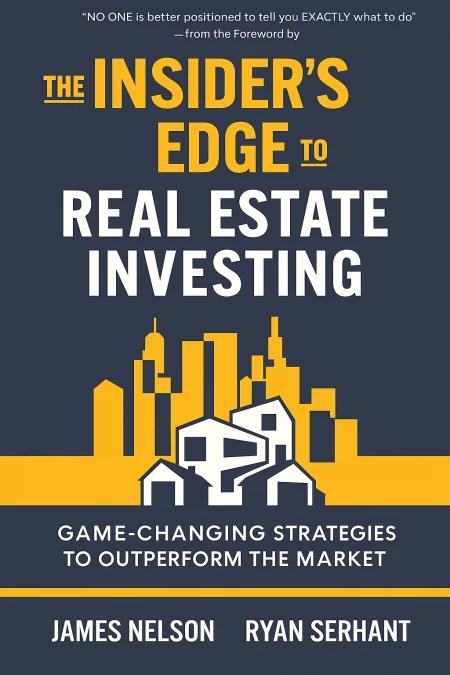
The Insider's Edge to Real Estate Investing
Game-Changing Strategies to Outperform the Market
Book Edition Details
Summary
Real estate isn't just about buying properties; it's about mastering a game of strategy and foresight. James Nelson, a venerated figure in real estate circles, reveals a treasure trove of insights in "The Insider’s Edge to Real Estate Investing." This Wall Street Journal bestseller is a gateway to unlocking the lucrative world of property investment, guiding both novices and seasoned players through a ten-step roadmap to success. Nelson’s wisdom covers everything from choosing the perfect property type—be it multifamily, retail, or land—to harnessing the power of networks for exclusive deals. By reimagining spaces and understanding true value, investors can achieve impressive returns. With a foreword by Ryan Serhant, this book promises to transform ambition into a legacy, making it an indispensable guide for anyone eager to outshine the market and build enduring wealth.
Introduction
What if you could build lasting wealth through real estate while everyone else struggles to find good deals? The truth is, real estate investing isn't just about having money or knowing the right people. It's about understanding the hidden dynamics that separate successful investors from those who never make their first purchase. While most people see real estate as too complex or risky, those with insider knowledge recognize it as one of the most reliable paths to financial freedom. The key lies in mastering a systematic approach that transforms seemingly ordinary properties into extraordinary opportunities. This journey begins with understanding that success in real estate isn't about luck or timing, but about developing the right mindset, building essential relationships, and executing proven strategies that consistently outperform the market.
Build Your Foundation and Team
Real estate investing success starts with assembling the right team of professionals who can guide you through every aspect of the process. Think of this as building your personal board of directors, each bringing specialized expertise that you'll rely on for years to come. Consider the story of Bruce Ratner, who transformed from earning $52,000 annually to becoming one of New York's most influential developers. When Bruce entered real estate at age 38 with two children to support, he knew he couldn't succeed alone. During a one-hour podcast interview, he mentioned "team" and "people" more than fifty times, emphasizing how relationships formed the foundation of every major project, from the Brooklyn Nets' arena to the iconic New York Times building. Bruce's approach demonstrates that real estate investing is fundamentally about people. His success came not from working in isolation, but from cultivating deep partnerships with attorneys, architects, contractors, and financial experts who shared his vision. These relationships enabled him to tackle increasingly complex projects that would have been impossible to handle alone. Your essential team should include an investment sales broker who understands local markets, a mortgage broker familiar with commercial lending, attorneys specializing in real estate transactions, accountants experienced with property investments, and reliable contractors for renovations. Start by identifying one strong connection in your area, then leverage their network to find other qualified professionals. Remember that building these relationships takes time and mutual benefit. Approach potential team members with genuine interest in their expertise, ask thoughtful questions about their experience, and look for ways to provide value in return. The strongest professional relationships in real estate are built on trust, competence, and shared success over multiple transactions.
Find and Evaluate Great Deals
Finding exceptional real estate opportunities requires developing an eye for value where others see problems, and understanding the subtle indicators that separate mediocre investments from life-changing deals. Matt Blesso discovered a mixed-use building in New York's West Village that seemed unremarkable to most observers. Listed at $2.2 million, the property featured an old restaurant on the ground floor with apartments above. While other investors passed it by, Matt recognized the hidden potential in the property's location and structure. Through skillful negotiation, he reduced the contract price to $1.95 million, seeing possibilities that weren't immediately obvious. Matt's vision extended beyond the property's current state. He planned to convert the spaces into luxury condominiums, transforming rental income into substantial sale proceeds. By partnering with other investors who brought additional capital and expertise, he created a collaborative approach that maximized everyone's returns. The renovation process took less than two years, but the results were extraordinary. When the project completed, the converted condos generated nearly $5 million in net profit. The retail space alone later sold for $4.4 million, more than double the original purchase price of the entire building. Even the air rights above the building provided additional revenue, demonstrating how one well-chosen property can deliver returns far beyond initial expectations. To identify similar opportunities, focus on properties with motivated sellers, limited marketing exposure, or obvious improvement potential. Look for buildings in neighborhoods showing early signs of growth, zoning changes that create new possibilities, and properties where current rents fall below market rates. Always research comparable sales to understand true market values, and don't be afraid to make offers on properties that others have overlooked.
Execute Your Investment Strategy
Successfully closing real estate deals requires mastering the due diligence process while maintaining momentum toward your investment goals. This phase separates serious investors from casual observers, as thorough preparation prevents costly mistakes and positions you for long-term success. MaryAnne Gilmartin faced an ultimate test of execution skills during a December 2009 closing that would determine the fate of Brooklyn's Atlantic Yards development. After investing $500 million in the project, her team had until year-end to demonstrate an $86 million line of credit, or the entire development would collapse. The stakes couldn't have been higher, with hundreds of jobs and a multi-billion-dollar project hanging in the balance. When a winter storm knocked out communications and delayed the critical financing document's delivery from Cleveland, most people would have accepted defeat. Instead, MaryAnne mobilized her network, contacted a law firm partner vacationing in the Caribbean, and convinced UPS to open their Queens facility at 3 AM. Her team searched through thousands of packages until they found the letter of credit that saved the project. This determination enabled the construction of what became Pacific Park, a $4.9 billion development including the Barclays Center. MaryAnne's willingness to go where others wouldn't, combined with systematic preparation and strong professional relationships, transformed a potential disaster into career-defining success. Your execution strategy should include comprehensive property inspections, detailed financial analysis, and contingency planning for unexpected challenges. Always verify tenant information, review all leases carefully, and conduct environmental assessments when appropriate. Build buffer time into closing schedules, maintain open communication with all parties, and never hesitate to ask for help when facing complex situations. Most importantly, remember that successful execution often requires creative problem-solving and persistence when conventional approaches fall short. The deals that seem impossible frequently offer the greatest rewards for investors willing to find innovative solutions.
Maximize Returns and Scale Up
The final phase of real estate investing involves optimizing your properties' performance while building a portfolio that generates lasting wealth. This stage combines operational excellence with strategic vision, turning individual successes into systematic prosperity. Francis Greenburger's journey from needing office space to becoming a major real estate developer illustrates how smart investors compound their successes. When Francis rented two offices but only needed one, his landlord suggested subletting the extra space. This simple arrangement covered both rents while teaching Francis the power of real estate arbitrage. He quickly recognized that property ownership offered more control and better returns than traditional investments. Francis's next opportunity came through understanding market dynamics. When rent deregulation allowed property owners to raise rents after tenant turnover, he identified a run-down building whose owner was charging regulated rents far below market rates. By partnering with investors who provided capital while Francis contributed expertise, he acquired the property and began strategic improvements that justified higher rents. As regulations evolved to encourage rental-to-cooperative conversions, Francis adapted his strategy again. He negotiated to purchase a 40-unit building for $1 million with an innovative payment structure, paying approximately $25,000 per unit only as each condo sold. The first unit alone sold for $500,000, demonstrating how creative deal structures can minimize risk while maximizing returns. To scale your real estate investments effectively, consider refinancing successful properties to extract equity for new acquisitions. Explore 1031 exchanges to defer capital gains taxes when selling appreciated properties. Focus on building systems and relationships that support multiple transactions, and always reinvest profits to compound your growth rather than simply consuming returns. Remember that sustainable wealth building in real estate comes from patience, continuous learning, and the discipline to reinvest success into bigger opportunities. Each property should teach you something valuable for the next investment.
Summary
Real estate investing offers one of the most reliable paths to building lasting wealth, but success requires more than capital or luck. As this book demonstrates, "The most important thing for success is tenacity," combined with the insider knowledge that comes from understanding markets, building strong professional relationships, and executing proven strategies consistently. The investors who achieve extraordinary returns share common traits: they start with solid foundations, surround themselves with expert teams, identify value where others see problems, and execute their visions with unwavering determination. Your real estate investing journey begins with a single action: choose one property type that interests you, connect with one experienced professional in your area, and start building the relationships that will support your first investment. The opportunities are waiting for those prepared to recognize and act upon them.
Related Books
Download PDF & EPUB
To save this Black List summary for later, download the free PDF and EPUB. You can print it out, or read offline at your convenience.
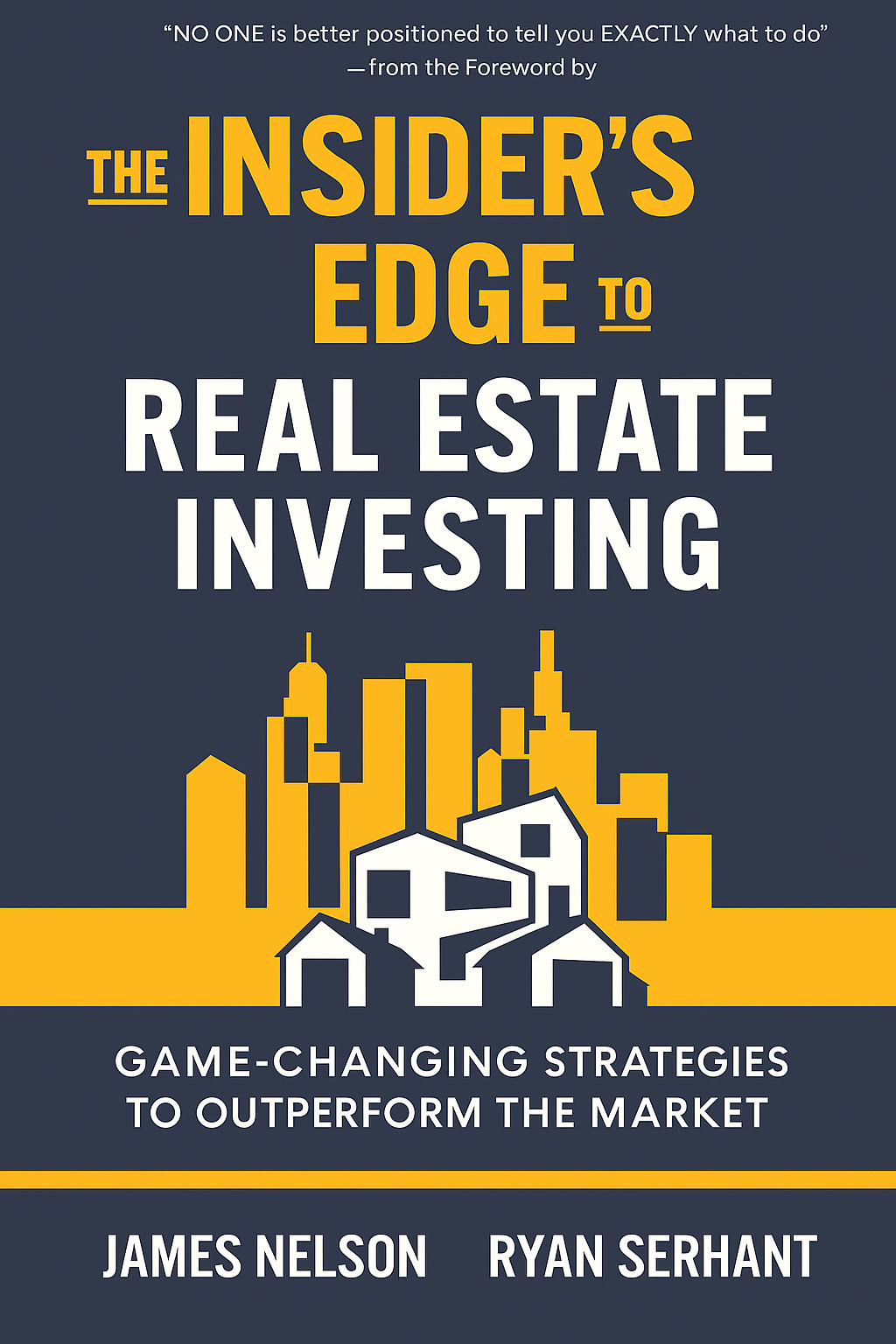
By James Nelson
