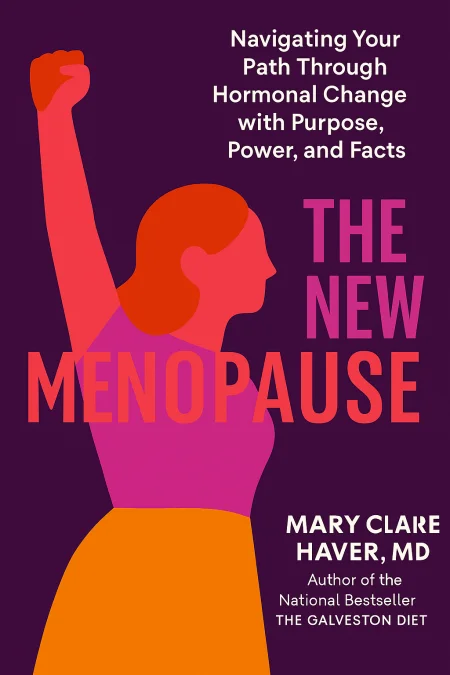
The New Menopause
Navigating Your Path Through Hormonal Change with Purpose, Power, and Facts
Book Edition Details
Summary
Hormones in flux, emotions on a rollercoaster, and health choices that can shape your future—welcome to the adventure of menopause, reimagined. Dr. Mary Claire Haver, renowned for her groundbreaking work in women's health, offers a masterclass in navigating this transformative life stage with poise and power. In "The New Menopause," she dismantles myths and builds a fortress of knowledge, arming you with a toolkit that's both scientific and empathetic. Whether it's reclaiming restful nights, understanding the silent whispers of your body, or steering clear of health pitfalls like osteoporosis and heart disease, this guide is your ally. It’s not just about surviving menopause; it’s about mastering it and emerging with resilience and vigor for the years to come. Here, empowerment isn't a buzzword—it's your new reality.
Introduction
At 3 AM, Sarah found herself standing in front of the bathroom mirror, her nightgown drenched in sweat for the third time that week. The 47-year-old marketing executive barely recognized the exhausted woman staring back at her. Joint pain had made her beloved morning runs unbearable, and the brain fog that clouded her once-sharp mind left her struggling for words during crucial client presentations. When she finally mustered the courage to visit her doctor, she was dismissed with a casual suggestion of antidepressants and told it was "just stress." Sarah's experience echoes that of millions of women worldwide who find themselves navigating the bewildering landscape of menopause feeling utterly alone and profoundly misunderstood. For far too long, menopause has remained shrouded in silence and shame, treated as an inevitable decline rather than a significant health transition deserving proper medical attention and compassionate care. This natural process affects every woman who lives long enough to experience it, yet our healthcare systems have systematically failed to provide adequate education, resources, or support. The symptoms extend far beyond the commonly discussed hot flashes, encompassing everything from cognitive changes and cardiovascular risks to joint pain and sleep disruption. Through groundbreaking research and countless patient stories, we're finally beginning to understand that menopause isn't merely about the end of fertility—it's about reclaiming health, finding voice, and discovering renewed power during one of life's most transformative transitions. This journey toward understanding offers hope, validation, and practical solutions for women ready to break free from decades of medical neglect and societal silence.
When Doctors Dismiss: The Medical System's Failure
Dr. Mary Claire Haver will never forget the moment her entire perspective on women's healthcare shifted forever. As a practicing obstetrician-gynecologist with over two decades of experience, she believed she understood the intricacies of women's health. Then menopause struck her with devastating force. Night after night, she awakened drenched in sweat, her sleep shattered and energy completely depleted. Weight seemed to appear overnight, settling stubbornly around her midsection despite maintaining her healthy lifestyle. Most alarming was the brain fog that made her question her professional competence—here was a seasoned physician who had delivered countless babies and performed numerous complex surgeries, suddenly struggling to remember simple words during routine patient consultations. What shocked Dr. Haver most profoundly wasn't the intensity of her symptoms, but the startling realization that she had been perpetuating the very dismissive attitudes she now experienced firsthand. For years, she had unconsciously contributed to the medical establishment's tendency to minimize women's menopausal experiences. Patients would arrive describing clusters of debilitating symptoms: crushing fatigue, severe joint pain, unpredictable mood swings, unexplained weight gain, and frightening cognitive difficulties. In medical school, these women were callously referred to as "WWs"—whiny women. This derogatory term reveals the deep-seated gender bias that has plagued women's healthcare for centuries, tracing back to ancient Greek theories about "wandering wombs" causing female hysteria. The statistics surrounding this systematic dismissal are both staggering and shameful. Women experiencing menopausal symptoms wait an average of sixteen minutes longer than men for pain medication in emergency rooms. They're significantly more likely to be prescribed sedatives or antidepressants instead of receiving proper evaluation and targeted treatment for their actual condition. A comprehensive recent study revealed that an astounding 75 percent of women seeking help for significant menopausal symptoms left their doctor's appointments without receiving any treatment whatsoever. This pervasive medical dismissal isn't merely frustrating or demoralizing—it's genuinely dangerous, as untreated menopausal symptoms can lead to serious long-term health consequences including cardiovascular disease, severe osteoporosis, and cognitive decline. The medical education system bears enormous responsibility for perpetuating this healthcare crisis. Most medical schools dedicate less than one hour to comprehensive menopause education, while many residency programs offer absolutely no specialized training in this critical area. A revealing 2013 survey found that nearly 80 percent of medical residents felt "barely comfortable" discussing or treating menopause-related issues. These future healthcare providers are being sent into practice woefully unprepared to care for the millions of women who will desperately seek their help during this crucial life transition, creating a perfect storm of medical neglect that leaves women suffering in silence while their legitimate health concerns are systematically dismissed as psychological complaints or inevitable aspects of aging.
The Science Revolution: From Fear to Evidence-Based Hope
Margaret's journey through perimenopause began as a bewildering medical mystery that seemed to involve every system in her body. At 48, she developed severe joint pain that sent her rushing to a rheumatologist, convinced she had developed rheumatoid arthritis. Her thick, lustrous hair began falling out in alarming quantities, prompting urgent consultations with a concerned dermatologist. Painful cystic acne appeared for the first time since her turbulent teenage years, while her previously regular periods became erratic and devastatingly heavy. Sleep became increasingly elusive, and her once-abundant energy plummeted to concerning lows. Each specialist she consulted treated her symptoms in complete isolation, prescribing various medications and running extensive tests, but remarkably, no one connected these seemingly disparate health issues. It wasn't until Margaret discovered educational content about perimenopause online that she experienced a profound revelation: all her mysterious symptoms shared a common, treatable cause—dramatically fluctuating hormones. Margaret's frustrating experience perfectly illustrates a fundamental problem in how the medical community understands and treats menopause. Healthcare providers have traditionally focused exclusively on the most obvious and well-known symptoms—hot flashes, night sweats, and irregular periods—while completely ignoring the dozens of other significant ways that hormonal changes can manifest throughout the body. Groundbreaking recent research has identified over sixty distinct symptoms potentially linked to menopause, including persistent tinnitus, frozen shoulder syndrome, burning mouth syndrome, and even dramatic changes in alcohol tolerance. This expanded understanding represents nothing short of a revolutionary shift in menopause medicine. The hormonal changes occurring during menopause are far more complex and nuanced than the oversimplified notion of simply "running out of eggs." As ovarian function gradually declines, the intricate symphony of hormones that has orchestrated a woman's monthly cycle for decades begins to falter dramatically. Estrogen levels don't merely drop steadily—they fluctuate wildly and unpredictably, sometimes surging higher than ever before suddenly plummeting to near-zero levels within days. This hormonal chaos affects virtually every organ system throughout the body because estrogen receptors are abundantly found in the brain, heart, bones, skin, joints, and numerous other tissues. What makes this transition particularly challenging and often overwhelming is its complete unpredictability. Some fortunate women sail through menopause with minimal symptoms, while others experience debilitating effects that can persist for many years. The timing varies enormously as well—perimenopause can begin in a woman's early thirties or not commence until her mid-fifties. This tremendous variability has significantly contributed to the medical community's historical struggle to recognize and treat menopausal symptoms consistently and effectively. The breakthrough in scientific understanding came when researchers began studying menopause not as a simple reproductive ending, but as a complex, multi-system endocrine transition affecting the entire body. They discovered that estrogen isn't merely about reproduction—it provides profound protection against inflammation, cardiovascular disease, bone loss, and cognitive decline. When estrogen levels drop precipitously, women lose this crucial protection, clearly explaining why the risk of heart disease, osteoporosis, and dementia increases so dramatically after menopause. This revolutionary understanding transforms how we view menopausal symptoms from character flaws or inevitable aging consequences into legitimate biological responses to significant hormonal changes that absolutely deserve comprehensive medical attention and evidence-based treatment.
Real Women, Real Solutions: Transformative Treatment Stories
When Katie, a highly experienced clinical pharmacist, first encountered the Women's Health Initiative study results in 2002, she watched in dismay as doctors across the country abruptly stopped prescribing hormone therapy to their patients. Women who had been thriving on treatment suddenly found themselves medically abandoned, told to simply endure their debilitating symptoms without relief. Katie couldn't understand why these women fought so desperately and emotionally to continue their hormone treatments. Years later, when perimenopause hit her with crushing, overwhelming force, she finally understood their desperation completely. The anxiety and irritability were utterly overwhelming, completely disproportionate to any actual life stressors she faced. Severe hot flashes and persistent insomnia destroyed her sleep quality, leaving her exhausted and struggling with dangerous brain fog while trying to make critical patient care decisions in her demanding hospital role. The joint pain became so severe it affected her ability to work effectively, while heart palpitations and constant, embarrassing sweating made her feel like her own body was betraying her. As a healthcare professional, Katie knew these symptoms were related to hormonal changes, but finding a doctor willing to prescribe appropriate hormone therapy proved surprisingly difficult. When she finally located a knowledgeable physician who understood current research and was willing to provide treatment, the relief was immediate and absolutely profound. Within weeks, her anxiety decreased dramatically, her sleep improved significantly, and the brain fog that had terrified her completely lifted. Katie's remarkable transformation reflects one of the most significant and encouraging developments in modern menopause care: the complete rehabilitation of hormone replacement therapy based on updated, properly interpreted scientific evidence. For over two decades, hormone therapy was unnecessarily demonized based on misinterpreted data from the flawed Women's Health Initiative study. Sensationalized media reports claimed that hormones definitively caused breast cancer, leading millions of women to suffer completely unnecessarily. However, careful reanalysis of the original data combined with new, well-designed studies revealed a dramatically different and much more reassuring story. The actual increase in breast cancer risk was minimal—less than one-tenth of one percent—and only occurred with specific synthetic hormone formulations used in much older women who were many years past menopause. Modern hormone therapy approaches look absolutely nothing like the outdated, one-size-fits-all treatments of the past. Today's evidence-based treatments utilize bioidentical hormones that precisely match the molecular structure of hormones naturally produced by a woman's own body. These can be delivered through convenient patches, gels, or other innovative methods that bypass the liver and significantly reduce potential side effects. Most importantly, timing matters enormously for both safety and effectiveness. When hormone therapy is started within ten years of menopause onset, it can be profoundly protective, actually reducing the risk of heart disease, osteoporosis, and even death from any cause. The current science clearly demonstrates that appropriately prescribed hormone therapy can address the root cause of numerous menopausal symptoms rather than simply masking them temporarily. It can restore restorative sleep patterns, completely eliminate hot flashes, dramatically improve cognitive function, protect crucial bone density, and maintain optimal cardiovascular health. For women who are appropriate candidates for treatment, hormone therapy can literally be life-changing and potentially life-extending, offering hope and renewed vitality during a challenging life transition.
Summary
The powerful stories woven throughout this exploration of menopause reveal a profound and hopeful truth: what has long been dismissed as inevitable suffering is actually a highly treatable medical condition that deserves serious attention and comprehensive, compassionate care. From Dr. Haver's awakening to her own unconscious biases, to Margaret's frustrating journey through multiple dismissive specialists, to Katie's professional and personal transformation through proper treatment, these experiences illuminate both the tragic failures of our current healthcare system and the tremendous potential for positive change when women receive appropriate, evidence-based support and care. The revolution in menopause care represents far more than simply updated treatment guidelines or better medications—it embodies a fundamental shift toward truly evidence-based, individualized care that honors each woman's unique experience and needs. The science now clearly demonstrates that menopause symptoms aren't character flaws, signs of weakness, or inevitable consequences of aging, but rather legitimate biological responses to significant hormonal changes that can and absolutely should be addressed with the same seriousness given to any other major health transition. When women are properly educated about their options, supported by knowledgeable healthcare providers, and empowered to make informed decisions about their treatment, they can navigate this challenging transition with confidence and emerge stronger than ever. Most importantly, these transformative stories remind us that every woman's menopause journey is beautifully unique, requiring personalized approaches that honor individual symptoms, preferences, medical history, and life circumstances. The future of menopause care lies not in outdated, one-size-fits-all solutions, but in comprehensive, flexible approaches that may include bioidentical hormones, targeted nutrition, strategic exercise, stress management techniques, and other evidence-based strategies carefully tailored to each woman's specific situation. By courageously breaking the silence, demanding better care from our healthcare systems, and supporting one another through this significant transition, women can reclaim their health, rediscover their vitality, and create a strong foundation for vibrant, fulfilling lives in all the decades that follow menopause.
Related Books
Download PDF & EPUB
To save this Black List summary for later, download the free PDF and EPUB. You can print it out, or read offline at your convenience.
By Mary Claire Haver
