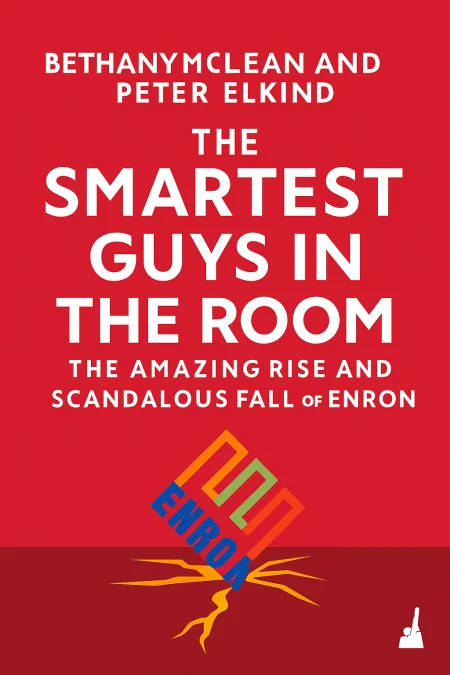
The Smartest Guys in the Room
The Amazing Rise and Scandalous Fall of Enron
byBethany McLean, Peter Elkind
Book Edition Details
Summary
In the realm of corporate intrigue, "The Smartest Guys in the Room" unravels the astonishing saga of Enron's meteoric ascent and catastrophic downfall. Once hailed as a beacon of innovation, Enron's empire crumbled under the weight of its own deceit. Fortune writers Bethany McLean and Peter Elkind meticulously chart this explosive narrative, pulling back the curtain on shadowy boardrooms and the audacious executives who gambled with the market's trust. Through a tapestry of insider accounts and sharp analysis, the book paints a vivid picture of ambition gone awry, with figures like Ken Lay and Jeff Skilling at the helm of a financial shipwreck. A gripping chronicle of hubris and ambition, this is the essential account of a scandal that reshaped the corporate landscape.
Introduction
In the gleaming towers of Houston's energy corridor, a corporate empire once stood as the seventh-largest company in America, commanding respect from Wall Street to Washington. Its executives jetted between continents closing billion-dollar deals, while traders moved vast sums with the click of a mouse, all under the banner of revolutionary business innovation. Yet within mere months, this seemingly unstoppable giant would crumble into bankruptcy, leaving behind one of the most shocking corporate scandals in American history. This extraordinary rise and catastrophic fall illuminates three profound questions that resonate far beyond the energy sector. How do brilliant minds, armed with cutting-edge financial tools, gradually transform legitimate innovation into elaborate deception? What happens when a corporate culture becomes so obsessed with stock price performance that it loses sight of fundamental business realities? And perhaps most critically, how do entire networks of supposedly independent watchdogs become complicit in perpetuating dangerous illusions that ultimately harm millions of innocent people? This story serves as essential reading for investors learning to distinguish between genuine value creation and sophisticated financial theater, business leaders navigating the treacherous waters of quarterly earnings pressure, and citizens seeking to understand how modern capitalism can go astray when proper safeguards fail. The lessons embedded in this corporate tragedy remain painfully relevant in our era of continued financial scandals and market volatility.
Foundation and Innovation: Building the Energy Trading Empire (1985-1999)
The transformation began in the deregulated landscape of 1980s America, when two traditional pipeline companies merged to form what initially appeared to be just another utility struggling with massive debt and commodity price volatility. The breakthrough came when visionary executives recognized that deregulation would create unprecedented opportunities for those bold enough to reimagine how energy markets could function. The revolutionary insight was elegantly simple yet profound: instead of merely moving natural gas through physical pipelines, the company could become a financial intermediary, offering long-term contracts that guaranteed prices and supply while absorbing market risks. This "Gas Bank" concept transformed energy from a regulated utility service into a tradable financial instrument, complete with standardized contracts and sophisticated hedging mechanisms. The innovation required mark-to-market accounting, allowing the company to book the entire projected value of multi-year deals as immediate revenue. The culture that emerged during these formative years was intoxicating in its ambition and ruthless in its execution. The organization attracted brilliant minds from elite consulting firms and investment banks, creating an environment where intellectual firepower was prized above traditional utility experience. The annual "rank and yank" performance review system eliminated the bottom performers while rewarding risk-takers with enormous bonuses and stock options. Employees learned that meeting quarterly earnings targets justified almost any means, while missing numbers meant career suicide. This foundation period established both the company's greatest strengths and its ultimate vulnerabilities. The genuine innovations in energy trading and risk management created enormous value and attracted Wall Street's admiration. Yet the obsession with stock price performance and the culture of extreme competition planted the seeds of future destruction, as success became measured not by sustainable cash flow but by the ability to consistently exceed analysts' expectations through increasingly creative financial engineering.
Peak Deception: Financial Engineering and Market Manipulation (2000-2001)
As the new millennium dawned, maintaining meteoric growth required increasingly sophisticated financial alchemy. The company's wizards created a labyrinthine network of off-balance-sheet partnerships with cryptic names, designed to hide debt, inflate revenues, and smooth out the natural volatility of trading operations. These special purpose entities allowed executives to sell assets to companies they secretly controlled, booking immediate profits while retaining the underlying economic risks. The period was characterized by breathtaking expansion into new markets and equally breathtaking disregard for traditional business fundamentals. International power projects hemorrhaged cash while reporting fictional profits, retail energy contracts were signed at unsustainable prices, and the much-hyped broadband division burned through billions with little genuine economic activity. Each setback was systematically concealed through accounting manipulation and the strategic shifting of losses between divisions and partnerships. Most troubling was the systematic market manipulation that occurred in newly deregulated energy markets, particularly in California. Traders developed strategies with names like "Death Star" and "Fat Boy," designed to exploit regulatory loopholes and extract maximum profits from a system in crisis. The human cost was staggering, as rolling blackouts and soaring electricity prices devastated the state's economy, yet the perpetrators seemed genuinely convinced they were heroes bringing efficiency to hidebound markets. The executive leadership displayed an almost pathological arrogance during this period, dismissing critics and short-sellers while simultaneously engaging in massive insider trading. Key executives sold hundreds of millions in stock while publicly proclaiming confidence and encouraging employees to increase their retirement investments in company shares. This betrayal of trust would later become one of the most damning aspects of the scandal, as the very people responsible for the company's strategy abandoned ship while their subordinates sailed toward disaster.
The Spectacular Collapse: Bankruptcy and the Pursuit of Justice (2001-2006)
The unraveling began with the abrupt resignation of the chief executive in August 2001, a shocking departure that immediately triggered intense scrutiny from analysts and journalists. As questions mounted about the company's complex financial structures and deteriorating fundamentals, the elaborate house of cards began collapsing with stunning speed. Credit rating downgrades triggered debt acceleration clauses, creating liquidity crises that no amount of financial engineering could solve. The revelation of massive conflicts of interest involving off-balance-sheet partnerships destroyed what remained of investor confidence. Wall Street discovered that the chief financial officer had personally profited from deals with his own company, while billions in losses had been systematically hidden from shareholders and creditors. Trading partners demanded cash collateral the company couldn't provide, while commercial paper markets dried up entirely. Within weeks, America's seventh-largest corporation was reduced to begging for emergency loans to meet basic payroll obligations. The final act played out with devastating consequences for thousands of innocent employees and investors. A proposed rescue merger collapsed when due diligence revealed the true extent of the financial manipulation, leaving bankruptcy as the only option. The filing wiped out $74 billion in shareholder value while destroying the retirement savings of employees who had been encouraged to bet their futures on company stock. The human tragedy was symbolized by executive suicides and the broader destruction of trust in American corporate governance. The pursuit of justice that followed was unprecedented in scope and severity. Federal prosecutors secured convictions of top executives, including lengthy prison sentences for the architects of the fraud. Arthur Andersen, one of the world's most prestigious accounting firms, was destroyed after being convicted of obstruction of justice for systematically shredding incriminating documents. The scandal prompted passage of the Sarbanes-Oxley Act, the most significant corporate governance reform since the Great Depression, fundamentally changing how public companies report their financial results and manage internal controls.
Summary
The corporate collapse represents far more than a single company's spectacular failure; it embodies the dangerous transformation that occurs when legitimate business innovation becomes divorced from ethical constraints and regulatory oversight. At its core, the story reveals how a culture of extreme short-term thinking, enabled by complex financial instruments and compromised gatekeepers, can systematically corrupt even the most brilliant minds and sophisticated institutions. The enduring lessons demand active vigilance from all market participants and citizens. Investors must develop the skills to look beyond headline earnings numbers, asking hard questions about cash flow sustainability and the real sources of reported profits rather than accepting smooth growth at face value. Business leaders should recognize that corporate culture ultimately determines long-term success, understanding that reward systems emphasizing quarterly performance above all else will inevitably produce destructive behaviors that threaten the organization's survival. Policymakers and regulators must maintain the independence and resources necessary to enforce meaningful oversight, recognizing that markets require not just freedom but also transparency and accountability to function in society's broader interest. Perhaps most importantly, this tragedy reminds us that sustainable prosperity requires building genuine economic value rather than elaborate financial illusions. The seductive belief that rising stock prices justify any means continues to threaten modern capitalism, making the lessons of this corporate collapse more relevant than ever for anyone seeking to understand how markets can serve human flourishing rather than merely enriching those clever enough to manipulate them.
Related Books
Download PDF & EPUB
To save this Black List summary for later, download the free PDF and EPUB. You can print it out, or read offline at your convenience.
By Bethany McLean
