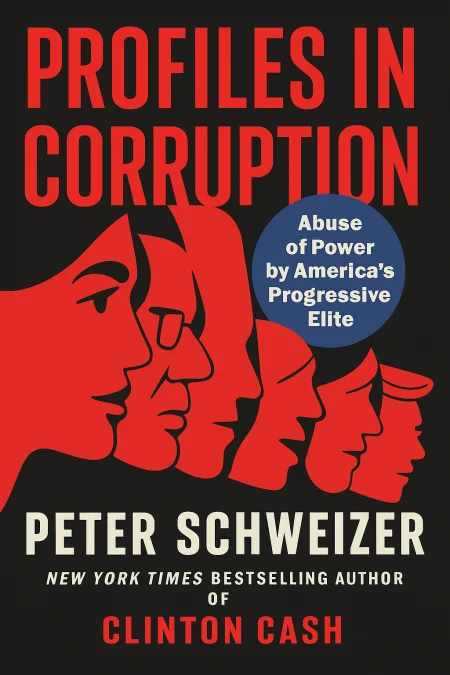
Profiles in Corruption
Abuse of Power by America’s Progressive Elite
Book Edition Details
Summary
In the murky underworld of American politics, where power and ambition dance a dangerous tango, Peter Schweizer returns with a hard-hitting exposé that leaves no stone unturned. "Profiles in Corruption" thrusts readers into the clandestine dealings of some of the nation’s most influential progressives, revealing how they bend the rules to serve personal agendas. Armed with an arsenal of undisclosed documents and meticulous research, Schweizer dissects the smoke and mirrors of political maneuvers, spotlighting secret deals and legal loopholes that line the pockets of those in power. This riveting investigation isn't just a book; it's a wake-up call, challenging us to scrutinize the integrity of leaders who shape the very fabric of democracy. Prepare to be stunned as the veneer of political virtue is stripped away to reveal a landscape riddled with deceit and corruption.
Introduction
Contemporary American politics presents a troubling paradox where those who most vocally champion reform and rail against corruption have themselves mastered sophisticated techniques of personal enrichment through public office. This systematic examination reveals how progressive politicians have developed elaborate networks of influence peddling that operate through family members, nonprofit organizations, and international business relationships while maintaining carefully crafted public personas as champions of ordinary citizens against powerful interests. The corruption documented here represents a fundamental evolution from traditional political graft toward more subtle forms of influence monetization that exploit regulatory gaps and media blind spots. These politicians have learned to leverage their positions not through crude bribery or obvious conflicts of interest, but by creating ecosystems of financial opportunity that generate substantial wealth for their relatives and associates while maintaining plausible deniability about any direct connection between official actions and personal gain. The evidence challenges conventional assumptions about political virtue and partisan morality by demonstrating how progressive ideology can serve as effective camouflage for enrichment schemes that would generate immediate suspicion if undertaken by politicians with different reputations. Understanding these patterns requires moving beyond partisan assumptions to examine the actual mechanics of how political power translates into private wealth through carefully constructed influence operations that traditional ethics rules struggle to address.
Modern Corruption Framework: Sophisticated Influence Monetization Through Family Networks
Progressive politicians have developed remarkably consistent approaches to monetizing their political positions that share several key characteristics distinguishing them from traditional corruption models. Rather than accepting direct bribes or engaging in obvious conflicts of interest, they create complex networks of financial relationships that generate wealth for family members and close associates through seemingly legitimate business activities that correlate suspiciously with the politician's rise to prominence and committee assignments. The most prevalent technique involves establishing consulting firms, investment partnerships, or nonprofit organizations that provide services to entities seeking favorable treatment from government agencies. These arrangements typically feature family members or longtime associates in key positions who often lack obvious qualifications for the lucrative contracts they receive, yet maintain relationships with clients who benefit from regulatory decisions or legislative actions. The businesses frequently have minimal employees, unclear service offerings, and client lists that align strongly with their political relative's areas of influence. International business relationships represent another crucial component of these influence networks, where family members serve as intermediaries or partners in deals involving foreign governments or state-controlled enterprises. These arrangements often involve complex corporate structures spanning multiple jurisdictions that make it difficult for investigators to trace connections between official actions and private financial benefits. The sophistication of these arrangements reflects a deep understanding of legal and regulatory loopholes that allow politicians to engage in behavior enriching their families while maintaining technical compliance with ethics rules. The system becomes self-perpetuating as success in politics creates more opportunities for financial gain, which in turn provides resources for maintaining political power. Campaign contributions from grateful beneficiaries, speaking fees, book deals, and consulting arrangements create multiple revenue streams that flow to politicians and their families, naturally influencing policy decisions in subtle but significant ways as politicians favor policies that benefit their financial supporters and business partners.
Case Studies: Biden, Warren, Harris Family Enrichment Patterns
The Biden family's business activities provide a comprehensive illustration of how political connections translate into financial opportunities across multiple sectors and countries. Hunter Biden's various business ventures demonstrate a clear pattern of monetizing his father's political relationships, from his early lobbying career through his international consulting work, with positions on corporate boards and investment partnerships with foreign entities consistently coinciding with his father's official duties and international travel. The family's approach extends beyond Hunter to include other relatives who have established businesses benefiting from political connections, including James Biden's construction and healthcare ventures and Frank Biden's involvement in charter school real estate deals. Elizabeth Warren's family presents an instructive case study in the gap between public rhetoric and private practice. While building a career as a critic of corporate power and defender of working families, Warren and her family members engaged in foreclosure property speculation, corporate bankruptcy consulting for major corporations, and business ventures that directly contradicted her public positions. Her transformation from corporate consultant to progressive champion illustrates how politicians can successfully rebrand themselves while maintaining profitable relationships with the interests they claim to oppose, earning substantial fees providing legal advice to major corporations seeking to limit their liability in bankruptcy proceedings. Kamala Harris's prosecutorial career in San Francisco demonstrates how progressive politicians can selectively enforce laws in ways that benefit their political allies and financial supporters. Her decision to avoid prosecuting certain corporate executives and political figures while aggressively pursuing others reveals a pattern of favoritism that contradicts her public image as an impartial law enforcement official. Her husband's law firm's representation of companies that benefited from her prosecutorial decisions creates additional conflicts of interest that have received minimal scrutiny despite their obvious implications for equal justice under law. These cases reveal consistent patterns where family members establish consulting firms, investment companies, and other businesses that provide services to corporations and foreign entities seeking to influence American policy. The arrangements allow for substantial financial transfers without direct involvement of the politician, creating legal distance while maintaining practical control over the benefits through businesses that often have minimal operational substance but generate substantial revenues through their connections to political power.
Media Complicity and Democratic Accountability Failures
The mainstream media's failure to investigate and report on these corruption patterns represents a crucial factor in their persistence and expansion. Despite extensive documentation of suspicious financial relationships and obvious conflicts of interest, major news organizations consistently fail to pursue investigative reporting that might expose the systematic nature of progressive political corruption. This selective blindness appears particularly pronounced when the subjects are politicians who align with the media's ideological preferences, creating a stark contrast in coverage intensity between conservative and progressive politicians' financial dealings. Professional journalism's institutional biases contribute to this selective enforcement of investigative standards, where reporters and editors who view themselves as allies in progressive political causes appear reluctant to pursue stories that might damage politicians they consider ideologically sympathetic. The result is a media landscape where corruption investigations become partisan weapons rather than neutral accountability mechanisms, undermining public trust in both journalism and democratic institutions while enabling certain politicians to engage in corrupt practices with minimal risk of exposure. Legal and regulatory frameworks have failed to keep pace with the evolution of modern corruption, creating loopholes that politicians exploit to enrich themselves and their families while remaining technically within the law. The complexity of these schemes often exceeds the capacity of oversight agencies to investigate and prosecute, particularly when politicians use their influence to limit the resources and authority of these agencies. The progressive movement's focus on expanding government power creates particular risks when combined with these accountability failures, as politicians advocating for greater federal authority simultaneously position themselves and their families to benefit from the expanded regulatory apparatus they help create. The erosion of ethical standards within political institutions has normalized behavior that previous generations would have considered clearly corrupt. Politicians now routinely engage in activities that create obvious conflicts of interest while claiming that technical legal compliance absolves them of ethical responsibility. This normalization of corruption undermines public trust and creates a system where political power becomes a pathway to personal enrichment rather than public service, with the absence of serious media scrutiny enabling these corruption networks to operate with impunity and expand their operations over time.
The Progressive Paradox: Reformist Rhetoric Versus Self-Serving Practice
The fundamental contradiction between progressive rhetoric and actual behavior reveals itself most clearly in the gap between stated principles and personal conduct, where politicians who build their careers denouncing corporate influence and wealth inequality simultaneously engage in sophisticated schemes to accumulate wealth through their political positions. This hypocrisy represents not merely personal failing but systematic corruption of democratic governance that undermines the policy-making process and contributes to public cynicism about political institutions. Progressive politicians have become particularly adept at using their ideological positioning to deflect criticism of their personal financial arrangements. By maintaining aggressive rhetoric against corporate power and wealth concentration, they create public images that make serious examination of their own financial dealings seem politically motivated or unfair. This defensive strategy allows them to continue benefiting from the systems they publicly oppose while maintaining their reputations as reformers, creating a reputational shield that provides exceptional cover for activities that would immediately trigger investigations if undertaken by politicians with different public images. The policy implications of this contradiction are significant because politicians who claim to represent ordinary citizens against powerful interests are themselves compromised by relationships with those same interests. Their policy positions become influenced by personal financial considerations rather than principled analysis of public benefit, naturally favoring policies that benefit their financial supporters and business partners. The progressive movement's tolerance for these contradictions reveals the extent to which partisan loyalty has replaced principled evaluation of political behavior, with supporters often dismissing evidence of corruption as partisan attacks while applying stricter standards to politicians with different ideological positions. This double standard enables corruption to flourish within progressive ranks while maintaining the movement's self-image as ethically superior to its opponents. The ultimate result is a political environment where those advocating for expanded government power to address inequality and corporate influence are themselves operating sophisticated influence-peddling schemes that benefit from the very systems they claim to oppose. The contradiction becomes self-perpetuating as successful corruption techniques are refined and replicated across the progressive political establishment, creating perverse incentives where the same individuals pushing for more government control profit from the implementation of their preferred policies.
Summary
The systematic examination reveals that political corruption in America operates through sophisticated networks transcending traditional partisan boundaries, with progressive politicians proving particularly adept at leveraging their reputational advantages to engage in self-enrichment while maintaining public images as reformers. The evidence demonstrates how family networks, nonprofit organizations, and international business relationships create plausible deniability while generating substantial wealth through carefully constructed influence peddling operations that exploit regulatory gaps and media blind spots. The fundamental insight emerging from this analysis is that modern corruption adapts to whatever ethical standards and oversight mechanisms exist, finding new forms of expression that exploit the blind spots created by partisan assumptions and ideological loyalties, ultimately creating a system where political power routinely translates into private enrichment while democratic accountability mechanisms fail to address the systematic nature of these practices.
Related Books
Download PDF & EPUB
To save this Black List summary for later, download the free PDF and EPUB. You can print it out, or read offline at your convenience.
By Peter Schweizer
