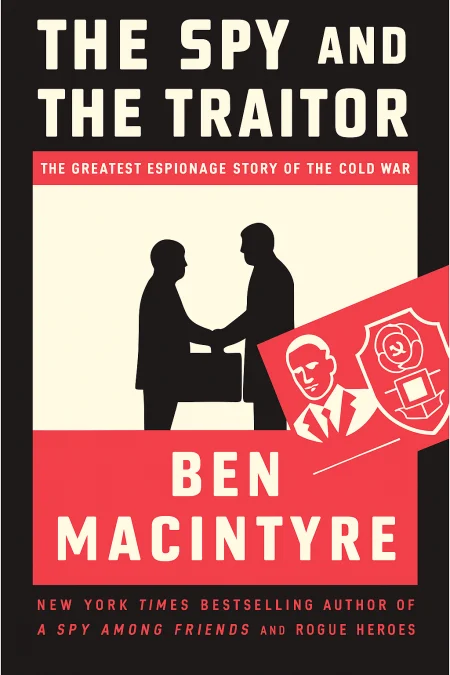
The Spy and the Traitor
The Greatest Espionage Story of the Cold War
Book Edition Details
Summary
In the shadowy realm where allegiances blur and loyalties dance on a knife's edge, Oleg Gordievsky emerges as a reluctant hero. Born into the iron grip of Soviet ideology, Gordievsky's journey from KGB elite to double-agent for MI6 paints a riveting portrait of courage and cunning. With the Cold War's tension crackling like live wires, Gordievsky becomes the West's secret weapon, unraveling Soviet plots while teetering on a precipice of discovery. His tale, a masterclass in espionage, unfolds with a suspense that echoes the best of John le Carré's world. Ben Macintyre's "The Spy and the Traitor" captures not just the clandestine dance of spycraft but the human spirit's defiance against tyranny, offering readers a gripping foray into one man's quest to alter the course of history.
Introduction
In the shadowy corridors of Cold War espionage, where nuclear annihilation hung by a thread and ideological warfare consumed nations, one man's extraordinary journey from loyal Soviet officer to Western intelligence asset would fundamentally alter the course of history. This remarkable tale reveals how personal conscience could triumph over institutional loyalty, transforming a devoted servant of the Communist state into its most dangerous enemy at precisely the moment when such betrayal might prevent global catastrophe. The narrative illuminates three crucial dimensions of Cold War intelligence warfare that shaped the twentieth century's final decades. First, it demonstrates how exposure to Western democratic values could shatter even the most carefully constructed ideological foundations, revealing the psychological vulnerabilities that would ultimately doom the Soviet system. Second, it exposes the terrifying reality of nuclear brinkmanship, where misunderstanding and paranoia among aging leaders brought the world closer to destruction than most realized. Finally, it reveals how human intelligence gathered at the highest levels of enemy governments could influence the thinking of world leaders and contribute to the peaceful resolution of humanity's greatest ideological conflict. This account will captivate readers fascinated by intelligence history, those seeking to understand how individual moral courage can alter the trajectory of nations, and anyone grappling with questions of loyalty and betrayal in times of political upheaval. It offers unprecedented insight into the human drama behind geopolitical events, revealing that the fate of civilizations often rests on the choices made by ordinary individuals facing extraordinary moral dilemmas.
From Loyalty to Betrayal: The Making of a Double Agent (1970s-1982)
The transformation of Oleg Gordievsky from devoted KGB officer to British intelligence asset began not with dramatic revelation but through gradual disillusionment with the Soviet system he had been raised to serve. Born into a family steeped in state security traditions, Gordievsky seemed destined for distinguished service to the Communist cause. His father had survived Stalin's purges, his brother operated as a successful illegal agent abroad, and young Oleg displayed all the qualities the KGB prized: linguistic brilliance, ideological commitment, and unwavering loyalty to the Party. The first cracks in his faith appeared during his posting to Copenhagen in the early 1970s, where exposure to Western prosperity and democratic freedoms created profound cognitive dissonance. The contrast between Communist propaganda and capitalist reality proved impossible to ignore. Danish citizens enjoyed liberties that seemed miraculous to someone raised under totalitarian rule, while Soviet citizens queued for basic necessities and lived in constant fear of denunciation. The brutal suppression of the Prague Spring in 1968 had already planted seeds of doubt about Soviet liberation, but witnessing genuine freedom in Denmark completed his ideological conversion. British intelligence recognized the potential in this disillusioned officer and approached him with characteristic patience and psychological sophistication. Rather than crude coercion or financial inducement, they appealed to his genuine desire for a more just world, transforming personal disillusionment into active resistance. The recruitment succeeded because it offered not just escape from moral compromise but the possibility of working actively against the system he had come to despise. By 1974, Gordievsky had crossed the ultimate line, beginning a double life that would span more than a decade. The psychological toll of maintaining this deception established patterns that would define his existence for years to come. Every conversation became a performance, every relationship a careful calculation of risk and benefit. Professional success in his KGB career brought increased scrutiny and responsibility, making the betrayal ever more dangerous while deepening his value as an intelligence asset. This period demonstrated how individual moral awakening could intersect with historical forces to produce consequences far beyond what any single person could anticipate.
Nuclear Brink: Intelligence Wars and Soviet Paranoia (1982-1985)
The early 1980s witnessed the most dangerous escalation in Cold War tensions since the Cuban Missile Crisis, driven largely by Soviet paranoia about Western intentions and fundamental misreading of American policy under Ronald Reagan. At the heart of this terrifying spiral lay Operation RYAN, a massive KGB intelligence gathering effort based on the erroneous belief that the United States was preparing a nuclear first strike against the Soviet Union. This operation, launched by KGB chief Yuri Andropov, represented one of the most dangerous intelligence failures in human history. Gordievsky's unique position within the KGB's London station provided Western intelligence with unprecedented insight into Soviet thinking at the highest levels. His reports revealed that the Kremlin's fear of nuclear attack was genuine rather than calculated bluff, making the international situation far more perilous than previously understood. The aging Soviet leadership, increasingly isolated and suspicious, interpreted every Western military exercise, diplomatic initiative, and technological advance as evidence of an impending assault. This paranoid worldview created a feedback loop where KGB officers worldwide were pressured to find evidence of Western war preparations, virtually guaranteeing that Moscow would receive false intelligence confirming its worst fears. The crisis reached its peak during NATO's Able Archer 83 exercise in November 1983, when Soviet leaders became convinced that the war game was actually cover for a real nuclear attack. Only Gordievsky's intelligence, passed through MI6 to the CIA and ultimately to President Reagan, revealed how close the world had come to disaster. The information provided what one CIA assessment later called "an epiphany for President Reagan," leading to a fundamental reassessment of Soviet psychology and the beginning of more nuanced approaches to East-West relations. The intelligence also profoundly influenced Margaret Thatcher, who developed an almost personal interest in her anonymous Russian source. She understood that the Soviet Union's greatest threat lay not in aggressive intentions but in defensive paranoia, and she began to moderate her rhetoric accordingly. This shift in understanding, made possible by Gordievsky's access to Soviet strategic thinking, laid crucial groundwork for the eventual thaw in relations that would help end the Cold War peacefully rather than catastrophically.
The Great Escape: Exposure, Betrayal and Exfiltration (1985)
The collapse of Gordievsky's carefully constructed double life came through betrayal by another Western spy working for Moscow. Aldrich Ames, a disgruntled CIA officer motivated primarily by financial gain and personal resentment, began selling American secrets to the KGB in 1985. Among the intelligence he provided were the identities of Soviet citizens working for Western services, including Britain's most valuable Cold War asset. This treachery set in motion events that would culminate in one of the most audacious rescue operations in espionage history. The first signs of danger manifested through subtle changes in Moscow's behavior and the recall of several Soviet intelligence officers for consultations that proved permanent. Gordievsky's promotion to KGB station chief in London, rather than representing career advancement, became an elaborate trap designed to lure him back to Moscow where he could be arrested and interrogated. The KGB's decision to dust his belongings with radioactive powder and subject him to psychological torture revealed both the extent of their suspicions and their confidence that no spy had ever successfully escaped from the Soviet Union. The harrowing interrogation that followed demonstrated the brutal efficiency of Soviet counterintelligence methods. Using truth drugs and psychological pressure, KGB officers attempted to break down Gordievsky's carefully maintained cover story. His survival depended on years of training, considerable luck, and extraordinary willpower to maintain the fiction of loyalty even under chemical influence. The decision to keep him under surveillance rather than immediately executing him reflected both Soviet desire for absolute proof and their underestimation of Western intelligence capabilities. The activation of Operation Pimlico, the elaborate escape plan developed by British intelligence, represented the pinnacle of Cold War tradecraft. From the moment Gordievsky signaled his distress by standing outside a Moscow bread shop with a Safeway bag, through his terrifying journey to the Finnish border hidden in the trunk of a diplomatic car, every detail required flawless execution under extreme stress. The operation's success not only saved a valuable agent but demonstrated Western commitment to protecting those who risked everything for democratic values, sending a powerful psychological message that would contribute to the broader pressures ultimately bringing down the Soviet system.
Cold War's End: Personal Sacrifice and Historical Victory (1985-1991)
The successful exfiltration of Gordievsky marked both personal liberation and the beginning of a new phase in Cold War intelligence warfare. His comprehensive debriefings provided Western leaders with unprecedented understanding of Soviet capabilities, intentions, and vulnerabilities at precisely the moment when Mikhail Gorbachev's rise offered genuine possibilities for reform. This intelligence proved crucial in calibrating Western responses to Soviet overtures, helping distinguish between tactical maneuvers and authentic policy shifts that would ultimately end the ideological confrontation peacefully. The personal aftermath proved far more complex than the geopolitical triumph. While Gordievsky had escaped physical destruction, the psychological and emotional costs of his choices continued to compound throughout the Cold War's final years. His family remained trapped in the Soviet Union, subject to harassment and persecution as punishment for his betrayal. His wife Leila and daughters became prisoners of his moral choice, their suffering a constant reminder that even the most justified decisions exact prices extending far beyond those who make them. The intelligence community's handling of the case revealed both strengths and limitations of Western espionage operations. While technical aspects of recruitment, handling, and exfiltration demonstrated remarkable professional competence, the long-term human consequences received insufficient attention. The assumption that successful escape would lead to personal happiness proved naive, as psychological trauma from prolonged deception and family separation created wounds that would never fully heal. This experience highlighted the need for intelligence services to better understand the human dimensions of their operations. The broader historical significance became clear only with the Soviet Union's collapse in 1991. The intelligence Gordievsky had provided helped prevent nuclear conflict, influenced arms control negotiations, and contributed to the peaceful transformation of the Communist system. His revelations about Soviet weaknesses and paranoia had shaped Western strategy during the conflict's most dangerous phase, while his escape dealt a severe blow to KGB prestige and morale. Yet this triumph came at enormous personal cost, serving as both testament to individual courage and reminder that moral choices in times of ideological struggle demand sacrifices that echo through generations.
Summary
The extraordinary story of Cold War espionage reveals a fundamental tension between individual conscience and institutional loyalty that defined the twentieth century's greatest ideological struggle. At its core, this narrative demonstrates how personal moral awakening can intersect with historical forces to produce consequences far beyond what any individual could anticipate, showing that the intelligence provided by one man's crisis of conscience helped prevent nuclear war, influenced the peaceful end of the Cold War, and contributed to the liberation of millions from totalitarian rule, even as these achievements came at devastating personal cost. This historical experience offers profound lessons for contemporary challenges involving authoritarian systems and moral responsibility. First, it demonstrates that individual conscience remains a powerful force for historical change even within the most oppressive systems, suggesting that supporting those who choose moral courage over personal safety remains crucial for defending democratic values in an era of renewed authoritarian resurgence. Second, it reveals that intelligence and information warfare continue to play decisive roles in international conflict, making the protection of democratic institutions and exposure of authoritarian deception more important than ever as new forms of hybrid warfare threaten open societies. Finally, it shows that the human costs of ideological struggle extend far beyond immediate participants, affecting families and entire communities in ways that demand both recognition and long-term support for those who sacrifice everything for principles larger than themselves. The enduring relevance of this story lies not merely in its historical significance but in its demonstration that ordinary individuals facing extraordinary circumstances can alter the course of history through moral courage, providing essential insight into both the possibilities and costs of defending human dignity against systematic oppression when the stakes are nothing less than the survival of civilization itself.
Related Books
Download PDF & EPUB
To save this Black List summary for later, download the free PDF and EPUB. You can print it out, or read offline at your convenience.
By Ben Macintyre
