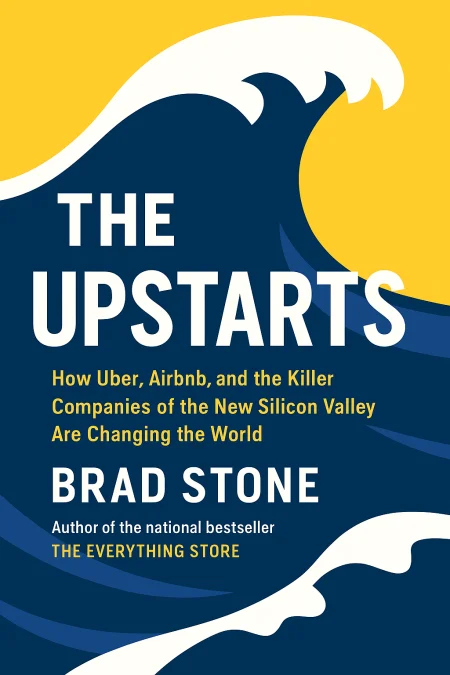
The Upstarts
How Uber, Airbnb and the Killer Companies of the New Silicon Valley are Changing the World
Book Edition Details
Summary
What happens when tech disruptors rewrite the rules of reality? Enter the audacious world of "The Upstarts," where Airbnb and Uber don’t just reinvent industries—they redefine the fabric of our daily lives. With the rebellious spirit of Silicon Valley mavericks like Steve Jobs and Bill Gates, a new breed of visionary founders emerges, fearlessly reshaping business norms and sidestepping ethical minefields. Brad Stone’s gripping narrative unravels the meteoric rise of these innovative powerhouses, illuminating the tenacity, creativity, and conflicts that fuel their relentless pursuit of success. As neighborhoods transform and regulations bend, discover how this bold revolution continues to challenge and change our world in ways we never imagined.
Introduction
In the depths of the 2008 financial crisis, as traditional industries crumbled and unemployment soared, two groups of young entrepreneurs were unknowingly laying the groundwork for a revolution that would reshape the global economy. Brian Chesky and Joe Gebbia, struggling to pay rent in San Francisco, began renting air mattresses to conference attendees who couldn't find hotel rooms. Meanwhile, Travis Kalanick, frustrated by unreliable taxi service, envisioned a world where transportation could be summoned with the push of a button. These mundane frustrations would evolve into billion-dollar platforms that challenged century-old regulations and transformed how we move through and inhabit cities. Their story illuminates three critical questions that define our digital age: How do technological upstarts overcome entrenched industries and regulatory systems designed for earlier eras? What happens when innovation moves faster than the laws meant to govern it? And perhaps most importantly, how do we balance the undeniable benefits of technological disruption with its often devastating consequences for existing workers and communities? The answers reveal not just the mechanics of modern entrepreneurship, but the broader tensions between technological progress and social stability that continue to shape our world. This narrative is essential for anyone seeking to understand how the modern economy actually works, why traditional institutions struggle to adapt to technological change, and what the future holds as artificial intelligence and automation promise even more dramatic disruptions ahead. The rise of these platform giants offers crucial insights into the collision between technological possibility and social responsibility that defines our era.
Origins of Disruption: From Personal Problems to Platform Solutions (2008-2011)
The genesis of both companies emerged from the kind of everyday frustrations that most people simply accept as unavoidable inconveniences. Brian Chesky and Joe Gebbia, recent design school graduates drowning in San Francisco rent, stumbled upon their billion-dollar idea when a design conference filled up all the city's hotels. Their solution seemed almost comically modest: renting air mattresses in their apartment with breakfast included. Across town, Garrett Camp, flush with cash from selling his previous startup, found himself repeatedly stranded by San Francisco's notoriously unreliable taxi system, especially when trying to maintain an active social life after late nights out. These personal inconveniences reflected broader systemic failures that had persisted for decades. San Francisco's taxi medallion system, designed in the early 20th century to ensure driver income, artificially limited the number of cabs and left passengers routinely stranded. Similarly, the hotel industry's rigid pricing and limited inventory during peak events created obvious opportunities for alternative accommodations. Yet both founders initially viewed their solutions as side projects rather than revolutionary business concepts, ways to make extra money or solve personal transportation challenges rather than transform entire industries. The early years were defined by relentless rejection and near-constant failure that would have crushed less determined entrepreneurs. Airbnb's founders famously survived on cereal they designed and sold during the 2008 presidential election, earning the nickname "cockroaches" from startup accelerator Y Combinator for their stubborn refusal to die. Uber's prototype barely functioned, with frequent crashes and dead phone batteries undermining the seamless experience Camp envisioned. Investors dismissed both concepts as niche solutions for affluent urbanites, fundamentally misunderstanding the universal nature of the problems these companies would eventually address. Yet these struggles forged the resilience and adaptability that would prove crucial as both companies scaled from desperate startups to global phenomena. The founders learned to navigate technical challenges, regulatory ambiguity, and market skepticism while maintaining unwavering belief in their visions. Their persistence through what Silicon Valley calls the "trough of sorrow" established the foundation for the explosive growth that would follow, demonstrating that the most transformative ideas often appear deceptively simple at their inception.
The Growth Wars: Scaling Against Regulatory Resistance (2012-2014)
The transformation from struggling startups to unicorn companies required mastering the art of viral growth in the emerging smartphone era, but it also meant confronting the entrenched interests that their success threatened. Airbnb's breakthrough came through sophisticated "growth hacking" techniques pioneered by co-founder Nathan Blecharczyk, who systematically exploited Craigslist's massive user base by automatically cross-posting listings and sending targeted emails to apartment listers. This strategy effectively used their competitor's platform as a customer acquisition channel, demonstrating the kind of creative thinking that would define the sharing economy's early expansion. Uber's growth strategy centered on creating an experience so superior to existing alternatives that users became evangelical advocates for the service. The company's expansion playbook, refined through launches in Seattle, Boston, and New York, combined guaranteed minimum payments to attract drivers with strategic geographic focus to ensure reliable service. Rather than spreading thin across entire metropolitan areas, Uber concentrated on affluent neighborhoods where customers could afford premium pricing and were likely to influence their social networks, creating organic word-of-mouth marketing that traditional advertising couldn't match. Both companies benefited from the powerful network effects inherent in marketplace businesses, where each additional user makes the platform more valuable for everyone else. Airbnb hosts attracted guests, who then became hosts themselves when traveling to other cities. Uber drivers reduced wait times for passengers, encouraging more riders to join, which in turn attracted more drivers seeking steady income opportunities. These virtuous cycles accelerated as smartphone adoption exploded and social media enabled rapid sharing of positive experiences. The period also revealed both companies' willingness to operate in regulatory gray areas while building political support through user advocacy. When faced with cease-and-desist orders or proposed restrictions, both platforms mobilized their growing customer bases to pressure elected officials through coordinated email campaigns and social media activism. This grassroots political strategy, later codified as "Travis's Law," demonstrated that superior products could generate sufficient public support to overcome regulatory resistance, setting the stage for even more aggressive expansion tactics that would define their global conquest phase.
Global Conquest: International Expansion and Market Dominance (2014-2016)
The transition to global platforms brought unprecedented challenges that tested every assumption about how American technology companies should operate in diverse international markets. Airbnb faced an existential threat from the Samwer brothers, German entrepreneurs notorious for cloning successful American startups and selling them back to the original companies at inflated valuations. The emergence of Wimdu, an Airbnb clone backed by substantial European venture capital, forced Brian Chesky to choose between accommodation and competition, ultimately leading to a rapid international expansion that established Airbnb offices across Europe, Asia, and Latin America. Uber's international expansion proved even more complex and controversial, requiring city-by-city launches and negotiations with local transportation authorities who had never encountered anything like a smartphone-based ride-hailing service. The company's willingness to operate first and ask permission later, combined with superior technology and aggressive driver incentives, allowed it to establish dominant positions in major markets before traditional competitors could respond effectively. However, this confrontational approach also generated intense backlash, including violent protests by taxi drivers in Paris and London, regulatory crackdowns across multiple European countries, and arrests of company executives who refused to comply with local restrictions. The most dramatic confrontation occurred in China, where Uber faced off against Didi Chuxing in what industry observers dubbed a "mega-unicorn death match" that consumed billions of dollars in subsidies. Both companies fought for dominance in the world's largest transportation market by offering rides below cost and paying drivers substantial bonuses, creating an unsustainable spending war that demonstrated the limits of venture capital-funded expansion. The battle ultimately ended with Uber's withdrawal from China, marking one of the few markets where American platform dominance failed to materialize. These international experiences taught both companies crucial lessons about the importance of cultural adaptation and regulatory cooperation. Success required more than simply translating apps into local languages; it demanded understanding diverse legal frameworks, cultural norms around trust and safety, and economic conditions that varied dramatically across markets. The companies that emerged from this global expansion phase were far more sophisticated organizations, capable of balancing standardized platforms with local customization while navigating complex political and regulatory environments that would have overwhelmed their earlier incarnations.
Corporate Evolution: From Upstarts to Industry Giants (2016-Present)
The final transformation from rebellious startups to corporate giants required both companies to fundamentally reimagine their relationship with society and accept responsibility for the broader consequences of their platforms. Uber's aggressive expansion tactics, which had served it well during the growth phase, became serious liabilities as the company faced increasing scrutiny over workplace culture, driver treatment, and executive behavior. A series of scandals, including allegations of sexual harassment, data breaches, and corporate espionage, culminated in the departure of founder Travis Kalanick and marked the end of the company's confrontational era. Under new leadership, both companies invested heavily in government relations and community outreach, striking tax collection agreements with hundreds of cities and implementing comprehensive measures to address concerns about housing affordability, neighborhood disruption, and worker protections. Airbnb's evolution was less dramatic but equally significant, as the company recognized that sustainable success required not just user adoption but genuine social acceptance from the communities where it operated. The preparation for initial public offerings subjected both companies to the scrutiny of public markets and quarterly earnings pressure, forcing them to demonstrate not just growth but genuine profitability and sustainable business models. This transition led to difficult decisions about which markets to prioritize and which battles to abandon, with Uber's strategic withdrawals from China and several European markets showing how even the most determined entrepreneurs must sometimes accept defeat in service of long-term success. The maturation process revealed the lasting impact these companies had achieved on urban life and the global economy. They had created new forms of work for millions of people, changed how cities think about transportation and housing policy, and demonstrated that digital platforms could successfully challenge even the most entrenched industries protected by decades of regulatory capture. Whether these changes represented genuine progress or simply new forms of exploitation remained hotly debated, but their permanence and global reach were undeniable facts of modern economic life.
Summary
The rise of Uber and Airbnb illuminates the central tension of our digital age: the collision between technological possibility and social responsibility that defines how innovation reshapes established industries and communities. Their journey from desperate startups operating out of cramped apartments to global giants worth tens of billions of dollars reveals how determined entrepreneurs can leverage network effects, venture capital, and regulatory arbitrage to challenge seemingly insurmountable incumbents, but it also demonstrates the profound social and political challenges that arise when technological disruption outpaces institutional adaptation. The core lesson of their transformation is that successful platform businesses require more than superior technology and aggressive growth tactics. They must navigate complex political, cultural, and economic forces while maintaining the trust of multiple stakeholders including users, regulators, and the broader communities affected by their operations. Both companies ultimately succeeded by recognizing that their platforms weren't neutral marketplaces but powerful social institutions with genuine responsibilities for the consequences of the behaviors they enabled and incentivized. For today's entrepreneurs and policymakers grappling with artificial intelligence, automation, and other emerging technologies that promise even more dramatic disruptions, this history offers crucial guidance. Regulatory frameworks must evolve more quickly to address technological change without stifling beneficial innovation. Platform companies must proactively address negative externalities rather than waiting for government intervention. Most importantly, sustainable success in the digital economy requires building genuine social value and maintaining public trust, not simply extracting maximum profit from regulatory gaps and market inefficiencies that won't persist indefinitely.
Related Books
Download PDF & EPUB
To save this Black List summary for later, download the free PDF and EPUB. You can print it out, or read offline at your convenience.
By Brad Stone
