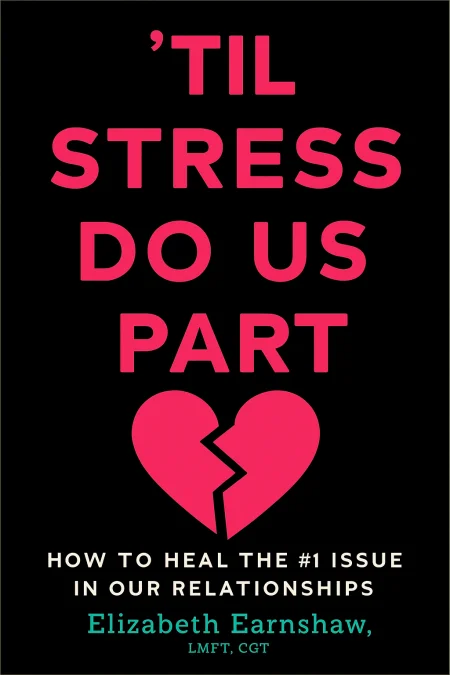
'Til Stress Do Us Part
How to Heal the #1 Issue in Our Relationships
Book Edition Details
Summary
In the chaos of modern life, stress doesn't just knock on the door; it barges right in, demanding attention. Elizabeth Earnshaw, a trailblazing therapist in relationship dynamics, flips the script on common marital woes in her groundbreaking book, 'Til Stress Do Us Part. She reveals that it's often not the relationship itself that's the problem, but the relentless external stressors that infiltrate our lives. Earnshaw offers a lifeline for couples drowning in this sea of stress, providing practical, research-driven techniques to safeguard their bond. Through illuminating client anecdotes and personal insights, she presents tools like mindfulness exercises, polyvagal practices, and effective communication strategies to fortify love against life's storms. This book is an invitation to transform your partnership into a sanctuary, a place where love not only survives but thrives, even amidst the world's turbulence.
Introduction
Sarah stares at the ceiling at 2 AM, her husband sleeping peacefully beside her while her mind races through tomorrow's endless to-do list. The mortgage payment, her mother's doctor appointment, the parent-teacher conference she forgot to schedule, the leaking faucet that's been dripping for weeks. When did their once-joyful marriage become a battlefield of exhaustion and resentment? When did love get buried under an avalanche of daily stressors that neither of them seems capable of managing? This scene plays out in millions of homes every night, where couples who genuinely love each other find themselves snapping over dirty dishes, withdrawing from intimacy, and feeling more like stressed-out roommates than romantic partners. The real culprit isn't a lack of love or compatibility—it's the invisible force of stress that has quietly invaded their relationship like an unwelcome third party. Through intimate stories from the therapy room and deeply personal revelations from her own marriage, this exploration reveals how modern couples are drowning not from relationship problems, but from the relentless pressure of trying to do everything, be everything, and have everything in a world that demands more than any two people can reasonably give. The path forward isn't about better communication techniques or more couple's retreats—it's about recognizing stress as the hidden saboteur and learning to protect your love from its destructive power.
The Breaking Point: When Perfect Plans Meet Reality
The text message arrives at the worst possible moment: "Babysitter canceled. Sorry!" Lisa stares at her phone in disbelief, standing in her carefully chosen date night outfit while her husband waits in the car. They've been planning this evening for weeks, desperately trying to reconnect after months of ships passing in the night. The restaurant reservation, the tickets to the show they've wanted to see, the rare child-free hours they've carved out of their impossibly busy schedule—all vanishing with a simple text. This isn't just about one ruined evening. It's the final straw in a tower of disappointments that's been building for months. The cancelled vacation when work demanded overtime, the postponed anniversary dinner when their child got sick, the abandoned weekend getaway when the washing machine flooded the basement. Each time they try to prioritize their relationship, life seems to have other plans. As Lisa watches her husband's shoulders slump in defeat through the car window, she realizes they've been fighting the wrong battle. They've been blaming each other for the distance in their marriage, when the real enemy has been lurking in plain sight—the relentless march of obligations, emergencies, and expectations that leaves no room for love to breathe. The perfect life they've been chasing has become the very thing destroying their chance at happiness together.
The Hidden Load: Mental Labor and Relationship Strain
Every morning, Jennifer's mind begins its familiar dance before her feet even hit the floor. She's already calculating whether there's enough milk for breakfast, remembering that permission slip due today, mentally noting which child needs new shoes, and wondering if she remembered to defrost something for dinner. Her husband sleeps soundly beside her, blissfully unaware that she's been awake for an hour, not from insomnia, but from the weight of invisible responsibility. This mental load—the constant cognitive effort of managing a household's endless details—falls disproportionately on one partner in most relationships. It's not just about doing the dishes or driving carpool. It's about being the family's central processing unit, the one who remembers dentist appointments, tracks everyone's schedules, anticipates needs, and maintains the delicate ecosystem that keeps daily life functioning. When Jennifer finally explodes about her husband not "helping more around the house," she struggles to articulate that the real problem isn't the physical tasks—it's carrying the mental weight of knowing what needs to be done in the first place. The cruel irony is that this invisible labor often goes unrecognized precisely because it's so well-managed. When everything runs smoothly, it appears effortless from the outside. But beneath the surface, one partner is drowning in a sea of details while the other remains oblivious to the undertow. This imbalance doesn't just create resentment—it fundamentally alters the relationship's foundation, transforming partners into manager and employee rather than equals sharing life's journey.
Boundaries and Baskets: A System for Stress Management
Michael and Rachel sit across from their therapist, surrounded by scraps of paper covered in their life's overwhelming inventory. Work deadlines, children's activities, aging parents' needs, home maintenance, financial obligations—the list seems endless. They've been arguing more, connecting less, and both feel like they're failing at everything despite working harder than ever. The therapist introduces them to a simple but revolutionary concept: not everything deserves the same amount of energy. She asks them to imagine three baskets of different sizes. The largest basket is for things they can eliminate entirely—the subscription services they never use, the commitments that drain without giving back, the perfectionist standards that serve no one. The medium basket holds items they can't eliminate but can manage better through boundaries, systems, or asking for help. The smallest basket, reserved for only the most critical issues, contains the few things that truly deserve their focused attention and energy. As Michael and Rachel sort their stressors into these categories, something profound shifts. They realize they've been treating every problem as a crisis, every obligation as equally important, every request as non-negotiable. The permission to say no, to choose quality over quantity, to protect their relationship by being selective about where they invest their energy, feels both terrifying and liberating. For the first time in years, they glimpse the possibility of a life where their love doesn't have to compete with an endless parade of competing demands.
Summary
The couples who find their way back to each other share a common realization: their relationship problems were never really about communication or compatibility—they were about drowning in a sea of modern life's relentless demands while believing they should be able to swim faster. The path to healing doesn't lie in adding more techniques or trying harder to balance everything perfectly. Instead, it requires the radical act of choosing what matters most and protecting it fiercely from the thousand daily intrusions that masquerade as urgent necessities. True relationship resilience comes from recognizing that stress will always be present, but it doesn't have to be the third partner in your marriage. By learning to regulate your own nervous system, support each other through inevitable challenges, and create intentional boundaries around your shared life, couples can transform from stressed-out survivors to thriving teammates. The goal isn't a stress-free life—it's a life where stress doesn't steal your capacity for joy, intimacy, and genuine connection with the person you've chosen to love.
Related Books
Download PDF & EPUB
To save this Black List summary for later, download the free PDF and EPUB. You can print it out, or read offline at your convenience.
By Elizabeth Earnshaw
