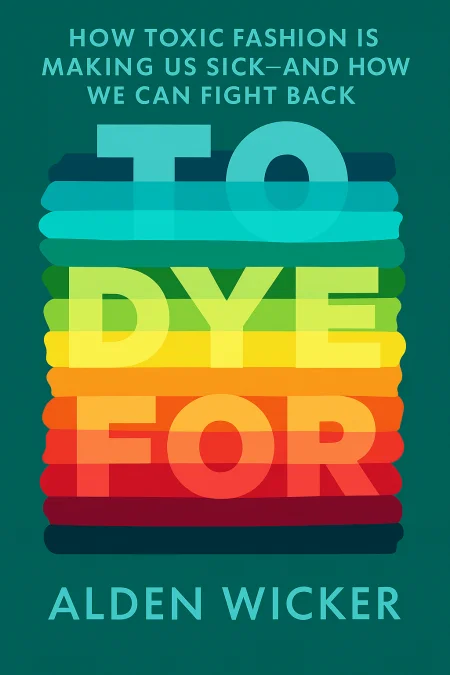
To Dye For
How Toxic Fashion Is Making Us Sick
Book Edition Details
Summary
In a world where fashion cloaks its toxic secrets, "To Dye For" unveils the perilous truth stitched into our everyday wear. With the incisive pen of award-winning journalist Alden Wicker, this eye-opening narrative sheds light on the hidden hazards lurking in your closet—unregulated chemicals that imperil your health. Wicker delves into the sinister alliance of synthetic dyes and fossil fuels, exposing their insidious link to a rise in autoimmune disorders, infertility, and respiratory ailments. As the fashion industry weaves tales of ignorance and neglect, this exposé demands you question the very fabric of your wardrobe. Discover the grim reality behind the seams and join the movement towards a safer, cleaner future, where style doesn't come at the cost of well-being.
Introduction
Picture a Victorian ballroom where elegantly dressed ladies collapse one by one, their emerald gowns literally killing them as arsenic-laced dyes seep through their skin. Fast-forward to today's airports, where flight attendants develop mysterious autoimmune diseases from their synthetic uniforms, while children wear school clothes containing the same "forever chemicals" used in firefighting foam. These scenes, separated by more than a century, reveal a disturbing truth hiding in plain sight: our clothing has always carried the potential to poison us. This hidden history spans five centuries of fashion's toxic evolution, from Renaissance poison gloves used as assassination tools to modern synthetic fabrics laden with hormone-disrupting chemicals. What emerges is not merely a chronicle of industrial negligence, but a pattern of how society repeatedly chooses aesthetic appeal and profit over human health. The chemicals that once drove hat makers mad with mercury poisoning have simply been replaced by new invisible threats that may be fueling our modern epidemics of infertility, autoimmune disease, and chemical sensitivity. This exploration will resonate with anyone who has wondered why new clothes smell strange, why certain fabrics cause mysterious rashes, or why chronic health issues seem to multiply despite medical advances. It connects the dots between historical poisonings and contemporary health crises, revealing how the fashion industry's chemical practices affect not just distant factory workers, but every person who gets dressed each morning.
Industrial Dawn: Mercury Madness and Arsenic Glamour (1800s-1900s)
The Industrial Revolution transformed fashion from handicraft into chemical experiment, with human bodies serving as unwitting test subjects. In early 1800s hat-making centers like Danbury, Connecticut, workers began using mercury nitrate to process beaver fur, creating the luxurious felt that defined gentlemen's fashion. The chemical made fur fibers mat together beautifully, but it slowly poisoned those who handled it daily, creating the trembling, paranoid workers immortalized as "mad hatters." The symptoms were unmistakable yet tragically misunderstood. Hat makers developed slurred speech, erratic behavior, and violent tremors as mercury accumulated in their nervous systems. Despite mounting evidence of the connection between mercury and madness, the industry continued using the deadly chemical for over a century, establishing a pattern of prioritizing profit over worker safety that would define fashion manufacturing for generations. The 1850s brought an even more revolutionary change with synthetic dyes. William Henry Perkin's accidental discovery of mauve in 1856 launched the age of artificial color, replacing expensive natural dyes with cheap chemical alternatives derived from coal tar. Suddenly, vibrant purples and brilliant greens became accessible to the masses, democratizing fashion while introducing new dangers that would claim countless lives. These early synthetic dyes contained arsenic, lead, and other toxic metals that turned clothing into potential weapons. Society ladies unknowingly wore poison, developing mysterious rashes and respiratory ailments as their arsenic-green ballgowns released toxic dust with every movement. The era established fashion's fundamental tension between consumer desire for beauty and the hidden costs of chemical innovation, setting the stage for even deadlier developments in the century to come.
Chemical Revolution: Synthetic Dyes to PFAS Deception (1940s-2000s)
The post-World War II economic boom ushered in the age of "better living through chemistry," transforming wardrobes with synthetic materials that promised unprecedented convenience and performance. What began as military necessity—nylon replacing silk during wartime shortages, polyurethane for chemical-resistant garments—quickly revolutionized civilian fashion. DuPont's Miss Chemistry, emerging from a test tube at the 1940 World's Fair, symbolized a future where synthetic materials would liberate humanity from natural fiber limitations. The introduction of per- and polyfluoroalkyl substances marked a particularly sinister chapter in this chemical revolution. Companies like DuPont and 3M promoted PFAS as miracle materials that could make fabrics stain-proof and water-resistant, marketing them as the solution to modern life's messiness. Internal company documents later revealed that manufacturers knew early on that these "forever chemicals" accumulated in human blood, caused cancer in laboratory animals, and persisted indefinitely in the environment. For decades, the chemical industry employed sophisticated deception campaigns to hide PFAS dangers from regulators and consumers. They funded misleading research, attacked independent scientists, and used legal influence to delay regulation while continuing to profit from products they knew were dangerous. This strategy of manufacturing doubt while maintaining profitable but hazardous practices became the industry's standard playbook, borrowed directly from tobacco companies' successful efforts to obscure smoking's health risks. The true scope of PFAS contamination only became apparent in the 2000s, when independent researchers discovered these chemicals in drinking water, wildlife, and human blood samples worldwide. The fashion industry's embrace of forever chemicals had created a global contamination crisis that will persist for generations, demonstrating how corporate power could override public health through strategic deception and regulatory capture.
Modern Crisis: Fast Fashion and Autoimmune Epidemics (2000s-Present)
The globalization of fashion production created a perfect storm for toxic chemical proliferation, as manufacturing moved to countries with lax environmental regulations while Western consumers gained access to cheaper clothing. The true scope of this chemical contamination only became apparent when flight attendants began falling seriously ill from their uniforms in the 2010s, serving as unwitting canaries in the coal mine of modern fashion's toxic crisis. The airline uniform crisis revealed the sophisticated chemical cocktails now standard in clothing production. Attendants wearing uniforms by major manufacturers developed severe rashes, autoimmune diseases, and chemical sensitivities, with testing revealing dozens of dangerous substances including flame retardants, stain repellents, heavy metals, and restricted dyes. Their cases provided compelling evidence of cause and effect, as thousands of people wearing identical garments in similar environments created an inadvertent human experiment. Meanwhile, emerging research connected everyday chemical exposures to broader health epidemics plaguing modern society. Endocrine-disrupting chemicals found in synthetic fabrics were linked to plummeting sperm counts, early puberty in girls, and rising infertility rates. The same PFAS chemicals that made clothing stain-resistant were discovered accumulating in human bodies at dangerous levels, while azo disperse dyes used to color polyester appeared in household dust at concentrations that could trigger allergic reactions and contribute to childhood asthma. Perhaps most troubling was the regulatory vacuum that allowed this chemical proliferation to continue unchecked. While Europe implemented comprehensive restrictions on toxic chemicals in textiles, the United States maintained a largely hands-off approach, creating a two-tier system where American consumers unknowingly served as test subjects for the chemical industry's latest innovations. The rise of ultra-fast fashion and direct-to-consumer shipping has intensified this crisis, allowing toxic clothing to reach consumers with virtually no safety oversight.
Summary
The five-century journey from Renaissance poison gloves to modern synthetic wardrobes reveals a consistent and disturbing pattern: the fashion industry's willingness to prioritize profit and aesthetics over human health, enabled by regulatory systems that consistently lag behind technological innovation. Each era's toxic crisis follows the same trajectory of initial enthusiasm, mounting evidence of harm, industry denial, and eventual replacement with new chemicals that often prove equally dangerous. This historical perspective illuminates why our current health epidemics cannot be understood in isolation from our clothing choices. The same chemical classes that poisoned hat makers and dye workers continue to affect modern consumers, albeit at lower doses over longer periods. The flight attendants' acute reactions serve as early warning signals for chronic health effects that may be silently accumulating in the broader population through daily exposure to chemically-treated textiles. The path forward requires both individual awareness and systemic change. Consumers can begin protecting themselves by choosing natural fibers when possible, washing new clothes before wearing them, and supporting brands that prioritize chemical transparency. More importantly, we must demand regulatory reforms that treat clothing safety with the same seriousness as food and drug safety, implementing comprehensive testing requirements and ingredient labeling for all textile products. Only by learning from fashion's toxic history can we hope to break this deadly cycle and create a future where getting dressed doesn't compromise our health.
Related Books
Download PDF & EPUB
To save this Black List summary for later, download the free PDF and EPUB. You can print it out, or read offline at your convenience.
By Alden Wicker
