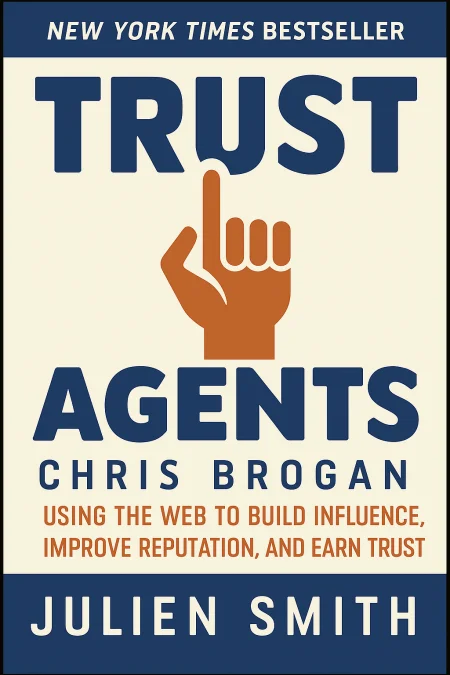
Trust Agents
Using the Web to Build Influence, Improve Reputation, and Earn Trust
Book Edition Details
Summary
In the digital age's bustling bazaar, where the currency of trust trumps all, "Trust Agents" emerges as your indispensable guide. Crafted by two maestros of social media, this book unravels the art of wielding online influence to bolster your brand’s reputation and bottom line. Forget being a bystander in the digital arena—learn to become a trust agent, a beacon of authenticity and reliability. Through engaging narratives and practical insights, discover how to harness the sprawling web of connections to not just survive but thrive. Dive into strategies that transform social tools into powerful allies, turning your business into a wellspring of credibility and success.
Introduction
In our hyperconnected digital age, trust has become the most precious currency in business and personal relationships. Yet paradoxically, as our communication tools have multiplied exponentially, genuine trust seems increasingly elusive. The authors present a comprehensive framework for understanding how authentic influence emerges not from traditional authority structures, but through consistent, value-driven interactions across digital platforms. This theoretical approach challenges conventional wisdom about networking and influence, proposing instead that trust operates as a complex ecosystem where transparency, reciprocity, and genuine service create sustainable competitive advantages. The framework addresses fundamental questions about how relationships scale in digital environments, how authenticity can be maintained while pursuing business objectives, and how individual actions compound into systemic influence. Rather than offering quick fixes or manipulation tactics, this theory provides a structured understanding of how trust functions as both a social and economic force in contemporary networked society.
The Six Characteristics of Trust Agents
The foundation of trust-based influence rests on six interconnected characteristics that distinguish authentic relationship builders from conventional networkers. This theoretical model positions trust agents as individuals who systematically cultivate influence through service rather than self-promotion, creating value ecosystems that naturally attract opportunities and connections. The framework recognizes that modern influence operates through multiple dimensions simultaneously, requiring both strategic thinking and genuine human connection. The six characteristics function as a unified system where each element reinforces the others. Making your own game involves creating unique value propositions that differentiate you from competitors while serving genuine market needs. Being one of us requires authentic participation in communities, demonstrating through actions rather than words that you belong and contribute meaningfully. The Archimedes Effect leverages existing resources and relationships to amplify impact beyond individual capabilities. Agent Zero positioning places you at the intersection of multiple networks, becoming a valuable connector and information hub. The Human Artist dimension emphasizes the irreplaceable value of genuine interpersonal skills in an increasingly automated world. Finally, building an army recognizes that sustainable influence requires cultivating others' success rather than hoarding opportunities. Consider how successful entrepreneurs often embody all six characteristics simultaneously. They create innovative solutions, participate authentically in industry communities, leverage partnerships and technology, connect disparate stakeholders, maintain genuine relationships, and develop others who become advocates and collaborators. This framework provides a systematic approach to developing influence that serves both personal advancement and collective prosperity.
Building Social Capital Through Digital Authenticity
Social capital represents the accumulated goodwill and trust that enables individuals and organizations to accomplish objectives through relationships rather than formal authority. In digital environments, this capital operates through transparent mechanisms where actions create permanent records, allowing reputation to compound over time through consistent behavior patterns. The theory posits that authenticity becomes both more critical and more verifiable in digital spaces, as inconsistencies between stated values and actual behavior become readily apparent. Digital authenticity differs fundamentally from traditional reputation management because it operates in real-time across multiple platforms simultaneously. Every interaction contributes to an individual's social capital account, building trust through demonstrated competence, reliability, and genuine concern for others' success. The compounding effect occurs because digital interactions create searchable, shareable records that serve as testimonials to character and capability long after the original interaction. The practical application involves consistently providing value before seeking reciprocity, sharing knowledge and connections freely, and maintaining transparent communication even when facing difficulties or mistakes. A consultant who regularly shares industry insights through thoughtful blog posts, connects clients with relevant resources outside their own services, and publicly acknowledges errors while describing lessons learned exemplifies this approach. Over time, this behavior pattern creates a reputation that attracts opportunities organically, as people prefer to work with individuals they trust and respect. The social capital accumulated through such consistent authenticity often proves more valuable than traditional credentials or aggressive self-promotion.
Leveraging Networks and Human Connection for Business Growth
Network leverage transcends traditional networking by creating systematic approaches to relationship building that generate mutual value across extended webs of connection. This framework recognizes that modern business success increasingly depends on access to information, opportunities, and resources that flow through human networks rather than formal institutional channels. The theory emphasizes that effective leverage requires genuine service to network members rather than extractive relationship management. The structure of network leverage operates through three primary mechanisms: connection bridging, value amplification, and resource sharing. Connection bridging involves identifying and facilitating relationships between network members who can benefit from knowing each other. Value amplification occurs when individual contributions are enhanced through network effects, such as when a single piece of content reaches exponentially larger audiences through sharing. Resource sharing enables network members to access capabilities and knowledge beyond their individual capacity through collaborative relationships. The implementation requires systematic attention to network health through regular communication, mutual assistance, and strategic relationship maintenance. A technology entrepreneur might maintain relationships with industry experts, potential customers, investors, and complementary service providers across multiple geographic regions and market segments. When launching a new product, this network provides market intelligence, beta testing opportunities, funding possibilities, and distribution channels that would be impossible to develop independently. The key insight is that networks require ongoing investment of time and genuine care for others' success, but yield returns that compound over time as relationships deepen and expand through referrals and reputation effects.
Scaling Trust in the Modern Digital Economy
Trust scaling presents the fundamental challenge of maintaining authentic relationships while expanding influence and impact across larger networks and markets. The theoretical framework addresses how individual authenticity can be systematized and distributed without losing its essential human character. This involves creating processes and structures that preserve the personal touch while enabling broader reach and sustainable growth. The scaling model operates through delegation with accountability, systematized personal interaction, and authentic organizational culture development. Delegation with accountability involves training others to represent your values and approach while maintaining oversight and quality standards. Systematized personal interaction creates touchpoints and communication rhythms that maintain relationship quality even as numbers increase. Authentic organizational culture ensures that growth preserves rather than dilutes the values and behaviors that initially created trust. The practical implementation might involve a successful consultant evolving into an agency that maintains personal relationship standards across multiple team members and client accounts. This requires developing training programs that transmit not just technical skills but also the relationship approaches and value systems that originally created success. Technology tools can support scaling through customer relationship management systems, content distribution platforms, and communication automation, but these must be implemented in ways that enhance rather than replace human connection. The ultimate measure of successful trust scaling is whether expanded operations continue to generate the same levels of authentic engagement and mutual value creation that characterized the original individual relationships.
Summary
Trust functions as the fundamental operating system of modern networked society, creating competitive advantages that compound over time through consistent authentic action. This theoretical framework demonstrates that sustainable influence emerges not from manipulation or positioning tactics, but from systematic service to others' success within interconnected relationship ecosystems. The implications extend far beyond individual career advancement, suggesting that organizations and societies that prioritize trust-building mechanisms will increasingly outperform those relying primarily on formal authority structures. For readers, this represents an invitation to reconsider influence as a collaborative rather than competitive endeavor, where individual success becomes inextricably linked to collective prosperity and authentic human connection.
Related Books
Download PDF & EPUB
To save this Black List summary for later, download the free PDF and EPUB. You can print it out, or read offline at your convenience.
By Chris Brogan
