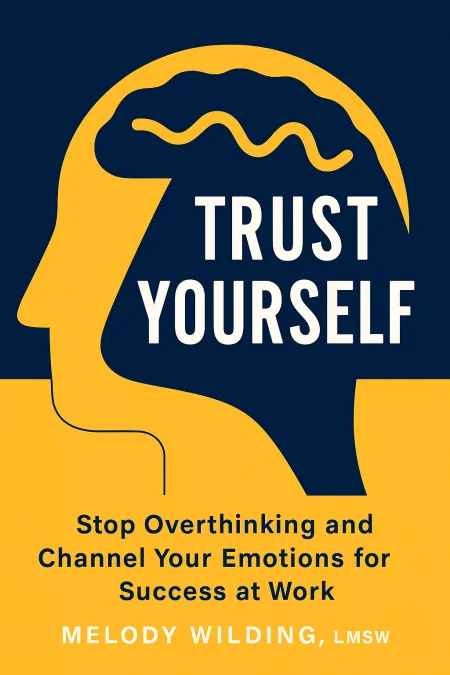
Trust Yourself
Stop Overthinking and Channel Your Emotions for Success at Work
Book Edition Details
Summary
In the bustling world where high sensitivity meets high achievement, an untapped power lies waiting. "Trust Yourself" by Melody Wilding, LMSW, is a transformative guide for those who feel deeply and strive mightily. Imagine your keen emotions and sharp instincts not as burdens, but as superpowers, ready to elevate your career and personal life. This book dismantles the myths of perfectionism and self-doubt, offering neuroscience-backed strategies to help you own your sensitivity with pride. Through practical advice and real-world applications, you'll learn to set firm boundaries, speak with confidence, and redefine success on your own terms. Ideal for ambitious professionals who seek to harness their empathy and intuition, "Trust Yourself" provides the tools to not only survive but thrive in a demanding world. Whether you're a corporate leader, a small business owner, or a coach, it's time to embrace your unique strengths and lead with authenticity.
Introduction
Sarah sat in her car after another grueling day at the office, her hands still trembling slightly from the team meeting where her innovative project proposal had been met with skeptical silence. As a high-performing marketing director with an impressive track record, she should have felt confident presenting her ideas. Instead, she found herself second-guessing every word, reading too much into every facial expression, and leaving the room convinced she'd somehow failed despite months of meticulous preparation. This scenario plays out daily in offices around the world, where some of our most talented professionals—those who combine deep sensitivity with fierce ambition—find themselves caught in an exhausting cycle of self-doubt. These individuals, whom we call Sensitive Strivers, possess remarkable gifts: they're intuitive, conscientious, and deeply committed to excellence. Yet they often struggle with overthinking, emotional overwhelm, and an relentless inner critic that no external success seems to quiet. The paradox of the Sensitive Striver lies in their greatest strengths becoming their most challenging obstacles. Their ability to process complex information and pick up on subtle cues can lead to analysis paralysis. Their empathy and desire to help others often results in burnout and boundary issues. Their high standards drive exceptional work but also fuel perfectionism and imposter syndrome. But what if sensitivity isn't a weakness to overcome, but rather a superpower to harness? What if the very qualities that make work feel overwhelming could become the foundation for authentic leadership and sustainable success? This journey isn't about changing who you are—it's about learning to trust the wisdom within yourself and channeling your natural gifts in ways that energize rather than drain you.
The Honor Roll Hangover: When Achievement Becomes Prison
Marcus had built his entire identity around being the reliable one, the problem-solver, the employee who could handle any crisis with grace. As a senior operations manager at a fast-growing tech startup, he thrived on the complexity and constant challenges. His colleagues admired his attention to detail, his ability to anticipate problems before they arose, and his willingness to work late into the night ensuring every project met impossibly high standards. But somewhere along the way, Marcus's dedication had transformed into something more troubling. He found himself unable to delegate even simple tasks, convinced that his way was the only right way. Weekend work became routine, not because deadlines demanded it, but because he couldn't bear the thought of anything being less than perfect. When his team achieved a major milestone, instead of celebrating, Marcus immediately focused on what could be improved for next time. Success felt temporary, while the pressure to maintain his reputation as the indispensable one felt crushing and permanent. The most insidious part wasn't the long hours or the stress—it was how Marcus's self-worth had become entirely dependent on external validation. Each completed project provided only a brief high before the anxiety about the next challenge kicked in. He had developed what many high achievers experience: an addiction to achievement that paradoxically made genuine satisfaction impossible to attain. This pattern represents a fundamental misunderstanding of what drives sustainable success. When we tie our identity so tightly to performance outcomes, we create a fragile foundation that crumbles under pressure. The very drive that initially propels us forward becomes a prison of our own making, where rest feels impossible and "good enough" becomes a foreign concept. True confidence emerges not from perfect performance, but from trusting our ability to navigate uncertainty with grace and self-compassion.
Finding Your Center: From Emotional Chaos to Inner Strength
Rachel's breakthrough moment came during what she later described as the worst presentation of her career. Standing before a room of senior executives, preparing to pitch a new client strategy she'd worked on for months, she felt her chest tighten and her mind go blank. The familiar surge of anxiety threatened to derail her completely—her heart raced, her palms grew sweaty, and critical thoughts flooded her consciousness. But instead of fighting these sensations or pretending they didn't exist, Rachel did something revolutionary: she paused, acknowledged what she was feeling, and took three deep breaths. That moment of acceptance transformed everything. Rather than spiraling into panic or rushing through her slides in embarrassment, Rachel found herself speaking from a place of authentic expertise. She addressed questions thoughtfully, admitted when she didn't know something, and even incorporated feedback in real-time. The executives later praised her for her thoughtful approach and comprehensive understanding of the market dynamics. What Rachel discovered was that emotional intensity doesn't have to be the enemy of professional excellence. For sensitive individuals, feelings aren't obstacles to overcome but information to integrate. Her anxiety had actually been signaling the importance of this presentation and her deep investment in doing meaningful work. By creating space for her emotions rather than suppressing them, she accessed a wellspring of wisdom and authenticity that purely rational analysis could never provide. The key lies in developing what researchers call emotional granularity—the ability to distinguish between different emotional states and understand their messages. Instead of experiencing a generic sense of "stress" or "overwhelm," we can learn to recognize when we're feeling disappointed versus frustrated, anxious versus excited, or tired versus uninspired. Each emotion carries specific guidance about what we need or what action might serve us best. This emotional intelligence becomes a competitive advantage, allowing us to respond to challenges with clarity rather than reactivity, and to make decisions that align with our deepest values and aspirations.
Building Boundaries Like a Boss: Your Professional Transformation
Jennifer's transformation began with a simple realization: she had become the office's unofficial emergency responder. As the director of customer success at a growing software company, her natural empathy and problem-solving skills had made her the go-to person for every crisis, from minor client complaints to major system failures. Her phone buzzed constantly with urgent requests, her calendar was packed with back-to-back meetings, and she regularly worked evenings and weekends to keep up with her actual job responsibilities. The turning point came during her daughter's soccer game when Jennifer found herself fielding a "critical" call about a software glitch that, upon investigation, turned out to be a minor user error that any team member could have resolved in five minutes. As she watched other parents cheering from the sidelines while she paced behind the bleachers talking through troubleshooting steps, Jennifer realized she had created a system where her availability was actually preventing her team from developing their own problem-solving capabilities. Implementing boundaries felt terrifying at first. Jennifer worried her colleagues would see her as unhelpful or uncommitted. She started small: setting specific office hours for non-emergency questions, requiring team members to attempt two solutions before escalating issues, and designating certain evenings as family time when she wouldn't check email. The initial pushback was real—some colleagues expressed frustration, and a few passive-aggressive comments were made about her new "unavailability." But something remarkable happened over the following months. Her team members began solving problems independently and building confidence in their own abilities. The quality of requests she received improved dramatically as people put more thought into their questions. Most importantly, Jennifer discovered she could be far more effective as a leader when she wasn't constantly in reactive mode, able to focus on strategic initiatives that actually moved the business forward. The paradox of healthy boundaries is that they often improve relationships rather than strain them. When we're clear about our limits and communicate them respectfully, we create space for others to step up and contribute meaningfully. We also model sustainable work practices that benefit everyone in the long run.
Speaking Up and Taking Risks: Your Journey Forward
David's moment of truth arrived unexpectedly during a quarterly strategy meeting. For months, he had watched his company pursue a market expansion that his data analysis suggested was fundamentally flawed. As the senior business intelligence analyst, he had run multiple scenarios and consistently reached the same conclusion: the timing was wrong, the target demographic was oversaturated, and the projected returns were unrealistic. Yet meeting after meeting, he sat silently while executives grew more excited about the launch, investing significant resources in what he believed was likely to fail. The familiar internal battle raged as David sat in that conference room. His analytical mind presented compelling evidence, while his anxiety whispered about the risks of challenging senior leadership. What if he was wrong? What if speaking up damaged his reputation or relationships with colleagues? The safe path seemed clear: stay quiet, do his job, and let others make the strategic decisions. But as he listened to discussions about hiring plans and budget allocations, David realized that his silence wasn't neutral—it was complicit in what he genuinely believed could hurt the company. When David finally spoke up, his voice was steady but his heart was racing. He presented his analysis clearly, acknowledged the limitations of his perspective, and offered alternative approaches that might achieve similar goals with less risk. The room fell quiet, and David felt the familiar surge of regret and self-doubt. Had he overstepped? Was his timing inappropriate? The response surprised him. The CEO thanked him for bringing forward a different perspective and asked thoughtful questions about his methodology. Other team members began sharing their own concerns and observations. What followed was the most productive strategic discussion David had witnessed in his three years with the company. They ultimately modified the expansion plan significantly, incorporating David's insights while preserving the core vision that excited leadership. The experience taught David that his expertise wasn't just a job requirement—it was a responsibility to the organization and to himself. Speaking up wasn't about being right or wrong; it was about contributing his unique perspective to collective decision-making. The courage to trust his own judgment, even when it differed from conventional wisdom, transformed him from a passive observer into an active leader whose insights shaped the company's direction.
Summary
The journey from self-doubt to self-trust isn't about eliminating sensitivity or dampening ambition—it's about learning to dance with both in harmony. Throughout these stories, we witness professionals discovering that their greatest perceived weaknesses often contain the seeds of their most valuable strengths. The executive who learns to read her emotions as data makes better strategic decisions. The manager who sets boundaries creates space for his team to flourish. The analyst who speaks up transforms from observer to leader. The common thread binding these transformations is a fundamental shift in self-perception: from viewing sensitivity as something to overcome to recognizing it as a sophisticated information-processing system that, when properly channeled, provides competitive advantages in our increasingly complex world. This isn't about becoming less caring or ambitious, but about caring and striving in ways that sustain rather than drain us. True professional confidence emerges not from having all the answers, but from trusting our ability to navigate questions with wisdom and grace. It comes from recognizing that our depth of processing, emotional attunement, and drive for meaningful work aren't professional liabilities to hide but assets to develop and share. When we stop fighting our nature and start leveraging it strategically, we don't just succeed—we create workplaces and relationships that honor both excellence and humanity, proving that sensitivity and strength aren't opposites but partners in building a more thoughtful, effective world.
Related Books
Download PDF & EPUB
To save this Black List summary for later, download the free PDF and EPUB. You can print it out, or read offline at your convenience.
By Melody Wilding
