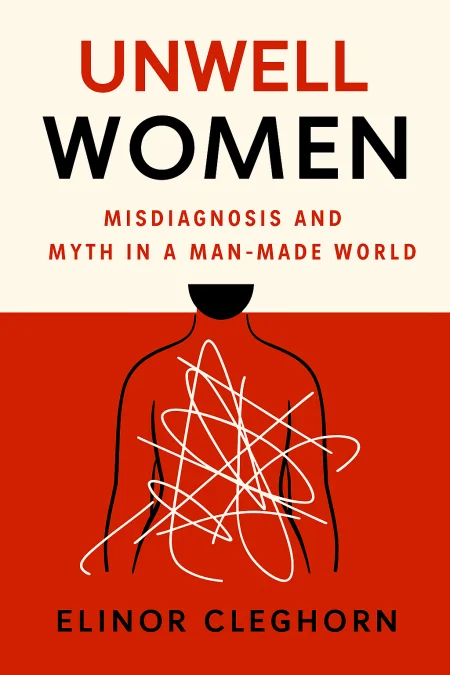
Unwell Women
Misdiagnosis and Myth in a Man-Made World
Book Edition Details
Summary
When women’s bodies become battlegrounds of misunderstanding, a chilling legacy of medical oversight is unearthed. In "Unwell Women," Elinor Cleghorn unveils the harrowing tapestry of female health history, where women's ailments were once dismissed as hysteria or witchcraft. Diagnosed with an autoimmune disease herself, Cleghorn embarks on a personal and historical quest, unearthing centuries of gender bias that shaped medical practice. From the mysticism of Ancient Greece to the stigmatization of menstruation and menopause, her narrative spotlights women who defied medical norms and redefined their destinies. This gripping chronicle calls for a revolution, urging the medical world to finally heed the voices of women whose truths have long been overshadowed by prejudice.
Introduction
Picture a woman in ancient Athens, writhing in pain as physicians declare her womb has wandered throughout her body, causing mysterious ailments. Fast-forward to Victorian London, where brilliant women are warned that education will literally damage their reproductive organs. Then witness the courage of 1960s activists who risked imprisonment to distribute birth control information, fundamentally challenging medical authority over women's bodies. This sweeping historical narrative reveals how medicine, supposedly objective and scientific, has been deeply infected by centuries of misogynistic assumptions about women's biological inferiority and emotional instability. From the wandering womb theory to modern-day medical gaslighting, we discover three profound truths that continue to shape women's healthcare today. First, the systematic exclusion of women from medical education and research created dangerous knowledge gaps where theories about female bodies were constructed by men who had never experienced menstruation, pregnancy, or menopause themselves. Second, women's own testimonies about their pain and symptoms were consistently devalued in favor of male medical authority, establishing a pattern of disbelief that persists in examining rooms worldwide. Third, the medicalization of normal female experiences transformed natural biological processes into pathological conditions requiring constant medical supervision and intervention. This exploration will resonate with healthcare professionals seeking to understand implicit bias in medical practice, historians interested in the intersection of gender and power, feminists examining the roots of contemporary health disparities, and anyone who has felt dismissed by a healthcare provider or wondered why women's pain is so often minimized. The story of medical misogyny is ultimately one of resistance and gradual progress, offering both sobering insights into persistent inequalities and inspiring examples of women who fought to reclaim authority over their own bodies.
Ancient Foundations: Wandering Wombs and Medical Patriarchy (Ancient-1800s)
The foundations of Western medicine's troubled relationship with women's bodies were laid in ancient Greece, where physicians first attempted to understand the mysterious ailments that seemed to plague the female sex. Hippocrates, the revered father of medicine, revolutionized healthcare by rejecting supernatural explanations for disease, yet his rational approach carried within it the seeds of centuries of medical misogyny. Greek physicians observed that women suffered from a peculiar array of symptoms including convulsions, breathlessness, paralysis, and mental disturbances that appeared to originate from their reproductive organs. The concept of the wandering womb emerged from these early observations, suggesting that the uterus could literally move throughout a woman's body, causing havoc wherever it traveled. This theory, though anatomically impossible, provided a convenient explanation for any female ailment that defied understanding. Plato described the womb as an animal within an animal, possessed of its own desires and appetites, while later physicians claimed it could float through the body like a log of wood, seeking moisture and causing suffocation when it pressed against vital organs. The prescribed treatments revealed the social agenda underlying medical theory: marriage, regular sexual intercourse, and frequent pregnancy were deemed the only cures for female ailments. These ancient theories established a dangerous precedent that women's health problems were inherently connected to their reproductive function, and their bodies were fundamentally unstable and uncontrollable. The rise of Christianity added moral weight to these medical theories, transforming women's bodies from merely defective to actively dangerous. Medieval texts portrayed menstruating women as toxic creatures capable of poisoning animals with a glance and infecting children in their cradles. The witch trials of the fifteenth through seventeenth centuries represented the horrifying culmination of these beliefs, as women's unexplained illnesses were reinterpreted as evidence of demonic possession. The transition from supernatural to scientific explanations during the Enlightenment failed to liberate women from medical oppression, instead creating new theories about nervous disorders and hysteria that would prove equally constraining. By the eighteenth century, the stage was set for the complete medicalization of women's bodies under the guise of scientific progress, establishing patterns of medical paternalism that would persist well into the modern era.
Industrial Medicine: Scientific Control and Gynecological Violence (1800s-1920s)
The nineteenth century witnessed an explosion of medical interest in women's bodies, driven by the professionalization of medicine and the development of new diagnostic tools like the speculum. Yet this increased attention brought not liberation but intensified scrutiny and control. The era's physicians, armed with new anatomical knowledge and surgical techniques, constructed elaborate theories about female pathology that served to justify women's exclusion from public life just as they were beginning to demand equal rights. The concept of hysteria reached its zenith during this period, evolving from a vague collection of symptoms into medicine's explanation for virtually any female behavior that challenged social norms. Physicians declared that hysteria affected nearly all women, with the diagnosis becoming so broad and malleable that it could encompass everything from menstrual irregularities to political activism. This provided medical justification for controlling women's bodies and minds through increasingly invasive treatments designed to restore them to proper feminine submission. The rise of gynecological surgery brought new horrors, as physicians performed clitoridectomies on women and girls to cure masturbation and other supposed sexual deviancies. These procedures, justified as medical treatments, were actually punishments designed to enforce Victorian sexual morality. The rest cure, popularized by physicians like Silas Weir Mitchell, similarly used medical authority to break women's spirits through enforced inactivity and isolation. The brutal force-feeding of suffragettes in prison represented the violent intersection of medical authority and political oppression, as women fighting for the vote were subjected to procedures that violated their bodily autonomy under the guise of preserving their health. The suffrage movement's emergence during this period was no coincidence, as women were fighting not just for political rights but for control over their own bodies and medical experiences. As women demanded the vote and access to higher education, anti-feminist physicians responded with increasingly dire warnings about the health consequences of female ambition, claiming that intellectual activity would damage women's reproductive organs and render them unfit for motherhood. This period established the template for using medical authority to enforce social control, creating a legacy of dismissed symptoms and delayed diagnoses that would persist well into the twentieth century.
Modern Awakening: Feminist Health Revolution and Persistent Struggles (1920s-Present)
The twentieth century brought remarkable medical advances including the discovery of hormones, the development of antibiotics, and the rise of evidence-based medicine, yet the fundamental problem of medical bias against women persisted in new forms. The birth control movement, led by figures like Margaret Sanger and Marie Stopes, represented a crucial victory in women's struggle for bodily autonomy, though it was complicated by eugenic ideologies that sought to control which women could reproduce. The development of the contraceptive pill in the 1960s offered unprecedented reproductive freedom while simultaneously subjecting women to dangerous medical experimentation, with initial trials conducted on Puerto Rican women without proper informed consent. The hormone revolution of the mid-twentieth century created new possibilities for understanding and treating women's health conditions, but it also reinforced essentialist ideas about femininity being chemically determined. The exclusion of women from clinical trials until the 1990s meant that decades of medical advances failed to account for sex differences in disease presentation and drug metabolism. Meanwhile, the widespread prescription of tranquilizers like Valium to housewives in the 1950s and 1960s revealed how medicine continued to pathologize women's legitimate frustrations with limited social roles. The feminist health movement of the 1970s marked a revolutionary shift toward patient empowerment and medical transparency. Groups like the Boston Women's Health Collective challenged the mystification of medical knowledge through publications like Our Bodies, Ourselves, teaching women to examine their own bodies and question their doctors' authority. This grassroots movement forced legislative changes requiring informed consent and patient education, fundamentally altering the doctor-patient relationship and establishing the principle that women had the right to make informed decisions about their own healthcare. Contemporary medicine has made significant strides in recognizing and addressing gender bias, with initiatives to include women in research and train healthcare providers about implicit bias. However, the legacy of centuries of medical misogyny continues to influence patient care, as women remain more likely to have their pain dismissed as emotional or psychological, more likely to be misdiagnosed, and more likely to wait longer for appropriate treatment. The rise of social media has created new platforms for sharing experiences and demanding better care, while movements like MeToo have empowered women to speak out about medical mistreatment, ensuring that the fight for medical equality continues into the twenty-first century.
Summary
The history of women's medical treatment reveals a persistent tension between scientific progress and social prejudice, where advances in medical knowledge have repeatedly been undermined by deeply ingrained assumptions about female inferiority and unreliability. From ancient theories of wandering wombs to modern debates about chronic pain, the core issue remains unchanged: medicine has consistently privileged male perspectives and experiences while treating women's own accounts of their bodies as suspect and unreliable. This pattern reflects deeper societal anxieties about women's autonomy and power, with medical control serving as a mechanism for broader social control throughout history. The courage of countless women who challenged medical orthodoxy offers profound lessons for contemporary healthcare advocacy, demonstrating that meaningful change requires not just scientific advancement but also cultural transformation and the redistribution of medical authority. Moving forward, several actionable steps emerge from this historical analysis. Healthcare systems must implement comprehensive bias training for all providers while establishing accountability measures for equitable treatment, ensuring that implicit prejudices don't continue to influence diagnosis and care. Medical research must prioritize conditions that disproportionately affect women, ensuring adequate funding and representation in clinical trials to address centuries of knowledge gaps. Most importantly, we must continue amplifying women's voices and experiences, recognizing that those who live in female bodies are the ultimate experts on what it feels like to inhabit them. This historical perspective offers crucial insights for contemporary healthcare reform, revealing that medical objectivity is often compromised by unconscious bias and requiring active efforts to center women's voices in research, education, and clinical practice. The long arc of medical history bends toward justice, but only when we actively work to bend it through sustained advocacy, rigorous science, and unwavering commitment to believing women when they speak about their own bodies and pain.
Related Books
Download PDF & EPUB
To save this Black List summary for later, download the free PDF and EPUB. You can print it out, or read offline at your convenience.
By Elinor Cleghorn
