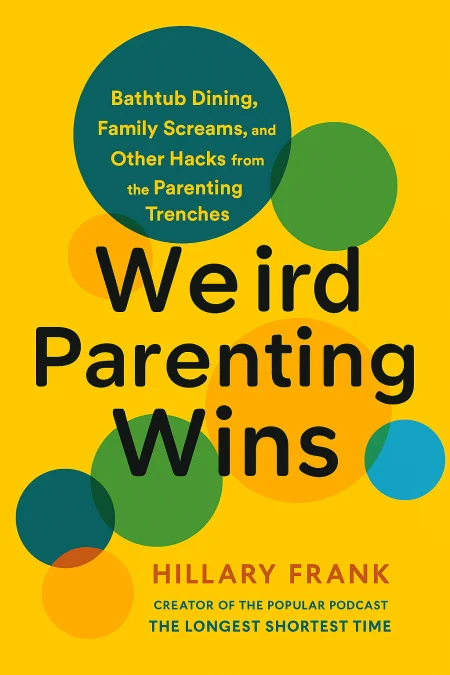
Weird Parenting Wins
Bathtub Dining, Family Screams, and Other Hacks from the Parenting Trenches
Book Edition Details
Summary
Parenting doesn’t come with a manual, but it sure could use some creative chaos! In "Weird Parenting Wins," Hillary Frank, the genius behind The Longest Shortest Time podcast, uncovers the magic in those quirky, spur-of-the-moment solutions parents conjure up in times of crisis. When expert advice falls flat, these parents turn their wildest ideas into success stories. Picture a father pig-snorting to calm his crying baby or a mother crafting a cardboard “flat daddy” to ease her children’s longing for their deployed father. This book is a treasure trove of unconventional wisdom covering every age and stage, from teaching manners to unlocking those tight-lipped teenage secrets. It’s a celebration of imagination, where the unexpected becomes the key to surviving—and thriving—in the beautiful chaos of raising children.
Introduction
The baby was screaming, and nothing in the parenting books seemed to work. After trying every technique from swaddling to shushing, one desperate mother discovered that her electric toothbrush's gentle vibration would instantly calm her colicky infant. For weeks, she and her husband rotated toothbrushes throughout the night—one charging while the other worked its magic beside their sleeping baby. This moment of pure parental ingenuity represents something profound about raising children: the most effective solutions rarely come from expert manuals or perfect theories. Instead, they emerge from the trenches of real family life, born from exhaustion, creativity, and the desperate need to turn chaos into connection. These "weird wins" reveal a fundamental truth about parenting—that authentic relationships with our children often require us to abandon conventional wisdom and trust our instincts. This collection of unconventional parenting strategies celebrates the beautiful messiness of family life. From parents who discovered that singing the blues transforms whining into laughter, to families who found that "crazy driver" shopping cart games create cooperation rather than conflict, these stories illuminate how creative problem-solving can strengthen bonds while preserving everyone's sanity. Each tale offers not just practical solutions, but permission to embrace the wonderfully weird journey of helping small humans grow into themselves.
When Conventional Wisdom Fails: Creative Problem-Solving
When traditional parenting approaches fall short, the most breakthrough moments often come from thinking completely outside the box. One parent discovered that their death-obsessed four-year-old found peace not through gentle reassurance, but by donning glow-in-the-dark skeleton pajamas and playfully "killing" mom in elaborate dramatic death scenes each night. Another family transformed their toddler's terror of automatic toilet sensors by covering them with panty liners, turning bathroom visits from traumatic experiences into manageable routines. The magic happens when parents recognize that children's unique personalities require equally unique solutions. A mother whose son was paralyzed by perfectionism introduced the "First Pancake Philosophy"—explaining that just like the first pancake never turns out right, first attempts at anything are meant to be learning experiences. This simple metaphor gave her anxious child permission to make mistakes and try new things. Similarly, parents dealing with separation anxiety discovered that having their child push them out the door, rather than clinging to them, transformed tearful goodbyes into empowered partings. These stories reveal that effective parenting isn't about following prescribed rules, but about understanding what makes each child tick. When a family created "Spanish Only" dinners to practice language learning, they accidentally eliminated sibling squabbles because the children were too focused on remembering vocabulary to argue. The most powerful solutions often address multiple challenges simultaneously, turning problems into opportunities for growth and connection. The thread connecting these unconventional approaches is their willingness to meet children where they are, rather than where adults think they should be. Success comes not from forcing compliance, but from finding creative ways to align a child's natural instincts with family needs and values.
The Art of Gentle Manipulation and Creative Solutions
The most successful parenting "tricks" often involve reframing situations to appeal to children's natural desires for autonomy and fun. One ingenious parent dealt with bedtime resistance by asking their child to "meet me in a dream," transforming sleep from a separation into an adventure. Another discovered that calling mashed potatoes "hot ice cream" made the previously rejected food irresistible to their five-year-old. Food battles particularly showcase parental creativity at its finest. A mother tired of her toddler's picky eating created "Costco Sample Lady" presentations, serving familiar foods on toothpicks in small containers. The theatrical element and sense of special treatment made ordinary meals exciting discoveries. Meanwhile, a father solved the problem of siblings fighting over who finished first by deliberately cooking an odd number of fish sticks and declaring that whoever finished first didn't have to eat the extra one—suddenly both children were racing to complete their meals. Language and presentation prove remarkably powerful tools for changing children's perspectives. Parents learned that calling cleanup time "making the room Roomba-ready" motivated children who wanted to "save" their toys from the robot vacuum. Others discovered that framing chores as helping children become "big kids" with important responsibilities transformed reluctant participation into eager cooperation. These strategies work because they honor children's developmental need to feel capable and autonomous while still achieving parental goals. Rather than engaging in power struggles, creative parents find ways to make desired behaviors feel like the child's own choice or special privilege. The most effective approaches tap into children's natural love of play, storytelling, and feeling important, creating win-win situations where everyone feels successful.
Building Independence While Maintaining Connection
The journey toward raising independent children requires a delicate balance between offering freedom and maintaining necessary boundaries. Smart parents have discovered that giving children age-appropriate responsibilities, paired with creative safety nets, builds confidence while preserving family harmony. One mother instituted an "ollie-ollie-in-come-free" system, where children could confess mistakes without consequences, creating space for honest communication while teaching accountability. Teenage years bring unique challenges that demand evolved strategies. A family's "roommate contract" approach transformed a college student's difficult return home by treating him as an equal partner in creating household agreements rather than imposing parental rules. Another parent used car conversations to broach sensitive topics, recognizing that the intimate space and lack of direct eye contact created perfect conditions for meaningful dialogue about difficult subjects like relationships and decision-making. Physical independence often develops through seemingly small adjustments that build children's confidence systematically. Parents who let their children set their own curfews discovered that kids chose reasonable times and were more likely to honor agreements they helped create. Meanwhile, families who celebrated new responsibilities as birthday privileges rather than burdens found children eager to take on tasks like making their own lunches or managing their laundry. The most successful approaches to building independence recognize that children need both roots and wings—secure attachment combined with increasing autonomy. Parents who master this balance create environments where children feel safe to take risks, make mistakes, and develop their own problem-solving capabilities. These families understand that the goal isn't perfect compliance, but rather raising young people who can think for themselves while maintaining strong family connections throughout their lives.
From Chaos to Confidence: Embracing Parenting Creativity
The most transformative parenting moments often emerge from embracing chaos rather than fighting it. When one mother realized her toddler's bathroom tantrums weren't about defiance but overwhelm, she began doing yoga poses during bath time, creating calm presence that naturally soothed her child. Another parent discovered that family screams—everyone throwing their heads back and yelling together—released tension more effectively than any discipline technique. These breakthrough moments share a common element: parents who stopped trying to control every variable and instead learned to work with their children's natural rhythms and personalities. A father who taught his daughter to give him pretend shots helped her overcome needle phobia by putting her in the powerful position of caregiver rather than victim. Similarly, parents who created "emergency emojis" for teenagers found that offering face-saving escape routes from peer pressure situations maintained trust while ensuring safety. The evolution from rigid rule-following to creative collaboration often happens gradually, through small experiments that build confidence in both parents and children. Families who instituted "DJ days" where each child controlled family decisions on their assigned days eliminated countless daily power struggles while teaching turn-taking and consideration for others. These systems work because they acknowledge children's need for control while maintaining overall family functioning. Perhaps most importantly, these stories demonstrate that parenting creativity flourishes when adults give themselves permission to be imperfect and experimental. The parents who discover the most effective strategies are often those who can laugh at their mistakes, learn from their children, and recognize that strong relationships matter more than perfect behavior. They understand that the goal isn't raising compliant children, but nurturing confident, creative, and connected human beings.
Summary
The wisdom embedded in these unconventional parenting stories reveals a profound truth: the most meaningful connections with our children often happen not through perfect execution of expert advice, but through creative moments of understanding and adaptation. Whether it's transforming a toddler's meltdown into a blues song or helping a teenager navigate independence through collaborative boundary-setting, the most effective approaches honor both the child's developmental needs and the family's unique dynamics. These parents discovered that success comes not from controlling every situation, but from learning to dance with the beautiful unpredictability of raising human beings. The thread connecting every breakthrough moment is the willingness to see challenges as opportunities for deeper connection rather than problems to be solved. When we approach parenting with curiosity instead of certainty, creativity instead of rigidity, we create space for authentic relationships to flourish. These families learned that children thrive not under perfect conditions, but in environments where their individual personalities are celebrated and their growth is supported through patient, imaginative guidance. Ultimately, these stories offer hope to every parent who has felt overwhelmed by the gap between idealized parenting advice and the messy reality of daily family life. They remind us that our children don't need perfect parents—they need real ones who are willing to learn, adapt, and find joy in the journey. The most important gift we can give our children is not flawless execution of parenting techniques, but the experience of being truly seen, understood, and loved for exactly who they are.
Related Books
Download PDF & EPUB
To save this Black List summary for later, download the free PDF and EPUB. You can print it out, or read offline at your convenience.
By Hillary Frank
