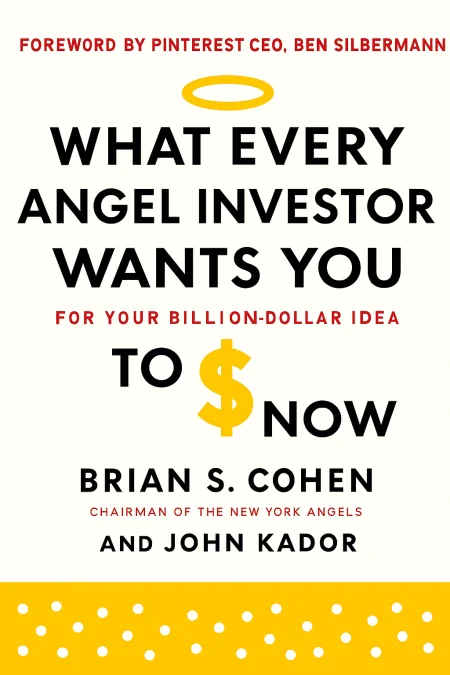
What Every Angel Investor Wants You to Know
An Insider Reveals How to Get Smart Funding for Your Billion-Dollar Idea
Book Edition Details
Summary
Picture this: a savvy investor who could turn your fledgling idea into a booming business. Brian Cohen, a trailblazer in the world of angel investing, pulls back the curtain on the intricate dance of securing that perfect backer. In "What Every Angel Investor Wants You to Know," Cohen distills decades of experience into a treasure trove of wisdom, offering entrepreneurs a masterclass in winning the hearts and minds of investors. This isn't just about the money—it's about forging partnerships that spark innovation and growth. With candid insights and practical advice, Cohen empowers visionary founders to present their ideas with authenticity, clarity, and the strategic foresight investors crave. Step into the mind of a top angel investor and transform your startup dreams into reality.
Introduction
Picture this: You're sitting across from a potential investor, your heart racing as you prepare to pitch the idea that's consumed your every waking moment. The investor leans back in their chair, studies you with experienced eyes, and asks a question that catches you completely off guard. It's not about your revenue projections or market size. Instead, they want to know about you, your story, your passion for solving this particular problem. This moment of human connection often determines whether your entrepreneurial dreams take flight or remain grounded. The relationship between entrepreneurs and angel investors is far more intimate and personal than most people realize. Unlike institutional venture capital, angel investing involves real individuals writing checks from their personal accounts, betting not just on business models but on the human beings standing before them. These seasoned entrepreneurs and successful business leaders have walked similar paths, faced comparable challenges, and understand the lonely journey of building something from nothing. They're looking for more than just the next unicorn; they're seeking authentic partnerships with founders who demonstrate integrity, determination, and the street smarts necessary to navigate the uncertain waters of startup life. This exploration reveals the unspoken dynamics that govern successful funding relationships, offering entrepreneurs a window into the minds and motivations of those who hold the keys to early-stage capital. Understanding these perspectives can transform how founders approach fundraising, moving beyond transactional money-raising to meaningful investor-raising that creates lasting partnerships built on mutual respect and shared vision.
The Contact Sport of Angel Investing
David Steinberger had been collecting comic books since childhood, and like many collectors, he watched his hobby become a storage problem at his parents' house. While cleaning out his collection, something clicked. He realized there was iTunes for music and Amazon for books, but no central, curated marketplace for digital comics. At NYU's business school, David developed this observation into a complete business plan, entered a competition, and won first place. Shortly after, he met Brian Cohen and secured his first angel investment. What made David's pitch so compelling wasn't just the market opportunity. Cohen, himself a comic book collector who owned valuable first editions, immediately connected with both the product vision and the person behind it. David possessed what Cohen calls "special intellectual charisma" - an uncanny ability to make people feel comfortable believing in his vision. There was something boyishly charming about his enthusiasm that melted concerns about execution risk. David understood that succeeding in the comic book industry required more than technology; it required understanding the culture, the customers, and the ecosystem that traditional retailers had failed to serve effectively. Five years later, comiXology had revolutionized the comic book world, becoming the largest digital comic distributor across iPhone, Android, and web platforms. In 2011, their Comics application became the highest-grossing iPhone app, and the company was eventually selected as a preloaded application on Amazon's Kindle Fire. David's success stemmed from recognizing that angel investing is fundamentally about human relationships, where technical excellence must be paired with the ability to communicate vision, build trust, and execute with unwavering determination.
Finding Smart Money and Building Relationships
Tom Patterson knew he had a problem with his undershirt bunching up around his waist every time he got out of his car after long commutes. Instead of accepting this minor frustration like millions of other men, Tom decided to solve it. He sketched a pattern for a better-fitting undershirt, took it to his local tailor, and created the first prototype of what would become Tommy John underwear. After testing his concept with fifteen trusted friends who demanded more samples, Tom knew he had something valuable. When Tom eventually pitched to investors, he did something that caught Cohen completely off guard. Instead of desperately accepting any available funding, Tom called Cohen and asked point-blank: "Tell me about yourself. Tell me why I should take money from you." This role reversal happened while Cohen was having drinks at a bar, and the directness of the question immediately sobered him up. Tom wasn't just raising money; he was raising the right investors. He understood that the person behind the check mattered as much as the amount written on it. This approach exemplifies the fundamental difference between money-raising and investor-raising. Tom recognized that his relationship with investors would last much longer than the initial funding event. He needed partners who could provide guidance, open doors, and offer support during inevitable challenges. By choosing investors as carefully as they were choosing him, Tom created a foundation for Tommy John that extended far beyond capital. The company grew from $1.5 million in revenue in 2011 to $5 million in 2012, supported by investors who brought industry knowledge, retail connections, and strategic advice that proved far more valuable than money alone.
Pitching, Due Diligence, and Team Dynamics
Patrick Ambron had already been rejected by every angel investor he initially approached for BrandYourself, his personal SEO platform that helps people manage their Google search results. Rather than giving up, Patrick implemented a strategy that transformed every "no" into an eventual "yes." He carefully researched each investor's background and portfolio, identifying why his startup aligned with their interests. Then he did something most entrepreneurs avoid: he maintained regular contact with investors who had passed on his deal. Every few weeks, Patrick would send brief, non-pushy updates about BrandYourself's progress. He'd share milestones they'd achieved and, cleverly, ask for advice on specific challenges they were facing. "This week, we accomplished A and B, but we're having trouble with C. Do you have any suggestions?" This approach proved irresistible to angels who genuinely wanted to help, even if they hadn't initially invested. The investors began responding with advice, gradually becoming invested in BrandYourself's success through their intellectual contributions. By the time Patrick was ready for his Series A round, every single angel who had originally turned him down was familiar with his business, had watched his team execute successfully, and had developed a personal stake in the company's success through months of advisory interactions. They all came in as investors. Patrick's experience demonstrates that successful fundraising is rarely about perfect initial presentations; it's about building authentic relationships over time, proving your ability to execute, and showing that you value investors' expertise beyond their financial contributions. The process of investor due diligence should flow both ways, with entrepreneurs carefully evaluating whether potential investors can add value beyond capital.
Iterating to Exit: The Startup Journey
Lily Liu left her government job with a simple but powerful belief: municipalities needed better ways for residents to report problems that required fixing. She developed PublicStuff, an app that allows anyone to photograph a pothole or broken streetlight and automatically sends the repair request to the appropriate city department. The app captures GPS coordinates, works 24/7, and provides residents with updates when issues are logged and resolved. What seemed like a straightforward civic technology solution required multiple iterations to find the right business model and market approach. When Liu eventually appeared before eighteen New York Angels who wanted to invest in PublicStuff, she faced an enviable but complex decision. Instead of accepting money from whoever offered it first, she asked each potential investor a question that took many by surprise: "Why should I take your money?" Some angels were taken aback by this apparent chutzpah, but Liu understood something crucial about startup success. The money itself wouldn't determine PublicStuff's outcome; the strategic value, connections, and ongoing support from her chosen investors would make the difference between moderate success and transformative growth. Liu's approach reflects the reality that successful startups must think about their exit strategy from day one. Angel investors don't make money from dividends or interest payments; they profit only when startups are acquired or go public. This means entrepreneurs and angels share the same fundamental goal: building companies that larger organizations will want to purchase. By choosing investors who understood government technology markets, had relevant connections, and could help navigate the complex sales cycles involved in selling to municipalities, Liu positioned PublicStuff not just for initial success, but for the kind of strategic acquisition that would reward all stakeholders. The best entrepreneurs recognize that every decision, from initial product development to investor selection, should consider how it positions the company for an eventual successful exit.
Summary
The world of angel investing reveals itself to be less about spreadsheets and business plans than about authentic human connections built on mutual respect, shared vision, and complementary strengths. Successful entrepreneurs understand that raising capital is fundamentally about raising relationships with individuals who bring not just money, but wisdom, connections, and unwavering support through the inevitable challenges of building something meaningful from nothing. These partnerships flourish when founders approach investors as carefully as investors evaluate startups, creating alliances built on genuine alignment rather than desperate necessity. The most powerful insight emerges from recognizing that every interaction, from initial contact through eventual exit, represents an opportunity to build trust and demonstrate the character traits that distinguish successful entrepreneurs: integrity that remains unshakeable under pressure, determination that persists through repeated setbacks, and the street smarts to navigate complex human dynamics while maintaining focus on customer needs. When entrepreneurs embrace their role as leaders of their own destiny rather than supplicants seeking charity, they create the conditions for partnerships that amplify their vision rather than constrain it. Take heart in knowing that the entrepreneurial journey, while demanding, connects you with a community of individuals who have walked similar paths and genuinely want to see you succeed. Your next conversation with a potential investor represents not just a funding opportunity, but a chance to find a mentor, partner, and advocate who will celebrate your victories and support you through challenges. Approach these relationships with authenticity, preparation, and the confidence that comes from knowing you're building something the world needs, and you'll discover that the right investors will emerge as some of your most valuable allies in creating lasting impact.
Related Books
Download PDF & EPUB
To save this Black List summary for later, download the free PDF and EPUB. You can print it out, or read offline at your convenience.

By Brian Cohen
