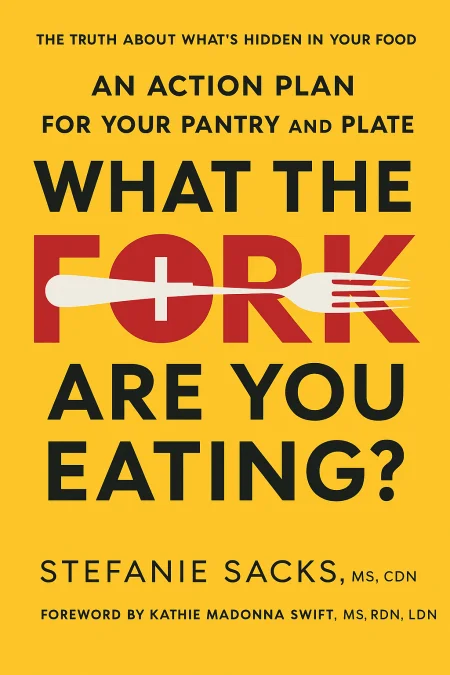
What the Fork Are You Eating?
An Action Plan for Your Pantry and Plate
byStefanie Sacks, Kathie Madonna
Book Edition Details
Summary
Ever wondered what's really on your plate? Those innocent-looking labels like "natural" or "sugar-free" might be hiding a cocktail of chemicals and additives that do more harm than good. Enter Stefanie Sacks’ eye-opening guide, *What the Fork Are You Eating?*. As a seasoned chef and nutrition expert, Sacks peels back the layers of food industry marketing to reveal the unsavory truths lurking in everyday groceries. She offers a no-nonsense, aisle-by-aisle breakdown on how to make smarter, healthier choices, backed by fifty mouthwatering recipes that promise both flavor and nourishment. This isn't just a cookbook; it's a manifesto for reclaiming control over your diet and health, crafted with wit and wisdom that leaves you both informed and inspired.
Introduction
Picture this: you're standing in the cereal aisle, overwhelmed by colorful boxes promising everything from "whole grains" to "natural flavors." You grab what seems like a healthy choice, but have you ever wondered what those twenty-plus ingredients actually are? That innocent morning ritual might be delivering a cocktail of artificial colors, synthetic preservatives, and laboratory-created flavor enhancers straight to your breakfast bowl. The modern food system has transformed eating from a simple act of nourishment into a complex navigation of chemical additives, misleading marketing claims, and hidden ingredients that most of us never think twice about. Every day, without realizing it, you consume dozens of substances that didn't exist in the human diet just fifty years ago. These aren't necessarily the obvious culprits like candy or soda, but everyday foods marketed as healthy options that contain surprising chemical additions. The average person now consumes over 150 pounds of food additives annually, yet most of us couldn't identify even half of the ingredients in our favorite snacks. This guide will equip you with the detective skills needed to decode ingredient lists, understand why certain additives raise red flags among food scientists, and discover practical strategies for making better choices without turning grocery shopping into an overwhelming ordeal. You'll learn to see through marketing manipulation, identify the most problematic ingredients hiding in plain sight, and transform your kitchen into a space that supports rather than undermines your health goals.
Top-Rated Terminators: Dangerous Additives in Everyday Foods
The food industry has created what can only be described as a chemical laboratory in our everyday meals, with certain additives earning the notorious title of "Top-Rated Terminators" due to their questionable safety profiles and alarming prevalence throughout the food supply. These include artificial preservatives like BHT and sodium benzoate, synthetic colors such as Red Dye No. 40 and Yellow No. 5, artificial sweeteners including aspartame and sucralose, and flavor enhancers like monosodium glutamate. What makes these substances particularly concerning isn't just their individual effects, but their ubiquitous presence, meaning most people consume multiple terminators daily without any awareness of their cumulative impact. Consider the shocking reality that many of these chemicals were discovered accidentally in industrial laboratories, often by scientists who noticed sweet or flavorful tastes while working with completely unrelated compounds. Aspartame, for instance, was discovered by a chemist researching ulcer drugs who accidentally licked his finger and noticed an intensely sweet taste. This serendipitous discovery led to one of the most widely consumed artificial sweeteners in history, despite ongoing debates about its safety. The irony is striking when you realize that substances affecting millions of people daily may have undergone less rigorous testing than medications prescribed to far fewer individuals. The cumulative effect of consuming multiple Top-Rated Terminators creates an unprecedented experiment on human health, as no comprehensive studies have examined what happens when these chemicals interact in our bodies over decades of consumption. While regulatory agencies maintain these additives are safe at approved levels, the definition of "safe" often relies on outdated studies or research funded by the very companies profiting from their use. This creates a troubling conflict of interest where consumers become unwitting participants in a massive, ongoing food safety experiment with unknown long-term consequences. Perhaps most disturbing is how these chemicals have altered our taste preferences and expectations around food. Artificial flavors are often more intense than their natural counterparts, potentially making real foods seem bland by comparison. Children raised on artificially enhanced foods may find that fresh fruits and vegetables pale in comparison to the hyperpalatable processed alternatives, creating a cycle where natural, wholesome foods become less appealing than their chemical-laden substitutes.
Decoding Food Labels: Science Behind Marketing Claims
Food labels have evolved into sophisticated marketing weapons designed more to sell products than inform consumers, creating a battlefield where understanding what you're actually eating requires advanced detective skills. The most deceptive aspect of modern food labeling lies not in outright lies, but in carefully crafted half-truths and regulatory loopholes that allow manufacturers to make bold health claims while hiding problematic ingredients in plain sight. Terms like "natural," "healthy," and "made with real fruit" operate in a regulatory gray area where companies can make impressive-sounding statements with minimal oversight or scientific backing. The ingredient list holds the real secrets of any packaged food, as ingredients must be listed in descending order by weight, theoretically revealing the true composition of what you're consuming. However, food manufacturers have become masters of deception through ingredient splitting and creative naming conventions. Sugar, for example, can appear under more than sixty different names including high-fructose corn syrup, maltodextrin, brown rice syrup, and fruit juice concentrate. This allows companies to use multiple forms of sugar while keeping each individual type lower on the ingredient list, creating the illusion of a less sugar-heavy product. The nutrition facts panel, while more regulated than marketing claims, tells only part of the story through manipulated serving sizes and selective emphasis on certain nutrients. A single bottle of iced tea might be labeled as containing two and a half servings, allowing manufacturers to list sugar and calorie counts that represent only a fraction of what most people actually consume. This mathematical manipulation means that a beverage you drink in one sitting could contain double or triple the sugar and calories displayed prominently on the front of the package. Understanding the psychology behind food marketing reveals why the most heavily advertised products are often the least healthy options. Companies with the largest marketing budgets typically produce the most processed foods, which require elaborate campaigns to convince consumers of their value. Meanwhile, truly nutritious whole foods like fresh produce rarely need flashy packaging or health claims to sell their benefits. Learning to read ingredient lists with healthy skepticism and focusing on products with short, recognizable ingredient lists becomes a crucial skill for navigating the modern food landscape successfully.
DIY Kitchen Detox: Evidence-Based Food Safety Strategies
Transforming your relationship with food begins not at the grocery store, but in your own kitchen through a systematic audit of what's currently occupying your pantry, refrigerator, and freezer. This process involves more than simply checking expiration dates; it requires examining every product for Top-Rated Terminators, assessing storage conditions that might compromise food quality, and honestly evaluating which items support your health goals versus those that undermine them. The goal isn't achieving perfection overnight, but rather developing awareness that leads to informed decision-making and gradual improvement over time. The pantry audit often yields the most surprising discoveries, as products marketed as healthy options frequently contain concerning ingredients that most consumers never notice. That "whole grain" breakfast cereal might list sugar as the second ingredient, while your favorite salad dressing could contain more artificial additives than recognizable food components. Condiments, sauces, and seemingly innocent items like flavored yogurts often harbor hidden sugars, artificial colors, and preservatives that accumulate to create a significant chemical load in your daily diet. The key is approaching this process with curiosity rather than judgment, viewing it as an educational opportunity rather than a source of guilt. Creating sustainable change requires developing your "Can't Live Without" list, identifying foods you genuinely enjoy and aren't ready to eliminate completely. Rather than attempting an unrealistic overhaul that leads to rebellion and failure, focus on finding acceptable alternatives for most problematic items while allowing yourself a few conscious indulgences. This balanced approach prevents the all-or-nothing mentality that derails many well-intentioned dietary improvements. For every processed food containing concerning additives, better alternatives exist that provide similar taste and convenience without the chemical baggage. Building a practical whole foods foundation involves stocking versatile ingredients that can create satisfying meals without heavy reliance on processed convenience foods. This includes maintaining supplies of whole grains, legumes, nuts, seeds, and high-quality oils that form the backbone of countless healthy meals. The objective isn't eliminating all packaged foods, which would be unrealistic for most families, but choosing packaged options more carefully while balancing them with fresh, minimally processed ingredients. Success comes from making gradual changes that feel sustainable rather than attempting dramatic restrictions that prove impossible to maintain long-term.
Summary
The most profound insight from examining our modern food system is that consumers possess far more power than they realize to influence both their personal health and the broader food industry through informed purchasing decisions. Every dollar spent on food represents a vote for the kind of food system we want to support, and companies respond remarkably quickly to consumer demand when it affects their profitability. The challenge isn't that healthy food doesn't exist, but rather that identifying and choosing it requires more knowledge and intentionality than most people realize is necessary in today's complex marketplace. This knowledge empowers you to make decisions from a place of understanding rather than marketing manipulation, transforming you from a passive consumer into an active advocate for your own wellbeing. What other areas of your life might benefit from the same level of scrutiny and informed decision-making that you can now apply to your food choices, and how might this approach to critical thinking extend beyond the kitchen to influence other important aspects of your health and lifestyle?
Related Books
Download PDF & EPUB
To save this Black List summary for later, download the free PDF and EPUB. You can print it out, or read offline at your convenience.
By Stefanie Sacks
