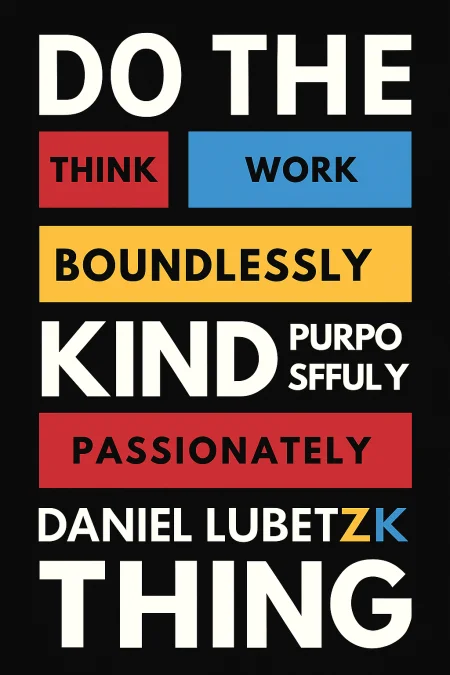
Do the KIND Thing
Think Boundlessly, Work Purposefully, Live Passionately
Book Edition Details
Summary
In a world where snacks often fall prey to the battle between taste and health, Daniel Lubetzky dared to say "AND." Founder of KIND Healthy Snacks, Lubetzky didn't just revolutionize snack bars; he crafted a philosophy that champions the art of harmonious duality—uniting business success with genuine social impact. Inspired by the kindness that saved his father during the Holocaust, Lubetzky embarked on a journey to prove that profit and purpose can coexist. "Do the KIND Thing" is his manifesto, blending personal anecdotes with ten actionable principles that illuminate how to foster a business that thrives while lifting others. It's a blueprint for those who refuse to choose between doing well and doing good. Through tales of triumphs and tribulations, Lubetzky invites you to rethink assumptions, embrace risks, and unleash the power of "AND" to not only transform your enterprise but also kindle a kinder world.
Introduction
Picture a young entrepreneur standing in his cramped studio apartment in 1994, surrounded by towering boxes of Dead Sea cosmetics that threatened to topple over at any moment. The Mother's Day marketing campaign he had poured his savings into had yielded zero sales. Zero calls. The suffocating smell of essential oils filled the air, and the weight of failure pressed down like those precarious boxes. Yet in that moment of despair, something extraordinary was being born—not just a business, but a philosophy that would eventually touch millions of lives. This is the story of how one man's unwavering belief in building bridges between people transformed from a seemingly impossible dream into a thriving enterprise that proves businesses can be both profitable and purposeful. It's about discovering that our greatest failures often contain the seeds of our most meaningful successes, and that the courage to keep going when everything seems lost can lead to innovations that change entire industries. Through intimate stories of setbacks and breakthroughs, we'll explore how authentic leadership, creative problem-solving, and genuine care for others can create something far more valuable than profit—a movement that makes the world a little kinder, one interaction at a time.
From Holocaust Survivor's Son to Social Entrepreneur
Standing in a small grocery store in Tel Aviv one evening in 1993, Daniel Lubetzky bit into a sundried tomato spread that would change his life forever. The flavor was so intoxicating that he devoured the entire jar with pita bread, sitting at his cramped desk later that night. When he returned to buy more, the shopkeeper delivered devastating news—the company had gone bankrupt, and he had purchased the last jar. But rather than despair, Daniel saw opportunity. What if this delicious product could become the vehicle for his seemingly impossible dream of bringing Arabs and Israelis together through business cooperation? The idea wasn't born from naive optimism but from profound personal experience. Daniel's father, Roman, had survived the Dachau concentration camp, where a moment of unexpected kindness from a Nazi guard—throwing a rotten potato to a starving prisoner—had literally kept him alive. Roman's survival story was woven with threads of compassion even in humanity's darkest hour, including a Lithuanian porter who spared the family's lives because Roman's grandfather had always treated him with dignity and respect. These weren't just family stories; they were lessons about the transformative power of seeing humanity in others, even in the most unlikely circumstances. From this heritage of survival through kindness, Daniel developed what he would later call the "AND philosophy"—the radical belief that you don't have to choose between doing good and doing well. While his law school classmates prepared for prestigious corporate careers, Daniel was sketching plans for businesses that would force warring peoples to work together, creating economic incentives for peace. The business model was elegantly simple yet revolutionary: if former enemies could profit together, they might discover their shared humanity and build bridges toward lasting coexistence. This early foundation reveals a profound truth about purposeful entrepreneurship—that our most powerful business innovations often spring from our deepest personal convictions. When profit and purpose truly align, they create an unstoppable force that can weather any storm and inspire others to join a movement far greater than commerce alone.
Creating KIND: Innovation Through Authentic Values
By 2003, Daniel found himself constantly traveling for his peace-building work and growing food business, always searching for a healthy, portable snack that didn't force him to choose between nutrition and taste. Existing energy bars tasted like cardboard, while fresh fruit spoiled easily and nuts were too easy to overeat. The market seemed to accept this false compromise—that healthy food couldn't be delicious, or that convenient snacks couldn't be wholesome. Then came a heartbreaking loss that would crystallize everything he had learned about bridging divides. The year his father died, Daniel spent months saying Kaddish prayers three times daily, a Jewish mourning tradition that became his meditation on how to honor his father's legacy of kindness. During this period of grief and reflection, the concept for KIND crystallized. The brand name itself emerged from brainstorming sessions with his marketing director, but it resonated deeply because it embodied everything his father had taught him—that kindness to others builds trust and ultimately creates bridges between people. The product development process revealed the power of refusing false compromises. While competitors made bars from emulsified pastes because they were cheaper and easier to manufacture, Daniel insisted on using whole nuts and fruits that customers could actually see. This decision was expensive and complicated—whole ingredients don't flow smoothly through production lines, and they create bars of irregular weights. But when customers bit into a KIND bar, they could taste the integrity of real food, not processed substitutes. The transparent packaging became another manifestation of this philosophy. Industry experts warned that stylized, colorful foil wrapping would outsell products that revealed their actual contents. But Daniel challenged this assumption, investing in barrier technology that would protect the bars while showcasing their artisanal appearance. The clear wrapper wasn't just packaging—it was a statement of authenticity in a world oversaturated with marketing spin. This journey illuminates a crucial lesson about innovation: true breakthroughs come not from following market research, but from refusing to accept that existing compromises are necessary. When entrepreneurs dare to ask "Why can't we have both?" and persist until they find the answer, they often create entirely new categories that competitors struggle to imitate.
Scaling with Purpose: Leadership and Community Building
When Daniel stepped back during KIND's critical trade show presentation to major retailers, watching his team deliver a flawless performance without his direct involvement, he experienced a profound moment of recognition. The founders who had once done everything—from packing boxes to making sales calls—now needed to trust others to carry the vision forward. As John Leahy seamlessly orchestrated presentations from marketing, sales, and category management teams, every retailer in the room committed to carrying the new product line. It was artistry in action, and Daniel realized his role had fundamentally transformed. Building this level of trust didn't happen overnight. It required creating what Daniel called an "ownership culture" where team members thought and acted like co-owners rather than employees. This meant giving stock options to everyone from executives to cleaning staff, but more importantly, it meant fostering an environment where people felt genuine responsibility for the company's mission. When Hurricane Sandy devastated New York, KIND team members spontaneously organized relief efforts, hauling supplies to affected communities while distributing bars to first responders and victims. The cultural foundation rested on radical transparency in an industry known for secrecy. Unlike traditional corporations that march failed employees out with boxes of belongings, KIND developed a transition process that honored people's dignity. Team members who wanted to leave could openly discuss their plans and help find their replacements, while those struggling with performance received coaching rather than immediate termination. This approach sometimes backfired—one trusted employee used the openness to shop proprietary information to competitors—but overall it created unprecedented loyalty and authenticity. Perhaps most challenging was maintaining this culture while scaling rapidly. Daniel instituted "start-up think" sessions where teams questioned every practice annually, ensuring that growth didn't breed complacency. The company's KINDOs program allowed team members to celebrate colleagues who embodied company values, creating peer recognition that reinforced cultural norms without top-down mandates. This evolution reveals that sustainable leadership isn't about maintaining control, but about building systems that perpetuate values even when founders step back. The most successful leaders create cultures so strong that they become self-reinforcing, allowing organizations to scale while preserving their essential character and mission.
The Movement Beyond Business: Making Kindness Contagious
The #kindawesome cards seemed like such a simple idea—small tokens to give someone you've witnessed doing something kind—yet they represented years of experimentation in creating authentic social impact. Daniel would hand them to strangers who offered their taxi to his family or gave up subway seats for elderly passengers, directing recipients to a website where they could claim free KIND bars and receive another card to pass along. Unlike typical marketing gimmicks, these cards celebrated kindness after it happened naturally, without corrupting the purity of the original act. This breakthrough came after numerous failed attempts to engineer kindness. Early efforts included secret societies with mysterious black cards that recipients could use to track chains of good deeds, and contests where communities competed to trigger charitable donations by logging kind acts. Each iteration taught valuable lessons about the delicate balance between inspiring kindness and maintaining its authenticity. Too many incentives made the acts feel transactional; too little guidance meant people didn't know how to participate. The KIND Movement's evolution paralleled the company's growth from product to platform. Monthly KIND Causes invited community members to vote for charitable projects by pledging to perform kind acts, turning social media engagement into real-world compassion. When one initiative fell short of its threshold, Daniel made the controversial decision to announce the failure publicly rather than quietly proceeding with the donation. The accountability worked—the following month's campaign generated overwhelming participation as the community rallied to prove their commitment. Behind these programs lay a deeper ambition: transforming KIND from a snack brand into a state of mind. Daniel envisioned millions of people identifying as part of the KIND Movement, becoming more conscious of opportunities to help others and deriving satisfaction from making someone else's day better. The ultimate goal was embedding "Do the KIND Thing" so deeply in public consciousness that it would prompt spontaneous acts of compassion worldwide. This transformation from business to movement illustrates how companies can create value far beyond their products. When organizations authentically commit to social missions and empower their communities to participate, they can catalyze cultural shifts that generate meaning for participants while building unprecedented brand loyalty and market differentiation.
Summary
This remarkable journey from a failed gift basket venture to a billion-dollar brand reveals that our greatest professional achievements often emerge from our deepest personal convictions. When Daniel Lubetzky refused to accept false compromises—between profit and purpose, health and taste, individual success and collective good—he didn't just build a successful company; he demonstrated a new way of thinking about business itself. The AND philosophy that guided KIND's growth offers a powerful framework for anyone facing seemingly impossible choices: instead of accepting "either/or" limitations, we can persist until we discover "both/and" solutions that create value for everyone involved. The transformation of a Holocaust survivor's son into a bridge-building entrepreneur shows us that our most painful experiences can become our greatest sources of strength and wisdom. Every setback—from those threatening boxes of inventory to the loss of major retail partnerships—contained lessons that ultimately strengthened the company's foundation and clarified its mission. This resilience, combined with authentic transparency and genuine care for others, created a culture so strong it could scale across hundreds of team members while maintaining its essential character. Perhaps most inspiring is the proof that business can be a force for healing in our fractured world. By treating kindness not as a marketing strategy but as a core operating principle, KIND shows us that companies can profit while making the world more compassionate. The movement's evolution from simple product samples to global initiatives demonstrates that when we align our work with our deepest values, we create the possibility for success that transcends financial metrics and touches the lives of millions. In a time when cynicism often dominates, this story offers hope that entrepreneurs with authentic purpose can build enterprises that serve both shareholders and humanity's highest aspirations.
Related Books
Download PDF & EPUB
To save this Black List summary for later, download the free PDF and EPUB. You can print it out, or read offline at your convenience.
By Daniel Lubetzky
