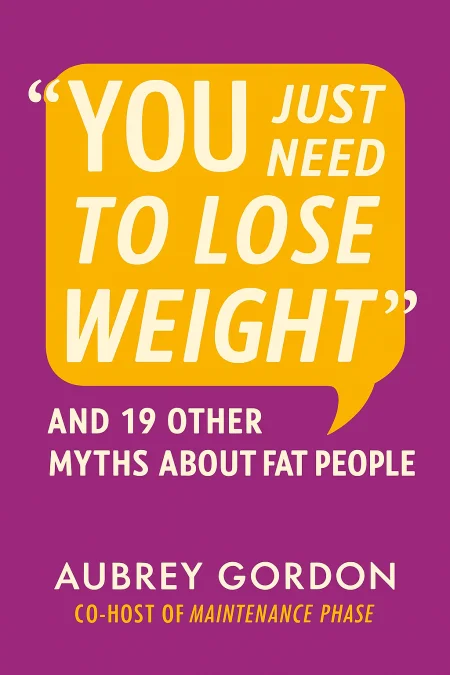
“You Just Need to Lose Weight”
And 19 Other Myths About Fat People
Book Edition Details
Summary
Challenging the pervasive myths that shroud fatness in a fog of misinformation, Aubrey Gordon wields truth like a beacon in "You Just Need to Lose Weight." Through the deft unraveling of entrenched beliefs—like the simplistic calories-in-calories-out narrative or the flawed gospel of BMI—Gordon invites readers to dismantle the bias that quietly governs societal attitudes toward fat bodies. Drawing from over a decade of activism, she crafts an illuminating guide to equip allies and advocates with the rhetorical ammunition needed to combat discrimination and champion fat justice. This book is not just a call to action; it’s a toolkit for reshaping dialogues and fostering acceptance for all sizes, rooted deeply in the historical and empirical, yet delivered with an engaging clarity that resonates far beyond the page.
Introduction
Contemporary society maintains a complex web of assumptions about body size, weight, and personal responsibility that shapes everything from medical practice to workplace dynamics. These deeply embedded beliefs operate largely unexamined, functioning as common sense despite resting on questionable foundations. The systematic examination of these assumptions reveals not merely individual prejudices, but institutional structures that create material disadvantages for people based on body size. The approach taken here employs rigorous evidence-based analysis to challenge twenty prevalent myths about fatness and fat people. Rather than relying solely on anecdotal experiences or emotional appeals, this investigation draws from peer-reviewed research, historical analysis, and documented institutional practices to demonstrate how anti-fat attitudes operate as a form of systemic discrimination. The methodology combines quantitative data with qualitative research to build a comprehensive case against weight-based marginalization. Through careful examination of each myth's origins, supporting evidence, and real-world impacts, readers can trace how seemingly innocent beliefs translate into concrete harms. This analytical framework allows for understanding how individual attitudes connect to broader patterns of exclusion and how challenging these myths requires both personal reflection and systemic change. The evidence presented here invites readers to reconsider fundamental assumptions about weight, health, morality, and human dignity.
The Personal Responsibility Fallacy: Why Weight Loss Isn't Simply Choice
The notion that body weight represents a straightforward matter of individual choice dominates contemporary discourse about fatness. This framework positions thinness as an achievement of willpower and fatness as evidence of moral failing, creating a simplistic binary that ignores complex biological, environmental, and social factors. Medical research consistently demonstrates that weight regulation involves intricate hormonal systems, genetic predispositions, and metabolic processes that operate largely outside conscious control. Studies of hormones like ghrelin and leptin reveal powerful biological drives that influence hunger and satiety, while research on metabolism shows how the body actively resists sustained weight loss through adaptive mechanisms. The failure rate of intentional weight loss attempts—with studies showing that the vast majority of people regain lost weight within several years—provides empirical evidence against the choice narrative. Environmental and social determinants further complicate the personal responsibility model. Factors including food access, economic resources, neighborhood safety, work schedules, and childhood trauma all influence body weight through pathways that bypass individual decision-making. Epigenetic research suggests that even ancestral experiences of famine or food insecurity can affect metabolic processes across generations, challenging assumptions about personal control over body size. The persistence of the choice myth despite contradicting evidence serves ideological functions beyond accurate understanding. By maintaining individual responsibility as the primary explanatory framework, this belief system allows broader society to avoid examining systemic factors that contribute to weight differences while simultaneously justifying discriminatory treatment of fat people as deserved consequences of poor choices.
Institutional Anti-Fatness: From Healthcare to Employment Discrimination
Anti-fat discrimination operates systematically across major social institutions, creating measurable disadvantages that extend far beyond interpersonal prejudice. Healthcare systems demonstrate particularly stark patterns of bias, with multiple studies documenting that medical providers hold negative attitudes toward fat patients and provide differential treatment based on body size. Research consistently shows that fat patients receive shorter appointment times, less thorough examinations, and are more likely to have symptoms attributed to weight rather than investigated for underlying conditions. This pattern contributes to delayed diagnoses and inadequate treatment, creating genuine health risks that stem from discrimination rather than body size itself. Medical equipment frequently fails to accommodate larger bodies, creating additional barriers to appropriate care. Employment discrimination represents another domain where anti-fat bias operates institutionally. Studies document significant wage gaps between fat and thin workers, with fat employees earning substantially less than their thin counterparts even when controlling for other variables. Hiring studies reveal consistent patterns of discrimination, with employers less likely to hire fat applicants and more likely to perceive them as lacking desirable professional qualities. These effects compound over time, creating cumulative disadvantages in career advancement and economic security. Legal systems offer minimal protection against weight-based discrimination, with only a handful of jurisdictions prohibiting such practices. Courts have generally declined to extend existing civil rights protections to cover weight discrimination, effectively sanctioning institutional anti-fatness. This legal environment enables discriminatory policies and practices to continue without meaningful recourse for those harmed by them.
Deconstructing Body Politics: Fat Acceptance vs. Diet Culture Narratives
The cultural landscape surrounding body size reflects competing ideological frameworks that shape both individual experiences and policy approaches. Diet culture promotes thinness as a moral imperative while marketing perpetual dissatisfaction with current bodies, creating profitable cycles of attempted transformation. This system operates through shame-based messaging that pathologizes fatness while promising redemption through weight loss. Body positivity movements emerged as challenges to these dominant narratives, but have themselves become sites of ideological contestation. Corporate co-optation of body-positive messaging demonstrates how radical critiques can be neutralized through commercial appropriation, with companies using inclusive language while maintaining exclusionary practices. The emphasis on happiness and health as prerequisites for body acceptance replicates hierarchies that marginalize those who cannot or do not conform to these standards. Fat acceptance activism advances more fundamental challenges to weight-based hierarchies by questioning the assumption that thinness represents inherent superiority. This framework centers the experiences and perspectives of fat people rather than treating fatness as a problem requiring solution. However, mainstream adoption of fat acceptance principles remains limited, with most institutions continuing to operate according to anti-fat assumptions. The tension between individual body acceptance and systemic change reflects broader questions about how personal practices relate to political transformation. While developing positive relationships with one's own body represents valuable work, it cannot substitute for challenging the institutional structures that create and maintain weight-based oppression. Effective approaches must address both individual healing and systemic reform.
Beyond Individual Bias: Systemic Oppression and Intersectional Fat Experience
Understanding anti-fatness as a system of oppression requires analysis that extends beyond individual prejudices to examine how weight-based discrimination intersects with other forms of marginalization. Fat people who also experience racism, sexism, classism, ableism, or other forms of systemic oppression face compounded disadvantages that cannot be addressed through interventions focused solely on weight bias. The historical development of anti-fatness reveals deep connections to racist ideologies that associated thinness with whiteness and civilization while coding fatness as primitive and uncontrolled. These associations continue to shape contemporary experiences, with fat people of color facing intensified scrutiny and discrimination. Research on health disparities demonstrates how the intersection of racism and anti-fatness creates particularly severe barriers to quality healthcare and other essential services. Economic dimensions of anti-fatness operate through multiple mechanisms, from employment discrimination to the additional costs fat people face for everything from clothing to airplane seats. These "fat taxes" create cumulative financial burdens that interact with class oppression to limit opportunities and resources. The framing of weight as a matter of personal responsibility obscures how economic inequality shapes access to factors that influence body size. Addressing systemic anti-fatness requires approaches that account for these intersections rather than treating weight bias as an isolated phenomenon. Effective strategies must simultaneously challenge multiple forms of oppression while centering the leadership and perspectives of those most impacted by intersectional discrimination. This analysis reveals anti-fatness as part of broader systems of domination rather than a discrete issue that can be resolved independently.
Summary
The systematic examination of anti-fat myths reveals a comprehensive structure of discrimination that operates through individual attitudes, institutional practices, and cultural narratives to create material disadvantages for fat people. The evidence consistently demonstrates that commonly held beliefs about weight, health, and personal responsibility lack scientific foundation while serving to justify exclusionary treatment. Most significantly, this analysis shows how challenging anti-fatness requires not merely correcting misconceptions, but transforming systems of power that benefit from weight-based hierarchies. This work will resonate with readers seeking rigorous analysis of social justice issues and those committed to evidence-based approaches to understanding oppression and discrimination.
Related Books
Download PDF & EPUB
To save this Black List summary for later, download the free PDF and EPUB. You can print it out, or read offline at your convenience.
By Aubrey Gordon
