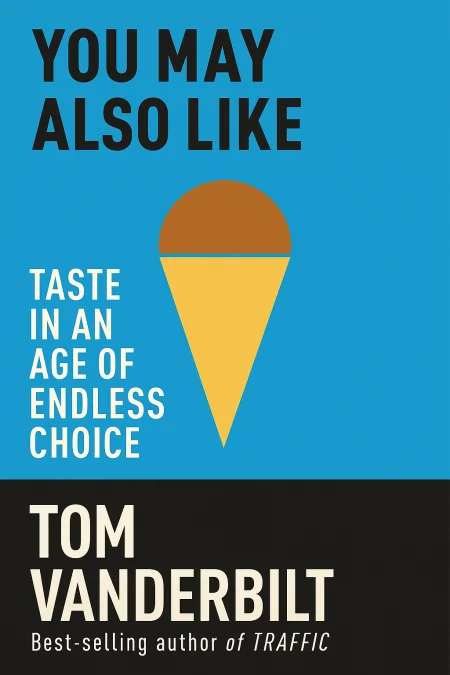
You May Also Like
Taste in An Age of Endless Choice
Book Edition Details
Summary
Ever wondered why certain melodies tug at your heartstrings or why a splash of color feels just right? "You May Also Like" peels back the layers of our whims and fancies, revealing the intricate dance between biology, experience, and culture that shapes our tastes. From the tangled web of flavors to the algorithms behind our latest binge-watch, this book unravels the science of preference with flair and wit. It’s a compelling investigation into the psychology and neuroscience of liking, where every thumbs-up or five-star rating becomes a puzzle piece in the grand tapestry of human desire. Ideal for anyone curious about the quirks of the human mind, this exploration is both a mirror and a map of our ever-evolving tastes.
Introduction
Every morning, you make dozens of choices that feel deeply personal: the music you play while getting ready, the coffee you brew, the clothes you select. These preferences seem to define who you are, creating a unique fingerprint of taste that distinguishes you from everyone else. Yet beneath this sense of individual authenticity lies a fascinating paradox that scientists are only beginning to unravel. Your likes and dislikes, far from being fixed expressions of your true self, are actually dynamic constructions shaped by forces you rarely notice and processes that operate largely outside your conscious awareness. The science of preference reveals that our brains are constantly engaged in a complex dance of evaluation, drawing on everything from evolutionary programming to social cues to construct the feelings we interpret as taste. When you hear a song and instantly know you love it, your brain has already processed dozens of variables in milliseconds, comparing it to past experiences, cultural associations, and even the context in which you're hearing it. The same mechanisms that help you navigate a restaurant menu or choose artwork for your room are working behind the scenes, creating the illusion of spontaneous preference while actually following surprisingly predictable patterns. Understanding these hidden processes doesn't diminish the authenticity of your experiences, but rather illuminates the remarkable sophistication with which your mind creates meaning and pleasure from an overwhelming world of choices. You'll discover how your food preferences began forming before you were born, why expert wine tasters can be fooled by price tags, and how the same piece of art can evoke completely different responses depending on where you encounter it. Most intriguingly, you'll learn that your tastes are far more malleable than you might imagine, offering exciting possibilities for expanding your capacity for enjoyment throughout your life.
How Our Brains Construct Food Preferences and Taste
Your relationship with food begins before your first breath, as flavors from your mother's diet reach you through amniotic fluid, creating the earliest foundation for your taste preferences. You enter the world equipped with just two reliable food judgments: sweet signals safety and energy, while bitter warns of potential toxins. Everything else you learn through a remarkably sophisticated process that transforms random encounters with different foods into the complex web of preferences that guides your eating choices today. The most powerful force shaping your food preferences is surprisingly simple: repeated exposure. Your brain operates on the principle that familiar equals safe, gradually warming to foods you encounter regularly even if you initially disliked them. This explains why children often reject new foods multiple times before accepting them, and why you might eventually develop a taste for coffee, wine, or other acquired flavors that seemed unpleasant at first. The mere exposure effect works so reliably that it can override strong initial negative reactions, transforming foods you once avoided into comfort foods you actively crave. Context plays an equally crucial role in determining how much you enjoy what you eat. The same meal tastes different depending on the lighting, background music, weight of your utensils, and even the color of your plate. Your brain doesn't simply record the chemical signals from your taste buds and smell receptors, it actively constructs your experience of flavor by integrating information from all your senses with your expectations and memories. When you're told a wine is expensive or a dish was prepared by a famous chef, you often experience it as more delicious, not because you're being fooled, but because your brain actually processes the sensory information differently based on what you expect to taste. Perhaps most remarkably, much of what you call taste actually comes from your sense of smell. The five basic tastes detected by your tongue provide only a foundation, while the rich complexity of flavors emerges when aromatic compounds travel from your mouth up through your nasal passages in a process called retronasal olfaction. This explains why food becomes bland when you have a cold and why the same ingredients can create vastly different flavor experiences depending on how they're prepared and presented. Your brain seamlessly weaves together these multiple streams of sensory information to create the unified experience you think of as taste, demonstrating the remarkable creativity involved in even the most basic acts of eating and drinking.
The Social Psychology of Cultural and Musical Choice
Music serves as one of the most powerful identity markers in human culture, functioning as an invisible badge that signals who you are and which social groups you belong to. Your musical preferences form during a critical window in late adolescence and early adulthood, when you have maximum cognitive resources to devote to discovering new sounds and when musical identity carries the highest social stakes. This isn't merely nostalgia at work, but rather reflects a time when your brain was optimally configured for processing and encoding new musical experiences that would become lasting parts of your identity. The digital revolution has created both unprecedented access to music and new challenges in navigating infinite choice. Streaming algorithms reveal just how predictable your musical tastes actually are, clustering listeners into "taste neighborhoods" that can be mapped with mathematical precision. People who enjoy certain genres, artists, or even specific songs tend to share remarkably similar preferences across their entire musical landscape. These patterns are so reliable that knowing your musical preferences allows surprisingly accurate predictions about your political views, personality traits, and consumer behavior in completely unrelated domains. Cultural omnivorousness has emerged as a new form of social capital, where having diverse tastes across multiple genres signals sophistication and cultural flexibility. However, even the most eclectic listeners maintain careful boundaries, typically avoiding genres associated with different social classes or educational levels. This suggests that musical taste continues to function as a form of social distinction, just with more complex and subtle hierarchies than previous generations. Your playlist becomes a carefully curated representation of how you want to be perceived, balancing authentic enjoyment with social signaling in ways you might not consciously recognize. The fundamental mechanism driving musical preference remains exposure, but the delivery systems have become far more sophisticated. Radio's power came partly from its lack of a skip button, forcing listeners to hear songs multiple times until familiarity bred liking. Modern streaming services must balance discovery with comfort, introducing new music gradually while respecting the human tendency to prefer the familiar. The challenge lies in expanding musical horizons without triggering the rejection response that comes from too much novelty too quickly, creating algorithms that can successfully predict not just what you like now, but what you might learn to like with the right amount of gentle exposure.
Neuroscience of Art Appreciation and Aesthetic Response
When you encounter a work of art, your brain makes split-second judgments about whether you like it, often before you consciously recognize what you're looking at. This rapid aesthetic response occurs within milliseconds, faster than rational thought, suggesting that your emotional reactions to art precede and powerfully influence your cognitive understanding. These immediate feelings can be surprisingly persistent, creating first impressions that are difficult to overcome even when you later receive information that should change your evaluation. The way you look at art reveals the active, constructive nature of visual perception. Your eyes don't passively record information like a camera, instead, they actively search for meaningful patterns based on your past experiences and cultural knowledge. Expert viewers literally see different things than novices when looking at the same artwork, their trained gaze patterns revealing attention to specific details and relationships that untrained eyes miss entirely. This explains why art education can genuinely enhance appreciation rather than simply providing intellectual context, it actually changes the fundamental process of visual perception. Context profoundly shapes aesthetic experience in ways you rarely recognize. The same artwork can evoke completely different responses depending on where you encounter it, what you know about its history, and how it's presented to you. Museum settings prime you to look for artistic meaning and cultural significance, while the same image encountered online might be dismissed as mere decoration. Labels and descriptions don't just inform your understanding, they actually alter your neural responses, demonstrating that knowledge and emotion in aesthetic experience are inseparably intertwined rather than separate processes. Neuroscience research suggests that your brain may be evolutionarily wired to respond to certain visual patterns and mathematical relationships, from the golden ratio found in classical architecture to the fractal patterns hidden in Jackson Pollock's seemingly chaotic paintings. However, the most compelling art often succeeds by violating these innate preferences rather than conforming to them. Artists seem to intuitively understand that capturing sustained attention requires a delicate balance between familiarity and surprise, comfort and challenge. This productive tension between what your brain expects and what artists actually provide may be fundamental to powerful aesthetic experiences, creating the memorable discomfort that makes art stick in your mind long after you've left the gallery.
Expert Judgment and the Malleable Nature of Quality
The world of professional evaluation reveals both the remarkable capabilities and surprising limitations of human judgment. Wine critics, art judges, and restaurant reviewers develop genuine expertise through thousands of hours of focused attention and systematic training, learning to identify subtle qualities that escape amateur notice. However, their supposedly objective assessments remain surprisingly vulnerable to contextual influences and unconscious biases that can dramatically alter their evaluations of identical products. Expert tasters don't necessarily possess superior biological sensitivity compared to average people, but they've trained themselves to notice and articulate specific characteristics using specialized vocabularies that allow precise communication about subjective experiences. A sommelier's expertise lies not in having a more sensitive palate, but in having learned what to look for and how to systematically break down complex sensory experiences into component parts. This trained attention allows experts to make finer distinctions and more consistent judgments, but it also creates blind spots where their expectations can override their actual sensory experiences. The standards that experts use to evaluate quality are not fixed or universal truths, but rather culturally constructed frameworks that evolve over time. What was considered excellent wine, music, or art in one era may be dismissed or forgotten in another, not because the objects themselves have changed, but because the criteria for evaluation have shifted along with broader cultural values and aesthetic movements. This historical perspective reveals that even the most sophisticated expert judgment reflects the biases and assumptions of its particular time and place. Perhaps most surprisingly, experts can be influenced by irrelevant information just as much as amateurs, despite their training and experience. Studies consistently show that wine experts rate identical wines differently when they believe one is more expensive, that art judges are influenced by the order in which they view submissions, and that restaurant critics can be swayed by factors completely unrelated to food quality. These findings don't invalidate expert opinion, but they do reveal that all human evaluation, no matter how sophisticated, occurs within the constraints and quirks of human psychology. Understanding these limitations can help you become a more discerning consumer of expert recommendations while developing greater confidence in your own aesthetic judgments and personal preferences.
Summary
The hidden science behind what we like reveals that our preferences, far from being fixed expressions of individual identity, are dynamic constructions shaped by exposure, context, social influence, and neurological processes operating largely beneath conscious awareness, creating experiences that feel deeply personal while following surprisingly predictable patterns. This understanding offers both humility about the objectivity of our own judgments and excitement about the possibilities for growth, suggesting that we can actively cultivate our capacity for enjoyment and expand our aesthetic horizons throughout our lives rather than being prisoners of our initial reactions. How might this knowledge change your approach to unfamiliar foods, challenging artworks, or music outside your usual preferences, and what new sources of pleasure might you discover by consciously experimenting with the malleable nature of your own taste? For readers fascinated by the intersection of psychology, neuroscience, and culture, this exploration offers both practical insights for enriching daily experiences and a deeper appreciation for the remarkable sophistication with which our minds create meaning and beauty from the overwhelming complexity of the world around us.
Related Books
Download PDF & EPUB
To save this Black List summary for later, download the free PDF and EPUB. You can print it out, or read offline at your convenience.
By Tom Vanderbilt
