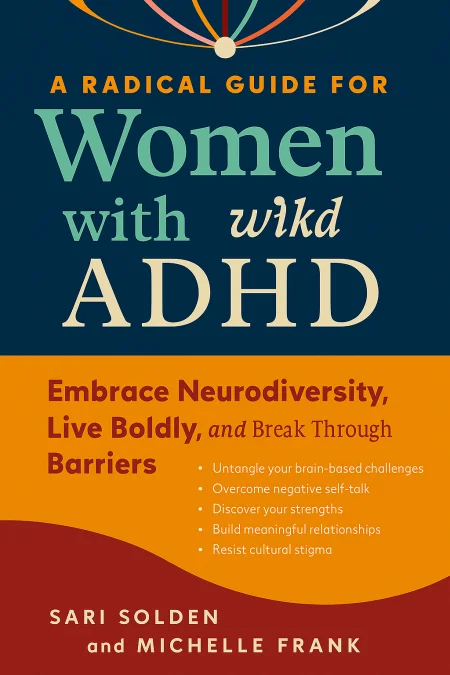
A Radical Guide for Women with ADHD
Embrace Neurodiversity, Live Boldy, and Break Through Barriers
bySari Solden, Michelle Frank, Ellen B. Littman
Book Edition Details
Summary
Whispers of the world often tell women with ADHD that they are too different, too much, too scattered. Yet, here lies a transformative guide that flips that script, celebrating the vibrant tapestry of neurodiversity. "A Radical Guide for Women with ADHD" is not just a workbook—it's a manifesto for self-acceptance and empowerment. Blending traditional therapies with modern insights like acceptance and commitment therapy, it offers women a fresh lens to view their minds as a source of strength rather than shame. Navigate life with newfound clarity and confidence as this guide helps dismantle the toxic narratives that have lingered too long. Discover tools that address self-esteem, relationships, and personal growth, allowing every woman with ADHD to not only survive but thrive—embracing her unique path with bold authenticity.
Introduction
Sarah sat in her car after another failed job interview, her hands trembling as she replayed the moment when her mind went blank. The interviewer had asked a simple question about her organizational skills, and instead of answering confidently, she'd stumbled through an explanation that revealed more about her struggles than her strengths. At thirty-two, she felt like she was still pretending to be someone she wasn't, constantly exhausted from the performance of appearing "normal" while her ADHD brain worked entirely differently. This moment of raw vulnerability represents the crossroads where countless women with ADHD find themselves. They've spent years receiving messages that their differences make them less capable, less worthy, less deserving of the life they dream of living. The shame becomes so deeply internalized that they begin to see their unique neural wiring not as a different way of experiencing the world, but as a fundamental flaw that must be hidden at all costs. Yet within this struggle lies an extraordinary opportunity for transformation. When women with ADHD stop trying to fix themselves and start embracing their authentic nature, something remarkable happens. They discover that their perceived weaknesses often mask incredible strengths, that their need for accommodation doesn't diminish their worth, and that their different way of thinking can be a source of creativity and innovation rather than shame. The journey from hiding to authenticity requires courage, compassion, and a willingness to challenge long-held beliefs about what it means to be successful as a woman in today's world. It demands that we separate our core identity from our brain-based challenges, recognize the difference between accommodation and weakness, and learn to advocate for our needs without apology. Most importantly, it invites us to see our ADHD not as something to overcome, but as an integral part of who we are that deserves respect and understanding.
Breaking Free: From Hiding Behind Masks to Finding Your Voice
Michelle discovered her ADHD at twenty-seven, but the revelation brought more questions than answers. For years, she'd been the master of compensation, arriving early to meetings so no one would notice her chronic lateness, keeping her apartment spotless when guests visited while living in chaos the rest of the time, and carefully scripting conversations to avoid revealing how often her mind wandered during important discussions. She thought receiving a diagnosis would bring relief, but instead, it intensified her fear of being discovered as somehow fundamentally broken. The turning point came during a work presentation when Michelle forgot her carefully rehearsed points and began speaking spontaneously about her genuine passion for the project. Her colleagues responded with enthusiasm she'd never experienced before, asking thoughtful questions and building on her ideas. For the first time, she realized that her authentic self, complete with tangential thinking and bursts of creative insight, was far more compelling than the carefully constructed mask she'd been wearing. This experience illuminated a profound truth that many women with ADHD struggle to accept. The very traits that cause us the most shame in traditional settings can become our greatest strengths when we stop apologizing for them and start honoring them. The key isn't learning to hide our differences more effectively, but discovering environments and relationships where our unique perspectives are valued and celebrated. When we stop spending so much energy on maintaining a facade, we free up tremendous resources for pursuing our authentic goals and dreams. The journey from hiding to authenticity requires us to examine the messages we've internalized about difference and challenge the belief that accommodation equals weakness. It asks us to consider that our struggles with traditional systems might say more about the limitations of those systems than about our own capabilities. Most importantly, it invites us to see our ADHD not as a deficit to be managed, but as a different way of experiencing and contributing to the world that deserves respect and space to flourish.
Seeing Yourself Whole: Beyond ADHD Labels to Authentic Identity
Laura's story began with a familiar pattern of self-criticism that had followed her since childhood. Every forgotten appointment became evidence that she was irresponsible, every messy desk proof that she was lazy, every impulsive decision confirmation that she lacked self-control. Her ADHD diagnosis at forty provided an explanation for these struggles, but it also created a new trap. Instead of seeing herself as a complex human being who happened to have executive function challenges, she began to view herself primarily through the lens of her diagnosis. The shift came when Laura started working with a therapist who asked her to describe herself without mentioning ADHD. The exercise initially frustrated her because the diagnosis had become so central to her identity. But as she reflected on her relationships, values, and experiences, a fuller picture emerged. She was someone who cared deeply about justice, who had an unusual ability to see connections others missed, who brought warmth and creativity to everything she touched. Her ADHD was part of her story, but it wasn't the whole story. This realization transformed Laura's relationship with her challenges. When she forgot someone's name, instead of spiraling into shame about her "broken" brain, she could acknowledge the memory slip as one aspect of her neurodivergence while holding onto her knowledge that she was also someone who remembered the emotional details of conversations long after others had forgotten them. When she struggled with organization, she could seek practical support without losing sight of her ability to think innovatively and see possibilities others missed. The path to wholeness requires us to develop what psychologists call integration, the ability to hold multiple aspects of ourselves simultaneously without letting any single trait define our entire identity. This means acknowledging our ADHD-related challenges while also claiming our strengths, recognizing our need for support while celebrating our capabilities, and understanding our differences while maintaining our sense of fundamental worth and belonging in the world.
Taking Center Stage: Building Confidence Through Mindful Action
Jennifer had always been the accommodating one, the person who adjusted her needs to fit everyone else's preferences. When friends made plans, she went along even when the chosen activity overwhelmed her sensory processing. When colleagues needed someone to take on extra work, she volunteered even when her plate was already full. She believed that by being low-maintenance and agreeable, she could earn acceptance despite her ADHD challenges. The pattern shifted when Jennifer was invited to speak about her expertise at a professional conference. Her initial impulse was to decline, terrified that her tendency to speak in spirals rather than straight lines would embarrass her. But encouragement from a mentor helped her recognize that her non-linear thinking often led to insights others missed. She decided to prepare by practicing mindful authenticity, checking in with herself throughout the preparation process to ensure she was honoring her true voice rather than trying to imitate what she thought others expected. The presentation was transformative, not because it was perfect, but because it was genuinely her. When she lost her train of thought halfway through, instead of panicking, she acknowledged the moment with humor and invited questions from the audience. The interaction that followed was more engaging than any scripted presentation could have been. People approached her afterward not despite her ADHD-related quirks, but because her authenticity had given them permission to be more genuine themselves. This experience taught Jennifer that taking center stage doesn't mean becoming someone different; it means becoming more fully ourselves. It requires developing what researchers call mindful authenticity, the practice of regularly checking in with our internal experience and making choices that align with our true values and needs rather than our fears and assumptions about what others expect. When we approach challenges from this centered place, we discover reserves of strength and creativity we never knew we possessed, and we give others the gift of experiencing us as we really are rather than as we think we should be.
Creating Your Path: Integrating Support Systems with Personal Values
Rosa's breakthrough came when she stopped trying to manage her ADHD like everyone else and started designing a support system that honored her unique wiring. For years, she'd attempted to use the same productivity tools and organizational systems that worked for her neurotypical friends, becoming increasingly frustrated when these approaches consistently failed her. She began to believe that her inability to maintain traditional systems was evidence of her fundamental inadequacy as an adult. The shift began when Rosa worked with an ADHD coach who helped her identify her natural rhythms and preferences rather than trying to force her into predetermined structures. Together, they discovered that Rosa did her best creative work in short, intense bursts rather than during long, sustained periods. They found that she thrived with body doubling, working alongside others even when they weren't collaborating directly, and that visual reminders were far more effective for her than written lists she inevitably lost or forgot to check. More importantly, Rosa learned to integrate her support needs with her personal values and life goals. Instead of seeing accommodation as weakness, she began to understand that creating ADHD-friendly systems was an act of self-respect and self-advocacy. When she needed to hire a bookkeeper to help with financial organization, she framed it not as evidence of her inability to adult properly, but as a wise investment in her mental health and creative capacity. When she asked friends for body doubling sessions, she presented it as a mutual support opportunity rather than a one-sided favor. This transformation illuminated a crucial truth about thriving with ADHD as an adult. Success doesn't come from learning to think and work like neurotypical people, but from developing systems and relationships that honor our unique needs while supporting our authentic goals. It requires us to see accommodation not as a sign of failure, but as a practical strategy for directing our energy toward what matters most. When we stop fighting our brains and start working with them, we discover that our differences can become sources of strength, creativity, and connection rather than shame and limitation.
Summary
The journey from ADHD shame to bold authenticity reveals a fundamental truth that extends far beyond neurodivergence. When we stop trying to fix what we perceive as broken and start honoring what makes us uniquely ourselves, we unlock possibilities we never knew existed. The women whose stories illuminate this path teach us that authenticity isn't about becoming perfect; it's about becoming whole, integrating all aspects of ourselves into a coherent identity that deserves respect and space in the world. The transformation requires tremendous courage because it asks us to release strategies that once felt protective, even when they were ultimately limiting. It demands that we examine long-held beliefs about worth, capability, and belonging, challenging messages we may have internalized since childhood about what it means to be successful as a woman. Most importantly, it invites us to see our struggles not as evidence of personal failure, but as invitations to create more inclusive, accommodating, and ultimately more human ways of living and working together. The path forward isn't about overcoming ADHD but about integrating it into a life that honors both our challenges and our strengths, our need for support and our capacity to contribute. When we approach our differences with curiosity rather than judgment, accommodation rather than resignation, and authenticity rather than performance, we discover that our unique perspectives and experiences have value not despite our ADHD, but because of the different lens through which it allows us to see the world. This shift from shame to celebration becomes not just a personal healing journey, but a contribution to a more diverse and accepting world for everyone.
Related Books
Download PDF & EPUB
To save this Black List summary for later, download the free PDF and EPUB. You can print it out, or read offline at your convenience.
By Sari Solden
