
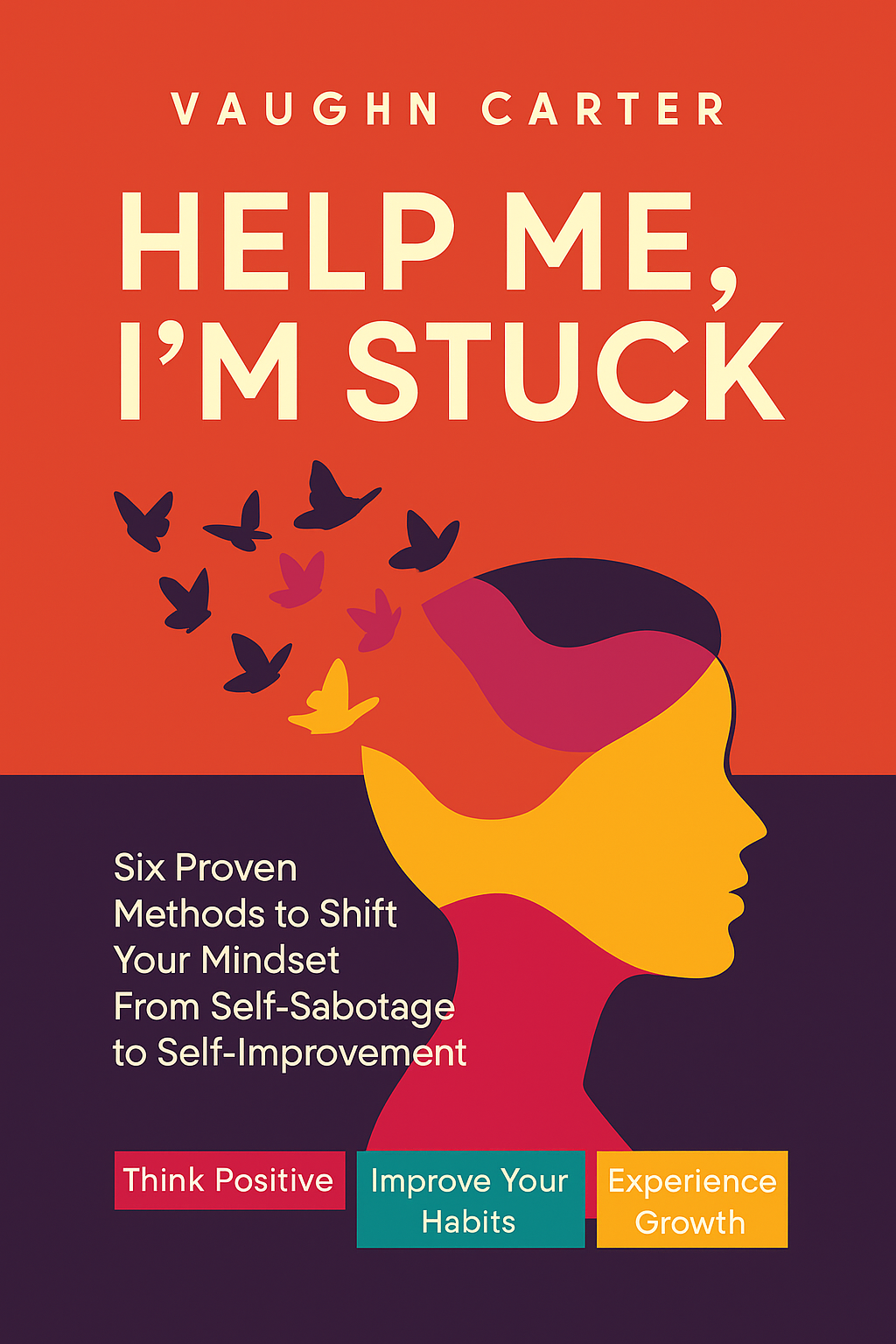
Help Me, I'm Stuck
Six Proven Methods to Shift Your Mindset From Self-Sabotage to Self-Improvement
Book Edition Details
Summary
Ever feel like you're trudging through a mental quagmire, bogged down by the relentless chatter of self-doubt? "Help Me, I’m Stuck" is your lifeline, offering a vibrant roadmap to escape the quicksand of negative self-talk and emerge into the sunlight of self-assured living. With six transformative strategies at its heart, this guide isn't just about thinking differently—it's about revolutionizing your entire approach to life. From harnessing the uplifting power of gratitude to the nourishing impact of mindful eating, each page is a step towards silencing the inner critic and embracing a mindset teeming with empathy and positivity. By addressing the mental, emotional, and even nutritional dimensions of your well-being, this book empowers you to break free from the cycle of self-sabotage and unlock a version of yourself brimming with potential and purpose. Are you ready to cast off the chains of self-imposed limitations and stride confidently into a future you control?
Introduction
Have you ever found yourself standing at the crossroads of change, knowing exactly what you need to do but feeling completely paralyzed by invisible forces holding you back? You're not alone in this struggle. Countless individuals find themselves trapped in cycles of self-defeating behaviors, watching their dreams slip away while feeling powerless to break free from patterns that no longer serve them. The journey from self-sabotage to self-improvement isn't just about willpower or positive thinking—it's about understanding the fundamental mechanisms that keep us stuck and learning proven methods to rewire our responses to life's challenges. Whether you're battling negative thought patterns, struggling with emotional eating, or simply feeling like you're running on autopilot through your days, transformation is not only possible but inevitable when you apply the right strategies consistently. Your circumstances don't define you, but your response to them shapes everything. The power to shift from self-defeating patterns to self-empowering choices lies within your reach, waiting to be activated through practical, scientifically-backed approaches that have helped countless others break free from their limitations.
Focus Your Mind and Leave Stuck Behind
Being stuck isn't a permanent condition—it's a mental state that occurs when we allow our circumstances to control our thoughts rather than the other way around. Like Ann and Beth stranded on identical desert islands, our response to challenging situations determines our outcomes far more than the situations themselves ever could. Ann, overwhelmed by her circumstances, curled into a ball under a palm tree, consumed by thoughts of death and despair. She saw only obstacles: undrinkable seawater, no visible food, painful sunburn, and inevitable doom. Her mind created a prison from which she saw no escape, and her thoughts became her reality. Meanwhile, Beth faced identical conditions but chose a completely different mental approach. She looked for signs of life, reasoned that lush vegetation meant fresh water existed somewhere, and immediately began planning her survival strategy. The difference wasn't their circumstances—it was their focus. Beth understood that circumstances have no inherent meaning unless we give them power over our thoughts and actions. She refused to let fear dictate her response and instead channeled her mental energy toward solutions and possibilities. This fundamental shift in perspective literally meant the difference between life and death. To break free from feeling stuck, start by examining your thought patterns throughout each day. Notice when you're giving your circumstances power over your emotions and consciously redirect your focus toward what you can control. Write down situations that typically trigger negative responses, then practice reframing them from positions of possibility rather than limitation. Remember, you have complete authority over how you interpret and respond to any situation life presents.
Harness the Power of Positive Thinking
Positive thinking isn't about denying reality or forcing fake smiles—it's about rewiring your brain's default patterns to notice opportunities rather than obstacles. Dr. Rick Hanson's research reveals that negative experiences stick to our brains like Velcro while positive ones slide away like Teflon, which explains why pessimistic thinking feels so natural and requires intentional effort to overcome. Barbara Corcoran exemplifies the transformative power of deliberately shifting thought patterns. After her boyfriend predicted she'd never succeed without him, Corcoran could have accepted this limiting belief and remained trapped by someone else's opinion of her capabilities. Instead, she made a conscious decision to prove him wrong, spending the next two decades building her real estate empire worth millions. When public speaking humiliated her in front of 300 bankers, she again faced a choice between accepting defeat or reframing the experience as a learning opportunity. Rather than viewing these setbacks as evidence of her limitations, Corcoran deliberately chose to see them as stepping stones toward growth. She understood that our brains create neural pathways based on our most frequent thought patterns, so she consistently fed her mind with empowering interpretations of challenging events. This wasn't wishful thinking—it was strategic mental conditioning that literally rewired her brain for success. Begin each day by analyzing your thought patterns from the previous day, identifying negative interpretations and consciously reframing them into positive possibilities. Spend at least twenty minutes daily engaging with genuinely uplifting content—whether watching beautiful nature scenes, listening to inspiring stories, or savoring positive experiences—to strengthen your brain's positive neural pathways. Practice self-compassion when mistakes occur, treating yourself with the same kindness you'd offer a dear friend facing similar challenges.
Eliminate Negative Thoughts and Build Resilience
Negative thought patterns don't disappear overnight, but they can be systematically dismantled through specific techniques that interrupt rumination cycles and redirect mental energy toward productive outcomes. Rumination—the habit of endlessly rehashing problems—creates what psychologist Guy Winch calls "a needle stuck in a groove," where repetitive thinking actually magnifies problems rather than solving them. When Robin stayed with her depressed friend Amy for three months, she witnessed firsthand how prolonged exposure to negative thinking patterns can literally affect physical health. Despite Robin's best efforts to encourage Amy toward professional help, Amy's constant negativity about wanting to "end it all" created an environment so toxic that Robin developed asthma, required antidepressants, and experienced anxiety attacks. Only when Robin removed herself from this negative environment did her symptoms disappear completely. This powerful example demonstrates that negative thoughts don't just affect mood—they create measurable physiological changes in our bodies. Robin's experience proves that we can reverse damage caused by negative thinking patterns, but it requires decisive action and consistent application of healthy mental practices. She used daily walks, journaling, and strategic isolation from Amy's negativity to protect her mental health. Combat negative thoughts by immediately redirecting your attention when rumination begins—visualize organizing books on a shelf or items in a grocery store for thirty to sixty seconds each time unwanted thoughts arise. Write down persistent negative thoughts on paper, then physically throw them away, as research shows this action literally reduces their psychological impact. Practice mindfulness by regularly checking in with yourself throughout the day, asking "How can I nourish myself in the next hour?" then immediately taking that action rather than postponing self-care indefinitely.
Develop Empathy to Connect and Grow
Empathy—the ability to genuinely understand and share others' feelings—serves as both a pathway out of self-absorption and a bridge toward meaningful connections that support personal growth. Highly empathetic people naturally focus outward rather than remaining trapped in cycles of self-criticism, which makes empathy a powerful tool for breaking free from stuck patterns. Claiborne Paul Ellis exemplifies empathy's transformative power. As a Ku Klux Klan member, Ellis blamed African Americans for his struggles until he was forced to work closely with Ann Atwater, a black activist he initially despised. During ten days of community meetings, Ellis discovered that Atwater faced identical poverty challenges, shattering his prejudiced assumptions. This encounter with genuine empathy literally changed his identity—he publicly tore up his Klan membership card in front of a thousand people and spent the rest of his life organizing predominantly African American labor unions. Ellis's dramatic transformation demonstrates that empathy doesn't just improve relationships—it fundamentally rewires our understanding of ourselves and others. When we truly listen to someone else's struggles and recognize shared human experiences, we often gain fresh perspectives on our own challenges. Empathy pulls us out of self-focused thinking patterns and creates space for growth through connection. Develop empathy through active listening—maintain eye contact, ask genuine questions, and resist the urge to formulate responses while others are speaking. Cultivate curiosity about strangers by respectfully inquiring about their experiences and stories, expanding your worldview beyond familiar social circles. Challenge your assumptions about different groups of people by seeking direct conversations that reveal shared struggles and common ground. Remember to extend the same compassion toward yourself that you naturally offer others, creating balance between caring for others and maintaining your own emotional well-being.
Summary
The journey from self-sabotage to self-improvement requires recognizing that you have complete authority over your thoughts, responses, and daily choices, regardless of external circumstances. As this transformation unfolds, you'll discover that "change happens in increments but incremental changes over time add up to monumental life changes," proving that small, consistent actions create lasting transformation. Your path forward begins with a single decision to focus on what you can control rather than what controls you. Start today by choosing one small habit—whether it's reframing a negative thought, taking a five-minute walk, or practicing genuine curiosity about someone else's experience—and commit to that tiny change for the next week. Your future self is waiting on the other side of this decision, ready to celebrate the courage you're showing right now.
Related Books
Download PDF & EPUB
To save this Black List summary for later, download the free PDF and EPUB. You can print it out, or read offline at your convenience.
By Vaughn Carter
