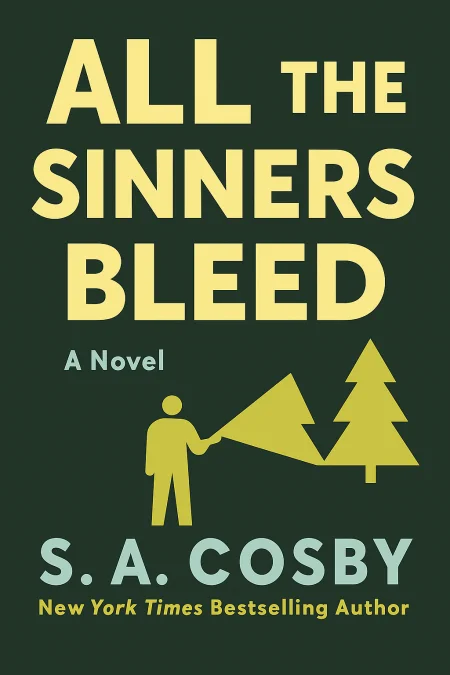
All the Sinners Bleed
A Novel
Book Edition Details
Summary
In the sultry heart of Charon County, where the air is thick with secrets and Southern tradition, Titus Crown returns with a badge and a mission. As the first Black sheriff, his path is riddled with challenges—combating ingrained prejudice and a corrupt system. When his deputies fatally shoot a young Black man, Titus is propelled into a labyrinth of buried truths and chilling revelations. What he uncovers is a silent specter—a serial killer lurking amidst the familiar faces of his hometown. Navigating racial tensions and his own moral compass, Titus stands at the crossroads of justice and survival, determined to protect his community from darkness without becoming lost in its shadows.
Introduction
What happens when the very people we trust most become the source of our deepest wounds? When teachers who shape young minds, neighbors who wave from their porches, and community leaders who speak at town halls harbor unthinkable darkness behind their carefully crafted facades? In small towns across America, where everyone knows everyone and reputations are built over decades, the revelation that evil has been hiding in plain sight can shatter not just individual lives but the very foundation of community trust. This gripping narrative follows a Black sheriff navigating the treacherous waters of justice in a Virginia county where a school shooting unravels into something far more sinister than anyone could have imagined. As he peels back layers of respectability and corruption, readers witness how true leadership emerges in moments of crisis, demanding choices between comfortable lies and uncomfortable truths. Through his investigation into systematic abuse and murder, we discover how historical trauma manifests in contemporary violence, how institutional failures create perfect storms of evil, and how communities can begin to heal even from their darkest wounds. The story reveals that justice isn't just about catching criminals but about having the courage to confront the systems that create them, the wisdom to recognize that redemption requires sacrifice, and the understanding that sometimes the greatest act of leadership is knowing when to step aside so others can carry the work forward.
The School Shooting That Shattered All Assumptions
The morning started like any other in Charon County until Sheriff Titus Crown's radio crackled with the words every law enforcement officer dreads: "Active shooter at Jefferson Davis High School." Racing through familiar streets with sirens wailing, Crown arrived to find chaos unfolding as students and teachers poured from every exit of the brick building, their faces etched with terror that would haunt them for years to come. In those first frantic moments, as parents screamed for their children and deputies secured the perimeter, Crown had no idea that this tragedy would expose a web of evil that had been operating in his community for years. When Latrell Macdonald emerged from the school carrying a rifle and wearing a leather wolf mask, Crown attempted to talk him down. The young man's words were cryptic and disturbing, speaking of a "Black Angel" and referencing Mr. Spearman, the beloved teacher who lay dead inside the building. Despite Crown's desperate efforts to de-escalate the situation, Latrell charged at the officers, leading to his death in a hail of gunfire. What appeared to be a tragic but straightforward case of a mentally ill student killing a respected educator would soon reveal layers of horror that no one in the small Virginia county could have imagined. The investigation took a devastating turn when Crown examined the contents of teacher Jeff Spearman's hidden possessions. Beneath the facade of the county's favorite educator, a man who had won Teacher of the Year awards and coached championship debate teams, were images and videos documenting years of systematic torture and murder of children. Spearman, along with Latrell and mysterious accomplices who wore wolf masks, had been operating a killing ring that claimed at least seven young lives. The discovery shattered Crown's understanding of his community and forced him to confront the reality that evil often wears the most trusted faces. This revelation teaches us that our assumptions about people, especially those in positions of authority and trust, can be dangerously naive. The most effective predators are often those who cultivate public personas of respectability and care, using their reputations as shields for their crimes. When investigating any serious allegation or suspicious behavior, we must be willing to look beyond surface appearances and social standing to uncover the truth, no matter how uncomfortable it makes us feel. The tragedy reminds us that vigilance and skepticism, even toward those we admire, are essential tools for protecting the vulnerable.
Uncovering Horror Beneath Respectability's Mask
Following clues from Spearman's hidden possessions, Crown and his team made their way to an isolated clearing where a majestic weeping willow stood like a sentinel in the dense Virginia forest. Crown remembered the tree from childhood hunting trips with his father, its unusual presence making it a landmark that had guided generations of local hunters. What they discovered beneath its ancient, gnarled roots would forever change how the community viewed their quiet corner of America and force them to confront the systematic failures that had allowed evil to flourish unchecked. As the excavation began under the watchful eyes of the medical examiner, the first small skull emerged from the earth, wrapped in the invasive roots of the willow tree like a macabre embrace. One by one, seven graves revealed their secrets, each containing the remains of Black teenagers who had been reported missing over the years but whose disappearances had generated little media attention or intensive investigation. The bodies bore evidence of prolonged torture, with biblical phrases carved into their skin, transforming their final resting place into a grotesque monument to hatred disguised as religious devotion. The discovery of these graves forced Crown to confront not only the immediate horror of the crimes but also the systemic failures that had allowed them to continue undetected for years. The victims were primarily young people of color whose disappearances hadn't triggered the same level of urgency or resources that missing white children might have received. The killers had counted on this disparity, exploiting societal blind spots and prejudices to continue their reign of terror while hiding behind masks of respectability, religious devotion, and community service. This tragic revelation underscores the critical importance of treating every missing person case with equal urgency and resources, regardless of the victim's race, social status, or background. It reminds us that predators often exploit society's prejudices and institutional blind spots to continue their crimes, understanding that certain victims are less likely to be missed or searched for with the same intensity. When we fail to protect the most vulnerable members of our communities, we create environments where evil can flourish unchecked, hidden beneath the veneer of normalcy and respectability that small towns cherish.
The Personal Cost of Pursuing Uncomfortable Truths
As the investigation deepened and the scope of the crimes became clear, Crown found himself caught between his duty as a law enforcement officer and the mounting personal cost of pursuing justice in a community resistant to change. The revelation that one of his own deputies, Tom Sadler, had been taking bribes from local drug dealers in exchange for information about upcoming raids added another devastating layer of betrayal to an already complex case. Standing in Sadler's modest home, watching this broken man try to justify his corruption with stories of medical bills and college tuition, Crown saw the human face of institutional failure and the way good people can be corrupted by desperation and weak leadership. The pressure mounted from all sides as Crown faced criticism from both the Black community, who questioned whether he had truly changed anything by becoming sheriff, and white power structures who saw his investigation as an attack on their version of order and stability. Board Chairman Scott Cunningham threatened political retaliation, warning that Crown's job depended on maintaining the peace rather than stirring up trouble with uncomfortable investigations. Meanwhile, community leaders accused him of betraying the very people who had elected him, suggesting that his pursuit of justice was somehow disloyal to the badge he wore. The case ultimately required Crown to risk not only his career but his relationships and his place in the community he had sworn to protect. His decision to pursue the investigation despite political pressure and personal cost demonstrated that real justice often demands sacrifice from those who seek it. When another victim, Cole Marshall, was found brutally murdered and displayed in a ritualistic manner clearly meant to taunt law enforcement, Crown realized that the killer was not only still active but was escalating, using the investigation itself as fuel for further violence. This chapter of Crown's journey illustrates that meaningful change often requires individuals to risk their personal comfort and security for the greater good. True leadership means being willing to stand alone when necessary, to pursue truth even when it's politically inconvenient or personally costly. The pursuit of justice is rarely a popular path, especially when it threatens established power structures and comfortable assumptions about community safety, but it's the only one that leads to genuine healing and progress for communities wounded by corruption and systemic evil.
Breaking Cycles: From Darkness to Redemption
In the final confrontation with the killer in his underground chamber of horrors, Crown found himself face to face with pure evil incarnate. Gabriel, the mixed-race young man who had been abused by a racist church family and transformed into a monster, represented the ultimate product of systemic hatred, neglect, and institutional failure. As Crown fought for his life and for young Lavon's survival in that bunker filled with torture devices and trophies from murdered children, he understood that this moment was about more than just stopping one killer—it was about breaking a chain of trauma and hatred that had poisoned his community for generations. The battle in that underground chamber was both physical and spiritual, a confrontation with the darkest impulses that humans are capable of harboring. Gabriel had been shaped by the same forces of racism, abuse, and abandonment that had scarred Charon County for decades, his crimes not just individual acts of evil but the inevitable result of a community that had failed its most vulnerable children. As Crown used his brother's knife to end Gabriel's reign of terror, he was literally cutting through the bonds that had held his community captive to its worst impulses and historical traumas. The aftermath brought both relief and profound reckoning for Crown and his community. His decision to leave law enforcement and become a teacher represented his understanding that true change happens not just through enforcement and punishment but through education, healing, and the patient work of building better futures for the next generation. His final symbolic act of helping to pull down the Confederate statue that had dominated the town square wasn't just about removing a monument—it was a declaration that the old order, with all its monuments to hatred and division, would no longer define his community's future or limit its potential for growth and redemption. Redemption isn't about forgetting the past or pretending that evil doesn't exist, but about refusing to let trauma and hatred determine the future. Crown learned that healing communities requires both justice for past wrongs and hope for future possibilities, both accountability for those who have caused harm and opportunities for those who have been harmed to find new paths forward. Sometimes the greatest act of leadership is knowing when to step aside and let others carry the work forward, trusting that the seeds of change you've planted will continue to grow long after you've moved on to new forms of service.
Summary
The key takeaway from this harrowing tale is that justice requires not just the courage to confront evil when it's revealed, but the wisdom to recognize that it often hides behind the most trusted and respected facades in our communities, and the strength to pursue truth even when it threatens everything we thought we knew about the places and people we love. Take responsibility for questioning authority and respectability when something feels wrong, even if you can't immediately articulate why or if others dismiss your concerns. Don't allow social pressure, political considerations, or fear of disrupting the peace to prevent you from investigating serious allegations thoroughly and impartially, remembering that the most vulnerable members of society often bear the brunt of our collective failures to act. When pursuing justice or trying to create meaningful change, be prepared for the personal cost that comes with challenging entrenched power structures and comfortable lies that communities tell themselves about their own virtue. Remember that true healing requires not just stopping immediate harm but addressing the systemic failures and historical traumas that create conditions for evil to flourish, and that sometimes the most important work happens not in dramatic confrontations but in the patient, daily effort of education, relationship-building, and creating new possibilities for those who come after us.
Related Books
Download PDF & EPUB
To save this Black List summary for later, download the free PDF and EPUB. You can print it out, or read offline at your convenience.
By S.A. Cosby
