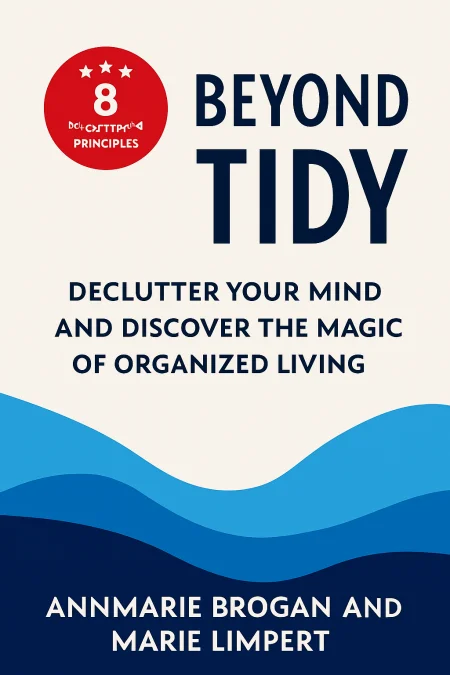
Beyond Tidy
Declutter Your Mind and Discover the Magic of Organized Living
byAnnmarie Brogan, Marie Limpert
Book Edition Details
Summary
In a world overflowing with chaos and clutter, find your sanctuary with "Beyond Tidy." This empowering guide doesn't just stop at organizing your space—it redefines your mindset. Crafted by the visionary minds behind Organize Me! of NY, LLC, this book offers eight transformative principles that transcend mere tidying. It's about cultivating a resilient, growth-oriented mindset that liberates you from the shackles of disorder, impacting every facet of your life. With a compassionate, non-judgmental tone, you'll uncover how organization can enrich relationships, elevate your quality of life, and open doors to new possibilities. Say goodbye to disarray and hello to a home and life that reflect your true self. Rediscover the joy of living in a space that not only feels right but fuels your passions, saves resources, and paves the way for a brighter, clutter-free future.
Introduction
Have you ever felt like you're drowning in your own belongings, surrounded by stuff yet unable to find what you need when you need it? You're not alone in this struggle. Millions of people wake up each day feeling overwhelmed by their physical spaces, constantly searching for lost items, buying duplicates of things they already own, and feeling stressed by the chaos that seems to multiply overnight. The truth is, disorganization affects far more than just how your home looks. It impacts your confidence, your relationships, your finances, and even your ability to show up fully in the world. But here's the empowering reality: organizing isn't about having some magical gene or being naturally neat. It's a learnable skill that can transform not just your space, but your entire life. When you understand the deeper principles behind effective organization, you gain the power to create systems that support your dreams and values. This transformation goes far beyond surface-level tidiness to touch every aspect of how you live, work, and connect with others. The journey begins with hope and the belief that change is possible, one intentional decision at a time.
Create Your Vision and Sort Your Belongings
True organization begins not with buying containers or labels, but with getting crystal clear about what you want your space to become. This foundational principle involves two interconnected elements: establishing a compelling vision for each area of your home and systematically sorting through your belongings to understand what you actually own. Consider the story of a schoolteacher who lived with her young son after a divorce. She called professional organizers because the clutter in her house had spiraled out of control, causing her significant anxiety. During their first session, she revealed that she'd grown up in a family where nothing was ever thrown away. Her parents, having lived through the Great Depression, kept everything from broken appliances to worn clothing, believing that waste was unforgivable. Even after economic hardship ended, this mindset persisted, creating a cluttered and uninviting home throughout her childhood. However, this client held a completely different vision for her space. She believed clutter was a barrier to living a better, easier life and desperately wanted to create a different environment for her son. She couldn't fathom keeping broken items or clothes that no longer fit, and she felt lighter and more in control when donating unused items. Her vision was clear: a home where her child could thrive without the chaos she remembered from her own upbringing. The transformation began when she started sorting through her belongings using the "like with like" principle. Instead of creating one overwhelming pile, she grouped similar items together, creating manageable categories. Kitchen items went with kitchen items, toys with toys, papers with papers. This process revealed shocking truths: she discovered she had six potato peelers scattered across different drawers, enough sticky notes to fill a gallon bag, and countless duplicates of items she thought she'd lost. The sorting process became a powerful reality check that informed every subsequent decision. To implement this principle, start by walking through your space and asking yourself what feelings arise when you enter each room. Write down your vision for how you want the space to function and feel. Then begin the sorting process one category at a time, gathering all similar items from throughout your home. This prevents the overwhelm of facing everything at once while giving you accurate knowledge of your inventory. Remember that the goal isn't perfection but progress, one category at a time. As you sort, resist the urge to make immediate decisions about keeping or discarding items. Simply focus on creating clear groups of similar things. This process alone will shift your perspective and set the foundation for all the organizing decisions that follow. The combination of clear vision and accurate inventory creates the perfect conditions for meaningful transformation.
Give Everything a Home with Clear Associations
The secret to maintaining an organized space lies in a simple but powerful concept: everything deserves a home, and everyone in your household should know exactly where that home is. This principle transforms random searching into purposeful retrieval and eliminates the frustration of constantly misplacing essential items. Marie learned this lesson through her own children's daily struggles. Her kids were organizational superstars at school, efficiently cleaning up after activities and returning materials to designated spots. But at home, they morphed into "bats out of hell," dumping school bags, artwork, and toys throughout the house. The breaking point came with those tiny vending machine prizes from places like Chuck E. Cheese. Though inexpensive, these little toys held enormous emotional value for her children. When they went missing, her kids believed the world was ending, usually right before swim lessons or other activities. The stress of these frantic searches affected the entire family. Marie would become frustrated about being late for expensive lessons, while her children lost enthusiasm for activities they usually enjoyed. The blame game began, voices were raised, and family harmony crumbled over trinkets worth mere pennies. Marie realized she needed to apply the same organizational principles her children's teachers used so successfully at school. She cleaned out two unused junk drawers in their coffee table and assigned one to each child. These became personal spaces for special little toys and trinkets that didn't belong with the "real" toys in the playroom. Each child became responsible and accountable for their specific drawer's contents. The transformation was immediate and remarkable. The kids loved having their own designated space, the coffee table stayed clutter-free, and the stress-inducing searches became extinct. Even in rushed moments, they could quickly grab a toy to bring along, and when something went missing, the responsibility was clearly theirs. To create strong associations in your home, start by identifying frequently lost items and establishing specific homes for them. Make sure these homes are logical, accessible, and communicated to all family members. For example, if batteries always live in the kitchen junk drawer, everyone should know this association. When you need batteries, you go directly to that drawer rather than searching the entire house. This creates an internal GPS system that saves time, energy, and frustration. The key is consistency and clear communication. Hold a family meeting to discuss new associations and explain why these systems will benefit everyone. Post temporary reminders if needed, but focus on building habits through repetition. When every family member understands that the car keys live on the hook by the door and the mail goes in the designated basket, your home runs like a well-oiled machine where everything has its place and everyone knows where that place is.
Manage Your Space and Finish Every Task
The most crucial organizing principle combines two interconnected concepts that separate temporarily organized spaces from permanently transformed homes: managing your space to control your inventory and finishing every task completely. These principles work together to prevent the accumulation of clutter and maintain the systems you've worked hard to create. Space management means your available storage should determine how much you keep, not the other way around. Consider Annmarie's approach to pasta purchases: no matter how incredible the sale, she won't buy more than what fits in her designated pantry space. She won't sacrifice space from other categories or create secondary storage locations that would scatter the same items throughout her home. This conscious boundary prevents overbuying and maintains her organizing systems. A powerful example of space management involved a family playroom serving four young children. The space was decent-sized, but toys covered every surface, making the floor invisible. The children couldn't focus on any single activity because of overwhelming stimulation, and they often migrated their play to other rooms. The real challenge came with the youngest daughter's Barbie collection, which filled three enormous bins. Her mother was certain the four-year-old would never part with any of them. With gentle guidance, the little girl sat beside one empty bin and considered which Barbies were her absolute favorites. The organizer explained they needed to create space for everyone to play comfortably and suggested that other children would love having some Barbies too. The child was asked to keep only what would fit in the single bin with the lid closed. Remarkably, she filled it only three-quarters full, and when told there was room for more, she declared she had everything she needed. The task completion principle proved equally transformative. Every organizing task has a true endpoint that goes beyond the obvious stopping point. Laundry isn't finished when clothes are folded; it's complete when everything is put away in drawers and closets. Bill paying isn't done when payments are made; it's finished when statements are marked "paid" and filed appropriately. This principle prevents the accumulation of "almost organized" piles that eventually become clutter again. To implement these principles, first assess your storage capacity for each category and set firm limits. Create implementation intentions for when you're tempted to exceed these boundaries. For task completion, identify the true endpoint of common activities in your home and commit to reaching that point each time. Use timers if needed, and celebrate the satisfaction of truly finished tasks rather than settling for "good enough" progress that leaves loose ends.
Summary
The journey toward an organized life reveals a profound truth that extends far beyond tidy surfaces and labeled containers. As the authors discovered through their own transformation and years of client work, "Both organization and disorganization influence how we show up in the world." This influence touches every aspect of our lives, from our confidence and relationships to our financial well-being and emotional regulation. When we understand that our physical spaces either support or hinder our deepest aspirations, we gain the power to create environments that nurture our best selves. The path forward requires both hope and action. Start today by choosing one frequently used item in your home and establishing a specific, logical home for it. Commit to returning that item to its designated place every single time you use it for the next two weeks. Notice how this simple act of consistency eliminates searching, reduces stress, and creates a small island of calm in your daily routine. This one success will build your confidence and demonstrate that transformation happens through intentional, repeated actions rather than overwhelming overhauls. Remember that every organized space began with a single decision to create something better, and your journey toward a life you love starts with that next conscious choice.
Related Books
Download PDF & EPUB
To save this Black List summary for later, download the free PDF and EPUB. You can print it out, or read offline at your convenience.
By Annmarie Brogan
