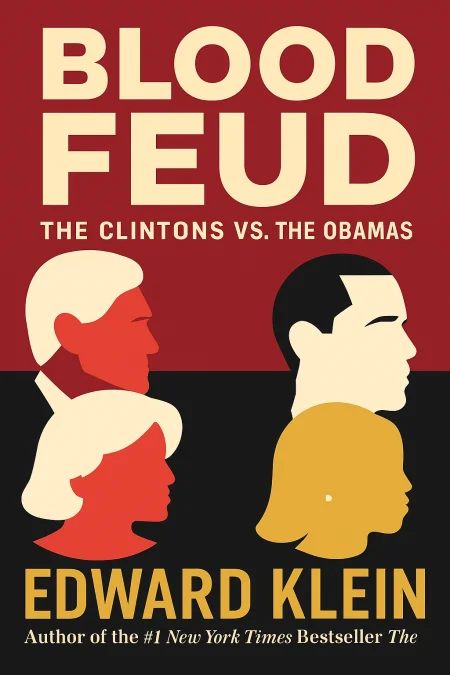
Blood Feud
The Clintons vs. the Obamas
Book Edition Details
Summary
In the shadowy corridors of American power, two dynasties clash with a fury that reshapes the political landscape. "Blood Feud" by Edward Klein exposes the raw, unfiltered hostility between the Obamas and the Clintons, capturing a saga of relentless ambition and simmering resentment. Klein, wielding his unparalleled insider access, uncovers the secret meetings and whispered betrayals that underscore this epic rivalry. With revelations that read like a political thriller, this book peels back the curtain on the profound animosity and strategic maneuvering of two formidable families. For those who crave the adrenaline of real-life drama and the intrigue of political warfare, this exposé is an unmissable journey into the heart of America's most notorious power struggle.
Introduction
In the corridors of American power, few rivalries have been as consequential or as deeply personal as the one that emerged between two of the Democratic Party's most prominent families. This political blood feud would shape not only the fate of individual careers but the very trajectory of American democracy itself. At its heart lies a fundamental question about power, loyalty, and the price of political ambition in modern America. The story reveals how personal animosity between former allies can override party unity and national interest. It exposes the machinery of political dealmaking, where promises are currency and betrayal is commonplace. Most importantly, it demonstrates how the struggle for control of a political party can determine the direction of an entire nation. This book offers readers an unprecedented look into the private calculations, public performances, and behind-the-scenes maneuvering that define contemporary American politics. For anyone seeking to understand how personal relationships drive political outcomes, how power is really exercised in Washington, and why party unity often proves more fragile than it appears, this account provides essential insights. It serves as both a cautionary tale about the dangers of political feuding and a masterclass in the art of political warfare.
The Deal: Political Alliance and Hidden Agendas (2011-2012)
The summer of 2011 found Barack Obama in a precarious position, his approval ratings plummeting and his reelection prospects uncertain. With unemployment stubbornly high and the economy stagnating, the president faced a dilemma that would force him to swallow his pride and reach out to someone he deeply distrusted. The irony was palpable: the man who had built his political career by defeating the Clinton political machine now needed Bill Clinton's help to survive. The origins of this unlikely alliance lay in cold political calculation rather than any genuine reconciliation. David Plouffe, Obama's campaign strategist, recognized that Clinton's popularity among white working-class voters and his reputation for economic competence could provide the boost Obama desperately needed. Meanwhile, Valerie Jarrett, Obama's closest adviser, harbored deep suspicions about Clinton's motives and warned against any meaningful cooperation with the former president. The pivotal moment came during a golf game at Andrews Air Force Base in September 2011, where Obama and Clinton engaged in what amounted to political horse-trading. Clinton arrived with his own agenda: securing Obama's support for Hillary's 2016 presidential ambitions in exchange for his campaign assistance. The conversation was tense, with both men understanding that they were entering into an agreement built on mutual necessity rather than trust. What emerged from their private negotiations was a deal that neither man fully intended to honor. Obama would receive Clinton's formidable campaign skills and popular appeal, while Clinton would gain what he believed was a commitment to support Hillary's future presidential bid. This arrangement would prove to be the foundation of a partnership poisoned by deception from its very inception, setting the stage for the bitter conflicts that would follow.
The Payoff: Convention Success and Rising Tensions (2012-2013)
The 2012 Democratic National Convention in Charlotte marked the public culmination of the Obama-Clinton alliance, yet it also revealed the deep fissures beneath the surface unity. Clinton's nominating speech became a tour de force of political theater, running nearly twice as long as planned and overshadowing Obama's own acceptance speech the following night. In that moment, Clinton demonstrated his unparalleled ability to connect with audiences while simultaneously asserting his dominance over the man who had displaced him as the party's leader. Clinton's performance was masterful political repositioning, transforming Obama from a liberal ideologue into a centrist Democrat in the Clinton mold. He praised policies Obama had never truly embraced and defended compromises Obama had rarely made. The speech was both a gift to Obama's campaign and a subtle assertion of Clinton's own political philosophy as superior to Obama's approach to governance. However, even as Clinton delivered for Obama on the campaign trail, tensions simmered beneath the surface. Clinton's off-message moments, including his praise for Mitt Romney's "sterling business career," revealed his ambivalence about Obama's success. These episodes demonstrated that Clinton's support came with strings attached and could be withdrawn at any moment. The Obama team's response to Clinton's indispensability was telling: they were simultaneously grateful for his help and resentful of their dependence on him. This dynamic would intensify after Obama's reelection victory, as the president began to understand that his debt to Clinton came with expectations he was unwilling to meet. The seeds of future conflict were planted in the very success of their temporary partnership.
The Deception: Benghazi Crisis and Broken Promises (2012-2014)
The Benghazi attack of September 11, 2012, became the crucible that tested the Obama-Clinton alliance and ultimately exposed its fundamental dishonesty. When terrorists struck the American diplomatic facility in Libya, killing Ambassador Christopher Stevens and three other Americans, both Obama and Clinton faced a crisis that threatened their political futures. Obama's reelection hung in the balance, while Hillary's reputation as secretary of state and her future presidential ambitions were at stake. The administration's response revealed the depths of political calculation that drove their partnership. Obama, fearing that acknowledging a terrorist attack would undermine his campaign narrative about defeating al-Qaeda, pressed Hillary to promote the false story about an anti-Islamic video. Hillary, despite her private reservations and Bill Clinton's advice to refuse, ultimately went along with the deception. This moment marked a turning point where both parties compromised their integrity for political survival. Bill Clinton's role during the Benghazi crisis was particularly revealing of the transactional nature of their relationship. While he privately criticized the administration's handling of the situation, he also recognized the political dangers it posed to Hillary's future. His advice to Hillary to take responsibility while distancing herself from Obama's failures showed his strategic thinking about positioning her for 2016. The aftermath of Benghazi became a preview of the coming rupture between the Clintons and Obama. Hillary's explosive Senate testimony, where she demanded "What difference does it make?" became a liability that Bill Clinton knew would haunt her presidential campaign. Obama's attempts to contain the political damage through joint appearances with Hillary only highlighted the artificial nature of their alliance and foreshadowed its eventual collapse.
Blood Feud: Open War for Democratic Party Control (2013-2014)
By 2013, the pretense of Clinton-Obama cooperation had largely collapsed, replaced by open competition for control of the Democratic Party's future. Obama's second-term struggles, from the disastrous Obamacare rollout to his fumbled "red line" in Syria, provided Clinton with opportunities to position himself and Hillary as alternatives to Obama's failed leadership. The former president began systematically poaching Obama's top campaign operatives, building a parallel political infrastructure for Hillary's anticipated 2016 run. The competition between the two camps became intensely personal, with each side viewing the other as an existential threat. Obama, guided by Valerie Jarrett's counsel, refused to endorse Hillary for 2016 and worked to maintain his own political relevance beyond his presidency. Clinton, increasingly frustrated by Obama's intransigence, began publicly criticizing the president's policies and competence, abandoning any pretense of party loyalty. The struggle manifested itself in countless small battles over political resources, endorsements, and party positioning. Clinton's systematic recruitment of Obama's campaign talent sent a clear message that he viewed the president as a lame duck whose political capital was expendable. Obama's resistance to these efforts and his refusal to transfer party infrastructure to Clinton control demonstrated his determination to maintain influence beyond his term. This phase of their relationship revealed the zero-sum nature of political power at the highest levels. Neither man was content to gracefully step aside or share influence with his rival. Clinton's advanced age and health concerns added urgency to his efforts, while Obama's relative youth meant he had decades of potential political activity ahead of him. Their battle became not just about immediate political advantage but about who would define the Democratic Party's legacy for generations to come.
Summary
The Clinton-Obama feud represents more than a personal rivalry between two ambitious politicians; it illuminates the fundamental tensions within American democracy when individual ambition conflicts with institutional stability. Their relationship demonstrates how even shared party affiliation and ideological alignment cannot overcome the corrosive effects of personal mistrust and competing visions of leadership. The consequences extended far beyond their personal careers to affect policy decisions, party unity, and ultimately the capacity of American government to function effectively. The story offers several crucial lessons for understanding contemporary American politics. First, it reveals how transactional relationships built on mutual necessity rather than genuine trust inevitably collapse under pressure. Second, it shows how personal animosities can override collective interests, weakening institutions and democratic norms. Finally, it demonstrates that in the modern political environment, former presidents and other political figures remain active players long after leaving office, creating ongoing competition for influence and resources. For citizens seeking to understand how political power really operates, this rivalry provides a sobering reminder that democratic governance depends not just on formal institutions but on the character and wisdom of those who lead them. The Clinton-Obama blood feud stands as both a cautionary tale about the dangers of political tribalism and a call for leaders who can place national interest above personal ambition.
Related Books
Download PDF & EPUB
To save this Black List summary for later, download the free PDF and EPUB. You can print it out, or read offline at your convenience.
By Edward Klein
