
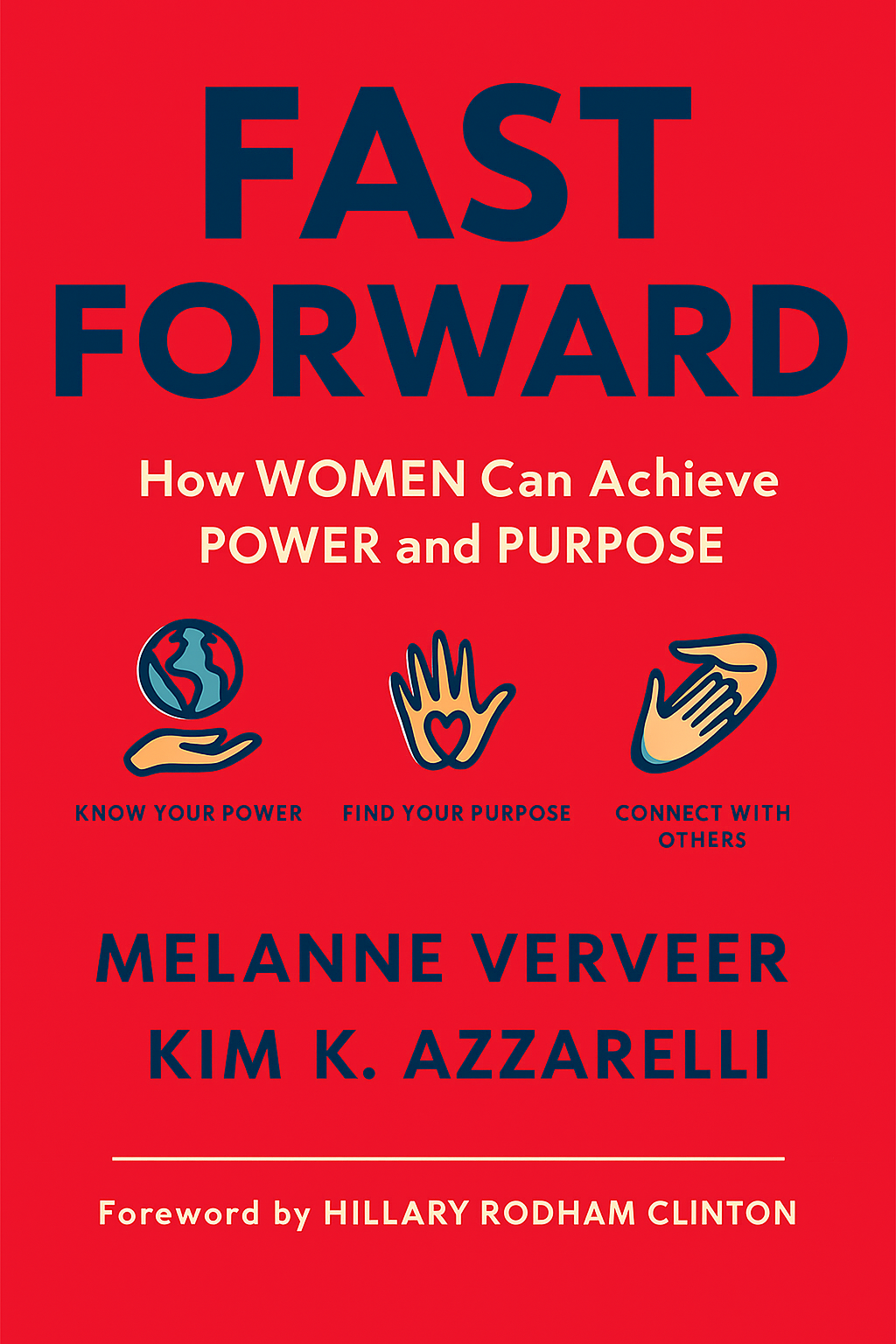
Fast Forward
How Women Can Achieve Power and Purpose
byMelanne Verveer, Kim K. Azzarelli
Book Edition Details
Summary
In the shifting landscapes of power and possibility, "Fast Forward" emerges as a clarion call for change, propelled by the audacious spirits of women who refuse to be sidelined. Crafted by two formidable voices with a finger on the pulse of global corporate dynamics, this book is a tapestry of insights woven from interviews with over fifty trailblazers. Here, the narrative pulses with the heartbeat of ambition and purpose, urging women to seize their burgeoning economic influence and channel it towards transformative impact. As Hillary Rodham Clinton herself notes, it is a guide for leaders at every echelon to harness their potential and forge a world where dreams take flight. This is more than a collection of stories; it's a manifesto for empowerment, offering a roadmap to navigate and dismantle the barriers that have long hindered women's progress, positioning them as the vanguards of this century’s monumental achievements.
Introduction
The global economy operates with a fundamental inefficiency that costs trillions in lost productivity and stunted development. Half of the world's human capital remains systematically underutilized, not through lack of capability or ambition, but through institutional barriers and cultural constraints that prevent women from achieving full economic participation. This systematic exclusion represents more than a social justice issue—it constitutes a profound market failure that handicaps entire nations in an increasingly competitive global landscape. The evidence has reached a critical mass where the economic case for women's participation transcends moral arguments to become mathematical certainty. Countries and organizations that harness women's economic power demonstrate measurable advantages in growth, innovation, and stability, while those maintaining exclusionary practices face compounding disadvantages. The multiplier effect of women's economic engagement operates through distinct mechanisms that differentiate it from general workforce expansion, creating cascading benefits that strengthen entire economic systems. The convergence of technological advancement, shifting demographics, and mounting empirical evidence has created an unprecedented opportunity for transformation. The analysis ahead examines how systematic barriers create market inefficiencies, explores the quantifiable benefits of women's economic participation, and investigates the strategic pathways through which societies can capture this enormous untapped potential before competitors recognize and act upon the same opportunities.
The Quantified Economic Case: Evidence for Women's Multiplier Effect
The mathematical case for women's economic participation has evolved beyond theoretical projections to measurable economic reality. McKinsey Global Institute research quantifies the potential GDP increase from gender parity at $28 trillion globally by 2025, equivalent to combining the entire economies of the United States and China. This figure represents not speculative growth but documented output currently lost through systematic exclusion and underutilization of female talent across all economic sectors. The multiplier effect operates through distinct mechanisms that create compounding benefits beyond simple workforce expansion. Women consistently reinvest 90% of their earnings in family and community welfare, compared to 35% for men, generating cascading improvements in education, healthcare, and social infrastructure. These investments create long-term productivity gains that compound across generations, establishing sustainable growth patterns rather than short-term consumption increases. Corporate performance data reinforces these macroeconomic patterns through measurable outcomes. Companies with gender-diverse leadership teams demonstrate 21% higher profitability and 27% superior value creation compared to male-dominated counterparts. The performance differential stems from enhanced decision-making processes, broader market insights, and improved risk management capabilities that translate directly into competitive advantages. Natural experiments in quota implementation and policy changes provide controlled evidence of causation rather than mere correlation. Countries implementing gender quotas for corporate boards experienced measurable improvements in firm performance, innovation metrics, and market stability within documented timeframes. These controlled conditions demonstrate that women's economic participation directly drives superior outcomes through identifiable mechanisms that can be replicated across different contexts and economic systems.
Structural Barriers and Market Failures: Why Exclusion Persists
Legal frameworks in 90% of countries contain discriminatory provisions that systematically restrict women's economic rights, from property ownership and inheritance to business licensing and financial access. These formal barriers create institutional constraints that prevent women from accumulating capital, accessing credit, or establishing independent economic identities. The legal restrictions operate as market distortions that artificially limit competition and resource allocation efficiency. Cultural and social barriers compound legal restrictions through informal mechanisms that shape expectations, opportunities, and resource distribution patterns. Traditional gender roles assign primary caregiving responsibilities to women, creating what economists term "time poverty" that constrains their ability to engage in formal economic activities. This care burden represents trillions of dollars in unpaid labor that subsidizes formal economic systems while remaining unrecognized in economic calculations. Educational and skill development barriers perpetuate economic exclusion by channeling women away from high-value sectors and leadership roles through systematic discouragement and limited access. Gender stereotypes in STEM education, restricted technical training opportunities, and cultural barriers to entrepreneurship create pipeline problems that manifest as occupational segregation and persistent wage gaps. These educational constraints compound over time, creating cumulative disadvantages that widen throughout women's careers. Institutional barriers within economic systems themselves reinforce exclusion through biased lending practices, discriminatory hiring processes, and systematic exclusion from professional networks. Financial institutions consistently undervalue women-led businesses, requiring higher collateral and offering less favorable terms despite demonstrating superior repayment rates. These institutional biases create self-reinforcing cycles where women's limited access to capital constrains their ability to demonstrate economic success, which then justifies continued exclusion from financial services and business opportunities.
Strategic Pathways to Transformation: Technology, Networks, and Policy Solutions
Technology emerges as a transformative force capable of circumventing traditional barriers through innovative platforms and services that bypass established gatekeepers. Mobile banking platforms enable women to access financial services without requiring physical bank branches or male guarantors, while e-commerce platforms provide market access that transcends geographical and cultural constraints. Digital technologies create new pathways for economic participation that operate independently of discriminatory institutions and traditional exclusionary practices. Network-based empowerment strategies leverage women's collaborative strengths to create mutual support systems that amplify individual capabilities and provide alternative pathways to resources. Microfinance groups, professional associations, and mentorship programs generate social capital that substitutes for traditional business networks from which women have been systematically excluded. These networks provide practical resources including capital and market information, while also offering psychological support and role models that encourage entrepreneurial risk-taking. Policy interventions must address both direct barriers and indirect obstacles through comprehensive frameworks that coordinate across multiple sectors. Direct measures include legal reforms ensuring equal access to credit, property ownership, and business registration, while indirect approaches focus on infrastructure investments in childcare, transportation, and technology access. The most effective policy packages create enabling environments that support women's advancement through various pathways simultaneously. Leadership development initiatives focus on building women's capacity to navigate and transform existing economic systems rather than simply adapting to discriminatory structures. These programs emphasize strategic thinking, negotiation skills, and systemic change capabilities that enable women to challenge exclusionary practices and create more inclusive institutions. The goal extends beyond individual advancement to institutional transformation that benefits all participants and creates sustainable change in organizational cultures and practices.
Addressing the Implementation Challenge: From Evidence to Systemic Change
Despite overwhelming evidence and proven strategies, persistent gender gaps in economic outcomes reveal the inadequacy of formal equality measures alone. The global gender pay gap remains at 23% across all education levels and occupations, with lifetime earnings disparities that translate into retirement insecurity and intergenerational wealth gaps. These persistent disparities indicate that legal reforms and policy changes require sustained implementation efforts to achieve meaningful transformation. Leadership representation gaps persist across all sectors, with women holding fewer than 20% of senior executive positions globally despite representing nearly half of the professional workforce. These leadership gaps create cascading effects through biased recruitment, promotion, and succession planning processes that become self-perpetuating. Organizations with limited female representation prove less likely to implement policies supporting women's advancement or recognize the value of gender diversity. Care economy challenges represent perhaps the most fundamental unresolved barrier to women's full economic participation. The unequal distribution of unpaid care work constrains women's ability to engage in formal economic activities, while inadequate care infrastructure forces difficult choices between career advancement and family responsibilities. Addressing these challenges requires comprehensive policy frameworks that recognize, redistribute, and reduce care burdens while supporting care providers through economic and social mechanisms. Violence against women creates an often-overlooked economic barrier that constrains mobility, limits educational and employment opportunities, and imposes direct costs through healthcare, legal, and security expenses. The economic impact extends beyond individual victims to entire communities through reduced productivity, increased social costs, and constrained economic development. Eliminating gender-based violence represents both a human rights imperative and an economic necessity for achieving full participation and realizing the documented benefits of women's economic engagement.
Summary
The transformation of women from economic participants to economic accelerators represents the most significant untapped opportunity for global development and prosperity in the contemporary era. The convergence of mathematical evidence, technological capabilities, and strategic interventions has created unprecedented potential for systematic change that benefits entire societies while addressing multiple development challenges simultaneously. However, realizing this potential requires moving beyond incremental reforms to comprehensive transformation of economic institutions, cultural frameworks, and policy structures that currently constrain half of human capital. The nations and organizations that successfully execute this transformation will gain decisive competitive advantages in an increasingly interconnected global economy that can no longer afford to waste its most valuable resource through systematic exclusion and underutilization.
Related Books
Download PDF & EPUB
To save this Black List summary for later, download the free PDF and EPUB. You can print it out, or read offline at your convenience.
By Melanne Verveer
