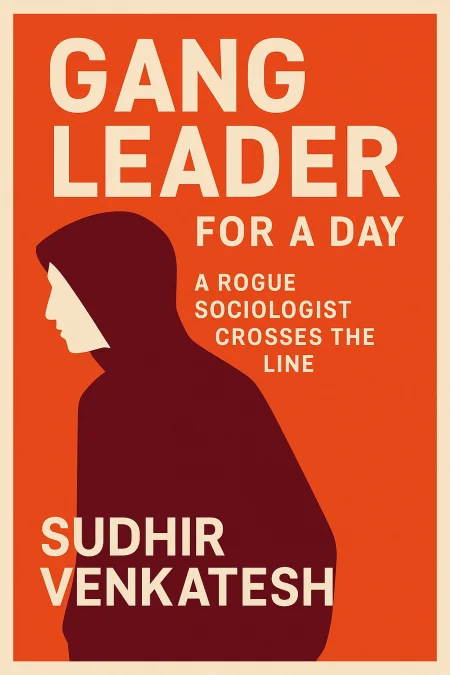
Gang Leader For A Day
A Rogue Sociologist Crosses The Line
Book Edition Details
Summary
In the heart of Chicago’s South Side, where hope and despair dance a dangerous tango, Sudhir Venkatesh immerses himself in a world few dare to tread. Through the lens of a sociologist and the eyes of an outsider, he chronicles a raw and riveting saga within the Robert Taylor Homes—a battleground where community resilience clashes with the brutal realities of gang life. Befriending J.T., a savvy gang leader with a CEO’s ambition, Venkatesh finds himself navigating a labyrinth of loyalty and survival. What compels a gang boss to champion education for his recruits? What truths lie beneath the streetwise facade of residents like Peanut? As the FBI closes in on the Black Kings, the line between observer and participant blurs, raising a pressing question: when chaos reigns supreme, where does one truly belong? "Gang Leader for a Day" is an unflinching exploration of power, poverty, and the unyielding human spirit.
Introduction
In the late 1980s, a young graduate student armed with academic questionnaires ventured into one of America's most notorious housing projects, only to find himself held overnight by a crack-dealing gang whose leader would challenge everything he thought he knew about urban poverty. This extraordinary encounter between two worlds—the ivory tower of the University of Chicago and the concrete towers of the Robert Taylor Homes—would unfold into one of the most revealing studies of inner-city life ever conducted. The protagonist of this remarkable journey was not just any researcher, but someone willing to abandon conventional academic methods in pursuit of genuine understanding. Rather than observing from a safe distance, he chose to embed himself deeply within a community that most scholars studied only through statistics and surveys. His willingness to cross boundaries that others deemed too dangerous or ethically problematic opened a window into the complex ecosystem of America's urban underclass. Through this immersive approach, readers gain unprecedented insights into how communities survive when formal institutions fail them, how leadership emerges in unexpected forms, and how the underground economy operates as both a source of destruction and a means of survival. The story reveals the intricate relationships between gang members and residents, the role of women in maintaining community stability, and the difficult moral choices faced by those trying to navigate systems that seem designed to exclude them. This is ultimately a story about human adaptability, the price of knowledge, and the complex realities that exist behind society's most persistent problems.
Entering the Field: First Encounters with Urban Poverty
The journey began with naive confidence and academic arrogance. Armed with multiple-choice questionnaires designed to capture the essence of urban poverty, a graduate student approached the Lake Park housing projects expecting straightforward answers to carefully crafted questions. The reality proved far more complex and dangerous than any textbook could have prepared him for. Within hours of entering the projects, he found himself detained by suspicious gang members who viewed his presence as a potential threat to their carefully guarded operations. The first lesson came from an unexpected source: the gang leader known as J.T., whose intelligence and business acumen shattered every stereotype about urban criminals. Rather than the mindless thug portrayed in media accounts, J.T. revealed himself to be a college-educated strategist who had consciously chosen the underground economy over legitimate employment that he viewed as racially limited. His critique of academic research methods was both pointed and accurate—how could scholars understand a community they refused to enter, relying instead on surveys that reduced complex human experiences to statistical data points. This initial encounter exposed the fundamental disconnect between academic theories about poverty and the lived experiences of those actually navigating urban hardship. The questionnaire asking "How does it feel to be black and poor?" struck residents as absurdly reductive, demonstrating how little outsiders understood about the daily realities of their lives. The young researcher quickly learned that gaining genuine insight would require abandoning his preconceptions and accepting a role as student rather than expert. The early weeks revealed the intricate social structures that governed project life, from the informal hierarchies among residents to the complex relationships between different groups competing for resources and respect. What initially appeared to be chaos and dysfunction gradually revealed itself as a highly organized system with its own rules, leadership structures, and methods of conflict resolution. This realization marked the beginning of a transformation that would challenge not only academic assumptions about urban poverty but also fundamental questions about research ethics and the responsibilities that come with privileged access to marginalized communities.
Inside the Underground Economy: Gangs, Power, and Community
The crack trade that dominated the Robert Taylor Homes operated with the precision and complexity of any legitimate business enterprise, complete with hierarchical management structures, territorial divisions, and sophisticated financial systems. J.T.'s organization functioned as much more than a criminal gang—it served as an informal government, providing services that official institutions had abandoned. The gang mediated disputes, provided security, maintained order, and even funded community activities when no other resources were available. The economics of the drug trade revealed stark disparities between perception and reality. While popular culture portrayed gang members as wealthy criminals living lavishly off illegal profits, the financial records told a different story. The vast majority of foot soldiers earned barely minimum wage for work that carried enormous risks of violence, arrest, and death. Only a select few at the top of the hierarchy earned substantial incomes, creating a pyramid structure that kept most members hoping for promotions that would never come. This system effectively exploited young men's dreams of wealth and status while providing them with little more than subsistence wages. The relationship between the gang and the broader community proved far more nuanced than simple predator-prey dynamics. While residents certainly suffered from the violence and disorder that accompanied the drug trade, many also recognized the gang's role in maintaining a form of stability in an environment abandoned by legitimate authorities. The gang's presence deterred random crime, provided informal employment opportunities, and offered a source of emergency assistance when residents faced crises that overwhelmed their limited resources. Understanding this complex ecosystem required recognizing how formal institutional failures created space for informal alternatives to emerge. When police response was inadequate, schools were failing, and social services were overwhelmed, the gang filled some of these gaps through its own mechanisms. This didn't make the organization benevolent, but it explained why community relationships with the gang were characterized by ambivalence rather than simple opposition. The underground economy operated according to its own logic, serving functions that the legitimate economy had failed to provide for residents with few other options.
The Complex Web of Survival and Authority
The social architecture of the Robert Taylor Homes revealed itself through the interconnected relationships between various power brokers who shaped daily life for thousands of residents. Ms. Bailey, the formidable building president, wielded enormous influence through her ability to navigate between official bureaucracies and street-level realities. Her position required constant negotiation with gang leaders, housing authority officials, police officers, and community members, each representing different and often conflicting interests. Success in this role demanded a sophisticated understanding of how power actually operated, rather than how it was supposed to work according to official organizational charts. Women like Ms. Bailey and the networks they created served as the backbone of community survival in an environment where formal institutions provided minimal support. These networks facilitated the sharing of resources, childcare responsibilities, and survival strategies that enabled families to endure conditions that would otherwise be impossible. The informal economy operated through these relationships, with women creating elaborate systems of mutual aid that included everything from shared apartments and appliances to rotation of cooking and childcare duties. The complexity of authority relationships became apparent through daily interactions that required residents to navigate multiple, sometimes contradictory power structures. A single transaction might involve a tenant leader who controlled access to services, a gang member who controlled territory, a housing authority official who controlled lease agreements, and a police officer who could disrupt or facilitate activities. Understanding how to work within this system required skills that were rarely acknowledged by outside observers who saw only dysfunction and disorganization. The survival strategies developed by residents demonstrated remarkable creativity and resilience in the face of systematic neglect and abandonment. From the ingenious methods used to obtain basic necessities to the informal justice systems that emerged to address conflicts, community members created solutions that worked within the constraints they faced. These adaptations often involved ethical compromises and moral ambiguities that reflected the impossible choices confronting people who had been excluded from mainstream opportunities and protections. The resulting social order was neither ideal nor sustainable, but it represented a rational response to irrational circumstances.
Demolition and Transformation: The End of an Era
The announcement that the Robert Taylor Homes would be demolished sent shockwaves through a community that had learned to survive within its concrete walls, regardless of how flawed those structures had become. The promise of relocation to better neighborhoods with improved opportunities was met with deep skepticism by residents who had witnessed decades of failed government promises. The logistics of moving tens of thousands of people while providing adequate support services seemed impossible given the Chicago Housing Authority's track record of mismanagement and corruption. The demolition process revealed the extent to which residents had been excluded from decisions affecting their lives, as plans moved forward with minimal input from those who would be most directly impacted. Building presidents like Ms. Bailey found themselves in the position of negotiating deals that prioritized their own interests while recognizing their inability to protect all of their constituents. The informal systems that had enabled community survival began to break down as people focused on securing individual advantage in an uncertain future. For the gang leadership, demolition represented an existential threat to their carefully constructed business model. J.T.'s success had been built on the unique advantages offered by the projects' concentrated population and strategic location, assets that would be impossible to replicate elsewhere. The prospect of members and customers scattering across the city challenged fundamental assumptions about how the organization could maintain cohesion and profitability. Even the most successful gang leaders found themselves confronting the limits of their power when faced with broader economic and political forces. The actual relocation process confirmed residents' worst fears, as the majority found themselves in communities that were no better than the projects they had left, and sometimes worse. The promised integration into middle-class neighborhoods materialized for only a small fraction of families, while most were concentrated in other poor, segregated areas. The land where Robert Taylor once stood was transformed into mixed-income developments that few former residents could afford, completing a process that many viewed as organized displacement rather than community improvement. The demolition marked not just the end of the physical structures, but the dispersal of social networks and survival systems that had taken decades to develop.
Summary
The story of life inside America's most notorious housing project reveals the extraordinary human capacity to create meaning, community, and survival strategies even under the most challenging circumstances. While the Robert Taylor Homes represented institutional failure on a massive scale, the people who lived there demonstrated remarkable ingenuity in developing alternative systems of governance, economic activity, and mutual support. Their experiences challenge simplistic narratives about urban poverty that ignore the complex realities faced by those excluded from mainstream opportunities and protections. The most profound lesson from this immersive journey concerns the importance of understanding communities from the inside rather than relying on external assumptions and stereotypes. The difference between statistical portraits of dysfunction and the lived reality of people working within impossible constraints cannot be bridged through survey research or theoretical analysis alone. Real insight requires the willingness to engage authentically with people whose experiences differ radically from our own, even when such engagement forces us to confront uncomfortable truths about inequality and social abandonment. This account offers valuable insights for anyone seeking to understand how communities survive when formal institutions fail them, how leadership emerges in unexpected forms, and how moral choices become complicated when conventional options are unavailable. The story serves as both a cautionary tale about the consequences of social policy failures and a testament to human resilience in the face of systematic neglect. For readers interested in urban studies, social policy, or simply understanding how the other half lives, this narrative provides an unprecedented window into worlds that remain largely hidden from mainstream American consciousness.
Related Books
Download PDF & EPUB
To save this Black List summary for later, download the free PDF and EPUB. You can print it out, or read offline at your convenience.
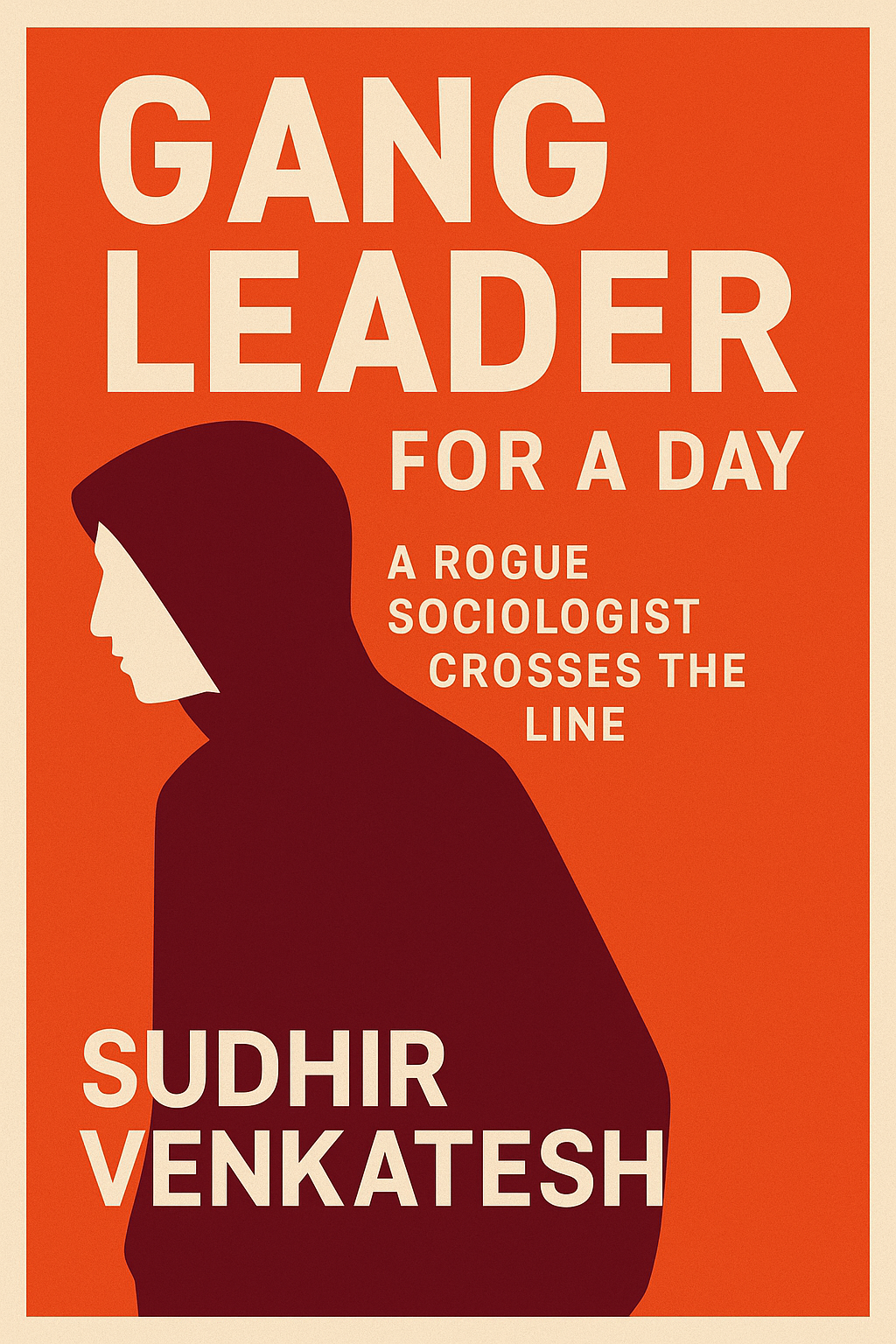
By Sudhir Venkatesh
