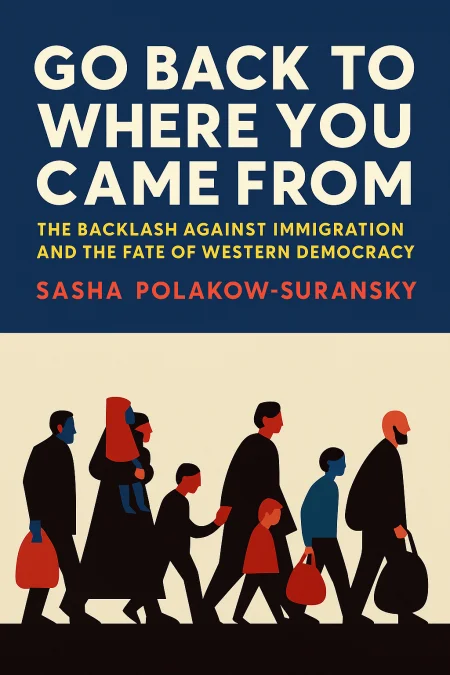
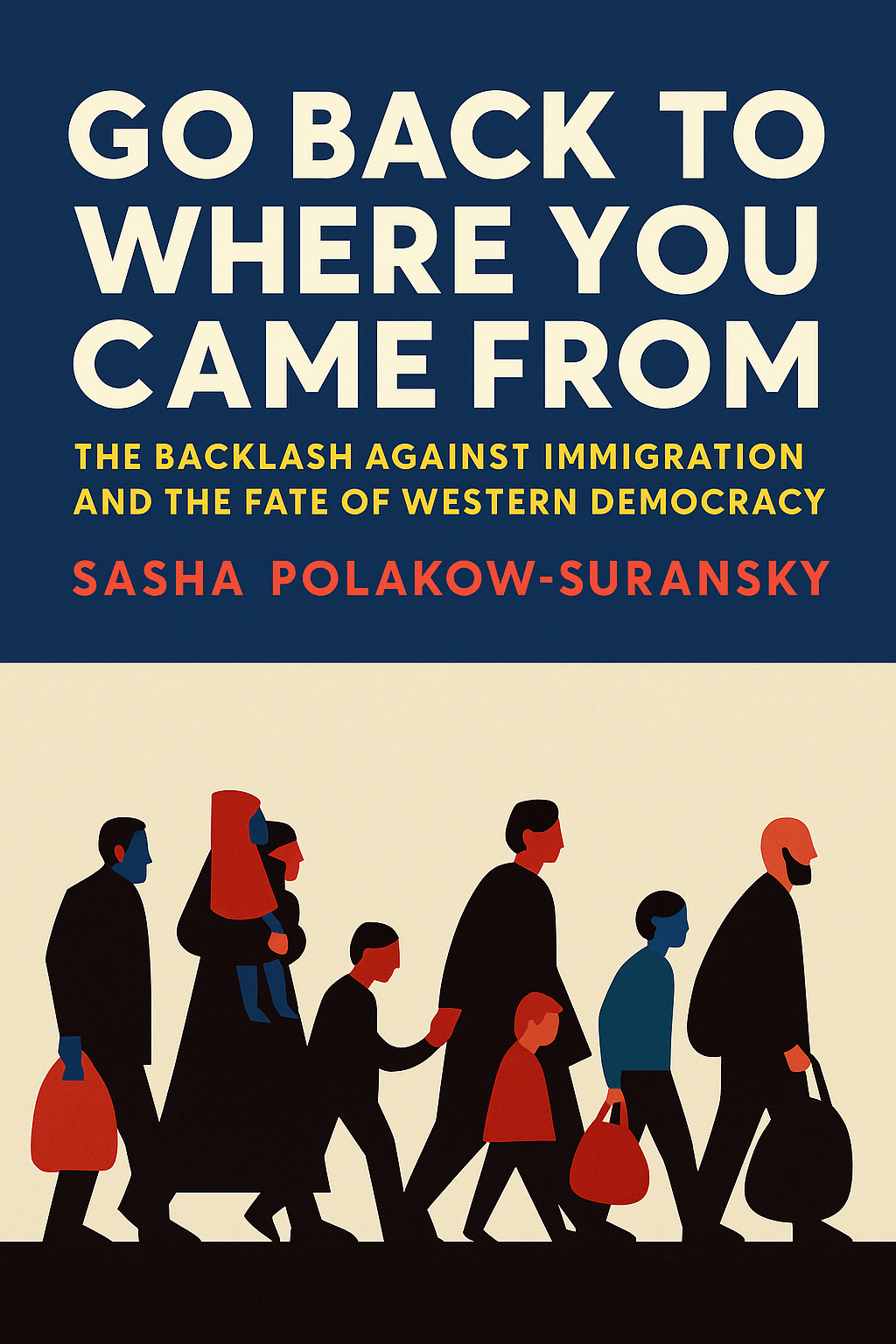
Go Back to Where You Came From
The Backlash Against Immigration and the Fate of Western Democracy
Book Edition Details
Summary
In the tumultuous arena of modern politics, Sasha Polakow-Suransky's "Go Back to Where You Came From" delivers a hard-hitting exploration of democracy's vulnerabilities. As demagogues manipulate crises and sow division, this gripping narrative exposes how extremist ideologies leap from the fringes to the forefront. Witness the transformation of fear into policy as Polakow-Suransky chronicles encounters with refugees, the disenchanted working class, and unlikely defenders of human rights. From Calais to the corridors of power, he illuminates the perilous allure of far-right populism. This incisive account warns that the real danger lurks not from the outside but within the very fabric of our societies, challenging readers to question the true custodians of democratic values.
Introduction
Contemporary Western democracies confront a paradox that threatens their foundational principles: the very democratic processes designed to protect liberty and pluralism are being systematically weaponized to dismantle these protections. The convergence of mass migration, economic uncertainty, and cultural anxiety has created conditions where elected governments increasingly abandon constitutional safeguards in pursuit of majoritarian demands for security and cultural homogeneity. This transformation reveals the fragility of liberal institutions when confronted with sustained popular pressure to exclude and marginalize minority populations. The phenomenon extends far beyond traditional xenophobia or economic competition, representing instead a fundamental recalibration of how democratic societies balance majority rule with minority rights. The strategic deployment of progressive values against religious minorities, the emergence of welfare chauvinism as a political strategy, and the normalization of exclusionary rhetoric demonstrate how quickly democratic norms can erode when political entrepreneurs successfully frame demographic change as existential threat. The analysis traces this evolution through multiple phases, examining how each stage progressively weakens democratic resilience while maintaining the facade of popular legitimacy. Understanding this process becomes essential for recognizing how liberal democracy can hollow itself out from within, transforming into what scholars term "illiberal democracy" where electoral procedures persist while constitutional protections disappear. The investigation reveals that the greatest danger to democratic governance emerges not from external conquest but from internal responses that sacrifice foundational principles for the illusion of cultural purity and collective security.
The Strategic Weaponization of Immigration Anxiety
Political entrepreneurs across Western democracies have discovered that immigration anxiety provides an exceptionally powerful tool for mobilizing electoral coalitions while simultaneously justifying attacks on liberal institutions. The strategic genius lies in connecting legitimate concerns about rapid social change to broader narratives of cultural displacement and political betrayal, transforming policy disagreements into existential struggles for national survival. This rhetorical framework proves devastatingly effective because it validates genuine feelings of powerlessness while offering emotionally satisfying explanations for complex social phenomena. The transformation of immigration discourse from economic competition to cultural warfare represents a deliberate strategic choice rather than organic evolution. Populist movements learned to frame demographic change not as a manageable policy challenge but as evidence of elite conspiracy against ordinary citizens. The concept of "replacement" emerged as a unifying theory connecting birth rates, migration patterns, and political change into a single narrative of civilizational decline. This framework transforms every mosque, halal butcher, or veiled woman into evidence of ongoing invasion, creating perpetual emergency conditions that justify increasingly extreme responses. The psychological appeal of replacement theory connects to deeper authoritarian predispositions within democratic populations, particularly the approximately one-third of citizens who prioritize social conformity and group cohesion over individual rights and democratic pluralism. When populist parties successfully activate these latent tendencies through crisis narratives, they create receptive audiences for exclusionary policies that would otherwise violate democratic norms. The strategy proves particularly effective during periods of economic uncertainty or following terrorist attacks, when anxiety levels peak and voters become more willing to trade liberty for security. The international coordination of populist movements reveals the sophisticated nature of this strategic approach. Leaders share rhetorical techniques, policy proposals, and mobilization strategies across national boundaries, creating feedback loops where electoral success in one country emboldens similar movements elsewhere. This transnational dimension gradually normalizes previously taboo positions throughout the Western democratic world, expanding the boundaries of acceptable political discourse while systematically undermining liberal democratic institutions.
From Integration Failures to Existential Threats
The evolution of European immigration policy reveals how genuine integration challenges became transformed into justifications for abandoning liberal democratic principles entirely. Guest worker programs of the 1960s created permanent immigrant populations that governments never planned to integrate, leading to policy failures that persist today. The application of traditional religious accommodation models, designed for established Christian denominations, to Muslim immigrants with vastly different cultural backgrounds inadvertently created parallel societies rather than promoting genuine integration. The intellectual left's embrace of cultural relativism further complicated integration efforts by abandoning universal values in favor of group-specific accommodations. The Salman Rushdie affair marked a crucial turning point where defending minority rights began to supersede protecting individual freedoms, including the fundamental right to free expression. This shift created space for religious fundamentalists to claim victimhood while simultaneously threatening violence against critics, establishing a pattern where liberal principles became subordinated to multicultural sensitivities. Politicians like Pim Fortuyn demonstrated how integration failures could be reframed in progressive terms, positioning themselves as defenders of gay rights, women's equality, and secular values against backward religious immigrants. This strategy created a new template for far-right politics that appealed to educated liberals who might otherwise reject traditional conservative messaging. The approach proved devastatingly effective by forcing mainstream parties to adopt increasingly restrictive immigration policies while ceding moral authority to populist challengers who claimed to defend liberal values more authentically. The transformation from viewing immigrants as individuals with integration challenges to treating them as representatives of incompatible civilizations represents a fundamental shift in democratic discourse. Terrorist attacks provided seemingly concrete evidence that Islamic immigration posed existential threats to Western civilization, justifying policies that would have been unthinkable decades earlier. The logic of civilizational conflict gradually replaced the logic of individual rights, creating conditions where democratic societies could justify abandoning their foundational principles in the name of cultural self-defense.
Welfare Chauvinism and Authoritarian Mobilization
The emergence of welfare chauvinism as a dominant political strategy reveals how populist movements successfully combine generous social spending promises with exclusionary citizenship policies. Rather than advocating reduced government expenditure like traditional conservative parties, populist movements promise expanded benefits while restricting access to native-born citizens. This approach proves particularly effective in Nordic countries with strong welfare traditions, where parties like the Danish People's Party position themselves as defenders of social democratic achievements against immigrant encroachment. The strategic brilliance of welfare chauvinism lies in its ability to appeal simultaneously to economic anxiety and cultural resentment while maintaining a veneer of progressive politics. Voters can support generous unemployment benefits, universal healthcare, and robust public services while simultaneously endorsing policies that exclude minorities from these protections. This combination allows populist parties to build broad electoral coalitions that transcend traditional left-right divisions, attracting both working-class voters concerned about economic security and middle-class voters anxious about cultural change. The psychological mechanisms underlying welfare chauvinism connect to fundamental questions about group membership and social solidarity. Research demonstrates that support for redistributive policies depends heavily on perceptions of group cohesion and shared identity. When populist movements successfully frame immigrants as outsiders who threaten both economic resources and cultural values, they undermine the social solidarity necessary for maintaining generous welfare systems. The result is a vicious cycle where immigration anxiety leads to welfare chauvinism, which further erodes social cohesion and democratic norms. The normalization of welfare chauvinism across European democracies represents a fundamental shift toward what scholars term "illiberal democracy," where electoral procedures persist while constitutional protections for minority rights disappear. The Australian model of offshore detention became increasingly attractive to European politicians seeking to avoid the political costs of visible refugee populations, demonstrating how democratic governments can maintain humanitarian rhetoric while implementing policies that violate basic human rights. The enormous financial costs of these approaches are justified by their supposed deterrent effects, even when evidence suggests they merely redirect migration flows rather than stopping them.
Democratic Vulnerability and Institutional Erosion
The systematic erosion of liberal democratic institutions reveals how electoral success can become a pathway to authoritarianism rather than democratic expression. Populist movements understand that democratic procedures provide legitimacy for attacks on constitutional safeguards, using electoral mandates to justify restrictions on press freedom, judicial independence, and minority rights. This process occurs gradually through technically legal means, making it difficult to identify clear moments when democracy crosses the line into authoritarianism. The relationship between majority rule and minority rights becomes fatally strained when significant portions of the electorate support policies that violate liberal democratic principles. Courts and constitutional frameworks provide some protection, but their effectiveness depends on broader social acceptance of their legitimacy. When populist movements successfully frame judicial decisions as elite interference with popular will, they undermine the institutional foundations that protect democratic governance from majoritarian excess. Civil society organizations and independent media face particular pressure because they serve as crucial checks on government power. Populist movements systematically attack these institutions through funding restrictions, legal harassment, and public delegitimization campaigns. The gradual weakening of civil society creates space for authoritarian practices while maintaining the appearance of democratic competition. The targeting of judges, journalists, and civil rights organizations as enemies of the people reveals how quickly democratic institutions can be captured by movements that maintain popular support. International cooperation and European integration, once seen as bulwarks against extremism, become targets for populist movements that frame them as threats to national sovereignty. This creates a destructive feedback loop where democratic backsliding in one country weakens international institutions, which in turn reduces their capacity to support democracy elsewhere. The result is a gradual erosion of the international liberal order that has underpinned Western stability since World War II, replaced by a system where authoritarian practices gain legitimacy through democratic procedures.
Summary
The contemporary assault on liberal democratic institutions demonstrates how electoral success can become a mechanism for democratic destruction rather than democratic expression. The strategic weaponization of immigration anxiety, the transformation of integration failures into existential threats, the emergence of welfare chauvinism, and the systematic erosion of constitutional safeguards reveal a coherent pattern through which democratic societies can hollow themselves out from within. This process succeeds because it exploits genuine grievances and institutional failures while offering emotionally satisfying but ultimately destructive solutions to complex social problems. The analysis illuminates how quickly constitutional protections can erode when fear and demographic anxiety are skillfully exploited by political entrepreneurs who understand that the greatest threat to liberal democracy comes not from external conquest but from internal responses that sacrifice foundational principles for the illusion of security and cultural purity.
Related Books
Download PDF & EPUB
To save this Black List summary for later, download the free PDF and EPUB. You can print it out, or read offline at your convenience.
By Sasha Polakow-Suransky
